Showing posts with label Zeboyd. Show all posts

Sunday, August 24, 2014

Twelve Tips for Indie Game Developers: The Outsiders Perspective


            Alright.  Let's be honest, I am not a game developer, I am not a PR guy, I am not an analyst.  What I am is a gamer.  And as a gamer, I wanted to just give a few ideas to the community as a whole, the indie gaming community, that, from a gamer's perspective, will actually help you.  Because, corporations may need advice, but they won't take it.  Indie devs tend to just be a group of a few people and they can and sometimes will use advice, so...here it is.

Considering the shit AAA devs are doing...yeah, I love Indie
            I've been seeing a lot of...shall we say, shady behavior on the indie scene, lately.  For every War Z or Guise of the Wolf, we get tons of decent games like Shovel Knight or Cubesis, certainly, but the fact that people think they can screw with their customers, on the indie level no less, is kinda disconcerting.  This doesn't just go for people trying to mess with critiques or lie to others, this goes for blow ups like with Phil Fish or even levels of mediocrity, like the dozens of RPG maker games that are starting to appear on steam.  So, let's start with some easy tips.

1) A New Developer Starts with nothing.

            As a new developer, you start with zero.  Zero faith, zero goodwill, but also zero bad will and zero vitriol.  You can build your image from the ground up.  So, play to the audience you want and respect that audience.  You can make a name that is meant to show your ambitions or what have you, like Wayforward or you can just have it sound cool, like Super Giant Games.  But, you start on an even keel, so use that to your advantage.  Use it as a jumping off point to show your audience, you respect them and you care.  They WILL start to judge you from the first screen shot you post, but when all you have is a name and a title, you start with nothing, so use that to your advantage.

All developers are born with neither good will nor bad will.  Use that to your advantage.
2) The Value of Goodwill.

            Indie developers can live and die on goodwill.  See, many indie developers work their jobs part time while doing other jobs or can survive on other means while waiting to hit it big.  However, if they do hit it big, this means they can work full time.  Indie devs are no different from big companies in this regard, as if their name has weight it can mean the difference between a boycott and massive sales.  Even if it just means you get a few hundred extra sales, since you try and deliver games cheaply and without much overhead, like a publisher or retailers cut, it can still help.

If you give to gamers, gamers will give to you, devs.
3) Be courteous, but don't be phony. 

            Your customers need to trust you and be willing to return your own goodwill, spreading word of mouth, doing reviews, talking to friends, what have you.  So, how can you build goodwill?  Well, a good way to start is to think about how you as a customer want to be treated.  Everyone hates that sir or ma'am crap we get when talking to corporate pawns like the cable company or healthcare and we hate automated systems even more.  We want to be spoken with as equals, by real people.  We want to be spoken to as people who are helping with the gaming experience, not lavished with false praise and titles.  If we make a suggestion, be glad for it.  Even if you can't use it, remember that someone cared enough that they wanted the game to be better so they could play it more. 

We all hate automated machines telling us our time is valuable to them.  Treat us courteously, but not like robots.
4) Be a nice person. 

            In spite of all vitriol, nothing builds goodwill like a developer who will act in a mature way when being insulted or demeaned.  This.  Is.  HARD.  Phil Fish may not be a guy I like, but he was insulted on a daily basis and demeaned the point he quit the game industry after many, MANY choice words.  It's probably good he did because after those words...he lost a LOT of good will from fans.  Thing is, Zeboyd put it best.  It's just good for all of us if we try and be nice guys.  Not fake nice, but if someone disagrees with you, let them, don't explode.  If they're being an asshole to you, ignore them.  If they're being an asshole to your community, feel free to ban them, since you have your community to think of.  But in general, just be a nice guy that people feel they can talk to. 

Gamers can be a vitriolic bunch but indie devs rely on them so...you kinda have to be the bigger man here.  Act maturely, even if we don't.
5) Man up to your mistakes. 

            All developers have made mistakes, wasted money, or generally had delays that prevent them from keeping promises in a timely manner.  Lying or making excuses to your fans and customers is not the way out.  Be upfront with them and share the experience.  If you're having problems, let them know but assure them of your commitment.  If you can't deliver, all there is to do is apologize, take the heat, and try to make it right how you can.  While you might lose some goodwill for doing the right thing, people remember those who are honest with them and respectful.  They respect those who don't cut and run and will try and do the right thing.  That, in turn, will get you more good will. 

People might never let you forget a mistake, but if you own up to them, don't make excuses, and say you'll do better, they're more likely to forgive and respect you.
6) Share with and go the extra mile for your community. 

            Everyone loves seeing games progress, either in development or in updates and bug fixes.  Share with them how things are going, maybe if you added something new, secrets maybe, but keep them involved, because that shows you care.

These are basic tips relating to good will.  In general, just think how you as a gamer or a customer want to be treated by others and...do that.

Community is a powerful tool in the game industry.  Treat them right.
7) Do not lie to your customers

            This is to cover all bases.  We talked about manning up to mistakes or problems, but don't sugar coat things.  If your game is a piece of ass, at least let them know going in that it's a piece of ass and that you are trying to learn to either fix it or do better the next time.  Don't bill it as a Call of Duty killer and then it turns out to be a generic shooter with copy paste graphics from the Unreal Engine with no trace of originality.  Don't use misleading clips or CGI or in general try and deceive them, because you will be found out and your attempts to hide it WILL be catalogued.  In the age of screen capture and mass media, nothing can just be covered up anymore.  You cannot cover up a lie in the games industry, so it's better to simply not lie.  Your rep and your goodwill will thank you.

If you lie, your customers will find out...and they will be PISSED.
8) Do not censor

            I know it may hurt to see something you worked hard on or which isn't finished take a verbal pounding from players who are basically ripping it apart for fun, but like I said before, if you try and cover that up and lie, it WILL be found out.  Garry's incident and Guise of the Wolf are the most notorious cases of censorship gone bad when Total Biscuit had his first impression videos taken down by people abusing the Youtube Copyright system.  He tore them apart in a mature manner, showing their wrongs in detail, catalogued, and eventually they had to relent.  Jim Sterling also covered those who took down steam reviews that were unflattering.  All incidents left a trail and the stories were picked up by Kotaku and other news outlets and the developers were treated as the scummy, money grubbing asses they were.  Don't censor.  It never ends well.  Take the vitriol on the cheek, turn the other cheek, and let it be forgotten, making way for fans who WILL appreciate your game.  Everyone hates a villain and if you act villainously, like trying to abuse the system to censor bad press, you will be slain by some righteous heroes of the net.
Best way to lose goodwill and become a gaming development pariah?  Try and censor your customers because they don't like your product.  Own up to your mistakes or you are going to burn.  The internet does not forget.

9) Don't belittle and don't fear comparison

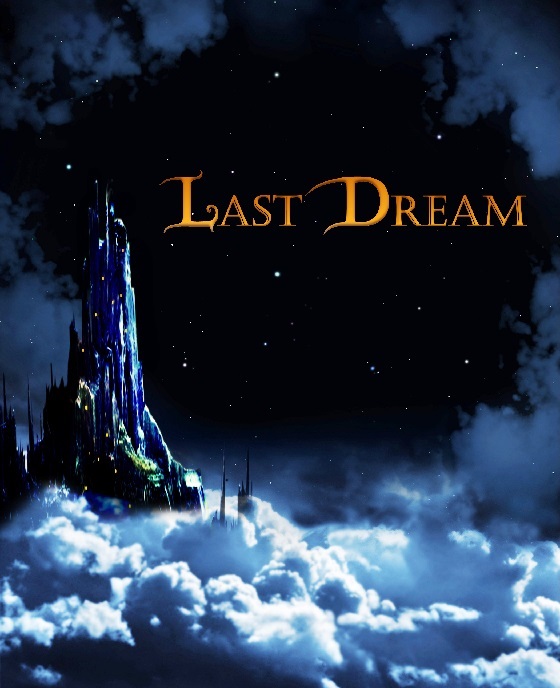
            Not everything has to be original, but don't be afraid to have something compared to your game and don't belittle others who might be compared to it.  Many people hated the calling of Terraria a "2-d Minecraft."  Sure, they are different, but that kind of comparison...is not bad.  Minecraft is a big hit and a game like it?  That's not saying a bad thing, you could be compared to worse.  And Terraria never set off to compete with Minecraft, they didn't claim they were better.  They were just different.  They didn't speak ill of them.  This is good.  I remember playing The Last Dream for Steam and didn't much care for it because it took too much of the original Final Fantasy and not enough of the sequels, with a bland class based system and not enough interesting story or music.  However, think about that sentence I just said.  Took too much from the original Final Fantasy.  Final Fantasy purists, who enjoyed the original NES games will eat a game like that up.  Don't fear comparison.  It's just someone else's way of pitching your game to a friend in a nutshell.  Don't belittle because whether or not someone who is making a game similar to yours is better, the fact that you treat them with the same respect you treat your customers, that is to say a lot, will earn you a fair bit of goodwill and possibly partners in the future.  Who knows?  They may want to work for the masters for their sequel.

Comparison isn't necessarily a bad thing.  Don't fear it, because it's just part of how people associate your game.
10) Don't nickel and dime your customers

            I see this happen a fair bit.  I'm not of the mind that all micro transactions are bad.  Some DLC definitely deserves the money, like Dark Souls 2's Sunken Crown DLC.  It clearly took extra time to make and was not part of the original product.  However, a game like Warlock 2, which looks like it should have been an expansion pack sold as a full retail release?  It makes customers raise an eyebrow and hurts your brand.  We don't like to feel like content is withheld from us.  Held hostage from us.  If you want to offer certain extras you can't get elsewhere, like behind the scenes footage or art books, maybe, but if you are withholding characters, music, whole levels even, BEFORE the game has even launched?  You are going to anger a lot of people.  Some DLC, we are okay with, but when it's been cut out of the finished product to make more money?  Many of us will skip the finished product entirely, since it's being sold to us piecemeal.
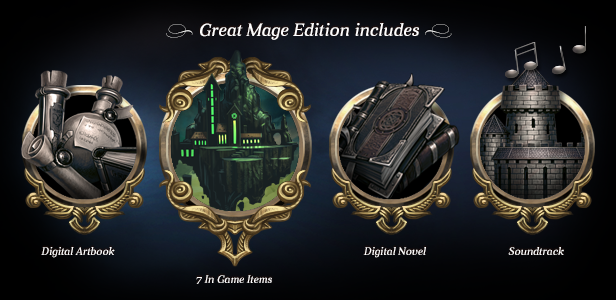
When your customers realize you hacked out in game items to sell a more expensive edition, they may just say to hell with your game.  It shows a lack of disrespect.

11) Spread the word, but don't bribe

            Disclosure has become a hot topic lately with youtubers.  It's the idea that a game developer is offering special goodies or money or deals to reviewers for a favorable look at their game.  This is a bad idea.  Why?  Because if you don't have enough faith in your game for it to stand on its own, you probably shouldn't be selling it.  Don't bribe reviewers, don't even try to sweeten a deal.  Just advertise that you have something cool to show people.  Spread the word through the medias and the fans, but don't try and buy publicity.  Market, but don't try and get "special attention."

Full disclosure, not non disclosure.  Don't bribe, don't lie, don't keep things from your customers.
12) Don't panic

            Even good games can receive bad reviews.  Why?  Because the game wasn't what that particular player wanted to experience, even if the videos and screenshots seemed like it might be.  And that's okay.  Sometimes, wires cross.  But if you are proud enough of your game that you would play and enjoy it, then others will too.  Don't panic if you get a bad review or if something happens to derail spreading the word or getting it to your customers.  In the end, most players will remember how you act and resolve issues as well as how they like the game.  I may not like FTL, but I give mad props to the developers for improving it and offering the updates for free.  I might buy another game from them, if it were released.  Whatever happens, just go with the flow and do your best to deliver your product to your customer.  If they like it, they like it, if they don't, they don't, but someone will like it.  Have faith in that.
This isn't my kind of game, but it is for someone.  Just cause I don't like it doesn't mean others won't.  Don't panic.  Keep calm and carry on.
            It's a little sad that the indie scene has been sullied by some developers who try and lie or abuse the system to their own benefit, but for every Guise of the Wolf or Garry's Incident, we get a dozen Shovel Knights, Valdis Story, Sang-Froid, Tiny Barbarian DX, etc.  It's easy to misstep as an indie developer, sure, but from a gamer's standpoint, these points above are what matter to us of the developers we trust.  Something to keep in mind for the aspiring game developers.  And something for games to keep in mind when picking a title on name value alone.

In the end, being a good developer and being a decent human being aren't mutually exclusive.  That is the best bit of advice I can offer.

Saturday, May 31, 2014

Still on cooldown. Updates, nonetheless.

Hello, all!  I swear, I had a rant prepared for today, but...hasn't quite coalesced yet.  Still working on what I want to talk about next and some indies to spotlight.  Either way, I wanted to let people know that I DID survive Animazement.  I debated buying some games, but was poor, so settled for a few movies.  I wanted to get the Guardian Legend for NES, but...again, poor.
Can we get a VC release, Nintendo?  Pleaes?
I sold about 400 dollars worth of my gaming perlers, which is pretty decent, if I do say so.  However, a fair bit of things happened while I was gone, so I just want to post a few updates about gaming, then I'll hopefully be back into regular update mode next week.  First, while Animazement was going on, we finally have the release of the Retron 5 by Hyperkin...the delays and price hikes have made many people skeptical, but as far as clone consoles go, it seems PRETTY DAMN IMPRESSIVE.  Save states, built in cheats, and almost 10 different systems that are playable(NES, Famicom, SNES, Super Famicom, Sega Genesis, Sega Megadrive Japan version, Game boy, Game boy color, and GBA.)  Gamespot did a much more comprehensive review than I could, seeing as I don't have one because, poor.  Check that out here.
It ain't perfect, but it is pretty damn cool.
Zeboyd games, one of my previous creator spotlights, has started up the Kickstarter Report again and I couldn't be more thrilled, as they have showcased some truly interesting kickstarter ideas.  Extra Credits recently finished an inspiring examination of how video games could be used as educational tools.  And Dark Souls 2 continues to be awesome, thanks to lore enthusiasts like Vaati.

Also, right after I returned home from my convention, an artist and graphic designer I know showed me something awesome.
A billion points to people who actually get this reference.
She's an artist, pokemon enthusiast, and overall awesome person.  Goes by the tag Aquarius Magick.  Check her stuff out, if you're interested.

That's all for me.  I'm still cooling down from working over 30 hours last weekend, yes still, shut up, I'm tired.  I'll also be heading out to New York in two weeks, so this might be a light month for me in terms of updates, but I don't intend to abandon this blog by any means, so...just be patient, alright?

Thinking next week we talk about either Legend of Iya or Neverending Nightmares and their creators.  We'll see...

Friday, May 9, 2014

Creator Spotlight: Zeboyd


            I tend not to do this, as this is a team of two developers at once, and these guys are pretty well known as far as indies are concerned...I mean, the titles of their games are too insane to ignore, but...these guys are just brilliant.  So insightful, so intelligent, and yet, still humble.  These are the models that every wannabe JRPG developer, that every piece of RPG Maker shovelware who gets onto Steam, should look up to.  This...is Zeboyd.

Retro does not even begin to describe this company...and yet, still more modern than a lot of other JRPGs.
            Zeboyd consists of Robert Boyd and William Stiernberg, with the duties for each neatly divided down the middle.  Boyd is the programmer and handles most of the storytelling and gameplay aspects, while Stiernberg is the artist, who creates characters, environments, and effects.  To me, it's amazing how well this works.  Neither side seems out of the loop, which helps because it's only a team of two, but...they work so well together to create such unique titles.

The men behind the company.
            Before we get too in-depth with the praise, however, let's go on a little trip back in time.  It's 2009.  Xbox Live Indie Games becomes available on the Xbox Live Marketplace, but only reaches a...minimal audience.  Robert Boyd decides to leave his day job and, being skilled with programming languages and having a love of JRPG and visual novel games, decides to try his hand at XBLIG.  He and Stiernberg's first title sold less than 1000 digital copies and was a visual novel style game parodying science fiction tropes.  It was called Epiphany in Spaaace!  Despite the minimal sales, Zeboyd tried again.  This time, it released a game called, Molly, the Were-Zombie.  Also an interactive novel game, it also sold less than 1000 copies.  Apparently, this lack of success made Zeboyd change their strategies just a bit.

Not exactly riveting stuff, but Epihphany in Spaaace! still maintains the trademark off humor of Zeboyd.
 
Have I mentioned that Zeboyd loves their cameos?
            Zeboyd's next title is one of the big ones it's known for.  Breath of Death VII: The Beginning.  This title is remarkable, and not just because Breath of Death I-VI don't exist(even the title is a parody...).  Breath of Death is built as a throwback to old 8-bit RPGs with a somewhat animated intro mimicking what might have been seen on the NES.  It plays very much like Dragon Quest and features as main characters, a skeleton warrior, a ghost priest, a vampire mad scientist, and a zombie prince.  This game takes place after the end of the world where the undead have taken the place of humanity, built cities, and are occasionally plagued by monsters.  This game is insane.  It's rife with parody, as the main character communicates via thought bubbles, since he is a skeleton and has no tongue, but while the players can hear him, others take him as a silent protagonist, and we are subjected to some clever humor lampooning the notion.  It plays very stiffly, but this is by design, as it mimics the controls of Dragon Quest.  However, Robert Boyd wasn't shackled by that design mentality.  Rather than making a straight up copy of Dragon Quest, he thought of ways to improve the experience for players.  First, the experience is relatively streamlined.  The only real items carried are potions, which one can use to revive a fallen comrade.  Other than that, there are basic equipment slots for everyone, though it usually consists of weapon and armor.  However, it wasn't just made simpler.  The game also had a number of improvements to the old formula.  There was a change to leveling.  When a character leveled up, they got an option of what skills to learn, usually either strength based or magic based, so players could pick and choose to build a balanced or specific stat heavy character.  Combo attacks were added, where some characters can forfeit their turn to do a single, powerful move to either heal or inflict tons of damage.  Enemies grew stronger as turns went by, encouraging encounters to be speedy, lest the whole party get wiped out.  Most notable amongst the changes to the standard JRPG formula, however, was the addition of the "Fight" option in the menu, eliminating the need to look for random encounters AND the fact that the number of encounters in an area was limited, and once that number was reached the only way to get more was to use the "Fight" command.  It was a brilliant way to balance the grind of the JRPG with the fact that people get tired of having to slog through weaker enemies if they need to back track.  Breath of Death sold 40,000 copies during its time on XBLIG and made enough money for the team to try another game.
 This opening...sooooo many warm fuzzy memories

            Following Breath of Death, Zeboyd made Cthulhu Saves the world.  Yes, you read that right.  Cthulhu.  Saves.  The World.  It's a game about the elder god from the  Lovecraftian mythos, re-imagined as a humorous RPG character.  Why is he saving the world?  Well, because the only way to regain his dark, evil, wicked power...is to become a true hero.  I am not kidding at all.  This game was closer to a 16-bit RPG and kept many of the innovations that Breath of Death pioneered, including the leveling systems, limited random encounters, and streamlined approach.  The game stands out for it's humor, which is genuinely funny, and the tributes paid to Lovecraft and the world he built.  What's remarkable about the game is the attention to detail paid in the art assets.  While characters aren't displayed on screen, attacks have more effects to them and every single enemy in the game has two different sprites.  One for normal and one for insane, since turning enemies insane is part of the mechanics of the game.  Stiernberg went out of his way to make characters, even hideous monsters, lose their minds when turned insane.  It's pretty amazing.  Cthulhu Saves the World is a fitting sequel to Breath of Death and was released with a bit more fanfare.  A parody song was made for it and after its release on Xbox Live, it was eventually bundled with Breath of Death for sale before being released on Steam.  This bundle was immensely successful, selling well over 100,000 units only four months after its subsequent release on Steam.
 Yes, this is a real thing used to promote the game.  Wow...
            This was how I was introduced to the game.  Zeboyd, however, has managed to do more than merely be successful by mimicking old school JRPGs.  They've earned a huge amount of goodwill from fans like me.  You see, all Zeboyd games are released at extremely low prices.  The Breath of Death/Cthulhu bundle on Steam was released for $2.99 without any discounts.  And these games also have a staggering amount of extra features, including new game+ modes and alternate story modes, where Cthulhu is replaced by another character, with cameos from some unexpected places.  Cameos from previous games are also a hallmark of Zeboyd, so players can always expect to meet some old friends.

$2.99 or less.  What's your excuse for not playing these games?
            So, after flying high, releasing their games on Steam to huge success, and still being humble, how does Zeboyd follow it up?  By being entrusted to finish up the Penny Arcade video games.  Zeboyd created Penny Arcade: On the Rain Slick Precipice of Darkness 3 and 4.  These games are...pure madness.  What's more amazing is that people need not have played the previous games to enjoy them or even be a fan of Penny Arcade's comic.  They are magic.

Never really been a PA fan, but alright, Zeboyd, show us what ya got.
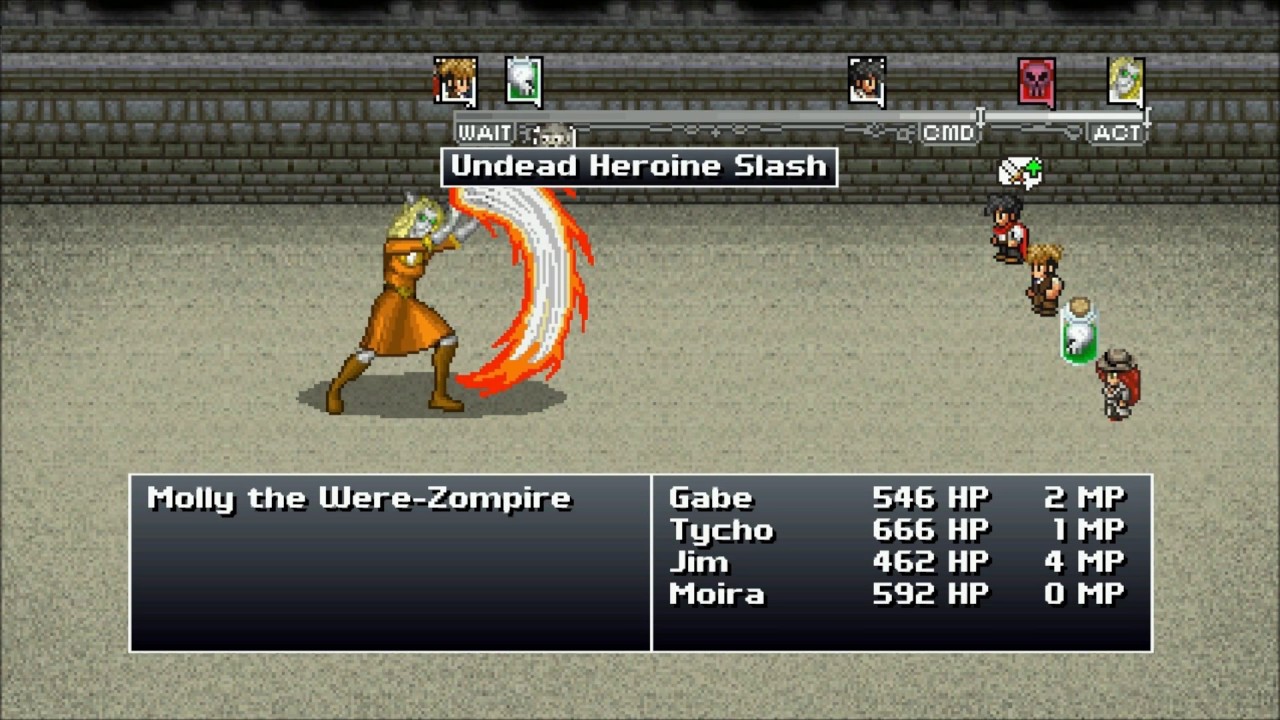
            Zeboyd decided to break up the formula as well as update the graphics on their game engines.  Penny Arcade 3 featured a class system, with such classes as crabomancer, hobo, gardener, soothsayer, etc.  It allowed players to mix and match up to two classes, along with their own abilities for some truly unique combos.  Players could summon the apocalypse, turn into a T-rex, and summon a swarm of honey bees all in one turn.  Speaking of turns, the game features an active time battle system that is more akin to Final Fantasy 10 than any other.  Players can see when they are coming up in the que and when the enemies are and, interestingly, can disrupt enemy movements to alter the order.  Also, enemies can be seen on the map, so random encounters are not a problem.  The combat is fun, fast paced, and allows for some bizarre ways to play the game.  There are also bonus dungeons near the end of the game and different filters to apply to the game, such as turning all the characters into girls or furries.  It's pure insanity.

Yes, that's a T-rex and a skull in a jar fighting the Thinker.  This game is crazy.
            For Penny Arcade 4, the same battle system was used, though the class system was replaced by a pokemon-esque system of raising companion monsters.  The humor from all their previous titles are intact, however there are some odd touches that add a bit of darkness to the humor.  More than that, the graphics for this title are simply beautiful, with players visiting some of the most unusual of places, such as a giant tree with a zoo inside it, the inside of a monstrous train that is literally alive, with guts and everything, and a temple run by different incarnations of the same guy.  Stiernberg really had some fun with this one.  The game lacked some of the extras of previous titles and the lack of random encounters made this and Penny Arcade 3 harder, since grinding was not an option, but on the whole, they were great games.

Yeah, have I mentioned these games are gorgeous yet?
            Ironically, for all my praise of these games, I dragged my feet with playing them.  For me, Zeboyd games are always good.  Not necessarily great, but good.  They are solid, innovative, wonderful...but none of them have really captured my heart the way Chrono Trigger or Final Fantasy 6 have.  I've always enjoyed my time with them, because they are fast, fun, and quirky, but...well, I suppose it's unfair to compare a game built by two people to the best of Square in its hey day.

            Interestingly, Zeboyd does not produce the music for their games in-house.  They do not have a dedicated composer, so they take to the interwebs and use music from indie musicians.  What is perhaps more amazing is that all the tunes work.  They all fit the game and the settings and are often quite beautiful.  Kudos for their choices.

            Zeboyd seems like it's here to stay.  The only cost for the team is their equipment and their own upkeep.  With two developers, that's not terribly much.  And it allows them to continue selling their titles for dirt cheap and getting more good will with the gaming public.  Of the few companies I trust for quality, there are only 3 at present who I would buy any game from on release day.  Vanillaware, for making some of my favorite games ever, Mistwalker, for creating spiritual successors to Final Fantasy, many of which stand side by side with their older brethren...and Zeboyd.  Zeboyd games may not move me like Mistwalker games, but...they are always, ALWAYS good.  Always worth my time.  And always dirt cheap.  Zeboyd is a product of good will and effort.  They have earned my trust.

Zeboyd may not be Last Story good, but they are still damned impressive.  Hell, almost NO ONE is Last Story good...
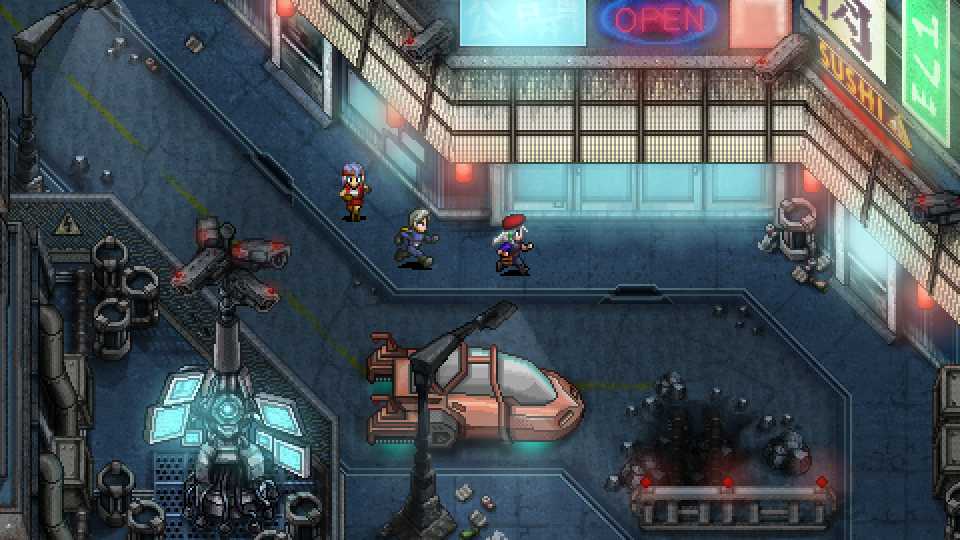
            What does the future hold for Zeboyd?  Well, they recently went to Kickstarter to fund a sci-fi Phantasy Star-esque space RPG, which looks to have sprites and graphics very close to those of Chrono Trigger.  Perhaps they are going to try and butt heads with giants.  All I know is that I helped fund it and that they're working, even as this post goes up, to get it ready.  Be on the lookout for Cosmic Star Heroine.

You can't tell me that doesn't look sweet.
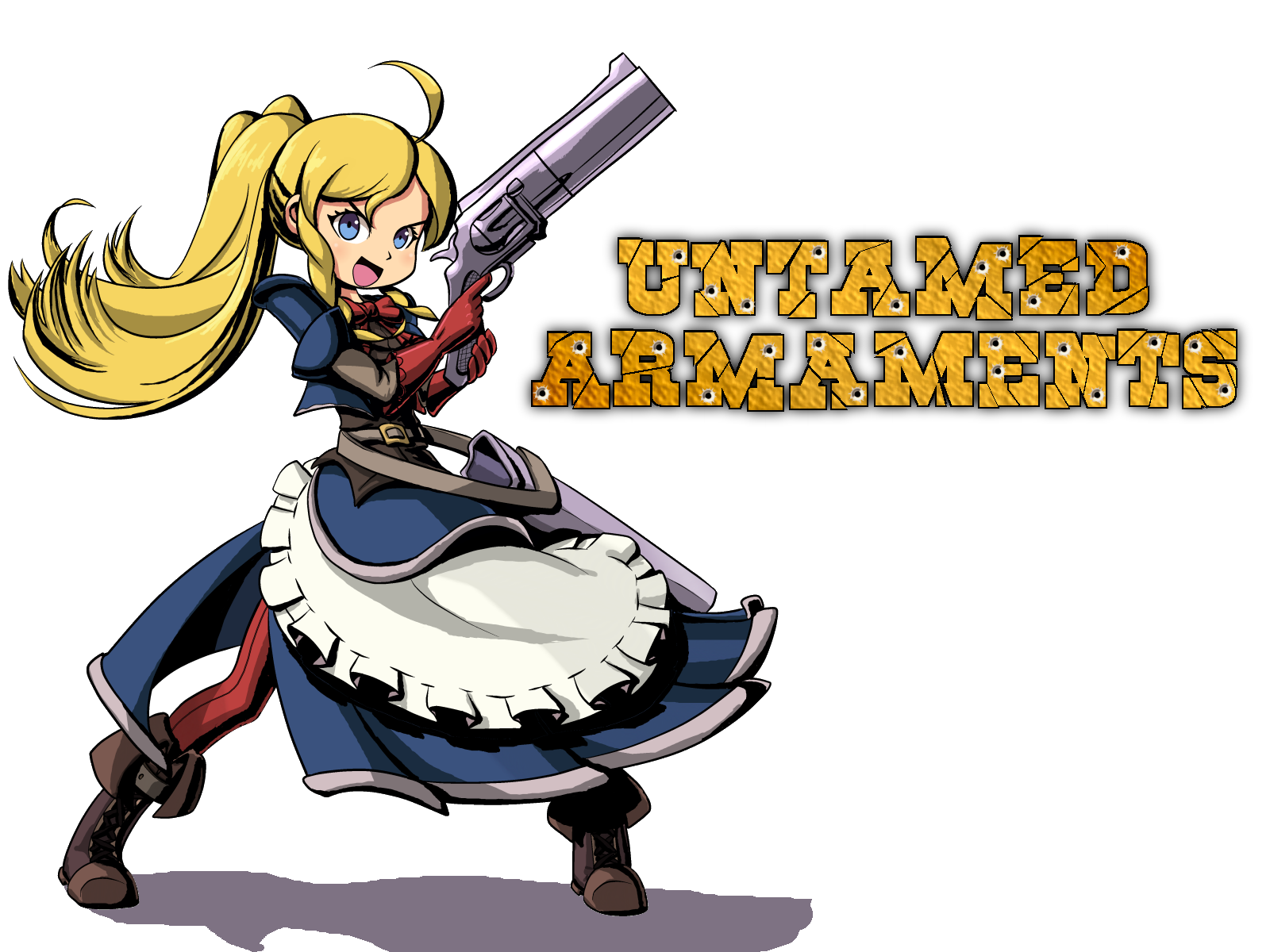
            Zeboyd also announced their next sequel, Untamed Armaments!  On April 1...so, yeah, no.  However, that does lead me to one of my closing discussions about them.  Both Boyd and Stiernberg manage their home website, as each is co-owner of Zeboyd, and their discussions on the industry are insightful and amusing.  Even when not making games, these two are willing to offer gorgeous art and common sense on the madness that is the games industry.  For example, with Phil Fish's retirement, they discussed the nature of being in the public eye and, without pointing fingers or making anyone feel bad, kind of agreed that it's better for everyone to just be nice(Everyone.  Not just developers.  Journalists, reviewers, fans, EVERYONE.)...which may sound childish or simple, but the way they put it was simply amazing.  Also, there used to be a kickstarter report, where Robert Boyd would give thoughts on certain, special kickstarters that he thought were worthy of attention.  I rather miss it, as it helped me find some amazing projects to fund.

Not sure what's sadder...that Zeboyd actually made me think, for a while, that they were making this game...or that I know and own the game this title is lampooning.
            Zeboyd is the whole package.  Insightful, mature, intelligent, and yet still humble.  They do not ask for a fortune for their games, but instead want others to be able to play them.  They treat the RPG genre with respect, while still modernizing it in ways that will please rather than enrage fans.  And they do it with only a shoestring budget and two developers.  I'm including the links for the Breath of Death/Cthulhu bundle as well as Penny Arcade 3 and 4 here, because you SHOULD buy them and play them.  They are dirt cheap guys...c'mon...we can find like 3 bucks in our couch cushions...  Also, this is the link to the main website.  Zeboyd is a great place to look for insight on the industry as well as updates on their games.  Give them a look.

            While you guys haven't breached my gaming top 10 list, you are a beacon of light in the darkness and everything that a game developer should be, now or in the future.  Zeboyd Games, I salute you.  If you continue giving us great JRPGs till your day of retirement, you'll hear no co