Saturday, July 12, 2014

Creator Spotlight: Matt Gilgenbach


            Usually, when I talk about creator spotlight candidates, they have a special connection to me.  I talk about both their past, accomplishments, and my personal story in regards to how I came to be acquainted with the developer.  However, this week is a bit different.  I've only played one game by this man and it's not the one I intend to talk about.  So, why am I talking about him?  What gives me the right?  Well, because even if I never played his games, I'm glad that they exist.  Ladies and gentleman, this is Matt Gilgenbach.
Meet Matt Gilgenbach of 24 Caret games

            Been a while since I did one of these, huh?  Well, I wanted to talk about this particular developer because recently, I gave up on a game called Call of Cthulhu: Dark Corners of the Earth.  Gilgenbach didn't make this one, but hear me out, I'm going somewhere with this.  Call of Cthulhu...is just awful.  It had a spark of brilliance in it, as it stayed relatively true the idea of alien horror invading the world we know and our mind slowly eroding to compensate that is a hallmark of H.P. Lovecraft's work.  It very much matched the pulp fiction culture of the time, with the hero being a noir-esque detective investigating strange goings on that led to the discovery of alien nightmares beyond all imagining.  I'd even go so far as to say the muddy graphics helped in this regard, giving a bleak feel to the game, and the atmosphere was both very alien and lonely in places, but also claustrophobic and paranoid when it needed to be.  The story is also really amazing too, mixing Dagon, Call of Cthulhu, Shadow out of Time, and Shadow Over Innsmouth together in a blender.  However, it is hampered by incredibly poor controls, level design that is frustrating to deal with, a huge number of game breaking bugs, and a frustration factor that makes the game nigh unplayable as a horror title, as the first time a mob of sick, cultish townsfolk chase you, it's scary, but the fifteenth time you deal with it, it becomes annoying.

The Alien horror of the deep ocean mixes with the great atmosphere of Lovecraft...at first.  It quickly gets frustrating though.
            Slowly, I grew to hate Call of Cthulhu, as it was a frustrating game that I was unwilling to slog through for the tiny, MICROSCOPIC bits of quality I could find.  However, I love the work of H.P. Lovecraft...and after giving up on the game I realized that while I hated it...I was glad that it existed.  Because it meant that Lovecraft COULD be done in game form...hopefully it could be done better next time.  It showed that something had value in being created.

Meet Call of Cthulhu's game breaking glitch.  If you don't know exactly where to point and shoot this scope, the game is unwinnable.  Problem is, there's no indicators of where to shoot.
            This brings me to Matt Gilgenbach.  Gilgenbach has a rather skewed view of the world, having near crippling OCD which have led to nightmares when sleeping and difficulty adapting to normal life when awake.  This led to Gilgenbach having depression, even prior to his entry into the game's industry.  Despite this, however, Gilgenbach got his start in the AAA industry, making games such as Ratchet and Clank: Size Matters for the PSP.  Ironically, this is the only Gilgenbach game I have ever played.  It was a decent enough title that, while fun, basically did nothing new and I didn't care whether or not I played it.  Gilgenbach would have fallen off my radar completely if not for the fact that he ditched the AAA industry to go indie.  On the indie scene, Gilgenbach basically defined games that, whether you love them or hate them, you can't help but be glad that they exist.

While fun, the only Gilgenbach game I've ever played is...kinda generic and forgettable.
            After leaving the AAA industry, Gilgenbach created Retro/Grade, a shooter that played in reverse.  You have to basically intercept and unshoot your shots, while avoiding the shots you originally avoided so that the enemies can unfire them, in a mind bending bit of temporal paradox.  Interestingly, it is also a rhythm game, which adjusts the music based on the shots you intercept to create different tunes.  I was both visually stunning and an interesting twist on a tired formula.  There are plenty of shooters, even rhythm based shooters like Rez, however it was an interesting idea to have the game playable in reverse.  What's more, you could control the game with a guitar controller from Guitar Hero.  The game was, sadly, a commercial failure, but looking back, I can't help but approve of the experiment.  Gilgenbach created a game that he had passion for and, rather than following the leader and trying to make the next Minecraft or a retro 16-bit throwback game, he created something wholly original and interesting.  That's admirable, even in the indie scene, and it provides an interesting point of reference to designers in the future to play around with.

            Unfortunately, the failure of Retro/Grade alongside Gilgenbach's OCD caused him to spiral into a period of even greater depression.  However, like a true artist, Gilgenbach tried to take what he had experienced, the hell of his OCD, his nightmares, and his depression, and make something out of it.  Make a game out of it.  And this is the reason I decided I wanted to talk about him.  The game he made...is Neverending Nightmares.

Oh...oh wow...so...anyone else not sleeping tonight?
            Confession time.  I have an odd fascination with horror games.  I don't really like being scared, but I think that horror titles can explore a part of the human experience that few other games can and thusly are unique, powerful experiences.  This has drawn me to a few select ones, like the Silent Hill or Clock Tower games...and it's what drew me to Neverending Nightmares.  The game appeared on Kickstarter when I was looking for fresh new experiences to support and fund.  While I didn't fund the game, I kept an eye on it, just in case...because like with many games, I wasn't sure if I wanted to play it...but I DID want it to exist.

Yes, I'm glad this to exists.  The hell is wrong with me?!
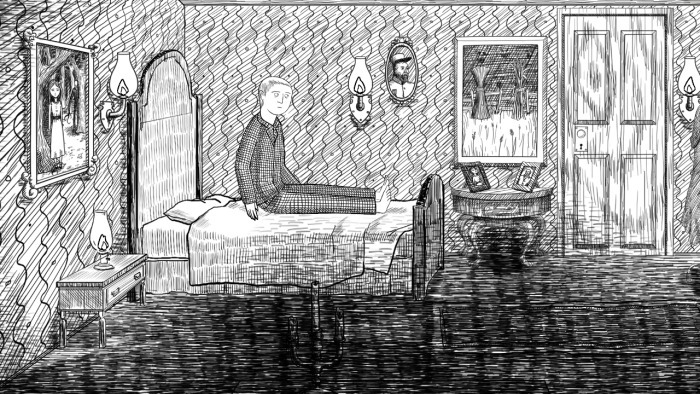
            Well, Neverending Nightmares reached its goal and recently released an alpha build for backers, which I got to see through the Let's Player, Lotus Prince.  The game is sublime.  It features a beautiful black and white art style with highlights of red for blood and with a number of brilliant mechanical and storytelling ideas. 

            The game's basic focus was on Gilgenbach's OCD nightmares, which frequently had him waking up, only to still be asleep and trapped in a nightmare, a cycle which would continue until he eventually did wake up.  Here, this is how you handle both progression and death.  Dying will return you to a bed where you wake up from your nightmare...only to realize you're still trapped in an entirely different nightmare.  When you complete a section, you either die or wake up...only to find you are worse off than before.  It's an interesting idea that gives respawning a very organic feel and allows the players to explore the world without feeling like they're doing the same sections over again, since each nightmare is, in the context of the game, new.
Waking up provides no escape from the nightmare that is life.

            Neverending Nightmares does what all good atmospheric horror games do.  It will create an aura of unease around the player, without the need for musical stings or jump scares...at least not as much as other games.  During Lotus Prince's play through, he found a room filled to the brim with creepy dolls, many missing their eyes, all staring at you.  There are no musical stings or camera changes...the game lets them sit there.  The player believes something bad will happen...but doesn't know when.  This is the feeling of true terror and helplessness, making us want to run from the section.  Also, only objects highlighted with red blood can be examined, meaning that to advance in the game...you have to subject yourself to the horror and the threat of bodily harm or mutilation that is forthcoming.  The trailer even shows a large degree of disturbing imagery, including a man prying a bone out of his cut open arm.  The art style is not meant to be realistic and is hand drawn, but because of the 2D and black and white aesthetic, it is suitably unsettling, especially during the death and mutilation scenes.  The lighting however is one of the game's best features as the darkness really feels alive, chased away only by a candle you can hold or the few lights on in the game...it feels oppressive, crushing...and absolutely perfect.

Oh god...why did it have to be dolls?! O_O
            I've only seen two of the proposed six sections of the game, the first being a house in the woods where things are...a bit tense, to say the least.  The second is a mental asylum, with creepy patients roaming the halls.  I adore Neverending Nightmares.  However, I don't know if I will ever actually play it.  The game is scary.  Scarier than almost any game I've seen in a long time.  It draws on a primal fear, born of Gilgenbach's own human experiences and uses that fear as both a storytelling medium and a driving force for the player.  I don't know if I can handle that.  But even so, I am still so glad that Neverending Nightmares exists.

Have I mentioned this game gets DARK...
            I first encountered Matt Gilgenbach as a developer trying to sell a dream.  He basically laid out that if he couldn't get Neverending Nightmares funded, he'd have to give up on it, not having the time or the money to do it otherwise.  He wanted to turn his fear and his experience into something constructive, that others could understand and enjoy in the form of a game.  And, I was captivated by it.  I didn't want to play it, but that didn't mean I couldn't recognize quality, passion, and something truly amazing.

By surviving our nightmares, we can grow stronger.
            I am glad that Neverending Nightmares exists because like Retro/Grade or Call of Cthulhu, it offers something unique and interesting to the world.  By extension, I'm glad we have developers like Matt Gilgenbach.  Someone willing to take a risk on a dream and work towards making their own nightmares something others can actually see and enjoy.  I've heard that sometimes art merely exists for art's sake and I believe that Neverending Nightmares is definitely art.

Regardless of your stance on art, the game has polish.  Look at that...I didn't even notice that at first!
            I do believe that I will buy Neverending Nightmares at some point.  It's an interesting game that has captivated me with it's art, story, and tone.  However, that is a ways off yet.  For those who want a more immediate interaction with Matt Gilgenbach, you can find Retro/Grade here, the completed Neverending Nightmares kickstarter here, and the Steam Greenlight page, with playable demo, here.

Well done, sir.  Well done.
            As a final word to Gilgenbach, I'd like to say congratulations.  In spite of struggling with your nightmares and your depression, you've created something truly amazing that, no matter how well others receive it, is marvelous simply because it exists.  And so are you, sir.  I look forward, Mister Gilgenbach, to seeing what else you can come up with in the future.

Dream on, dreamer.

Thursday, July 3, 2014

Video review of Sang-Froid

Hello!  I know, I know, I promised a creator spotlight soon, but I got enamored with the idea of making my own video review for a game I dearly love, Sang-Froid.  So, I did.  It's amateuristic, certainly, and has the fraps watermark because I'm just a cheap bastard with no good equipment, but I did this because I wanted to give it a try.  So, please give it a look.  It's basically one of my discussions, but in video form.


Will I do any more of these?  Probably not, as even this short, 5 minute video took up almost 5 gigabytes of video data before I got it trimmed down to where it is.  It's just too time, processor, and space intensive for me to do it regularly.  Still, I might give it a shot again.  Who knows?  Not like I'm doing this for profit, so I could care less about the amateur quality of it.

Anyway, hope everyone got a kick out of this.  Till next time.

Wednesday, June 25, 2014

To Walk Among Giants: Empowering a Play To Make Them Feel Strong


             I'm back from NYC and since we discussed the magic of how to make a player feel weak and helpless last time, through disempowerment, let's talk about the opposite this time.  Empowerment is pretty easy to understand on a lot of levels.  People like to feel strong, to feel capable.  Often, they aren't strong or able to feel proud of themselves due to illness or circumstance in real life, but a game can give them that feeling.  It can make them feel good about themselves.

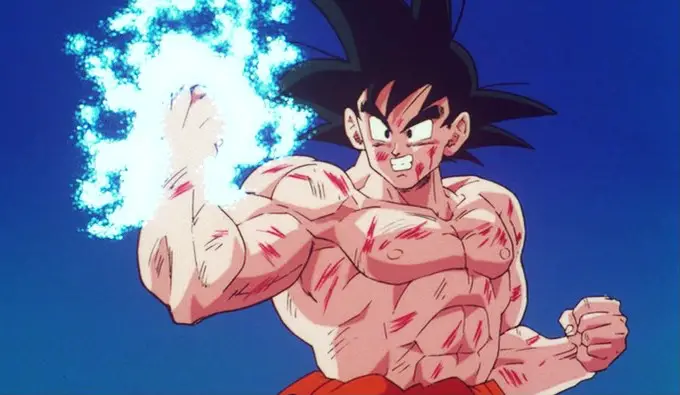
It would feel good to be Kenshiro, punching a tank to death...games can give you that awesome feeling.
            Sadly, while it is easy to understand why empowering someone is so enchanting, it is often botched by those who attempt it.  See, there are a number of ways to empower a player and give them that feeling of strength and pride in themselves.  However many game designers fall prey to cliche or the idea that by simply making a player hard to kill or a game easy that it will have the same effect.  This is far from true, because hollow empowerment, an experience which tries to empower but which is plainly false and not convincing, is even worse than disempowerment.  It doesn't just make you realize your own situation.  It makes you feel like a sham for trying to be strong.  Real empowerment doesn't make you feel ashamed for trying or hollow or empty because it doesn't live up to the experience promised.  It gives you a real feeling of weight behind your actions and the play you make.

A shell of empowerment will only make you feel a shell of yourself...it will make you feel weak, not strong.  That must be avoided at all costs in games meant to empower.
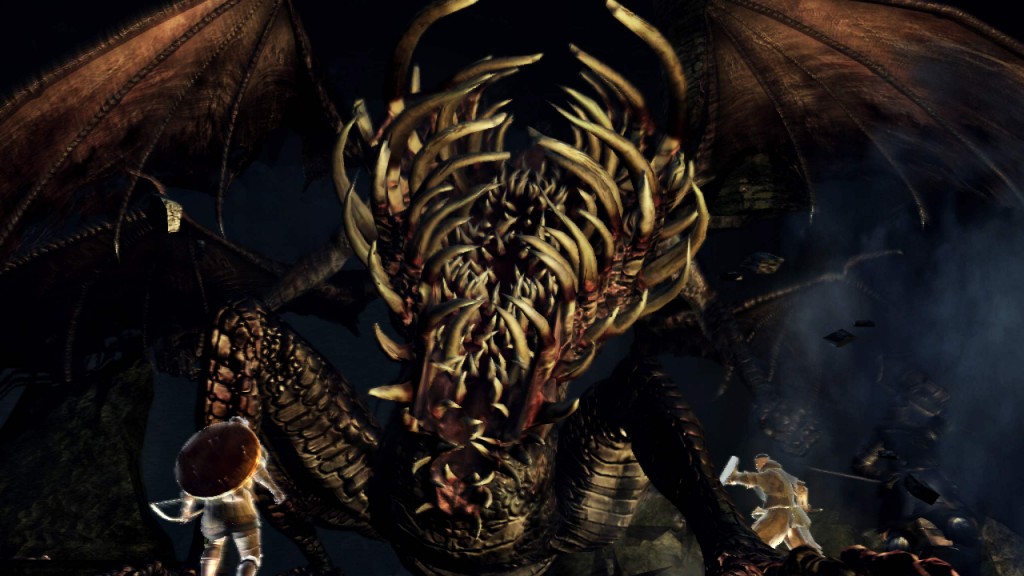
            There are a number of very good ways to empower a player.  In fact, many games ramp up the difficulty for the sole purpose of this, as struggle and a little bit of disempowerment make an eventual victory even sweeter.  Dark Souls 1 and 2 are games that have the potential to be very frustrating, but the difficulty actually makes the victories you have very satisfying.  You start out at a decent power level.  You're not naked, unless you choose to be, and can fend for yourself.  However, the bosses and many enemies you face will be better equipped or just massive.  You will feel small and weak in comparison, but the game is built in such a way that you can win, no matter how weak you are, if you are able to recognize patterns or train yourself up.  It feels AMAZING to down a demon that can one shot you and which is 2-4 times your size.  So, while it can be disempowering to come across such challenges, building a game that is challenging, but balanced enough so that you can overcome it, makes victory feel all the more sweet.

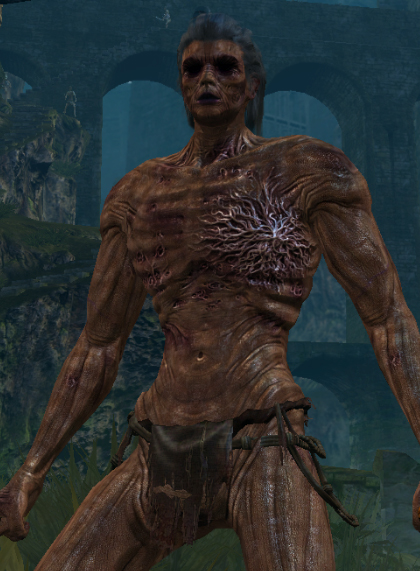
This thing is just huge...downing it for the first time, I felt like such a bad ass.
            Personally, my favorite method of empowering a player is through sensory feedback.  Obviously, games cannot cater to all five senses, but sight, sound, and even touch can be catered to in video games and if they are sufficiently satisfied, then the player will actually feel closer to the character onscreen or more engaged in the action.  This will make their power feel all the more real, all the closer to home.  Warhammer 40K: Space Marine is a great example of sensory feedback.  The actions on screen are all beautifully animated and make the player feel strong, showing the overwhelming strength of the space marine you control compared the hordes you are fighting.  However, I would argue that sound design is where this game really shines.  You see, the standard weapons are bolters.  They are guns which have explosive shells and whenever one is fired, the sound is very satisfying.  It doesn't sound like a tiny pistol or even the insubstantial racket of a machine gun, it feels very solid and strong.  It's a nice blunt burst, followed by a tiny explosions to remind you of the power of the gun.  In fact, at once point, you get a machine gun version of the bolter called a twin combi-bolter, which doesn't sound like a machine gun at all...it sounds like something more akin to a minigun coupled with a rocket launcher.  Ironically, it's pretty weak compared to the other weapons later on.  However, I stuck with it for a while because the sound was so satisfying and it just felt good, hearing it whenever I fired it off in rapid succession.  With a rumble controller, games like Space Marine or other titles can even give you a touch sensation feedback.  It can help the game give you a real feeling of the weight of your actions.  This kind of sensory feedback can help you to feel strong and empowered because it is both satisfying, making the actions on screen resonate with the players, and it is also able to give them a feeling of importance through the sheer force of the senses.

The look, the sounds...everything in this game assaults the senses...and it feels good.
            A sense of realism is not necessarily needed when trying to empower a player.  Yes, I've talked about making the player feel more in tune with their game avatar through the senses, however that doesn't need to be grounded in reality...and indeed, most games feature physics or players wielding weapons that would be impossible to use normally.  However, there needs to be a feeling of weight behind the weapon.  Not heavy weight necessarily, but some weight.  For example, one of the satisfying things to do in Devil May Cry is to juggle an enemy with your guns.  To hold him up in the air and keep him there with gunfire.  If you took this out, the guns would have almost no weight, because they don't stagger enemies who are standing and if they couldn't hold an enemy in the air, they would have no power behind them.  They'd still do damage, but they would feel weak and would not empower the player.  Likewise, any game where you hit something?  There needs to be a feeling of weight behind each attack.  Light attacks can be somewhat weightless, since they are meant to be quick, glancing blows, but if a player throws a heavy attack it doesn't feel like it does anything, then you've done something wrong in designing the game.  One reason Dark Souls is so deep is because each weapon has weight behind it.  A different weight.  So, some attacks will be slow, laborious affairs that will shake the ground or stagger an enemy when they hit.  This gives them a feeling of weight that makes each action meaningful and allows the player to feel as if they are stronger than they are.  Sadly, Splatterhouse doesn't always do this.  I love the game, but the fists feel a bit pointless...weapons and the super form are a bit slower in their swings and do more damage/stagger the enemy and they feel satisfying because of it, however the regular fists are a bit unsatisfying.

Imagine how much less bad ass you'd feel if your guns couldn't do this...the weight of those attacks matters.
            I would even go so far to say that this does not just extend to games where you fight.  A game like Harvest Moon or Rune Factory can give meaning to your farming by making the swing of your hoe feel heavy or the flow of your fishing line light because it's only a bit of wood with twine attached to it.  These different feelings of weight add, not necessarily a sense of reality, but a sense of value to the actions.  A player who feels their actions have value is a player who feels empowered.  It makes them feel strong because what they are doing has meaning in the world of the game.

If each swing of the hoe has meaning and value, then the game will make you feel good.
            Another important thing to think about is challenge.  Now, I've already talked about how disempowering a player only to have them rise from the ashes stronger than before can be a great way of empowering them, however challenge as a whole is a very important aspect of game design to consider.  Many game developers think it's fine to just let players follow a linear, easy path to the end, leading them by the nose so that they can see the sights and be done with it.  However, without challenge, without a feeling of resistance by the game, then the victory feels meaningless.  It is hollow.  I don't think a game should be so brutal that players cannot win, like say Ghouls and Goblins or Silver Surfer on the NES, because those games are so unfair in their design that it feels almost pointless to try, because without hours of work, you can't even advance past the third or fourth level.  However, don't make it so easy that the players feel like they're being given a win.  They have to earn it on some level, otherwise it won't be empowering.  Tiny Barbarian DX is, in my opinion, a decent balance in this regard.  The game gives you infinite lives, so you don't get kicked back to the beginning arbitrarily, however when you die it puts you back to the start of that particular section.  You still have to win each boss battle with no more than six pieces of health and each section is still a platforming and combat based challenge.  It requires skill and work to get through, but it's not necessarily hard, because you can try as often as you want.  I think this balance is important in making a game both empowering but also accessible to players who may not be the best in terms of skill.

Tiny Barbarian DX may not be hard, but it ain't easy.  This game strikes a nice balance.
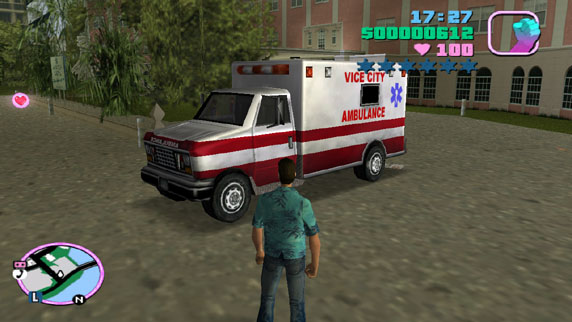
            Choice is another aspect of game design that allows for a player to be empowered.  I am NOT talking about arbitrary choice.  Not talking about a button at the end of the game which gives you either ending A or ending B.  I'm talking about meaningful choice.  Doing something that feels like it matters.  Sometimes these choices can be organic.  Demon's Crest lets players go to levels in whatever order they choose.  Some of these levels will be impossibly hard than others, because you won't have the skills you need, however the choice, where you can go and the ability to not just stick with it, but change it, is powerful.  It lets a player feel in control.  This is why sandbox games are so popular these days.  Because while you will have a story based mission, the plethora of side missions and open world interaction, organic interaction like driving a cab or an ambulance in Grand Theft Auto, allow you to play your way and gives the player the feeling that they are in control of their own destiny.  That feeling of choice and power over how they play in a game like Skyrim can be very empowering, because they are not restricted, like they might be in real life.  In real life, we need to work, sleep, go to school, do assignments, whatever.  In a game, being able to choose not to sleep, or choose to go against the beaten path or the established formula...it feels refreshing, because it gives us a feeling of freedom we don't get in normal life.  And that's why choice is so empowering.  It gives us the power to do what we cannot in normal life.

Choose your own path, be it the path of the crook or the path of the savior.
            Now, I have given several examples of ways to empower players.  The feeling of weight behind actions, choice, sensory impact, disempowerment peppered with hope for the future, challenge, etc.  But don't try and shoehorn everything into one game.  These are ways of empowering a player, not a checklist.  Every game needs to try and do it in its own way and sometimes that way may be derivative or even completely unique from these examples I'm given.  They don't all need to be included, but I'd say that at least one or two couldn't hurt.  Because, for the player to feel empowered when that is the game's intent?  That's important...not just for the designer, but for the player as well.  It can help them face the demons they're dealing with in their life by giving them an outlet where they can build confidence and be strong.  The most important thing a developer can do, is play a game and ask if they feel strong while playing it.  Not, is the story good, or is the music beautiful, or are the graphics AAA.  Ask if you feel powerful while playing it.

If you feel powerful, you'll be less afraid of the demons, real and make believe, that assail you.
            I recently bought a game called Risk of Rain for the PC and for a while, I just felt weak playing it.  However, it had many different characters with different play styles to choose from and eventually I found one I liked.  A poison beast called Acrid who had to fight up close so enemies could easily wail on him, but he could destroy great swathes of them if he poisoned them, since the poison was strong.  Now, this mixed both a feeling of challenge, choice, and something I can't quite put my finger on to make me feel tough.  I was well aware the enemies could kill me easily, and I did die, but I walked through them like a giant, laying waste to all in my path for a while, even the large bosses.  It just felt good.  And if a developer can play a game and say, I feel good...I feel strong...then they know they've got a winner on their hands.

I may be small, but my poison is fierce >:)
            Empowering a player may seem like a no brainer, but making it feel genuine is actually pretty tough.  It's something I encourage not just developers, but players to think about.  Because we all need that boost to feel powerful sometimes and nothing is more pitiable than trying to unwind and feel strong with a game, only to feel cheated, frustrated, and weak by the end.

            I enjoy games that can genuinely make me feel powerful, because many games will actually go that extra mile to not only make you feel strong while playing, but to make you feel strong even after you stop.  By making a hard choice or doing something challenging, you can feel the empowerment of your game and avatar even after you've stopped playing and it can help you through your trials.

We all need to feel powerful sometime.  Confidence will help us survive the trials ahead...so empower through gaming.
            Disempowerment has its uses, for story, to teach us about fear so we are ready when life throws challenges our way, or just because we want to feel low for a bit...but empowerment, I believe is just as if not more important, because it helps us with living our lives.


            I hope you've enjoyed this discussion on power fantasy, both disempowerment and empowerment.  Next week, I believe we'll go back to a creator spotlight, like I promised so long ago, however I have to say that alongside writing for my other blog, I'm also preparing to go to China soon.  So...my updates may be a tad sporadic.  Sorry if that's inconvenient, but it is what it is.  I have my priorities after all.  I don't intend to stop, but if I need to take time to get done what needs doing, I will.

            Thanks to everyone who continues reading this silly little blog of mine, even now.

Saturday, June 7, 2014

Insignificant as an Ant: The Magic of Disempowerment


Okay, so I'm not doing a creator spotlight this week, nor probably for the rest of June.  This doesn't mean I don't want to, it means I have something else I want to talk about.  This week and the week after I get back from New York, we will be spending doing a talk about power fantasies in video gaming.  The two sides of power fantasy.  Empowerment and this week's topic, disempowerment.

Insignificant as an Ant: The Magic of Disempowerment

            Extra Credits brought up an interesting bit of discussion during one of their segments recently, talking about the Cthulhu mythos and how so few people understand what it means.  It's not about monsters or beasts, it's about the abject horror of being so small, so infinitely weak that the monsters we face are beyond our understanding and that we are as insignificant as an ant to them.  Or even less so.

            This got me to thinking about disempowerment in video games.  There are whole genres of game design which seem to want to disempower the players, such as Outlast or Silent Hill, and many games which use disempowerment as a tool, such as Sang-Froid, where you are disempowered for the purpose of storytelling or character growth.  But why do we like disempowerment?  Why do we play games that may make us feel afraid, insignificant, or powerless?  Well, lots of reasons.  Many people are control freaks and the idea of losing control is appealing to them as a way to relax and let go of the stresses of the day, even if they have the ultimate power, the power to turn the game off.  Others Like to start off weak so they feel much better when they become strong.  Others still like the adrenaline high...the feeling of struggling to stay alive in spite of all that is stacked against you.  Count Jackula actually put it best for me.  We all need to feel fear, to understand what it is to be weak, because then, when we are faced with true horror in our real lives, we will not flinch.  In many ways, they teach us to cope, to handle obstacles, and to find hope.

We put ourselves through fear to better prepare ourselves for the coming nightmares.  Or perhaps because we just enjoy it.
            Whatever the reason, there is an art to disempowerment.  It can be handled in a number of ways.  One way is to not give the player any power to begin with.  To place them in a position of danger and give them no way to cope with it, other than to run.  This gives a modicum of control to the player, namely the ability to run and hide, but prevents them from acting like...well...a human being.  Because, no matter how scared or weak we are, some of us, when cornered, will grab a pipe and start bashing away at the cosmic monster or the psycho killer trying to destroy us.  While flawed, I believe this method has some interesting applications.  The ultimate goal is to make the players feel helpless, but to not make them feel like a pawn of the game.  These experiences are generally very, very linear, since your actions are so limited.  These are story driven experiences, not sand box games.  These games give players the illusion of choice, and thus the illusion of hope, when in reality they are just pulling you by the nose towards a goal, with the atmosphere around you and your own mind starting to play tricks.  Outlast and Amnesia are games like this.  You cannot fight, your inventory and ability to run/heal are very limited, and you will always follow the same path each time you play.

You have no power in Outlast.  All you can do is run.  Try to outlast your hunters.
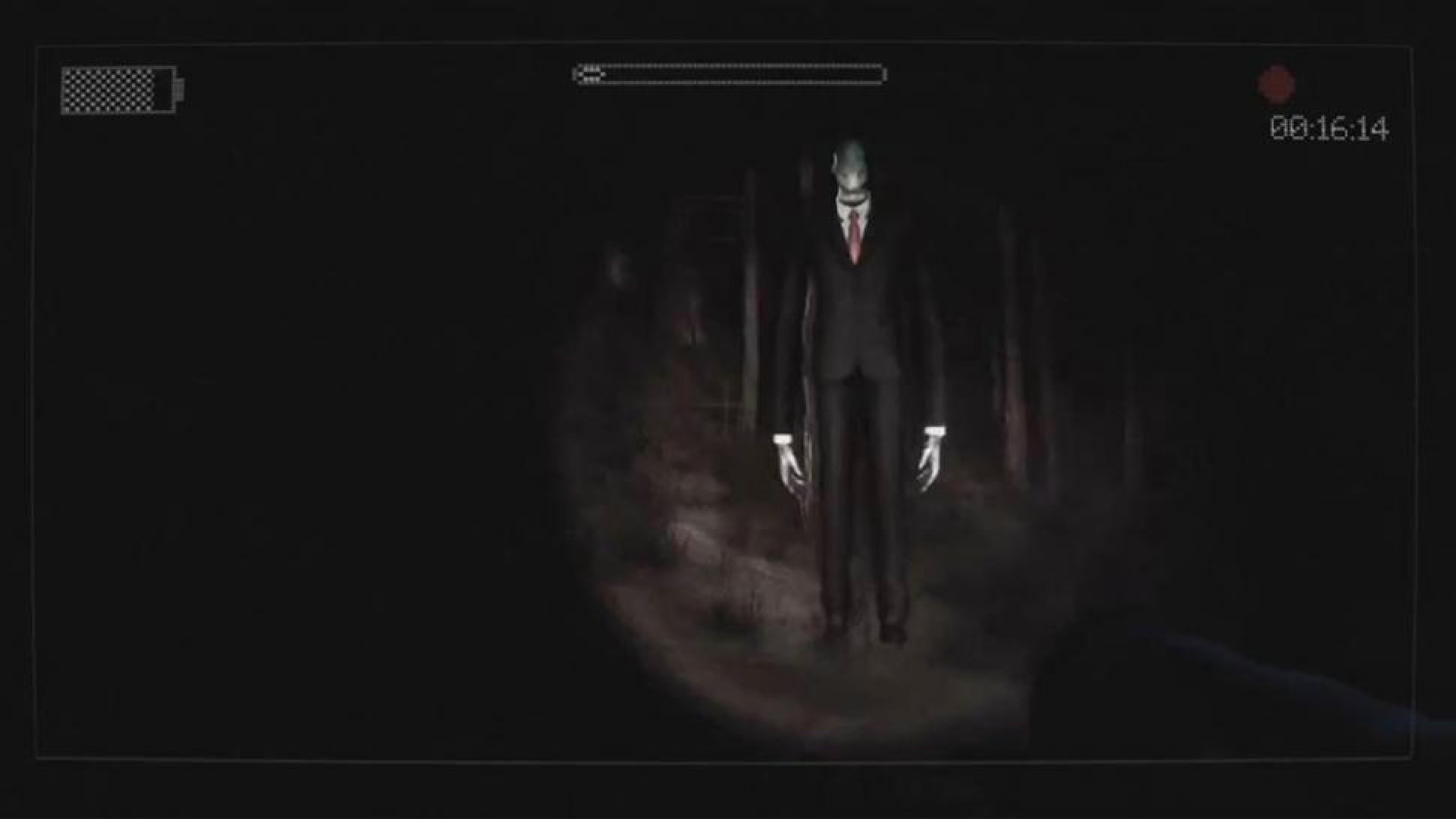
            I heartily disagree with this method of disempowerment because while these games can be quite horrifying, I think they make a cardinal mistake.  Outlast, Amnesia, and Slender, are all games based around running, hiding, and light puzzle solving in order to try and evade some horrific monster or psycho killer.  One way that disempowerment fantasy works is that you are put under a threat and a fear and you wish to avoid it.  Typically the fear is about death.  However, Outlast, Amnesia, and Slender usually kill you right at the end of the game anyway.  Now, this isn't necessarily bad, as the point of these games is, as I said, story driven.  To make you feel horror and fear in regards to the story being told.  However, the flaw is that if you just die at the end...what is the point?  Why are you being pushed forward so much if once it is all over, you simply die?  Why do those other deaths matter any less?  The answer is, of course, so you can enjoy the journey and see more horrific sights.  At the end of the day, I feel it's a bit of a cheat, however, because they don't really give resolution.  You may get to a point where you cannot run any more or where there is nothing else left to do, however we don't get an end to the overall story, usually.  It just ends.  Worse is that during these death scenes at the end, your ability to run or struggle is taken away, robbing you of your control and removing you from the body of your avatar.  This kind of takes away the disempowerment, because you're no longer playing, you're watching.  There is a disconnect between player and avatar, as what the player may want to do is not what the game is ALLOWING them to do.  At least some players will want to try and fight, no matter how futile it is.  Taking away the control to fight, or hell, even run, removes some of the fear, horror, and disempowerment.  And I think they should be allowed to fight if necessary.  Why?  Because another way to disempower the player is to give them power, but show them that their power is ultimately meaningless, weak, or that they are truly insignificant.

Problems with games like Slender or Amnesia or Outlast are...if you're just going to die anyway, what makes this death at the start of the game any more or less meaningful than the death at the end of the game?
            The Silent Hill games are a beautiful bit of disempowerment fantasy, where the player is actually given a decent assortment of weapons, from pipes and clubs to various guns.  These can be used to defend yourself against the enemy, however it is ultimately. futile.  Why?  Because the true horror does not come from the fear of death.  The true horror is not about physical bodily harm or a monster getting you.  The true horror is about living with the monster.  About being surrounded by an unholy feeling of dread that although you could be killed at the whim of whatever you are facing, you are left alive only to suffer, for the amusement of whatever you are facing.  The Silent Hill series does this better than almost any other game, with the possible exception of Lone Survivor.  The atmosphere around you is incredibly heavy and the enemies, while dangerous, seem to have a kind of apathy towards you.  They care very little about you...not even to the point where they even need to attack you.  They will if they see you, however you know that if they all charged you at once, you'd die...but you are kept alive because Silent Hill itself doesn't care about you.  Not even enough to kill you outright.  In all the Silent Hill games, you CAN die at the end if you act in a certain way, however most of them offer a solid resolution, showing either a falling deeper into horror or finding a way out, which I believe is nice for disempowerment fantasy...it helps bring the players back to reality, so to speak, while still being a bit obscure...leaving the player wondering and making connections with their own life.
The true terror of a game like Silent Hill 2 is living with the monster that is the town.  It hates you.  But it doesn't care so much to kill you...it will let you kill yourself, little by little, because you really are insignificant.  This is what makes the game so disempowering...and so brilliant.
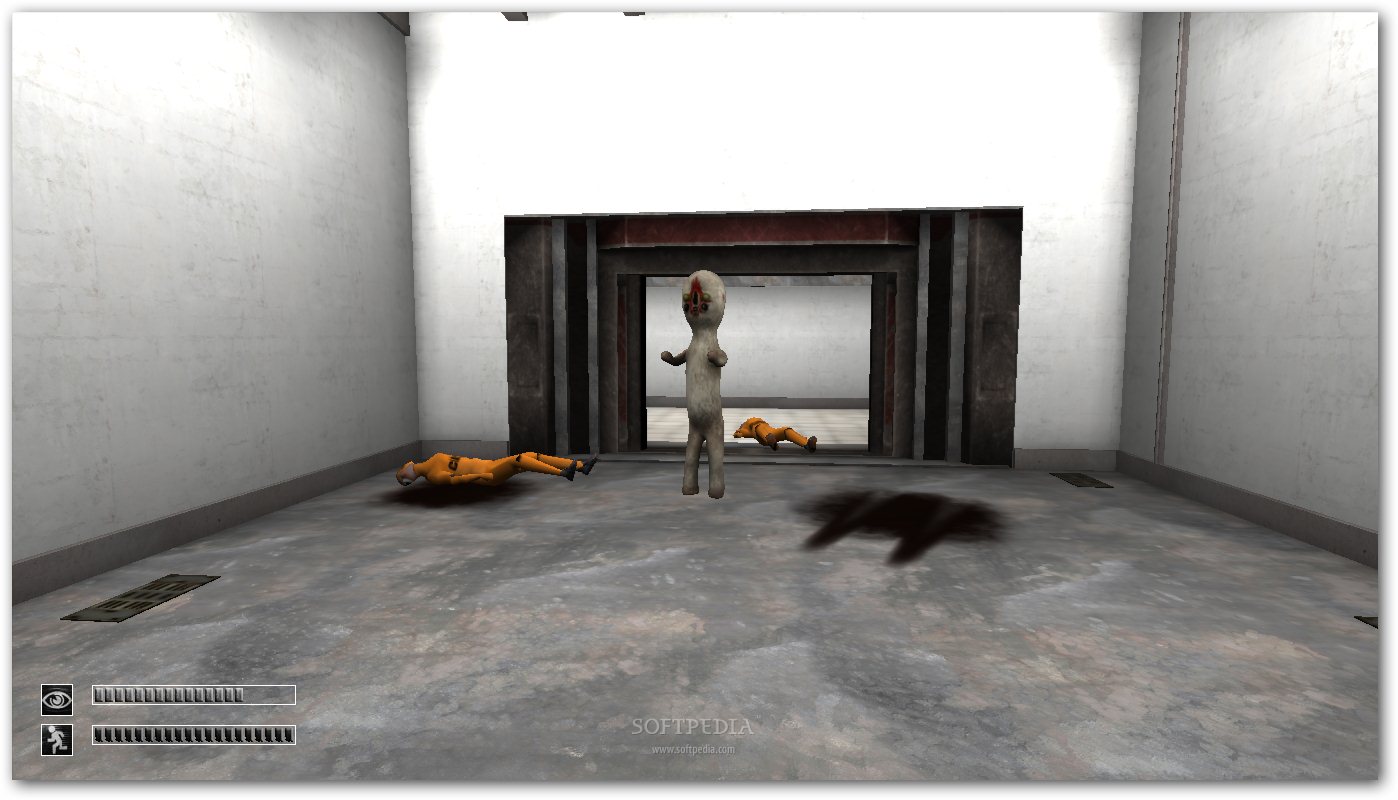
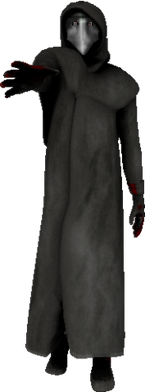
             Another way to handle disempowerment fantasy is to try and give someone something truly unknowable that they are facing.  It might be given an explanation or a synopsis on some wiki, but the creature itself is still alien to you and acts in a way no human could ever act.  This is truly horrifying, as we don't understand the reason for its actions.  It is beyond us.  Even if armed with powerful weapons, like in Prey, you can feel weak and disempowered because you cannot fathom the purpose of the enemies around you, or even if you can, you cannot reconcile it.  SCP: Containment Breach is a charming little freeware indie game that does this better than any game I've ever seen.  Using the monsters on the SCP wiki, it has creatures that are gifted with power beyond your understanding and a dark purpose that is never explained.  The horror comes from trying to survive them, such as a porcelain statue with an unblinking, painted face, which will only move when you don't look at it, like the Weeping Angels in Doctor Who.  While the Angels can be figured out and were even given a voice, the statue has none of this and haunts you, perhaps for no reason other than its own amusement.  Other monsters abound in SCP containment breach, such as the plague doctor, a creature that can pass through walls, or even a simple painting which compels you to slit your wrist and finish it in your own blood.  These are nightmares that cannot be reasoned with, figured out, or in many cases, even fought.  They are contained because of the danger involved.  These horrors would make you cringe and feel weak even if the game gifted you with a gun, which it does not, and in many ways are one exception to my rule of not letting the player fight.  When you are facing human monsters, or human-esque monsters who kill you with physical force, that's one thing.  But when you are facing a creature that kills you by infecting you with a disease, forcing you to slit your wrist, or simply hiding in your peripheral vision...what can you do?  How do you fight something that kills you by simply being?

Blink or take your eyes off the statue and you die.  It will move so long as you're not looking in its direction.  How do you fight something like that?  More to the point...what the hell is this thing?!
 
Did I forget to mention...in SCP: Containment Breach, the doll from hell isn't the only monster out there.  We have many, MANY more...
           And of course, many games try to disempower using tried and true horror cliches, such as the jump scare, the sound of people dying within your ear shot to make you feel that you're responsible or too late or what have you.  They can use gross out moments, such as filling a room with roaches or they can use gore, such as bodily dismemberment.  However, the instant you take away control from the player, I personally believe that it stops being a disempowerment game.  It stops being that horrific experience of facing demons and trying to come out unharmed, both as the character and as the gamer.  So, many times I feel these techniques are wasted.

Fear is demoralizing and disempowering...and body horror is a great way of inducing fear and making the player feel weak and scared.
            So, now that we've looked at different ways to disempower, how can we take it that one step further?  How can we improve on the subject?  Well, there are a number of ways. 

            SCP: Containment Breach, I believe has great potential because it does one thing that most horror games don't.  It adds an element of randomness.  You see, the death of horror and disempowerment is rote memorization.  The longer a player experiences a game, the better equipped they are to deal with it later.  The game stops being disempowering because you now have the power of pre-cognition.  You know what's coming and are therefore able to handle it, even if the character in game cannot fight.  When I played Dark Souls 2, I beat the game 3 times before starting a new game+.  When I got to one section of the new game, a GIANT MONSTER climbed out of the ground and began to attack me.  I was shocked and a little scared.  I felt helpless, as I wasn't expecting it.  It wasn't supposed to appear.  And it does disappear quickly enough, but the shock and surprise, not unlike a jump scare, got me.  That element of newness, of the unexpected, actually got me.  SCP: Containment Breach does this quite well.  It has randomly generated maps so that players dealing with the monsters within have the potential to find new monsters in places they thought were safe.  The game always starts and ends the same, however where it proceeds from there is different each time, and that keeps people on their toes.

Seeing something new, horrific, and scary will demoralize and disempower the first time you see it...but once the newness wears off, so too does the fear.  You have to keep things fresh...keep people on their toes...to keep them disempowered on a regular basis.
            Sadly, however, even random elements can be predicted to an extent.  No matter how random the layouts, play SCP: Containment Breach enough times and you'll eventually get used to the monsters and they'll stop scaring you and making you feel weak.  A more lasting way to get into people's heads, in my opinion, is to make their fear personal.  Now, this is limited by the hardware.  You can't have a game slamming doors or rattling walls in real life.  However, there are ways to make it feel personal nonetheless.  Silent Hill 4, for example, takes place in a person's 1 bedroom apartment.  Slowly, the apartment becomes more corrupted and your haven becomes your prison.  Since I live in a 1 bedroom apartment myself, this really freaked me out.  Likewise, in Gone Home, the idea of your family home being exactly as it should be, but without your family and with a painful story to tell can be unsettling.  A home matching yours covered in Slender man scribblings can be downright terrifying.  These personal touches can make games far scarier, because you never get used to them, at least while you're in the place that it makes homage to.  So, one way to create lasting fear in spite of being able to predict or get used to the disempowerment is to make it personal.  This is naturally quite hard, due to everyone being different, however I believe some things are universal.  If you can tap into that, then you can make something truly horrifying.

My apartment looks similar to this in terms of layout...but not nearly as much blood or rust.  Seeing this in a game...seeing my home become a nightmarish prison...it really got to me.  THANKS, SILENT HILL 4!!!
            Also, I believe that the key to disempowerment is tricking the player into feeling weak, when in fact they can do whatever they want.  Once again, Silent Hill does this very well by giving you the ability to fight, but by making you feel as if your fighting is futile.  A way to improve this is to have tighter controls.  Silent Hill usually has very clunky controls, even with the more combat focused games like Homecoming.  If the gameplay allows the player to do anything, but still makes them feel weak...then you've successfully disempowered them in the best way possible.

The trick to making a game truly disempowering is to give players perfect control...and still make them feel helpless.  If you can do fight or trick enemies but still feel weak and helpless...then you've got a good horror/disempowering title on your hands.
            A key way to get around the problem I talked about with games like Outlast or Slender is actually to make death and rebirth an integral part of the game.  Imagine the horror you might experience of finding your zombified/petrified/mutilated corpse on a subsequent playthrough?  ZombiU does this, by allowing you to spawn a new avatar with each death and forcing you to reclaim your supplies by killing your zombified former self.  Unfortunately, where ZombiU stumbles is in the storytelling, as the new character is different, thus the horror is diminished, since death no longer becomes that big a deal.  After all, if all that you can be threatened with is death, then why be afraid?  Death is merely an inconvenience.  Neverending Nightmares and Gyossait found a brilliant way around this, in my opinion, each approaching the problem in a different way.  Neverending Nightmares is a game about dealing with horror, monsters, and tragedy, but also puts instakill enemies and traps in the game.  However, when you die, you wake up in bed, panting and covered in sweat, as if it were a dream.  Even when you advance, it is always like waking up, only to be still trapped in the nightmare.  The beds act as checkpoints and each death only leads into another nightmare.  Conversely, Gyossait states after your first death that you are here to be tormented and that you will be reborn time and again only to suffer.  What's more, I believe your corpses linger in these games, even with the new lives.  How horrific is that?

Death is not the end.  It only leads to more nightmares.
 
You live to feel pain.  And each time you die, you will be born again, just so I can watch you suffer...
            Along that same line of thought, I'd say that all games, even Outlast, Slender, and Amnesia should feature the ability to attack monsters.  Now, don't misunderstand me.  Just because you can attack a monster, I don't think you should be able to beat it.  Give them infinite HP, while still making the weapon sound like it touched them.  Players may die a few times while trying to fight off their foes, but it will just add to their sense of helplessness and sooner or later, they will try to run, realizing their own weakness.  This is something that will disempower greatly.

Could you or I really beat a monster like this?  Maybe not, but we don't know until we try...and if you let us try and fail, imagine the horror and weakness we'd feel the next time...
            Finally, the most effective way of disempowering a player is selective loneliness.  Removing any figures of compassion or understanding.  Putting them in a world that hates them.  This is hard to do, even with the best of games because they typically need at least one or two figures who will give the player hope or push them forward to try and survive.  This is where "selective" comes into play.  You should not have anyone to give support to the player while they are actually playing.  Have enemies and monsters as even with a great atmosphere, if you feel truly alone, then you have nothing that can hurt you.  Even Amnesia had to throw a monster at you after an hour or two of atmospheric teasing, lest the player start to lose their fear.  With no one to rely on, despair can set in, as human beings are social creatures.  With no one to fight for or to help you, you may begin to lose hope, no matter how capable you are, pushing forward only because you fear death or want out of your nightmare.  This is where true disempowerment lies.  Neverending Nightmares sets this up with a brilliantly dark opening, featuring a young woman being stabbed, apparently by the player, right before we wake up and meet the same young woman, our younger sister, who is nice to us and tries to guide us forward.  Once she vanishes, our apprehension and fear return...more so than before, because we fear we will hurt this person...we fear we will be alone.  We despair of saving  or being saved.  We feel weak.

In Neverending Nightmares, you are alone...that which is here, hates you.  That which you love is gone.  God...why have you forsaken me?
            When it comes to gaming, I'm not sure if we can ever fully simulate the feeling the Extra Credits crew was talking about.  Cthulhu, to them, was not an entity, but a concept.  It was an idea, or a presence.  The very existence of it breaks our understanding of reality, of our importance in the world.  The only reason we live in a world with Cthulhu is because we are so small that he does not care about us.  We could be stepped on or spared, and the elder god would not care.  In this aspect, one of the few things we can hope to do is survive the nightmare...to hide and if we're lucky, avoid the foot of god.  This presence, this feeling that we are always and forever weaker than we think, the idea that the universe is so infinitely large and that we are so pathetically small, could make for an interesting corner stone of disempowerment in video games.  It just hasn't been tried that much.  Games like Silent Hill or Lone Survivor do it on a small scale, where the presence of the world around you exacts a pull on your psyche, however on a truly cosmic scale?  Nothing quite that ambitious has been done. 

To truly know how small we are on a grand a scale as this is hard.  To truly feel like an ant under the boot of an eldritch god, who cares nothing for our existence, for good or ill...that kind of horror is still waiting for us to discover in gaming.
            I believe that as horror evolves, it may be tried, as disempowerment is a part of our development.  We have to feel weak sometimes to understand the value of strength.  We need to be tested with helplessness in order to temper our resolve and not lose hope.  Or perhaps we just like being scared and the adrenaline high does it for us.  Who knows?

            I am not a horror gamer by trade.  I have Silent Hill 2-4, Homecoming, and Clock Tower 3.  I generally DO NOT LIKE playing horror games.  That being said, it doesn't mean I'm not fascinated by the stories they tell or by the odd approach they have to game design.  Making someone feel weak runs contrary to basic game design.  And yet, it can still be compelling for the reasons I stated above.  So, I have gained a growing interest in horror games.

Perhaps I too gaze into the abyss in fear, in hope, or to test and see...if something is going to gaze back at me.
            I hope you have enjoyed this exploration of disempowerment fantasy and ways that it might be improved through game design in the future.  Check out some of the horror titles I've mentioned for a terrifying good time and come back in two weeks for when we discuss the exact opposite.  We're going to talk about how to make you feel like a bad ass.