Showing posts with label Bayonetta. Show all posts

Wednesday, February 4, 2015

Fanservice: The Death of Storytelling

*UPDATE*
Youtube is a piece of shit that content ID me AUTOMATICALLY.  Friggin robot.  Last time I ever try and use fucking video of any AAA games, fuck you Sega, or anime, fuck you TV Tokyo, so I blacked all that shit out.  Still got some good still images and some good commentary, but yeah, this broken ass video is all that's left after Youtube bowed its head to the corporate gods of greed.

As a proponent of good stories in games, movies, anime, etc. I happen to get especially agitated when a series leaves plot holes or other issues.  However, more than even that, I get teeth grindingly frustrated when they mess up the characters.  Nothing does this more, in my opinion, than fan service.  How can we make our bad ass female warrior seem far less capable and intimidating?  Ass and boob shots.  It's nearly killed my love for the manga Fairy Tail, but it's not all as bad as that.  Sexual characters are fine.  Screwing up characters who aren't portrayed as sexual, however, is not.

So, let us examine this phenomenon, in several different anime, manga, and games.


Thursday, July 11, 2013

Oversexualized Vs Objectified


 With the release of Dragon's Crown just a few short weeks away, I'd like to talk a little bit about something that happened in May.  You see, Jason Schrier of Kotaku fame recently did a smear job of Dragon's Crown and itscreator, George Kamitani. Kamitani and his company, Vanillaware, make some of the only games I will buy no questions asked anymore in this boring, over saturated, overblown game industry, because they are fun, often feature strong female characters, have interesting art styles, and prove that hand drawn sprites are still relevant in this day and age. So, why the smear job? Because some of his characters are sexually exaggerated...and this naturally descended into the typical flame war between journalist, developer, and fans of both.  We're so mature in this field of entertainment, aren't we?  However, while looking on with a mix of disgust and disappointment at the state of games media and even developers themselves, I read a few arguments from fans who were more than just well thought out.  They were somewhat transcendent. 

Kamitani's rebuttal to Schrier's criticism.  We're so mature here...from the moment I saw this picture, I began the count down to the Kamitani x Schrier flame war.
            "Oversexualized does not mean objectified," was the thesis I took away from the most eloquent of these arguments. There are tons of oversexualized women in gaming and while some of it may pander to the male demographic, these women only become less as characters if you fail to see them as characters to begin with. True, there are the token eye candy cheesecake shots, but most of these women have a personality, a past, and a drive, beyond the outlandish designs...if you're willing to look for it. And really, many people who cry foul about oversexualization should perhaps examine for themselves why they jumped onto that bandwagon to begin with. I don't deny being a man and being biased towards the outlandish designs of some women in gaming, but if a woman is an object, I tend to get frustrated...I would rather they be a well rounded character who contributes to the story, because that is kind of why I play games.
 
Outlandish, perhaps, but objectified?  Not if you know who this character is.  Especially not if you know who this character is.
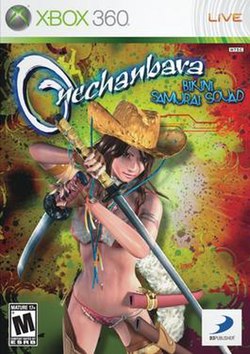
           Following that same line of thought, I examined why certain women are dressed the way they are.  I found that those who are blatantly pandering, like the Oneechanbara girls who fight zombies in bikinis, are...well, rather stupid.  Their outfits make no sense and come off more as idiotic, rather than sexy.  Some of the pandering games at least gave their characters good reason to dress the way they did, thus sucking me more into the world.  Juliet Sterling, for example, in Lollipop Chainsaw was a high school cheerleader, so her short skirt and tank top, while very much showing off her body, made sense in the context of the world.  On top of that, Juliet is a strong female lead who is capable, unreliant on men for protection, has an emotional support system through her family, wit and intellect that is buried behind a valley girl personality, and some self loathing which makes her more relatable, as she has self-image issues.  These personality traits mesh well with her role in the game as a cheerleader/zombie slayer, creating a nice balance between cheesy, over the top, and somewhat relatable.  Her occasional lapses of understanding are still played for yucks and the camera loves to zoom in on her short skirt or her tight top, but she, on her own, has both a personality and context.  Even if the character herself is oversexualized, to an extreme degree might I add, her strong, distinct personality and the proper context for her behavior and clothes go a long way to combat the idea of objectification.  In the current video gaming environment, this seems like the status quo for strong female leads.  They're allowed to have some character, but there must always be sexual appeal and their clothes often need to show off their bodies.  While this is understandable to an extent...it is also very unfortunate, given how in the past video games have created strong female characters who didn't need to rely on sexuality to sell their games.
 
Juliet Sterling:  Oversexualized?  Most definitely.  Pandering?  Without a doubt.  But look at her clothes.  She's a cheerleader caught in a zombie outbreak on her way to school.  At least her outfit makes some kind of sense.  We aren't always so lucky.
            I shared some of these ideas with a non-gamer friend of mine who was markedly more critical of my approach, stating that oversexualization, even with a strong character, is still objectification to a degree, since game designers have control over how a character looks and acts.  While we did get a bit heated, we managed to stay civil and she broached the idea to me that one of the few times oversexualization is okay is when it is done not for the sake of pandering but for the beauty of the form.  When sexuality is just created for beauty's sake, for its own sake, then it is alright.  No cheesecake shots, no snide remarks or drooling idiots hounding a beautiful woman, just someone who is beautiful on their own and it does not have to become an issue with the story or the audience.  To her credit, I found this idea intriguing and after re-examining some of my own favorite female protagonists, I found that the ones I liked the most did in fact adhere to this kind of mentality, where they were beautiful, but not objectified or even used for male pandering.
 
Meet Ellen, from the game Folklore.  Ellen is very attractive.  Without showing a bit of skin.  She is beautiful for the sake of being beautiful, not for titillation or pandering.  Well done, Folklore.  Well done indeed.
            So, I decided I wanted to have a little chat with the gaming community on oversexualization.  When it is actually well done, when it is tolerable, and when it is deplorable.  For these three examples, ironically, I can use the three female leads of Dragon's Crown to tie it all together, because of their varied designs.  The elf fits the criteria for beautiful, well rounded, and contextual character, making her the strongest female lead and the one requiring the least pandering, while still being able to be attractive.  The amazon fits the well rounded and contextual character and while her design does pander a little to the male audience, it largely stands on its own since she has a unique and independent persona.  The sorceress sadly falls into a trap that was started in the Playstation 2 era where "jiggle physics" became a thing.  Her clothing makes a kind of contextual sense, but largely it seems out of place and only meant to show off her cleavage and legs.  Speaking of her cleavage, her breasts jiggle around willy nilly with no rhyme or reason and her personality seems ditzy, flirtatious, and reliant on men, even if it is for the sake of manipulating said men for personal gain.  She is the kind of character that needs to be avoided.  I hate bashing on her because Kamitani probably didn't create her with that in mind, but it speaks to an archetype that really needs to be laid to rest in gaming at large. 

            I want to add for the sake of completeness that this is a preliminary analysis from before the game launches to broach the idea of oversexualization vs objectification.  The characters are being examined based on gameplay footage, since the story has not been officially released, so their personalities, as seen through their in-game animations and dialogue, may change.  This is just based on what we know right now. 
 
Get ready kids, we're about to jump into examination and wild speculation on character design and personality.  Fun times.
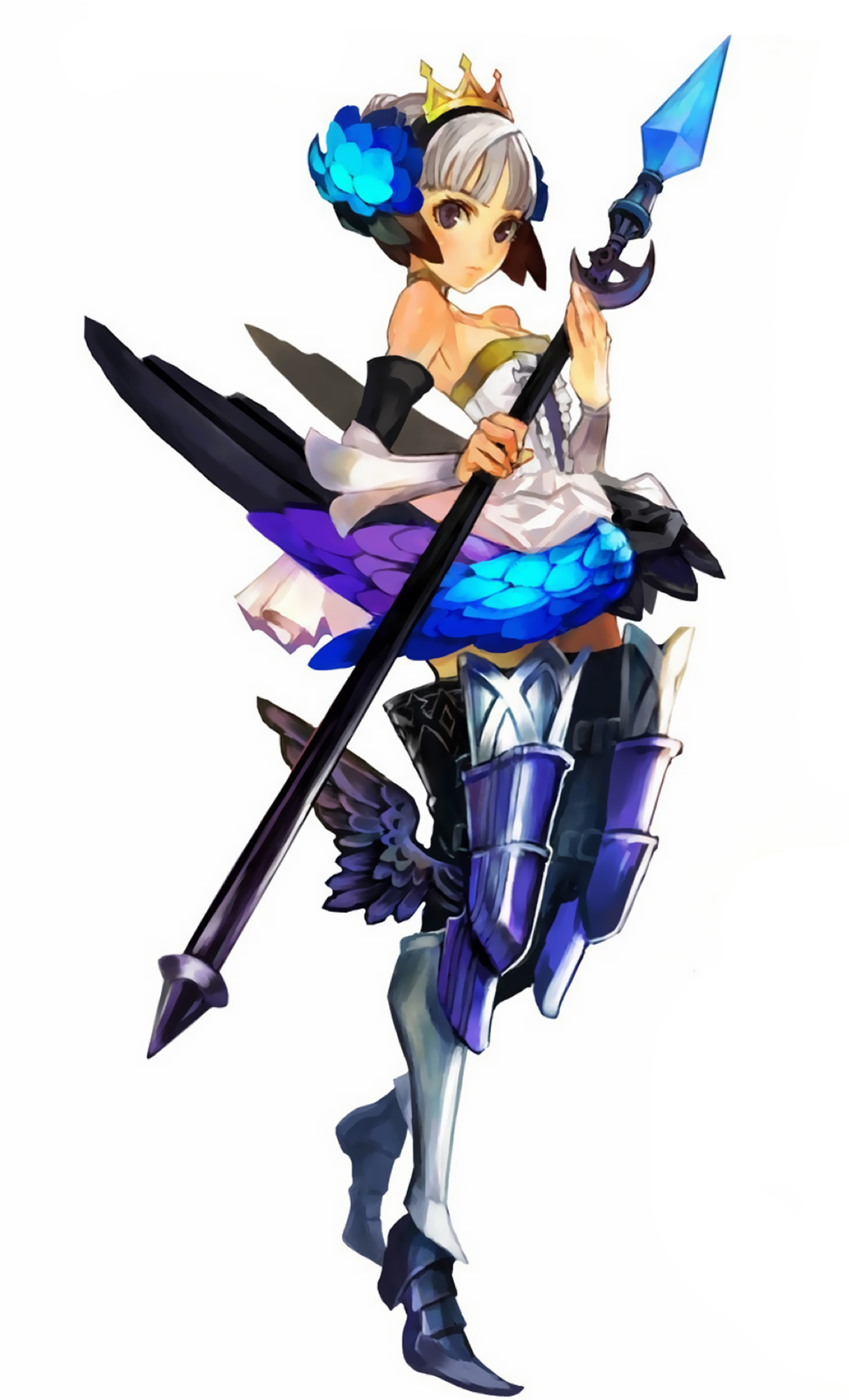
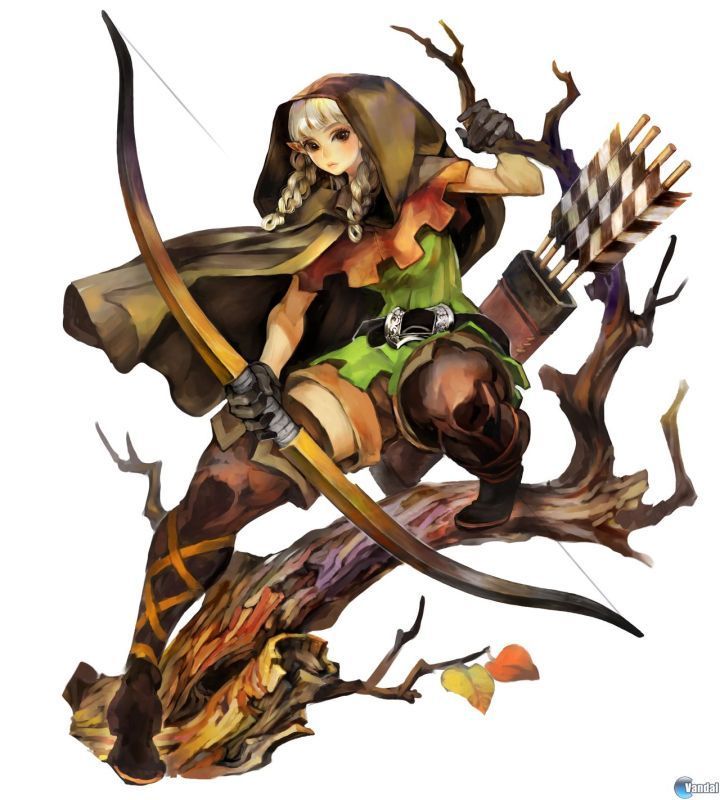
            Anyway, with the background out of the way, let's start with the best first.  The elf fits the bill of being beautiful byhaving a slender, attractive body that is fitted into a ranger's uniform.  A green tunic and brown cloak for disappearing into the woods, a hood to keep the rain out of her eyes, thigh high boots for traversing through muck unimpeded, and all of this together without needing to show much skin for titillation.  Her pale face and well proportioned body speak of a kind of beautiful woman who is agile and capable, even if she cannot wield a gigantic sword like some of the male characters.  She has strong bow skills and the ability to use martial arts to defend herself.  The elf's in-game animations give her an air of seriousness, with a tender side as she appears to be friendlier to animals than the other characters.  The elf hits the perfect balance, in my opinion, of strong, attractive female characters that are beautiful for their own sakes, not for the audience's sake.  She is like Gwendolyn from Odin Sphere, Elly from Xenogears, or Lenneth Valkyrie from Valkyrie Profile.  Her clothes make sense in context with both the setting and her personality and her body type is pretty average.  Truth be told, she could have been given larger breasts as an attempt to titillate the audience, but if her overall design was the same, I.E. no cleavage, then she'd still be able to hold onto this beauty for the sake of beauty ideal.  This is what we want if we're going to have an oversexualized character.  One who is beautiful for their own sake, not for the sake of a male audience, who has a strong, independent personality, and one who dresses and acts with proper context based around their persona and the setting.
 
The elf has a slender, beautiful body, but her clothing makes sense and doesn't needlessly show off skin.  She is cute and attractive without having to flash breasts or butts to the male audience.  This is what we need more of.
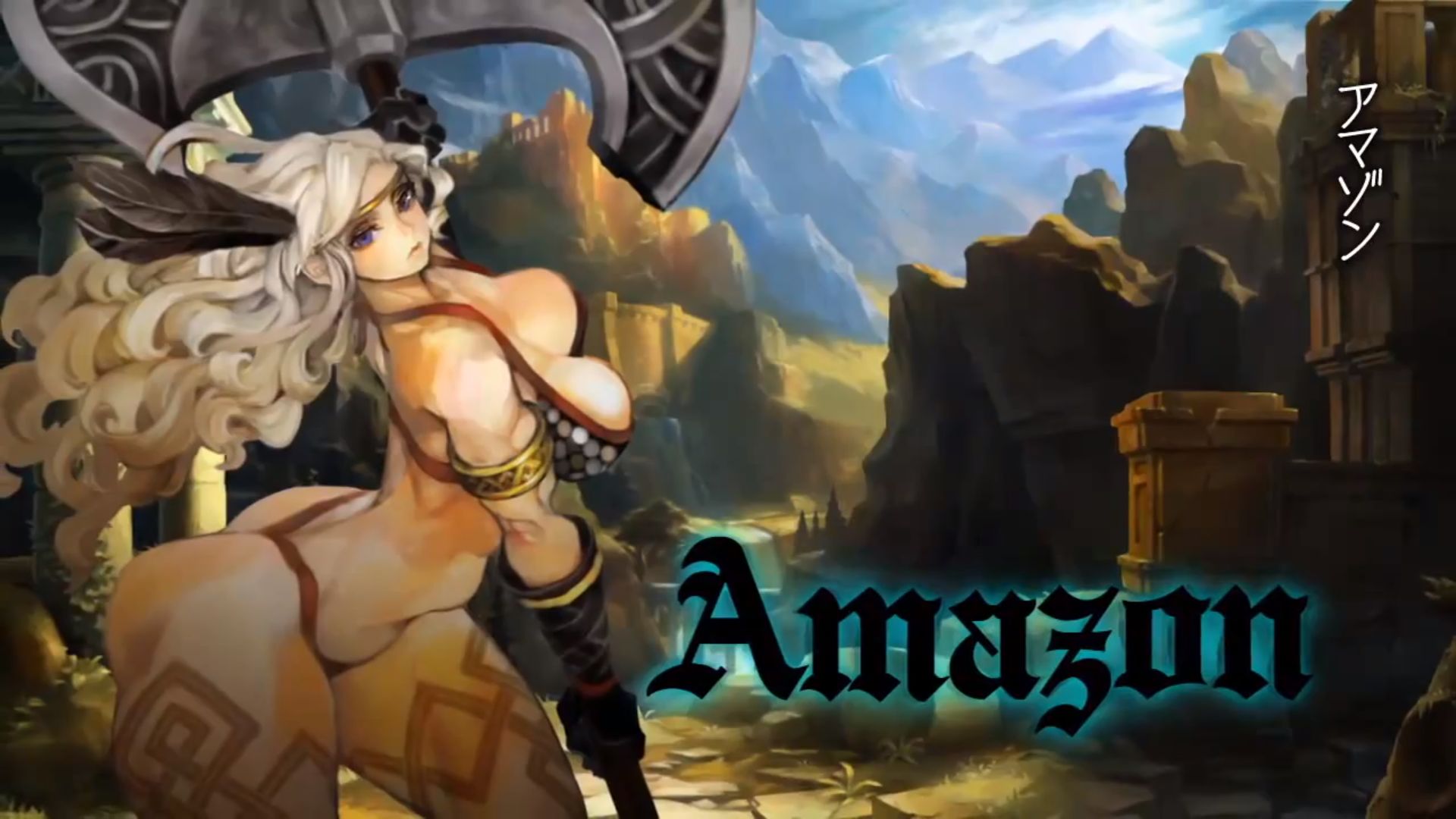
            Next up is the amazon.  The amazon, in my opinion, fits into a precarious position between overtly pandering and beautiful in her own way.  From her animations, the amazon appears to be very much like a barbarian heroine from a Borris Vallejo painting.  She is muscular, comfortable with her body, and favors brute force over subtlety or protection.  The amazon has a fairly decent sized chest, complete with cleavage showing, and massive muscular thighs, which have earned her some criticism because she dresses in what amounts to a chainmail thong bikini.  This may sound like me, as a male, making excuses, but hear me out.  I honestly think this aesthetic works for the barbarian woman personality the amazon seems to have.  Barbarians are traditionally known for wearing little clothing, as they prefer freedom of movement over heavy armor, and only cover their weakest spots, like genitalia, feet, or their head on occasions.  In this context, the amazon is a mass of muscle, but still has weak points in her feet, for example, if she had to cross jagged ground, in the area of her genitalia due to the nerves and sensitivity, and the head, which controls the rest of the body.  Thus, it makes sense for her to cover these parts, while not covering her muscle.  And the clothing she wears, while very revealing, allow her to make full use of her legs, as she favors kicking enemies as well as using an axe.  She is confident enough in her own strength that she doesn't need the covering and would prefer the freedom of movement.  To me, this costume makes sense with her personality and the context of the game.  Is it pandering?  Well...yeah, unfortunately.  The amazon doesn't have a body thought of as traditionally beautiful but she does have some parts which could be singled out as sexy by others which overlook her as a whole
 
The thong will be a sticking point for a lot of people, but considering her aesthetic, I think the amazon works.  Is she pandering?  Yes, but at least there is more under the surface and her outfit makes sense in context.
            In this case, like with many women in games who have a strong personality and clothing that matches context but is still revealing, I want to say this.  A character is only objectified if you THINK of them as an object.  The amazon has a personality, a reason for dressing like she does, and even if she is somewhat pandering, it is easy enough to ignore it because she can be seen as beautiful in her own right.  The beauty of the human body at its peak physical perfection.  However, if all you see are the giant thighs and the cleavage, or the lack of clothes, you are turning her into an object.  She wasn't made as one, you are TURNING her into one.  This is true for a fair number of female protagonists in modern gaming.  Bayonetta, for example.  Her personality shows that she feels dismissive towards men and enjoys using their sexual thoughts against them, while using an outfit that is made of her hair which is equal parts weapon and armor.  Is she pandering?  Absolutely, there are plenty of cheesecake shots or moments where she herself is overtly sexual.  But for her personality and the world she exists in, her costume makes sense and her actions seem more like a middle finger towards the largely male audience oggling her.  So, she's only objectified for her looks if you refuse to see how she is subverting the norms of the jiggling bimbo heroine and choose to only see her AS a jiggling bimbo heroine.
 
Bayonetta and the amazon are where we are right now in the games industry in terms of regular female protagonists.  They can be strong, but they do have to pander the audience, with sexy poses, cheese cake shots, or a general lack of clothing.  They're still characters and are only objects if we reduce them to objects...but we can do better.  I know we can.
            Sadly,the worst example of female character design in Dragon's Crown comes from theSorceress.  Her clothes feature a dress that has a slit in the side to show off her long legs and her top is low cut, allowing her breasts to jiggle about like crazy.  She has a ridiculously thin waist and seems content to shove her legs and chest wherever she pleases.  Her attacks seem to focus on a mix of magic and titillation.  She has some impressive magic feats, such as ice and fire spells, true, but she also has spells like charming enemies, turning them to frogs, or turning them to stone, which reflect back on female ideas of titillation and temptation.  Her design seems to dip heavily from traditional witches and mythical temptresses.  This could be me looking too far into it, but this kind of design seems reliant on men for her success, as she counts on her sex appeal to a degree, and with clothing that really doesn't fit the context of the game world.  In Dragon's Crown, players enter all kinds of dungeons, from dank sewers to dragon's caves.  I'd think you'd want clothes that either protects your entire body, like the knight who is covered in armor, that allow freedom of mobility while protecting the essentials, like the amazon, or which makes sense based on your skillset, like the elf, whose costume seems built around keeping her mobile and able to snipe enemies with her arrows.  The sorceress's clothing seems more reminiscent of a bar waitress's clothes, with a witch's hat added in for good measure.  I'm not saying bar maiden's or bards or any other unorthodox type of person can't be an adventurer, but it seems oddly out of place amongst the other adventurers.  She seems like fan service for the sake of fan service.  And really, that is, in my opinion, the worst kind of female character in video games.  These are the characters who are objectified because they have no strong persona, their clothing and design in and of itself are meant to not fit into the world, but rather to catch the male eye, and they cannot stand on their own without a male audience.  I'd find it hard to believe with her jiggling breasts and overly sexual design that women would be able to enjoy the sorceress as much as men.  Which is a shame, because some of the ideas they had for her seemed interesting, like turning male monsters into toads, thus subverting some fairy tale and female tropes of storytelling.  However, the whole package with the sorceress seems to be a bit much.
 
Look at that shot.  The skull between the breasts.  That should say it all.  The sorceress might turn out to be fun and not nearly as sexist as she seems, but...just this image of a woman in gaming is discouraging.  Guys, we really need to stop doing this...
            This is what I hate.  I hate it when a character isn't given enough personality to work with, like Paula in Shadows of the Damned, and where what little they have either panders to the male audience or makes little sense.  I hate it when characters are dressed up like barbie dolls for no reason at all and without context, like in the DOA volleyball games.  Think about those games for a second.  Not only are these female characters regular enemies in fighting tournaments, so they wouldn't be hanging out together at a resort, but they also have jobs or personas which make them lounging on a beach in a bikini, posing as hard as they can to look sexy, really unlikely.  Christie is an assassin.  Sex appeal can be used in her work, but in her downtime too?  Lisa is a wrestler.  Maybe she wants to relax, but...with people she's smacked down with?  Ayane is a bloody ninja who is frequently in contact with and assisting the Hayabusa clan!  Why is she traipsing around in a bikini on an island that seems to be inhabited only by eye candy for the male audience?!  Perhaps worst of all though, I hate characters that have potential, but have that potential is squelched for the sake of fan service.  The character Tala in Darkwatch was a bit oversexualized, with her gothic look, black clothes, open cleavage, and cold, but flirtatious persona.  But she provided some nice character development for the main character, Jericho.  Jericho is a vampire and still coming to terms with his powers, so Tala acts as the devil on his right shoulder vs. an angel he had on his left in the form of a ghost.  Then the game thought, let's show them having sex, with Tala naked and straddling Jericho, who is still fully clothed.  ...Really?  Why was that necessary?  Yeah, she uses the moment to tempt Jericho to bite her and uses her new vampire powers to become the main boss later, but...there were dozens of ways to do that which didn't just degrade the character into bouncing breasts.  Talya had potential as a female villain because she was subtle and clever...I'd think she could've figured out a quicker, easier way than screwing Jericho to get bitten.
 
Darkwatch, DOA Volleyball, Oneechanbara...this is just pathetic.  Fan service women with no character whose only goal is to titillate.  THESE are the objectified women.  These are the ones I feel sorry for and the ones I am unable to play, because they're so vapid, pandering, and empty.
            So, there you have it.  Three examples of oversexualization in gaming through the lens of Dragon's Crown.  What I want you to take away from this though is that oversexualization does not automatically mean objectification.  In the first case, objectification is damn near impossible because the character is so well designed that she is beautiful, but in perfect balance between body, clothing, persona, and likability.  In the second case, objectification is possible because certain parts of the character's body and clothing put aspects of her on display, creating an imbalance, but her personality and the context of her design make it your choice.  You can choose to see her as an object or as the character she was meant to be.  The third case is the most depressing, as it blatantly panders to the male audience without really providing context in costume, character, or setting as to why she needs to be this way.  The character herself is not strong enough to carry the design and while the abilities she possesses are nice, they don't excuse or hide the fact that the design is too catered towards the male audience, rather than a gender neutral party, which most games should be.  A good game can create male leads that both men and women find either admirable or attractive or female leads which women feel empowered playing and which men can find beautiful, but without feeling the need to ogle.

            Let me close with this. Oversexualization of both men and women is a common thing in all kinds of media, from books, to movies, to games. And not all of it as unwanted as some might believe, as many people, men and women, enjoy the form, the outlandishness of the design, or the costuming without even getting sexuality involved.  They enjoy the beauty of the character for what it is.  Oversexualization is not a bad thing in and of itself...it's when you reduce the characters being oversexualized to objects that we have a problem.  Oversexualized doesn't have to mean anti-feminist, misogynistic, or even unhealthy.  It's when you reduce that character to an object that you give them this negative connotation.  So next time anyone wants to do that, think about the game, the context, or the character you're talking about.  Think about who they are, what they mean, why they're depicted that way and if there really is a reason to get upset.  Don't just point and go "SEXIST" as a knee jerk reaction. And likewise, don't pick up a game or get enamored with it because of sex appeal...games are there to be played. You want sex, you've got the internet.
 
Vallejo paintings are full of oversexualized women and men.  Does this make them objects?  Well...I say that's up to you.  I'm more interested in the wings and the alien world that the fact the woman's in a bikini.  To me, she isn't an object...I don't know if the same can be said about others.
             All in all, game developers should strive to make characters like the elf, but we shouldn't be as critical of the amazons or the Bayonettas out there.  They are pandering to increase sales, but their character, design, costume, and their overall likability coupled with the game's enjoyment factor often make this a matter of choice.  You can reduce them to objects if you only focus on certain aspects, but that is YOUR decision to make.  The character still has character.  Game developers should avoid making characters like the sorceress, or at the very least try and make her BETTER.  The sorceress had potential and with a little re-tooling, I think she could be just as strong as the amazon or even the elf.  Don't make a character only for eye candy's sake, though.  We all lose when that happens.

            Finally, let me say once again, this is just one person's opinion.  Take it or leave it, argue with it if you want, but at least think about what I've said and why I've said it.  The fact that we live in a world where A) Men think it's okay to make a pandering piece of eye candy as a main character in a game and B) Where the world is such that women are so jaded about the portrayal of all characters that they may call sexist as a knee jerk reaction makes me very, very sad.  Also, this is based on the impressions of Dragon's Crown from its promotional material.  I wanted to use this to kind of defend Kamitani to a degree, because I don't think he tried to make his characters eye candy.  I want you to see how he probably thought about their design and creation, through these three examples.  I think the sorceress design is flawed, but it at least had potential.  That's more than I can say for the DOA Volleyball series, which took established characters and turned them into dress up dolls.

Thursday, February 28, 2013

What's in a name? Go for something original!

            One pervading practice in the game's industry that really ticks me off is naming schemes.  Names that have numbers which discount sequels, side stories or the like, names that are meant to be a reboot for a series, despite it having a dozen previous entries, names of games completely unrelated to a series...the list goes on.  My big question is, why?  What's in a name?  If the game is something original, go for something original.  If the game is part of a series, make sure it has its proper place either chronologically or spiritually.  Don't use a name just to sell game.  Just don't. 
Chronologically confused?  Blame terrible naming conventions!
            Because if you try to sell a game using a name and that game isn't worthy of the name, all the fans you'll win with the name will hate your game.

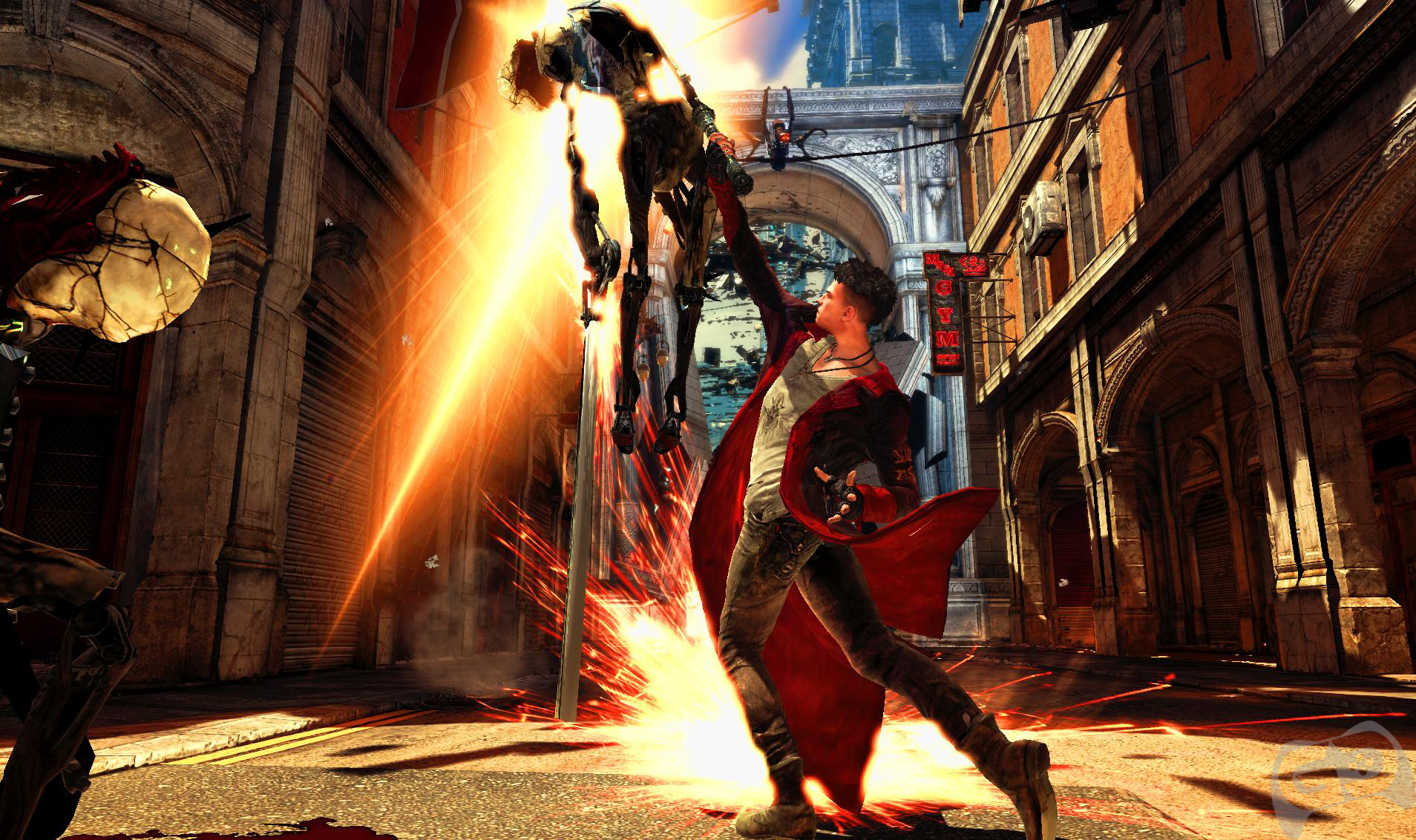
            There are dozens of good examples for this practice.  While DMC was meant to be a reboot of Devil May Cry, it probably would have faired better with Devil May Cry fans if it wasn't given that name.  While the tone of the game is darker than the original series and the character a bit more petulant and angsty, the gameplay is solid and enjoyable.  The level design and aesthetic are unique and the story, while a bit topical, has some interesting nuances.  However, many people who grew up with the silver haired devil killer, Dante, and his brother, Vergil, cried foul of the game for its drastic tonal and character shift.  If the game had been called something different like "Purgatory" or "Angels and Demons" then fans of Devil May Cry would probably have loved the game as a wholly separate entity from their beloved series. 
Top is Devil May Cry 4, bottom is DMC.  Notice the similarities and difference.
These games both look fun, both look like they play similarly...so did you really need to alienate Devil May Cry fans with the new look when they'd probably love the game if it was named something differently?
            Name value is not brand loyalty like it was before the internet.  Before the rise of the internet, people had to rely on names to sell games.  Final Fantasy sold because it was Final Fantasy.  Now, Final Fantasy doesn't sell, not because of drastic changes to the name, but because fans no longer have to rely on the name to see the gameplay.  They have the internet.  They can choose for themselves.  And with the rise of games which blatantly gouge the players for money, like Final Fantasy: All the Bravest or three Final Fantasy 13 games which don't feel like Final Fantasy games at all, they tend to be more angered by the use of the name than prone to buy into it.  When fans of a series see that series bastardized, they are less likely to invest in it because it is not what they want and it actively insults, in their minds, the accomplishments of previous entries.  Bringing it back to Devil May Cray, the game DMC was already receiving a ton of press for its visuals, combat, and because it was being created by Ninja Theory.  It didn't need the Devil May Cry name to sell units.  If anything, the name hurt sales.
This looks like a fun take on old school Final Fantasy.  But the name isn't enough...fans are smarter than that.  When they learned this game was full of price gouging pay to play mechanics, they realized this was anything BUT Final Fantasy.

            And despite how utterly simple this kind of logic is, many people fail to realize that original IP CAN survive and that it doesn't need to cling to other titles.  An example:  Bioshock could have called itself System Shock 3, since it was clearly a spiritual sequel, but it was different enough that they went with a different name for a different premise, preserving the System Shock series for fans while introducing a new game to the public.  It worked.  Bioshock is getting ready to release a third game in its series this year, with no signs of stopping yet.  Darksiders also received critical success even though it was an original IP.  It may have borrowed heavily from the Legend of Zelda and a few other games, but it wasn't called "The Legend of War."  You do not need to use someone else's name to sell a game.  Bayonetta wasn't called Devil May Cry 5, even though it could have been since the combat and mythology were very similar and it's director made the first Devil May Cry.  And Bayonetta was a critical darling, making a huge splash with Devil May Cry fans because of how fun and insane the game was despite it not involving their favorite devil killer.  You don't need to piggyback success from other games if you have a solid product.
Darksiders was an original IP with an original name that made enough money to have a sequel.  Original IP CAN survive!
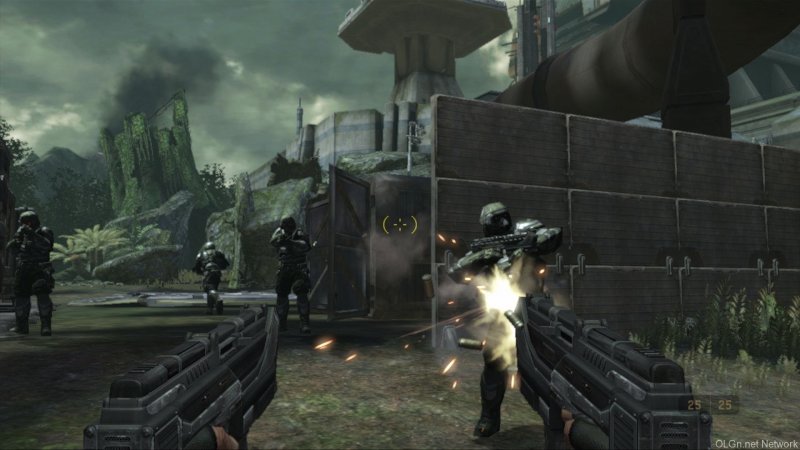
            More than just original IP having the power to survive though, game companies need to be aware of fan backlash.  The game Turok is a perfect example.  People were hoping to sell a bland, generic shooter, where the player is a space marine on a planet of pirates and dinosaurs using the name Turok, because it had had a successful comic run and was a cult classic on the Nintendo 64.  People balked at Turok, panning it and refusing to buy the game.  The original Turok featured a time traveling Native American who fought off dinosaurs with alien weaponry, spiritual powers, and who dealt with aliens and it became a cult classic, even earning a sequel on the N64.  But the Turok game released in 2009?  That game was as bland and cookie cutter as they come and earned the ire of Turok fans for dashing their hopes of a true sequel.
Compare for yourself.  This is Turok 2008.  Can you tell this apart from any other generic shooter on the market?
This is Turok: Dinosaur Hunter.  Cyborg dinosaurs.  Now can you understand why fans hated the 2008 game?

            Hope is one of the cogs of the game industry that keeps it moving forward.  Players hope for sequels or ports, or re-releases of their favorite games.  So much so that they write in, phone in, petition, and go out of their way for game companies to notice that they have interest.  There is a surge of hope every time there is a chance for a Mother game to be released abroad, but it has yet to be realized.  The Mother fanbase is very loyal and devoted to the Mother/Earthbound series.  Now, imagine if an RPG that was just a bland fantasy fare took on the Mother name, which grounded itself in contemporary society with offbeat humor and a strange story?  The fans would go nuts, boycotting the game and crying foul against the company that made it.  So...why is it that game companies keep using names that will more than likely hurt their products?
The Earthbound/Mother series.  If another game took the name and tried to pass it off as a sequel and it didn't look or play VERY similarly to this one, the fans would boycott it en mass.  If they didn't just burn it, that is.
            Well, there are a number of reasons, though none of them are very good.  The first is the design by committee rule.  This is where a game is created strictly by the books, an uninspired, generic, waste of space that never attempts to challenge the player's thinking processes or their skill as a gamer.  Design by committee is not as uncommon as it needs to be and it even goes down to a name.  The committee has to decide what name will sell, even if they know their game is utterly generic.  If it's a movie licensed game, they use the movie's name, so fans of the movie know to pick it up, even if they may not enjoy the game once they've purchased it.  Otherwise, the committee may look at the rights they currently own and which games might fit into the mold, regardless of their original forms.  Syndicate was originally a tactical espionage RPG set in the far future, however it was re-released as a generic first-person shooter with only tangential connections to the original.  A committee looked at what properties they owned, slapped it on their game, and put a thin coat of paint on the surface to disguise it as that property.
This is Syndicate
This game is NAMED Syndicate, but is just another generic design by committee shooter.  Fans were pissed.
            Another good reason is the ability to hide a game's flaws from the public.  In the internet age, nothing is secret.  However, some developers have managed to keep the darker parts of their games' pasts out of the spotlight and give off an image of confidence and polish.  An excellent example of this is Aliens: Colonial Marines.  This game was released to abysmal scores by most, citing numerous graphical glitches, terrible AI and story, and a lack of focus on the Aliens license.  This was due to numerous delays, issues, and developer Gearbox having to start from scratch after a developer they outsourced it to threw out much of their work.   But, by creating an impressive E3 demo, they were able to pull off the illusion of everything being alright.  The demo showcased the Aliens using flanking maneuvers, their environments, and even climbing on the walls or hiding in vents to get people, showing off dynamic AI.  There were also several powerful character moments, where the player jovially flips off one of his marine comrades who is checking on him to see if he's alive.  And what got fans most excited was the ability to use a number of weapons, like the smart gun and power loader, from the Aliens movie.  However, few of these promised features made it into the actual game, and those that did were horribly butchered.  However, because of the illusion of a good game, the name was actually able to move some units before the truth was leaked.  Perhaps not enough units, but in cases like this, some is better than none.
This is the Aliens: Colonial Marines demo.  Yeah, that flame thrower power loader?  Doesn't exist in the real game.  This was just made to hide the poor production of the real thing.
            Press seems to be the biggest reason for these name decisions.  How do we take an utterly generic game and make it stand out, both on the internet and in gaming culture?  Give it a name people will recognize!  This logic is horribly flawed and usually results in fan backlash, like with Turok, however some companies don't care.  Some games are so play by numbers, uninspired, or just plain bad that they need the press to get people to even know their game exists.  This is how shovelware can sometimes reach some success on the market.  A company knows their game is bad, but they have to push it out to try and recoup some of their money, so they use a license they already own to drum up press and some people will be convinced by the media blitz to purchase the game.  Or they will just be morbidly curious as to how butchered their beloved franchise can be.  For some games and some companies, any press, even if they cry foul of the name of your game, is worthwhile.

            One of the saddest reasons for these naming schemes are corporate ignorance or mandate.  Often times, corporations seem to take an almost child-like glee in showing how out of touch they are with their consumers.  Capcom's continual use of on disc DLC or EA's online pass systems are proof of that.  So, some games may be given a name from a series or called a reboot simply because their corporate overlords say that's how it has to be.  They don't take into account the fan reaction, or if they do they don't care, thinking the games will sell well regardless.  This is why, in my opinion, all the decision making at a corporation, at least one involved in game development, should offer final say on certain decisions to the developers actually working on the product.  Maybe the corporation shouldn't create another bland Syndicate or Turok and, instead, just let the developers name their game something unique.  Even if it's bad or uninspired, it at least no longer has to compare to the standards of much better games before it.  By the standards of an original IP, maybe it won't seem as bad and can actually have a chance, rather than being dead on arrival.
Capcom: Pissing fans off with corporate BS since 2007
            There are other, more minor reasons, but they all fall into the same lines.  Before we wrap up, however, I just want to encourage gamers and developers to use their brains when thinking about the names of video games.  Not just sequels either.  When it comes to sequels, reboots, remakes, or what have you, use the resources available to you and do research before you plonk down $60.  Maybe wait a week until after a game is released and check out videos of it online to get an idea for story and gameplay or read a review.  Use your brain.  That also extends to general naming schemes in games as well.  What we haven't talked about are some of the esoteric or bland names in video games.  Fracture, Bullet Storm, Quantum Theory, Sina Mora, Nier, and so many others use names that ultimately tell little to nothing about their game beyond a broad, general idea.  Fracture, you can move earth or break stuff, possibly?  Bullet Storm, you shoot bullets?  Quantum theory...physics?  Sina Mora...I don't even know.  Nier...I know it's the protagonist's name but that tells me nothing about the game.
I love Suikoden.  It's a fantastic RPG series.  But look at that name...does it tell you ANYTHING about the game at all?  Names need to excite, not confuse players.  It needs to make them WANT to play.
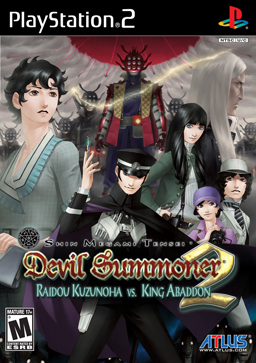
            Look, naming is not as difficult as you might think.  If you're not going to use an already existing series, then think about what your story has involved in it, what you want fans to know about it and the best way to convey that to them in the minimal amount of effort.  Shin Megami Tensei Devil Summoner 2 Raidou Kuzunoha vs King Abbadon?  That's a bit too long.  It gives a lot of information, but really, Devil Summoner 2 would have said all it needed.  You summon demons to fight for you and this is the sequel.  Try to get across a feel for your game with the title as well as certain character details.  For example, the three games from Operation Rainfall: Xenoblade Chronicles, The Last Story, Pandora's Tower.  Think about what those names tell you.  Xenoblade Chronicles.  It's a story that has become something of a legend that has spiritual ties to previous games from the Xeno series and you wield a powerful sword.  The Last Story: This game focuses heavily on story and it is of such importance that it is the last one, meaning the last tale of a dying man, the last tale of a dying world, or the final chapter in someone's life.  This kind of title is beautifully ambiguous, allowing the imagination to sell the game for you.  Finally, Pandora's Tower.  This immediately invokes images of a forbidden tower which you are tasked to explore, drawing parallels to the Greek myth of Pandora's box with the fairy tale implication of towers as places of imprisonment that need to be surmounted by heroes.  All of those titles only use two words but the imagination of gamers sells them on only a premise.  Even a simple, ambiguous title can be pretty effective.  Halo, for example.  Religious warriors?  Death and rebirth?  God?  Halo may be a pretty bland fare, featuring space marines fighting a religious cult of aliens, but the title invokes a number of images in one's mind that the uninitiated might be taken in by.  And the game actually delivers on some of those images, which makes the title appropriate and not just deceptive.
The name is a bit too on the nose...sure it tells us what the game is about, but needs to leave more to the imagination
These game names set the imagination on fire with possibility.  THIS is how naming games should be
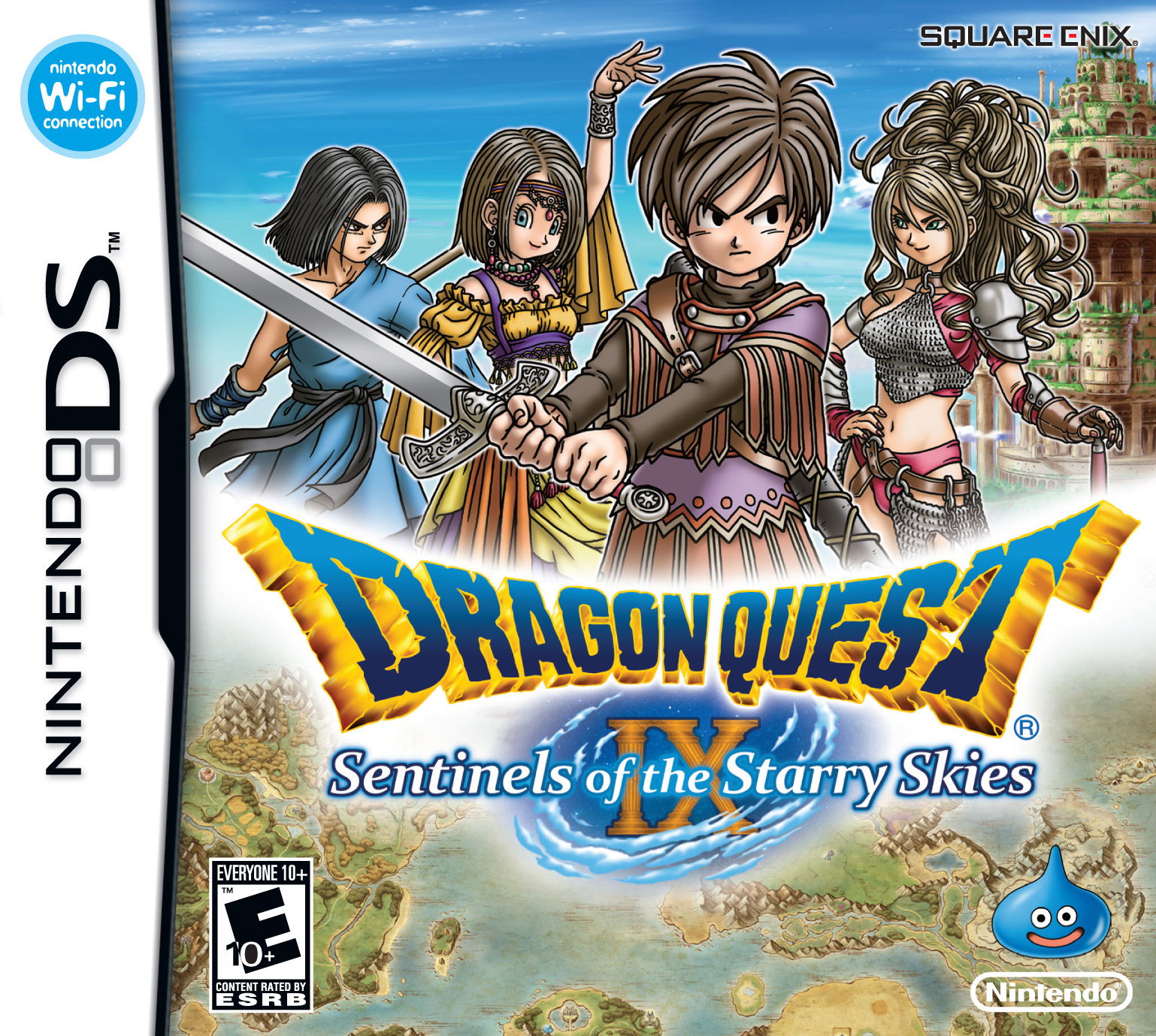
            These kinds of rules go for subtitles to games as well.  Numerous sequelized properties use subtitles to differentiate or whet the appetites of gamers.  Some can be spot on, but with a bit of dramatic flair.  Dragon Quest 5: Hand of the Heavenly Bride.  Immediately we know what we're getting.  A Dragon Quest game and all that entails, but now we know something about the story.  It will prominently feature marriage, perhaps not the player's but marriage in general, it will deal with destiny or heavenly powers, and it will involve the groom of said bride.  Titles like that set the imagination on fire.  Or how about Dead Rising 2: Off the Record.  Again, you know what you're getting.  Zombie killing whacky/serious fun.  But the title indicates that it is non canon, meaning it is a different take on what is already known.  This can easily sell certain players.
Even with established game series, a good subtitle is worth a lot.  Sentinels of the Starry Skies.  That gets me pumped for what's to come.
            My point is this.  Game developers.  Corporations.  Use your brains.  If you're creating a game, think about what the name you want to give it will mean and try to tailor it to so that it captures the imaginations of gamers.  A name of a character or a name of a species...if it doesn't have flair to it, it can be the death knell of a new property.  Don't try to put an already established name on something bland or unrelated.  Gamers will notice and they will be angry.  Do not use a game's name to entice players, then hide the fact that your product is garbage.  This will only erode a gamer's faith in your company and make them less likely to support you.  And finally, don't just slap any old name onto a game.  If a game is a movie license or a sequel, I know that sometimes there's no other option, but for an original IP...every original IP tries to do something with what they've got.  So think about what you're trying to do, the mood, the feelings, the desires you're trying to get across, and incorporate that into your naming.  It will make a difference.

            Gamers, this one also goes out to you.  Recognize what a game's name might mean.  The good ones which set your imagination ablaze and the bland ones which you forget almost as soon as you read them.  And use your resources.  The internet, word of mouth, your own eyes...don't buy into a game just because of a name.  It's fine to take an interest in a game because of the name, but it needs more than just the name supporting it.

            Games industry, put thought into what you name your games.  If it's original, give it something suiting the mood and style of the game.  If it's a sequel, a subtitle that tells us what to expect might be nice.  And if it's bland and uninspired, own up to it at least and try to make it work for you.  Don't use someone else's good name to sell a shoddy product.

            In the end, what's in a name?  Quite a lot, it would seem.