Anyway, without further ado, Final Fantasy 6, ladies and gentleman.
Showing posts with label Final Fantasy 6. Show all posts
Showing posts with label Final Fantasy 6. Show all posts
Thursday, December 4, 2014
History of Final Fantasy: Final Fantasy 6
So, in spite of much illness and a project to prove how video games have the potential to educate, I have continued work on this series. Today, we are going to look at the longest video I have ever made, my favorite Final Fantasy game, and quite possibly, the best game in the series. It's not perfect, and I will discuss the many problems it faces, but it captured a kind of magic from both the series and the 16-bit generation that has never since been replicated. And with this, we end the golden age of RPGs, even though I will still talk about a game that was in the golden age next time, which was not terribly good.
Anyway, without further ado, Final Fantasy 6, ladies and gentleman.
Anyway, without further ado, Final Fantasy 6, ladies and gentleman.

Thursday, May 9, 2013
Month of Characters Continued: Top 10 Villains I Love to Hate
A good villain is one who is both intimidating, yet
admirable to a degree. Not admirable in
that you want to be like them, but you can respect their power, or their
motives, or they are relatable, in that you find something about them in
yourself. These villains are ones we
love because we hate them. They are the
perfect opposing force for our heroes.
And here's a tribute to the 10 villains I love to hate the most. Needless to say, there will be spoilers.
SPOILER WARNING!!!
Kefka (Final Fantasy 6)
I bet everyone knew this was coming. Kefka, the psychotic clown. Of course he makes the list. There's something undeniably scary, but also
silly about Kefka. Despite wielding
immense magical power, he never really does much with his life besides
kill. And normally, this would be
horrific, but he's so gleeful and childlike at times that it's hard to chastise
him. Kefka laughs and rhymes and makes
terrible jokes and is garbed in harlequin's makeup. Despite being a truly evil villain, he's one
of the silliest characters in all of Final Fantasy. What makes Kefka more intimidating, however,
is that despite being silly and childish, he's ruthlessly clever, cunning, and
unconstrained by morals. He'll poison an
entire population just for fun, kill his master to serve his ambition, and all
the while seem like an unassuming fool.
Kefka literally becomes a god halfway through Final Fantasy 6, merging
with the three mystic forces that created the world to take full control over
them and become a god of magic. The
world is turned inside out and Kefka watches it burn with unprecedented
glee. For all his malice, though, Kefka
seems like he's lacking. He finds no use
or purpose in life and so wants to end all of it. Nihilism at its core. Even becoming a god didn't cure him of
it. While he is maliciously evil, Kefka
has a kind of charm to him, with his horrific acts juxtaposed by his crazy
personality and clown-like appearance.
Also, while most villains seek to control or destroy the world but are
always thwarted, Kefka managed to do both and was only stopped years after he'd
become a god. Perhaps what is most
interesting is that Kefka's death is almost like a middle finger to the heroes,
as all their magic is now useless without him, the god of magic. If they want to live, he's forcing them to do
it the hard way. For how irredeemably
evil, yet undeniably fun and funny he is, Kefka remains a favorite of mine even
years after I first saw his goofy face and heard him proclaim "You son of
a submariner!"
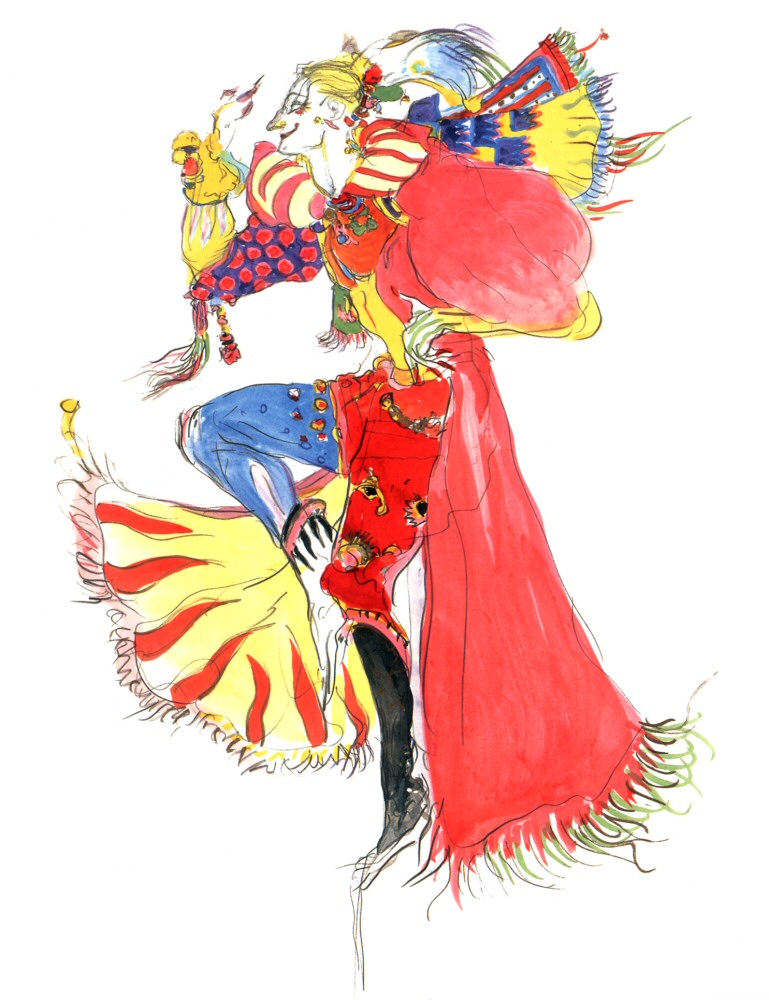 |
| The fool dances to his own tune, creating and destroying in equal measure. He is totally self involved, unaware that all his sound and fury ultimately signify nothing. |
Sephiroth (Final Fantasy 7)
I know some people are going to roll their eyes at this
inclusion, but hear me out. You see,
when I first played Final Fantasy 7 in 1996, Sephiroth wasn't the overpowered,
momma's boy, bishounen that he eventually became thanks to media overexposure
and what not over the years. My first
encounter with Sephiroth was when I had escaped the prison in Shinra tower and
discovered that all hell had broken loose.
The tower was decimated, countless guards were dead, and the president
of Shinra had been impaled on a sword. I
went in with about four guys and had to sneak, battle, and work my way up to
the top, but one guy utterly destroyed the place. For a little bit, I was actually scared. Sephiroth created an atmosphere around him
throughout much of the game that made him scary, because chaos and death were
always on his heels. He goes to
Nibleheim? Town is burned to the ground
and almost everyone dies. Follow him to
the Ancient City?
One of your team permanently dies. What impressed me the most, however, was the
Midgar Zloom. It's a giant snake that's
easily ten times your size and which can casually annihilate your party when
they first meet it. When the party cross
the Midgar Zloom's marsh via chocobo, they see a Zloom impaled upon a giant
tree trunk by Sephiroth, as if it were nothing.
That is power, cruelty, and terror.
Sure, he's had a bit too much exposure lately, but Sephiroth was true
fear for a while, creating an atmosphere more in line with survival horror than
a JRPG. That's one of the reasons I
still love him.
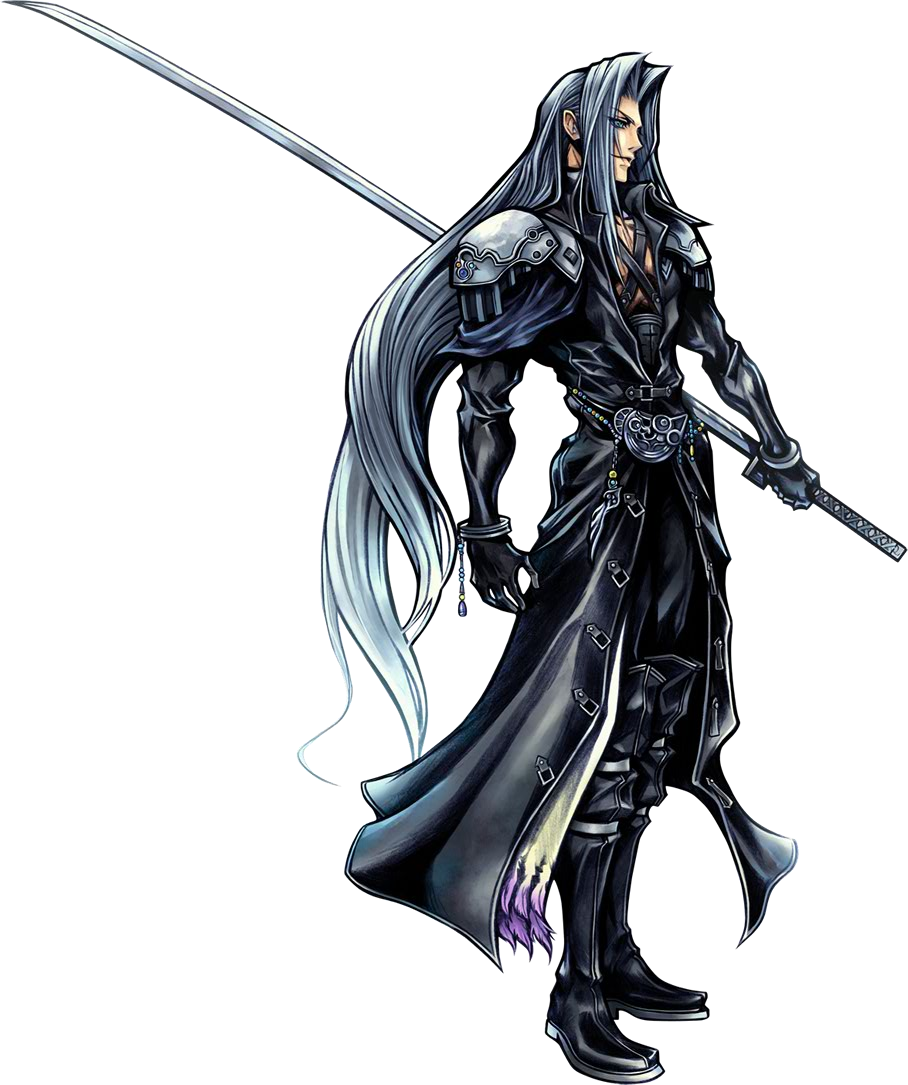 |
| The devil spreads death and chaos wherever he goes. He is fear made manifest and his cruelty extends to all things, good or evil. |
 |
| One man did all this. No...not a man. A monster. |
Grahf (Xenogears)
Words do not describe the sheer oddity or the sheer terror
that Grahf inspires. Grahf is, in a
nutshell, a split personality of an ancestor of our hero, Fei Fong Wong, that
became a parasitic psychic entity after he lost his most cherished friend and
lover. This entity became obsessed with
power and would frequently body snatch those close to his reincarnated self, as
his body and spirit had died, but this facet of his personality lived on. Grahf seeks ultimate power for the purpose of
destruction, reducing all those around him to ash. Yet, he is also a cautionary tale about how
absolute power corrupts and will ultimately destroy us. Grahf is constantly watching Fei Fong Wong in
Xenogears for the purpose of using him, as he is another reincarnation of
Grahf's previous form and Grahf believes Fei will lead him to the ultimate
power he seeks. Fei, possessing a
similarly destructive split personality, is both at odds with and subservient
to Grahf, as his evil persona, ID, was trained and manipulated by Grahf from
childhood to adulthood. Perhaps Grahf's
most signature trait is that he possesses the ability to give others
extraordinary power. Power that is so
intense that it will literally burn them out, leaving them naught but a
withered husk of their former selves.
The real kicker? Grahf needs a
body for his persona to attach to and when he makes his final stand against
Fei, it's revealed that the body he took was that of Fei's father. Grahf has no redeeming qualities, but is
interesting for his aesthetic, resembling something like Darth Vader if he were
more dramatic and monstrous, and for his situation, being a psychic entity
which has walked the earth for centuries seeking the power to purify it in
flames. While a bit one note at times,
Grahf is an interesting look at just how out there a villain can be while still
being taken seriously. In spite of his
odd back story, Grahf stands tall as a villain, acting as both the catalyst for
Fei to overcome his own weakness and as a cautionary tale of how power and loss
can corrupt even the best of us.
 |
| The seeker is forever in search of power, freely giving or taking with no regards for those hurt in his quest. This power will consume him and all the world. Knowing this, he continues on, for he has nothing left to protect. Only things to destroy. |
Kato (Shadow Hearts: Covenant)
In a game series full of tragedy, where the bad endings are
frequently canon, Kato appears as a most unlikely villain. A special forces agent for Japan at the turn of the 19th
century, Kato has unlucky metaphorically stamped on his forehead. He lost the woman he loved due to internal
fighting and betrayal and became jaded about his own weakness, especially after
seeing his friend Yuri Hyuga defying fate.
So, Kato did what many men in the series did and set about trying to
change his destiny. He used forbidden
necromantic documents to revive the woman he loved in an artificial body,
though she held no memories, created artificial super soldiers, and tried to
make Japan strong by
enslaving a biblical demon from Europe. Yuri and his friends had to stop him, but
Yuri and Kato understood one another, both having lost their true loves. Yuri had to stop Kato because he knew what
would happen if that power ran amok. And
Kato tried anyway, out of love. In the
end, Kato lost his love a second time and tried to change fate directly,
meddling with time itself, in order to settle things. However, even as he and Yuri squared off,
there were no hard feelings. They both
knew that there was no turning back. And
that's why I like Kato. Honorable, true
to his friends and his convictions, and a romantic at heart. He started the Shadow Hearts series as a weak
incidental character but improved himself and made himself strong. All for the sake of love. Kato is the perfect sympathetic villain, as
you both feel sorry for him but cannot allow him to continue, for the greater
good. Over the course of the game,
players even get a chance to control Kato's super soldiers and work with him, endearing
him to the audience, despite his goals, and his introduction was early enough
that the players probably didn't see him as becoming the main villain, even
though it makes perfect sense when he does.
It seems as if Kato is meant to suffer, but his drive is a force to be
reckoned with.
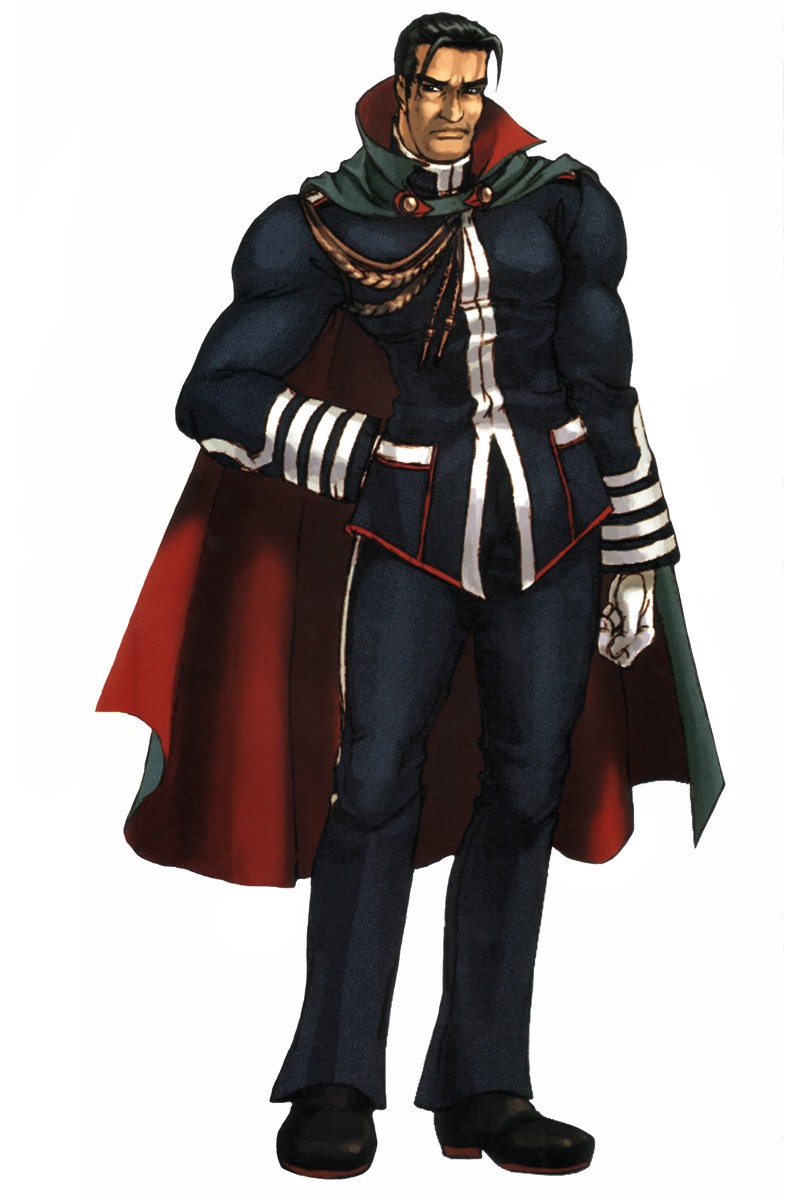 |
| The soldier is supposed to work for the betterment of his country. Must he then sacrifice all he holds dear to achieve this? Or shall he defy fate for a chance at happiness and redemption? |
Lezard Valeth (Valkyrie Profile series)
There has never been a more obnoxious, arrogant, and
hilarious bastard in Midgard or Asgard than Lezard Valeth. He's a sorcerer with immense natural talent,
an inquisitive mind, and no moral qualms about furthering his research. He's Shakespearean in his wording and loves
to analyze and argue points. He's
charming, despite being a tad insane, and he's madly in love with the warrior
goddess Lenneth Valkyrie, who he's trying to build a mortal body for. Lezard, despite being really, REALLY, evil,
is too silly, crazy, powerful, and...human, to dislike. In fact, to further his goals of attaining
his love, he actually helps save her from death by putting her into one of the artificial
bodies he made. Later, he warps back in
time to try and kill Odin, lord of the gods, and usurp his position. And he does it with ease. Coupled with all that, Lezard possesses the
philosopher's stone and was the only human not under the protection of Lenneth
Valkyrie to survive the end of the world, Ragnarok. Even if his schemes are evil, horrific, or
morally questionable, there's always a sense of fun with him. Lezard is both respected by his colleagues
and victims, but also the butt of many jokes, as a classmate of his frequently
teases him and calls him a freak with a lolita complex despite his immense
power. Perhaps what's scariest about
Lezard, however, is that even though he has a fun loving, inquisitive, and
enjoyable demeanor, he can be ruthlessly cunning and totally amoral. When he warped into the past, he lied and hid
his true nature to become an apprentice to three sorcerers and got close to
another Valkyrie named Silmeria. No one
suspected a thing until he was already ruling Asgard. He also outright admits that the majority of
his plan to take control of Asgard and alter history was just to lure Lenneth
into a situation where he could control her.
It is only through the intervention of the other Valkyrie and their
allies that he is stopped. However, even
if he is a villain, Lezard is just fun. He
laughs frequently, tells lewd jokes, and just enjoys life, even if he's the
only one having fun at the time. What's
not to love about Lezard Valeth?
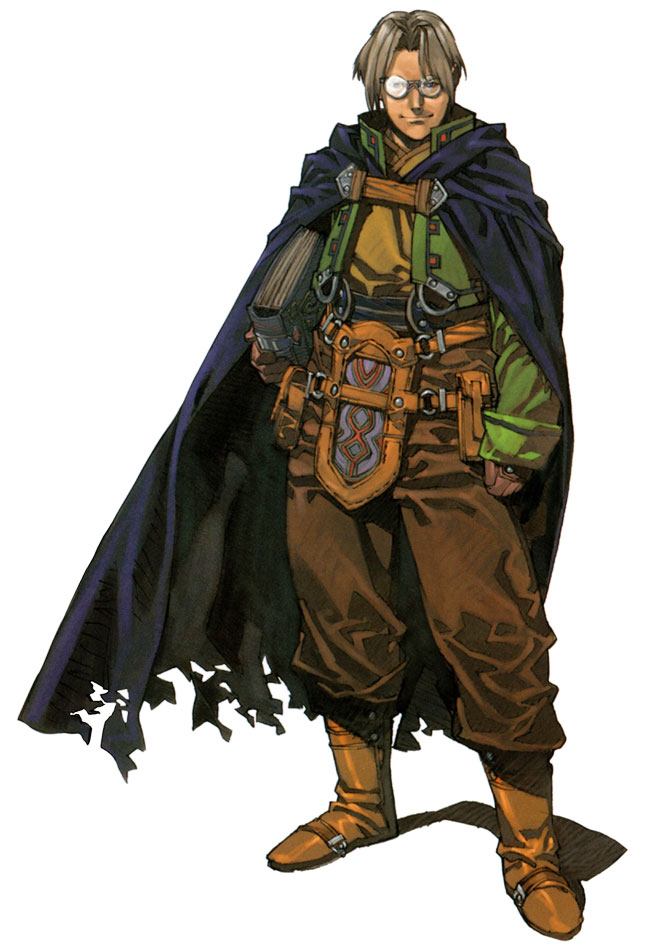 |
| The magician revels in knowledge and power, feeling no sacrifice is too great or compromise too unlikely for the sake of his experiment. |
Galcian (Skies of Arcadia)
Galcian is a fascinating villain for all his nuances. He's the leader of an evil empire's airship
armada, skilled with a blade to the point where he's almost untouchable,
stealthy enough to manipulate his empress and his enemies while cunning enough
to appear on the level to both, and surprisingly loyal to his comrades, all
things considered. Even those he turns
on, he treats with some degree of honor and respect. Galcian once had to kill an old friend of his
for letting a group of sky pirates escape him and they fought. Galcian won, but warned the guards to take
care of the body, for it was worth far more than any of them. His most trusted assistant, Ramirez, held the
key to ultimate power in his body and would have sacrificed his life so that
Galcian could remove it. Instead,
Galcian found another way, in order to spare the life of his associate. Nothing seems to phase Galcian, as he is
prepared for all outcomes in a battle, even if it is a loss. The single time he shows any manner of shock
is right before his death, and that was likely due to the way he died. Galcian shows no favoritism to allies and
only respects those who are useful, which is quite refreshing as one of the
minor villains of Skies of Arcadia is a snobby, but incompetent, aristocrat who
acts as an airship captain. He lies and
cheats his way into the army's top brass and frequently makes excuses, but
Galcian doesn't take any of it and disciplines and demotes him regardless. Even though he acts without remorse,
Galcian's vision of the world is almost one people can get behind, with his
armada acting as a police force. People
would be welcome to live in peace and without fear so long as they obeyed his
will. True, it would be totalitarian,
but compared to the empire he would be replacing, it'd be much more
desirable. Galcian's ambitions are to
destroy his corrupt empire and conquer the world for his own sake. And he believes he can do it. Everyone believes he can do it. That's what makes him so dangerous. And, to top it off, he has a beautiful woman
for a girlfriend who also commands a battalion of airships for him. Bonus.
 |
| The emperor holds dominion over all he surveys. Strong, just, confident and utterly ruthless, his greatest flaw is putting his ambition before his heart. |
Gannondorf (LoZ Twilight Princess)
With Gannondorf, I'm kind of being selfish, because he's not
a well rounded villain, a well spoken villain, or even a very deep
villain. But I admire his power and his
aesthetic. Gannondorf is gifted with the
Triforce of power, because he desires power over all things and this strength
of his is what allowed him to reach out from beyond the Twilight realms and
corrupt the false king, Zant, thus starting the Legend of Zelda: Twilight
Princess proper. He is able to control
others, turn into a giant beast, summon a horse and riders to support him and
when facing a monster formed of ancient and destructive twilight magic,
Gannondorf shrugs it off and crushes its head.
Gannondorf is not very nuanced, but his power makes him pretty bad
ass. And it's not just that he has power
which makes him cool, but rather, the way in which he uses it. For example, he could fight Link head to
head, but instead amuses himself using Zelda as his puppet and fighting through
her. Or, as a show of irony, uses the
sword which impaled him as his personal weapon.
Even if few words pass Gannondorf's lips, it's plain to see that there's
something's going on behind those cold eyes.
Apart from that, Gannondorf just looks like a conquering king, with his
tied back dreadlocks almost forming a crown, his pitch black armor, and his
ability to ride and fight on a horse.
Gannondorf, to me, also wins this spot for his role in Super Smash
Brothers Melee and Brawl, where his obscene power is enough to punch people
beyond the realm of the screen and kill them with very little effort. He takes skill to use, but he is a fun
villain to have on my list. Gannondorf
is power and style, all wrapped up in a nice little package.
.png) |
| The usurper is power made manifest. Nothing can stop him. Not royalty, not sages, not death. He turns his pain into power and fights without fear. |
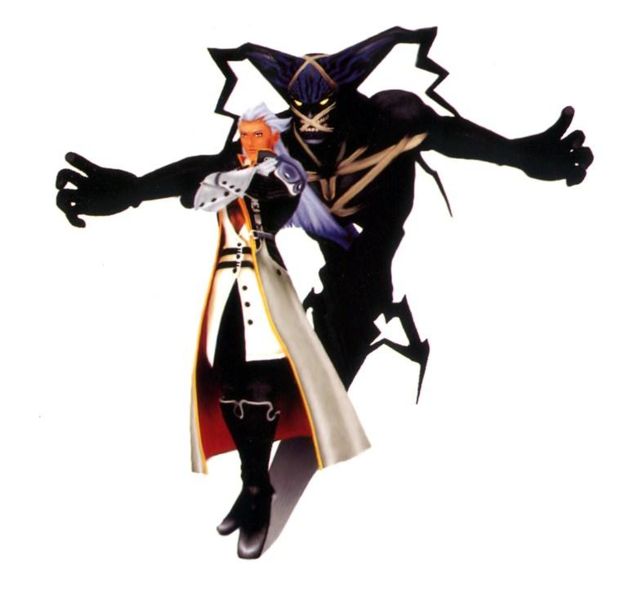
Xehanort: All Incarnations (Kingdom Hearts series)
I find something positively enchanting about all
incarnations of this Kingdom Hearts villain.
Despite his role as ultimate evil, a greedy, selfish incarnation of how
a good power can be turned wicked, Xehanort remains pretty engaging as a
character, in my opinion. In the first
Kingdom Hearts game he is a very dramatic, almost Shakespearean figure, using
his words and his mere presence, which at that time was without physical form,
to manipulate Riku, best friend to our hero, Sora, before ultimately possessing
him. Xehanort only evolves from there,
going from a shadow of his former self to a being gifted with power over the
darkness in hearts, which grants him near limitless strength, as all hearts
contain at least some darkness. He uses
this power to continue his pursuit of knowledge and the ultimate heart, Kingdom
Hearts. Even after his defeat, he
lingers within Riku, tempting him with offers of power but also helping the boy
to grow into his own. After all is
settled in Kingdom Hearts 2, the prequel story, Birth by Sleep, reveals the
truth of Xehanort. A grim, jaded old man
who despite his frail appearance is one of the strongest Keyblade masters to
ever live. His search for the truth of
the heart and for knowledge led him to become cunning and deceptive, so that he
could corrupt and manipulate a youth named Terra before stealing his body. Xehanort is interesting because while he will
not hesitate to manipulate, corrupt, fight, or lie to achieve his ends, he is a
scholarly individual, musing on the nature of good and evil, light and
darkness, right and wrong, and constantly seeks knowledge for his goals. He's revealed to not be entirely heartless
either, such as when he managed to aid Riku and encourage him, or when after
hurting his own apprentice, he returned him to the islands he grew up on so the
apprentice could rest. While his plans
can be a bit too elaborate at times, he's interesting for his scholarly
pursuits and because there are shades of a time when he was actually a warrior
for the light, before his obsession and fear surrounding death and
heartlessness jaded him.
 |
| The scholar quests for answers within the darkness. He cares not for those hurt by his goals, he cares only for truth. No act is too cruel, no betrayal too great, so long as he finds answers. |
 |
| There was a time when the scholar sought answers in the light. However it blinded him and he became jaded. Thus, he turned to the dark. The scholar is corrupted, but wise. Demonic, but not without a human heart. He is selfish, but shades of a hero remain. |
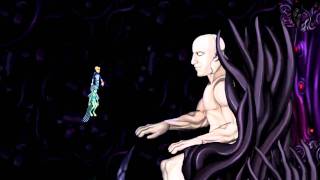
Creator (Aquaria)
Children are selfish. Children act without thinking. Children are almost always sure they are
right. And the Creator in Aquaria is a
millenia old child. Formed when a child
falls from a city in the sky into the ocean and merges with a god-like power,
the Creator is one of the most despicable, but also tragic villains I've ever
met. He lost his home and his mother and
spent his eternal life trying to recreate her under the sea. And each time he failed to make her
"Perfect" he destroyed the civilization that had been created by his
"mother." This means the
Creator of Aquaria has singlehandedly committed genocide almost 12 times,
sparing only the mother figures, usually, out of some misguided form of love. He hounds Naija, the hero of Aquaria,
throughout the game, constantly seeking her mother, Mia, his
"perfect" creation. And yet,
in the end, he was just a child given power he never wanted. He only desired to return home and be with
his mother. And when Naija defeats him,
his final request is that she sing him to sleep with the lullaby of his
mother. The Creator is an interesting
look at both the psychology of a child and how gods can be very much like
children. You see, children only develop
ideas of right and wrong after a certain age when their brains become advanced enough
to understand morality. But the Creator
never seemed to understand what was wrong with his actions, following the logic
of, "I created it, it is mine, I can do with it what I please." This draws a nice parallel to other gods in
myth and religion because while they always act like they are right, they can
at times be petulant children. They will
punish their creations on a whim and call it just because they are the ones who
made them. They lack basic ideas of
morality or willfully ignore them for their own pleasure. The Creator is an interesting look at how
pathetic a god can be when brought low...and also how tragic they can be, since
despite his power, the Creator could never have what he truly wanted. He only found peace when Naija sang him to
sleep.
 |
| The child thinks himself a god. He sees no consequences of creation and no wrongs in destruction. Without a guiding hand, he will continue to spread misery until it engulfs him entirely. |
Creator (Final Fantasy Legend)
The Creator from Final Fantasy Legend was something of a
tossup, since I only had 9 villains who absolutely had to make the list. But, let's just say that the Creator is kind
of beautiful in shock value, symbolism, and in how his actions affect the
players. You see, in Final Fantasy
Legend, heroes must climb a tower that reaches into the sky, fighting fiends
and monsters on each floor they arrive on and seeing all manner of sights, from
an ocean world, to a cloud kingdom, to a dystopian nightmare. However, when they get high enough, they
fight Ashura, who offers to give them worlds of their own to rule. When they refuse and beat Ashura, they are
deposited back in the first world and, with no further fiends above them, reach
the top of the tower, where it is revealed that the entire tower and the worlds
below are merely a game for the Creator, the god of the world. In essence, he created the tower, Ashura, and the worlds as a game, creating everything for the purpose of entertainment. He was amused by the heroes efforts to reach paradise, at the top of the tower, and watched them every step of the way. He is the designer of this world...a game designer. The Creator sees nothing wrong with what he's done,
since to him the characters are little more than bits of data, but the heroes
are horrified at having their lives and the lives of their friends manipulated
by this callous god. So, they defeat him
and are presented with an opportunity to see behind the Creator's door, to
enter his world, a place none have ever seen, possibly the paradise they have been seeking.
And they choose to go home instead.
Even if their world was just a game, it had become something real to
them. I love this villain because you
never saw it coming, but it kinda makes sense in a metaphysical way. His actions and thoughts likely mirror our
own, making both designer and player kind of the villain here, but it also
shows that constantly moving forward isn't the only way. Sometimes, when the adventure is done, it's
nice to return home and spin your stories around a campfire.
 |
| The god sees all the world as a game. For his own amusement, people fight and die. However, is is only when the god is brought low that he realizes his folly. The world is far more than just a game. |
And those were the greatest villains I've discovered. They each have something special about them
which endears them to the audience, which is important, but are also unapologetic
about their actions which seek to hurt countless innocent lives. It makes sense for the heroes to stop them,
no matter how charming they may be. And
in my opinion, that's what makes a good villain. They are likeable, even understandable, but
also unapologetically evil, doing either malicious or selfish acts for their
own personal gain. They aren't evil
because "Wooooooo the plot needs a bad guy!" they're evil because it
serves their needs. That's
understandable. That's human. And that's scary.
Thursday, May 2, 2013
May, the month of Characters: Top 10 heroes I admire
May, the month of Characters:
This is sort of a personal project for me since Video Game
Growing Pains is not just a blog about the industry and how change can help,
but also a personal blog looking at my journey through the world of gaming as
it stands. And, inspired by the works of Doug Walker and the Blisteredthumbs.net Characters With Character panel, I
decided that I would do a bit of reflection on characters that mean a lot to me. May is going to be the month of characters,
with 4 separate lists about characters I think truly make gaming wonderful, or
deplorable, and the reasons why.
Hopefully, people can use these characters as baseline comparisons when
crafting their own heroes or villains.
Or they can just enjoy the list.
So, let's start with a few heroes.
Here are the 10 heroes I most admire, in no particular order.
Top 10 heroes I admire:
Many people would argue that there aren't enough heroes in
the world. I say it's all about where
you look. In gaming, while we do stray
too far sometimes into the generic RPG hero, the fun but ultimately flat
platformer heroes, or the often morally bankrupt heroes of shooters, there are
times when heroes are born that can move you.
And this is a tribute to the heroes who've moved me the most in my
life. Needless to say, there will be
spoilers.
SPOILER WARNING!!!
Cloud Strife (Final Fantasy 7)
A lot of people will sigh or roll their eyes at this
inclusion, but Cloud Strife, as both an image and as a character, moved me when
I was a kid. He was different from other
heroes. Larger than life with his five
foot tall buster sword and his hardened persona, which seemed self serving but
which ultimately did what was right, Cloud was different from the RPG heroes
I'd grown up with. Underneath the more
gritty persona, however, Cloud was an engaging character who, for me at least,
embodied courage. True, most of the game
sees him chasing after his rival, Sephiroth, for answers, only to be revealed
to be a puppet in a greater plot and a failed clone of Sephiroth, but it is how
he deals with these situations that makes me say he is courageous. Cloud will not hesitate to fight for his
friends, even if the odds are stacked against him and even if his magic has
been stolen. But more than that, Cloud,
with the help of his childhood friend Tifa, has to come to terms with the fact
that he was, and is, a failure. He
identified himself as a member of Soldier, an elite group of warriors, when he
repressed the fact that he actually failed to gain entry into Soldier and it
was a friend of his, Zach, who became a Soldier. He even inadvertently caused Zach's death,
because Zach died trying to protect him.
Cloud had to accept his own weakness in order to get beyond it. To truly become himself and not a copy of
Zach or Sephiroth. But even before this
realization, Cloud showed boundless courage when trying to save those around
him. Before the main game started, it is
revealed that Sephiroth burned Cloud's home down and that no one, not even
Zach, could stop him. Sephiroth was
truly a monster, capable of slaughtering dragons and other giant beasts with
his bare hands. But after seeing
everything he loved in flames, Cloud took Zach's fallen sword and fought
Sephiroth, managing to defeat him and toss him aside, though he fell
unconscious from his own wounds. He did
this partly out of revenge, but Tifa and Zach had been injured and would have
been killed if Sephiroth was not stopped.
So, for their sakes, Cloud fought him.
Even against a monster like that, Cloud didn't turn away when it came
time to protect others. This is
especially important because Cloud knows by the end of the game that there may
not be any way to save the world.
Sephiroth is trying to drop a meteor onto the planet and even if he is
defeated, it may not stop. But for those
he cares about and those who have fallen before him, Cloud does not give
up. However, grim determination isn't
all there is to Cloud. Throughout the
game, he's shown to have a softer side, one more open to humor and wackiness,
such as crossdressing or participating in plays, and even though he deals with
some self loathing throughout his growth as a character, he always faces his
fears and fights for those who cannot protect themselves. Now, Cloud's been interpreted many different
ways, from the boring emo character to nothing more than a tool of the plot,
but I disagree. The first time I played
Final Fantasy 7, I saw courage in his actions.
And I cannot help but admire the strength he wields in facing his inner
demons.
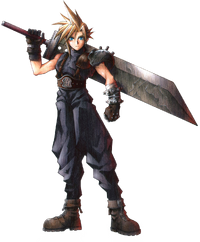 |
| Swathed in black and wielding a giant sword, this warrior's piercing eyes are full of courage. |
Fei Fong Wong (Xenogears)
Kindness, madness, denial, and self loathing. These four words describe the four unique
personalities that exist within Fei Fong Wong.
Truly a remarkable character in his own right, Fei has dissociative personality
disorder, giving him, at the start of the game, three split personalities. Near the end of the game, Fei splits himself even
further when he realizes some of the atrocities he's unwittingly committed as
some of his other personas, giving him four personalities. But, on his own, Fei is one of the nicest
people in gaming. A martial artist and a
painter of sorts, he trains only for self advancement, until war comes to his
tiny village, leaving a stranded giant robot and enemy troops coming up around
him. Fei takes the robot and pilots
it...only to destroy half the village in an uncontrolled burst of energy,
killing two of his oldest friends and ostracizing him from the other villagers. After which, he sets out on a self imposed
exile, accompanied only by an old friend and his self loathing. Fei is a character with boundless capacity
for good, but who fears his own power, especially after what happened to his
village. And with good reason. Dwelling within Fei is a destructive split personality
that can rip humans and robots alike to shreds with his bare hands. You see, when Fei was a boy he had terrible
experiments performed on him, in which his child self went into hiding in the
back of his mind, cherishing the good memories, and leaving only a bitter husk
of anger behind. When he was finally
subdued and freed from those who would use him, Fei contracted amnesia and,
because of that, his current persona of the kind and dedicated martial artist
became dominant. And for Fei to come to
terms with all this is one hell of a trial.
Fei meets reliable friends who are fighting for independence, salvation,
or just basic human rights along the way and despite his quirks and how
dangerous he proves to be, they all care for him, helping Fei to cope with and
accept his nature. He even falls in love
with Elly, a young woman who caused the calamity in his village by stealing the
robot in the first place. She too is
afraid, but more so of weakness, failure, and a loss of control. They meet in a forest shortly after Fei
leaves his village and end up strangely close, despite Fei's frustration and
anger and Elly's bravado. The next time
they meet, Elly's been drugged up on a performance enhancer which increases
aggression. It's up to Fei to save her,
having experienced his own form of lost control and knowing what it can do to
yourself and others, Fei is able to snap Elly out of her blood rage. Fei understands pain and is able to empathize
and help others better because of it. By
the end of the game, it is even revealed that he and Elly have been brought
together through reincarnation countless times throughout history, only to be
separated by tragedy each time. Once Fei
is able to merge his separate personas into one, he is able to save Elly from
being absorbed by a psychic entity which takes her over and return to their
home planet together, thus breaking the cycle of tragedy. Even though he only wanted a peaceful life,
Fei's empathy, kindness, will, strength, and his drive to save others helped
change the world, freeing it from a corrupt nation lording over it and helping
to establish global peace after a calamity.
Fei Fong Wong is unbelievably complex and nuanced, but at heart, he's just
a man trying to help others and do what's right.
 |
| His own worst enemy, despite the earth shattering power he wields, this man's kindness is his true strength. |
Lenneth Valkyrie (Valkyrie Profile)
Valkyries are choosers of the slain in Norse mythology, who
ride down to humans who die worthy deaths in battle and take them to Valhalla to feast and fight for all eternity. Lenneth is a different kind of valkyrie. She serves Odin, the all-father, at first,
but has an unbelievable capacity to empathize with mortals about the situations
revolving their deaths. More than once,
she is asked by these mortals to take their lives so that others might be
saved, thus earning her approval. Lenneth
also cannot abide people profaning the dead or attempting to use dark power to
hurt others and will strike them down if she sees them. Why does a god have such empathy? Because when Lenneth is not choosing the
slain, she lives as a human, bereft of her divine memories, to experience life
as they live. This is where the story gets
interesting. Fearing Lenneth might rebel
against the gods for the sake of humans, or that she would be unable to do her
job, Odin sealed her memories and used her as a tool. But at one point, Lenneth's memories are
awakened by a man she knew as a human, after he has been killed by a traitor to
the gods named Loki. This sends Lenneth
into shock and leads Odin to try and put her back to sleep, awakening her
crueler sister, Hrist, and nearly destroying Lenneth in the process. Ironically, her empathy for humans is a two
way streak, as those she has chosen from the dead to be her allies save her and
help restore her to power, with some assistance from a sorcerer who has been
stalking her. Together, she is able to
rise above Odin and is given the ability to create and protect. A plot by Loki disrupts the balance of
Asgard, leaving Odin dead and his toadies in a panic. Lenneth walks through them and fights Loki,
for revenge and to protect others. Loki
causes the end of the world, but with her new power, Lenneth causes the world
to be reborn, and protects all the living souls within it. Lenneth's story is not merely one of love,
but also one of rising above patriarchal bonds.
Odin decides what is best for Lenneth, but like many in power, his obstinance
and assurance that he is correct blinds him.
The other two valkyrie under his command are treated just as
carelessly. Lenneth's younger sister
Silmeria is imprisoned for being too empathetic to humans and her elder sister
Hrist is cruel to them, using humans as tools, like Odin. Lenneth finds the balance between the two and
ultimately proves wiser than Odin by putting her faith in humanity rather than
power or sacred objects. What amuses me
most, however, is that while Odin claims himself to be lord of the gods, father
of all, etc. etc. Lenneth and her sisters, when combining their power, can
change fate, making them his superior. A
patriarchal figure suppressing a woman out of fear only to have the tables
turned on him? Deliciously ironic. Lenneth shows detachment at first, but grows
to love and respect her human allies as she tries to understand their sometimes
irrational actions. In the end, she is
rewarded by being reunited with the man Loki slew, who she now realizes she
loves. Lenneth is an admirable female
figure in her own right, made all the more impressive by her boundless ability
to care for others and her wisdom in dealing with the trials thrown her way.
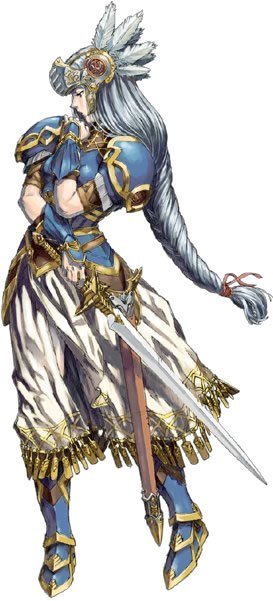 |
| Chooser of the slain, her empathy and wisdom allowed her to stand above even the gods. |
Chrono (Chrono Trigger)
Chrono is not deep at all.
He's another silent RPG protagonist.
Yet, that doesn't mean he has no character. Chrono has a unique look, tons of reliable
friends, and a loving family life, all while being skilled with the katana. And when one of his friends is sent back to
the past and stranded by a time machine, Chrono embarks on a journey to save
her. In so doing, he discovers that
several hundred years after he will die, the world will be destroyed by an
intergalactic entity called Lavos. Even
though he need not fear it, Chrono sees the devastation and the hopelessness
that engulfs the world after Lavos appears and, with his faithful friends,
decides to fight against this evil, even if the odds are stacked against
them. Chrono cares about helping others
no matter the time or the place because he is a good hearted soul. He's also very lucky, too. At one point in the game, Chrono is outright
slain and wiped from existence by Lavos.
However, his friends go back in time to the moment of his death and swap
his body out for a cheap clone they were able to find, effectively defying fate
to save him. With Chrono back to life,
he is not shaken by fear or the realization of what very nearly could have
happened to him, but redoubles his efforts to save others from Lavos's power. Along the way, he and one of his friends,
Marle, develop a close bond. Eventually,
they fall in love. Marle was the one who
saved Chrono, after all. Chrono is an
avatar of the player to some degree, but even if silent, he still maintains a
unique personality through his body language and the actions he chooses to
take. I suppose what I love most about
this character is his perseverance.
Despite the odds, Chrono never gives up and will fight on. Even after dying, his memory inspires the
others and eventually ends up having him resurrected. He may not say much, but for the sake of his
friends and for the sake of people everywhere, Chrono will travel to the ends
of time itself, fight dinosaurs, robots, and monsters, and do it all while
having the time of his life. Chrono
never gives up.
 |
| A timeless hero, he shall traverse the ancient past and the far off future to protect the innocent. Even in death, he perseveres. |
NiGHTS (Nights into Dreams)
What could be more admirable than a character who embodies
dreams and protects others from nightmares?
Nights is a spirit who was originally created to cause nightmares, but
broke free of his master's control to enjoy and protect pleasant dreams. Dreams are hope. Nightmares are despair. And when children in despair come to the
world of dreams, Nights can help them to find their own strength. Courage gives Nights power and with that
power, Nights helps children recover control of their dreams. Nights is hope in despair. Neither male nor female, Nights is a fragment
of dreams and imagination that is playful, free spirited, and perhaps most
interestingly, vulnerable. Nights is
unable to fight the nightmares without the aid of children who doubt. Because courage is not something that can be
taken from you in the world of dreams.
Even if hope is lost, courage remains.
And it is the courage of children that grants Nights the power to
fight. Nights helps people find the
strength within themselves, the strength they always had but were unable to
see. That's why I can't help but admire
Nights. Nights fosters self improvement
and hope in people, showing them that if they believe and keep moving forward,
then they can face their fears, their doubts, and all the horrors of the real
world and their nightmares. Through
Nights, we realize our own power.
 |
| The playful dreamer offers hope in despair, showing us the strength within ourselves. |
Terra Branford (Final Fantasy 6)
Terra's one of my favorite characters ever. I first met her when I was just a child,
playing Final Fantasy 6, so part of this is nostalgia. But there's more to it than that. Terra is a character who goes through a
remarkable journey and immense personal growth to overcome a lifetime of
slavery and oppression. You see, Terra
was taken from her parents as a baby, raised by a totalitarian empire that saw
her as only a weapon, and made to kill and slaughter against her will. When she is freed from their control, she is
horrified at her actions. Terra is a
warrior with great power, but underneath it all is a scared girl who wants to
understand who and what she is. The
child of a magical being called an esper and a human, Terra begins without the
ability to control her vast stores of power and is a danger to those around
her. But through her friends, she is
able to find joy and acceptance, even learning to make peace with her two
different lineages. Terra, despite
doubting herself, decides to fight for others, joining a resistance movement to
fight the empire at first, and when the world is destroyed, Terra devotes
herself to raising and protecting children in a tiny village. The children even give her the strength to
fight to save the world in the end.
Terra acts as a mother without children, seeking to find meaning in her
own life. That's why I admire her. Even with all her doubts, even with being
horrified at her actions, and even with being torn by her very blood, she
always finds a way to fight. To protect. Her kindness and innocence coupled with her
immense power juxtapose nicely with the Kefka, the main villain, who is cruel, self
serving, insane, and in possession of godlike power. When the Kefka asks her what the point of
life is, why people live, even when all that remains for them is pain, Terra has
finally found the answer. We take pride
in our small victories. In kindness. In protecting others. In hope.
We find our own reason to live.
Terra knows these struggles more than anyone else, being born into
slavery and having to discover her own purpose for being alive. Once the game ends and Kefka is dead, Terra
too starts to die, as magic and the espers which spawned her cannot exist
without Kefka's power. However, she
chooses life and embraces humanity fully, remembering that she has found her
reason to live and will continue to exist, even without magic.
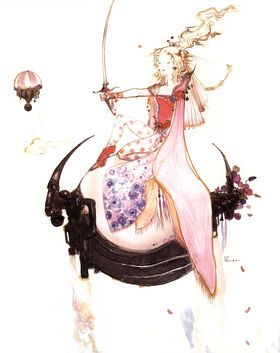 |
| The girl struggles with her two lineages, but ultimately finds her reason to live. Armed with this reason, she fights to save the world. |
Vyse (Skies of Arcadia)
Everyone loves pirates because of their swashbuckling spirit. The search for adventure, the exploration,
the threat of the unknown, the magic...it's why even today we look back
nostalgically at pirates and the age of exploration. Vyse takes that to the next level. He's a sky pirate. In a world made up of islands and continents
which float in an ocean of clouds and air rather than water, he soars the skies
with his trusty crew of pirates seeking adventure and fortune. However, Vyse is no Blackbeard. Vyse is a kind, noble individual. He's a member of the blue rogues, a group of
pirates who are noticeable for sparing the innocent, only robbing the rich, and
basically being good hearted people. He
saved a girl named Fina when she was in trouble and together with his childhood
friend, Aika, they go out of their way to help Fina recover six ancient
artifacts to prevent an evil empire from taking over the world. Along the course of his journey, Vyse gets
stuck working for an old sailor and a ladies man, is forced to sneak into a
prison to save his family and friends, and is wrongfully accused of being a
thief and a villain. However, he never
loses his good nature, his humor, or his sense of wonder. No one is bound by their circumstances
according to Vyse. He strikes out on his
own with naught but his friends for support and he frequently encourages others
to do the same. He shows an old sea
captain that revenge may not be the answer.
He offers a young prince the chance to do what he believes is right
rather than what is expected. He even
convinces several of his enemies to pursue their true goals, be it love, honor,
or to become pirates themselves. Vyse
defines freedom and choice. Everywhere he goes, he finds undiscovered lands and
treasures and visits ruins and people who were lost or isolated from the rest
of the world. In fact, the wonder of
exploration and his friends are why he goes out of his way to save the
world. Vyse's ultimate goal is to have
his own pirate ship and sail the endless skies.
And he can't do that if the world's destroyed. He wants to see everything that he can and
experience as much of the world as possible.
Vyse is a strong fighter, a reliable friend, and a capable captain, but
above all else, he's an explorer, charting the skies of Arcadia, free as a bird.
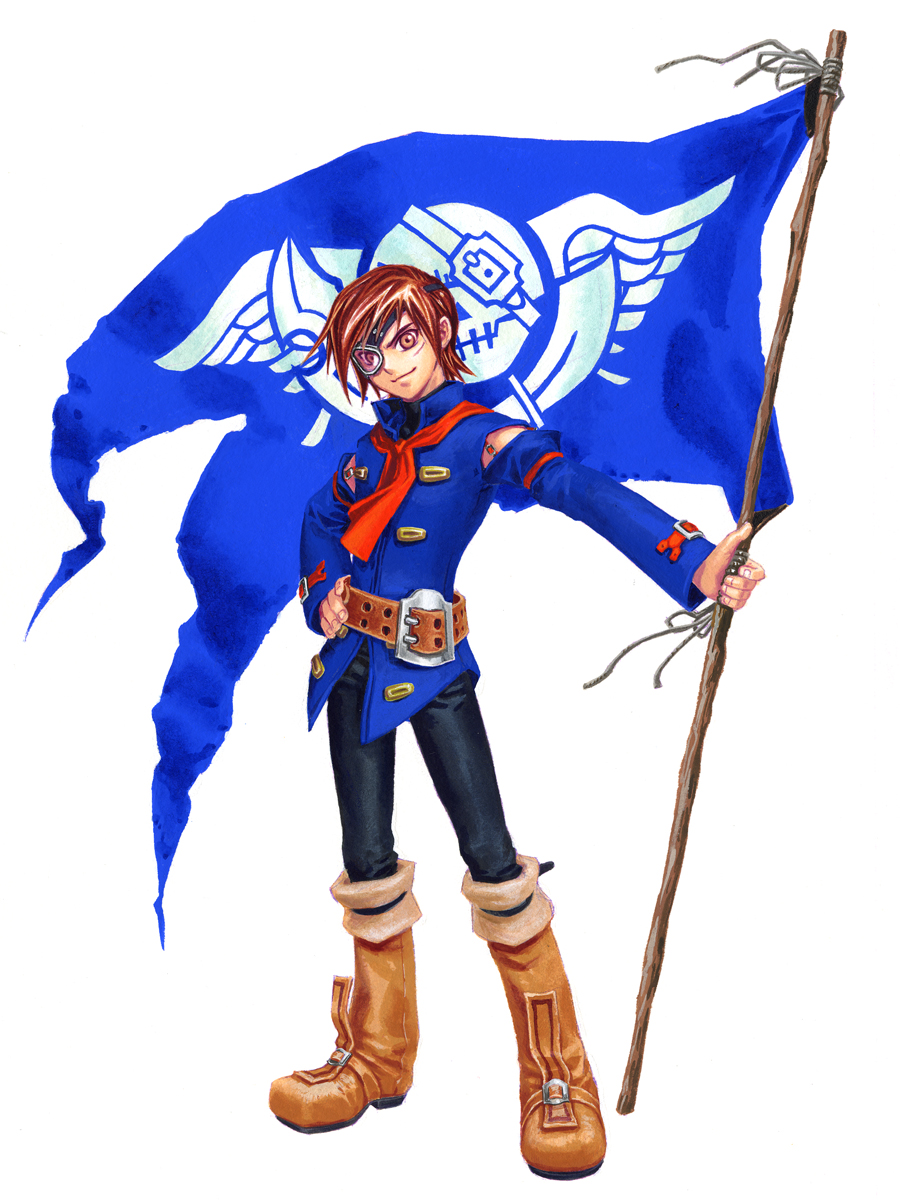 |
| The pirate flies free as a bird through the skies of Arcadia, ever seeking new treasures to discover. |
Naija (Aquaria)
There is something wondrous about Naija. Every new vista she sees and strange sight
she encounters causes her to gasp at the beauty around her. Naija is a girl who loves to explore and the
thrill of unknown waters washing over her fins is what constantly pushes her
forward. Naija is interesting because
she still retains a sense of child-like wonder and awe at the world despite
having to learn to fend for herself, frequently killing others for meat or
power in order to survive the dangerous waters of Aquaria. Even though she must kill to survive and find
answers as to why she is alone, she never forgets to stop and smell the kelp
flowers or ride a seahorse for fun, or sun herself on the beach. Even love is all about exploring and
experiencing new things to her, which leads her to fall for a human diver named
Li. These feelings of wonder are
precious to Naija and she protects them ferociously, dolling out punishment to
those who would defile the world or harm her love. I find something unbelievably beautiful about
this creature who started out young and fragile, only to become hardened and
tough, while still being able to be moved by the beauty of the world around
her. This is especially true,
considering that her mother stole her memories from her. The one complaint I have about Naija is that
her story is not complete. We only know
half and may only ever know half. It's a
bit depressing. Still, for the half we
do know, Naija is someone I admire because of her ability to be moved by all
that she sees. The wonder of exploration
is Naija in a nutshell.
 |
| The child of the sea truly knows she is alive when uncharted waters wash over her fins and new vistas appear before her. |
Gwendolyn (Odin Sphere)
When people say games are inherently misogynist, Gwendolyn
is the character I point to that breaks that rule in every way possible. Gwendolyn is a valkyrie, a warrior woman
whose greatest joy is battle and whose greatest fear is marriage and
subjugation by a man. Despite this, she
is a respectful daughter and will do anything to make her father, Odin, happy,
even if it means she must suffer. While
this could make people think she's a straw feminist with daddy issues,
Gwendolyn comes off as surprisingly human, questioning her own motives and
thinking some pretty horrible thoughts from time to time. When she meets her much more beloved half
sister, for example, she thinks, "If she's dead, I'll be daddy's favorite. I'll be all he has left." However when faced with the chance to let her
sister die at the hands of one of her father's generals, she slaughters the
general and frees her sister, telling her to run. And when her father confronts her about her
actions, she accepts his punishment, believing she has done what was right in
protecting the child he loved. At first,
Gwendolyn never strays from her duty, doing all that she can to grant her
father victory in his war with the fairies, even going so far as to betray the
trust of someone who loves her. However,
she is not blind to what happens around her and starts to learn that duty is not
all there is to life. Slowly, she starts
to change, following her heart rather than her duty as a soldier or a daughter
or even as a wife. She always tries to
do the right thing and in the case of saving her sister, her father enchanted
her to love her bitterest enemy, the shadow knight, Oswald, as punishment for
her betrayal. Only...Odin didn't. He didn't enchant her and counted on her
loyalty so that he could get a special ring the knight had bequeathed her as an
engagement gift. Gwendolyn didn't know
and out of respect for her father, she retrieved the ring for him and saved him
from being killed by a traitor. When she
realized afterwards that Oswald killed the king of the dragons to get that
ring, which he gave to her as an engagement present, she started to wonder
about her feelings and sought to protect Oswald. She saved him from being slain by another
dragon and when her ring was stolen from her father, she fought through a small
army to get it back. When Oswald learned
she had given it away, he fell into despair because he knew that she was not
enchanted to love him and had tried to win her love through his devotion and
actions. As soon as he learned of
Gwendolyn's betrayal, however, he felt that she had chosen not to love him and
died from sadness. Gwendolyn refused to
accept this and went into the netherworld itself to retrieve him, killing the
queen of the netherworld to save her husband and standing up to her father, at
last, for herself and for the sake of her love.
Gwendolyn is a character who is very human. She is conflicted about her choices quite
often and ultimately ends up hurting people she loves. However, she accepts her mistakes and tries
to make amends. She is strong willed,
refusing Oswald's advances at first, even though she believed she had no
choice, and strong in body, routinely battling dragons and huge beasts. She's a romantic and loyal to her dear
friends. Gwendolyn moved me for being
exactly the kind of female protagonist I wanted. Strong and capable, but not just a man with
breasts...she was flawed and human, facing very real concerns about being a
woman, such as the fear of childbirth and subjugation in a male dominated
world. She and Oswald made a good pair
in that regard, as he would never treat her as an object. I suppose what I admire most is the love
Gwendolyn and Oswald share, even though they grew up as enemies. They respect and care for one another because
of all that they have gone through to be together.
 |
| The valkyrie faithfully does her duty, until love makes her realize her true duty is to her heart. |
Yuri Hyuga (Shadow Hearts)
Poor, poor, Yuri. He's suffered all his life, lost his mother,
father, his lover, his friends, his soul, and eventually his life. Yet, for all that, he's pretty bad ass. Yuri is sarcastic, snarky, and lives everyday
with purpose, whether that means getting into a fight for fun or just trying to
make the voices in his head quiet down.
He's an honest and kind young man underneath the tough street punk that
was born out of his mother's death. In
fact, if it weren't for his ability to fuse with demons as a harmonixer, he might
well be the star of a dozen different action movies. Yuri is cursed by his demonic powers and is
filled with malice that must constantly be purified, lest he lose his
soul. He doesn't really know compassion
till he meets his beloved, Alice,
and she gives her life to save his.
Despite the loss, Yuri continues forward, protecting her grave and any
people he finds with his power. Yuri
even goes so far as to try and revive her from the dead with his friend, Roger
Bacon. It fails and all he's left with is
Alice saying
she loves him before she dies once again.
Depressingly tragic, Yuri never lets his misfortune get him down too
much. While he laments Alice's death, he has friends he can depend
on, even among the enemy, and tries to make the most of his time, which is
sadly limited due to a curse. When all
is said and done, though, Yuri manages to defy fate and return to the moment he
first met Alice,
this time, sure that he can save her.
Yuri is a survivor. He keeps on
moving no matter what is thrown his way and will protect those who can't
protect themselves. This attitude earns
him the respect of his friends and enemies alike. No one is too high and mighty for Yuri, who
isn't above smacking a god with his brass knuckled fists for causing trouble. What I find most endearing about Yuri though
is his romantic streak. Never having
known love besides his mother, he cares so deeply for Alice that he seeks to revive her from the
dead. And when that fails, he defies
fate in order to try one more time. Yuri
Hyuga. He makes even fate quake with
fear.
 |
| The harmonixer is without fear. For his love, he will stand against fate itself and emerge triumphant. |
Well, that's the top 10 characters I admire, in no particular order. These heroes are my favorite amongst all the hundreds of games I've played. Tune in next week for my top 10 villains I love to Hate.
Sunday, December 16, 2012
Manual Mayhem: Where Did Our cloth Maps Go?
I was born in 1988 and grew up in the grip of Nintendo
mania. During that time, I played a number
of fantastic games from the NES and SNES, as well as the Sega Genesis and
Master system. However, the games were
only half the fun for me, as a child. My
brother liked to hog the systems, so I amused my self with his copies of
Nintendo Power or with the manuals that came with our games. Why?
Because in that era, manuals for video games were works of art unto themselves. Which is why today, it pains me to denounce the video games industry for their exceedingly pathetic supplemental material for modern video games.
 |
| 3 pages. Why is this manual 3 pages?! |
Now, for
anyone born after 1998, this may raise a few eyebrows. Video games come with manuals, naturally, but
they aren't anything special. They give
you a little background into the game, the story, the characters, and tell you
the controls. However, as time wore on,
the need for manuals seemingly decreased.
Games had tutorials for teaching players the mechanics and if they
wanted story, they could just play the game.
However, this logic is, in my opinion, horribly flawed. Game manuals and supplemental materials can
do far more for video games than simply instruct. They can immerse.
For example, Final Fantasy 3(6) for the SNES was a crowning achievement in 16-bit RPGs, meshing charming graphics and an unforgettable score with a moving story full of unique characters. However, the game wasn't the only part of Final Fantasy 3(6) which was special.
For example, Final Fantasy 3(6) for the SNES was a crowning achievement in 16-bit RPGs, meshing charming graphics and an unforgettable score with a moving story full of unique characters. However, the game wasn't the only part of Final Fantasy 3(6) which was special.


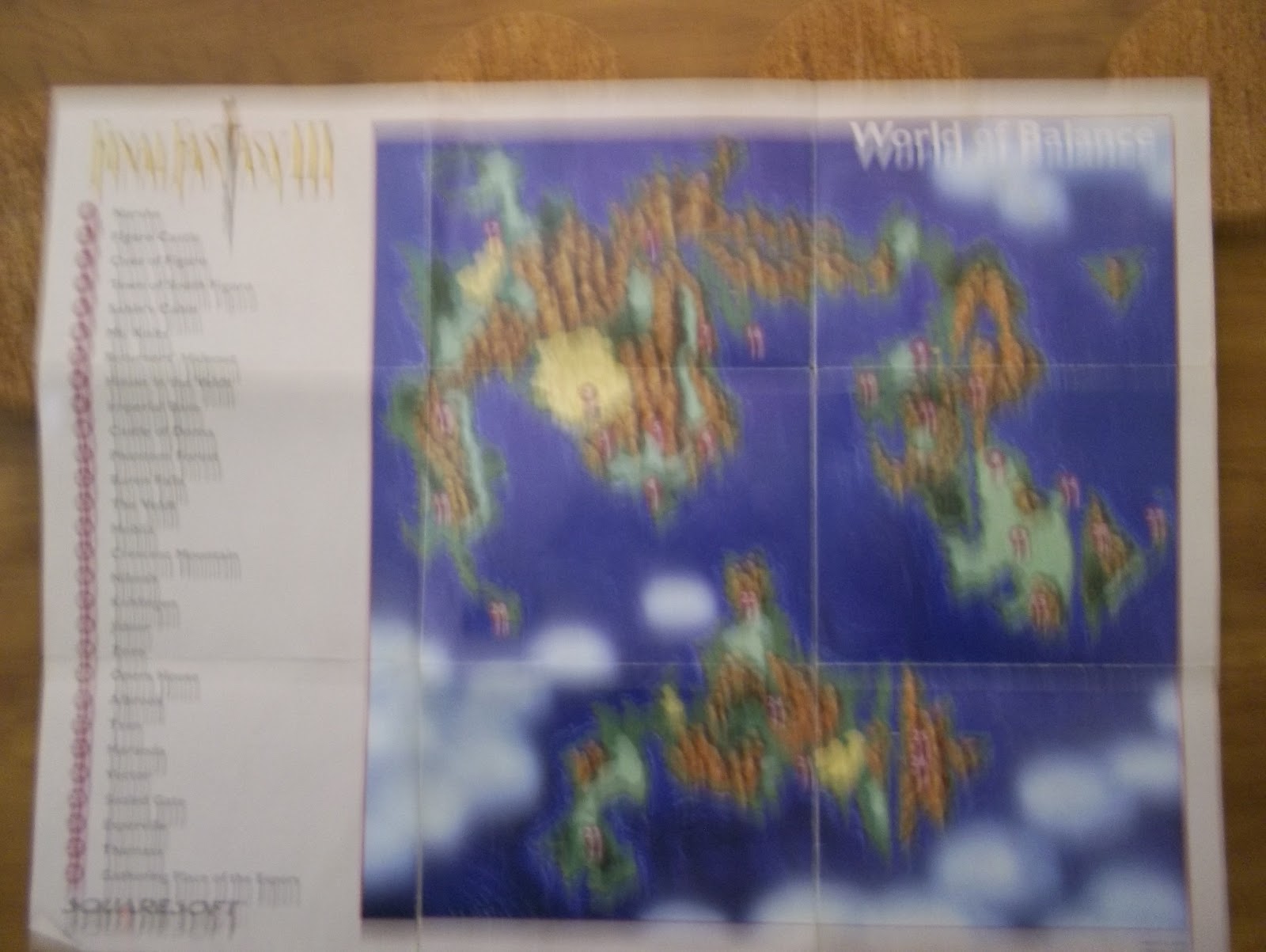
Showcased
above are images from the manual. They
are in color and chocked full of interesting illustrations from the Final
Fantasy series's longest running character designer, Yoshitaka Amano. It's more like an artbook than a manual in
some places. Next to each character is a
small poetic description, meant to excite the players. Along with these descriptions, the characters
get their own illustrations and a thorough explanation on how their special
moves work, some coming with necessary advice or tips to make them more
effective. The back of the manual is full
of tips and advice, while the front contains a dramatic recounting of the War
of the Magi, a conflict central to the plot of Final Fantasy 3(6). It immerses players in the world's lore,
while giving them advice on how to proceed.
It wasn't the only thing that came with the game though. There was also a full color, double sided map
to help keep players on track. This
entire package sold, at the time of its release, for near what a collector's
edition sells for now. However, this was
just the standard edition. Final Fantasy
3(6) came with all this standard.
Other games
in the early 90s, realizing how difficult they could be, had full color,
hundred page strategy guides pre packaged with their games. Phantasy Star 3 is one such example, offering
complete maps, bestiaries, and item lists for gamers looking to get a little
help with their RPGs.


Even more basic games which didn't have name brand value at least gave it their all. The game manual for the NES title Crystalis had explanations of all the items, a few tips, story bits, and illustrations based on the actual gameplay. They had effort.

Compare that to manuals of today. In front of you is the manual for White Knight Chronicles 2, part of a pair of games that are incredibly complex, have a deep character driven plot, gorgeous graphics, and lots of story. So, how do they do this epic justice? With seven pages giving the most basic description of controls with no attempt made to actually educate gamers on some of the nuances of game play. The manual comes up to fourteen pages if, and only if, players count the foreign language sections. This is pathetic, showing no effort or attempt to immerse or engage the players. It is the most bare bones, waste of space manual one can have.

When did
manuals start receiving such disrespect?
I remember a time when the manual was an integral part of the game
because it offered something the game couldn't.
Take the manual to Metal Gear Solid 2.
It contains within it a small comic that actually explains gameplay by
showing how it would work in the game.
The main character dodges guards, avoids alarms, and uses his weapons or
his fists in the comic in the same way the game uses them. It shows an attempt to engage players with a
unique approach to tutorials and interesting art design.

But games
do not even need to be this inventive.
Adapting gameplay into comic form is hard. However, incorporating world building can be
astonishingly easy for those with a little forethought. Take the manual to Final Fantasy Legend on
the Game Boy. It contains many useful tips
as well as information on players, the world, and items. However in the very back of the book is an
adventurer's diary. It tells the first
few levels of the game as if they were straight out of a novel or a diary of a
fallen adventurer, talking about characters fighting, leveling up, and
advancing through the game. It is
engaging and it is little more than a few words on a page with the occasional
bit of art thrown in, like a helmet or a sword.
It requires no effort beyond someone typing up a few pages of fluff on a
computer. This. Is.
Easy. Why don't developers use
this more? After all, an engaged player
is a player more likely to come back to the same game series and the same
developer.

Some games
can have basic manuals, but can require players to think outside the box as
well. Literally. The original Metal Gear Solid, along with its
remake on the Game Cube, had players look on the back of the box for a code
necessary to advance through the game.
This fourth wall breaking approach adds not only humor but a sense of
involvement from the player in the game, making them more engaged.

The current trend of pitifully uninspired game manuals saddens me greatly. True, not all manuals need to be epic novels, but they are as much a part of the game as the story or gameplay. They deserve respect. And it is only in recent years that the plight of manuals have become so dire. While I never owned any of the Ultima games, they came with special fluff books and cloth maps that fleshed out the game world. These days, games with these "extras" require a premium price.
There are
exceptions to this rule, of course. Take
the Last Story. It was a game released
in packaging that resembled a book, with an artbook inside as well as a fully
equipped manual that gave character descriptions, world building elements, and
tutorials. However, this game was only
released as such because it was a pre-order only release. A re-release of Tactics Ogre on the
Playstation Portable included a pack of tarot cards matching those used in the
series. But only if players pre-ordered
it. The Arc The Lad Collection on the
Playstation 1 contained a huge full color art book that doubled as the
instruction manual, included standard.
However, the collection was rare, as games localized by Working Designs
were wont to be. Only for a premium
price or in rare cases do game manuals get the respect they deserve.


Players who
think that this is not an issue should take a short trip through time with
me. From 1993-1998, the Legend of Zelda
games have included a delightful assortment of manuals. They are all colorful, with cartoonish
illustrations of items, fold out or separate maps, and in-depth character
backgrounds. Compare that to the White Knight Chronicles manual, with it's black and white walls of text meant to give as little imagination as possible. Game manuals have slowly, but steadily been
dying out or getting worse. Even the Skyward Sword manual, which I no longer have, sadly, was in color, even though it lacked maps or character bios.
 |
| 1992 |
 |
| 1993 |
 |
| 1998 |
On one
level, I understand. The world of video
games is going further and further towards digital releases. Steam, XBLA, PSN, the Virtual Console. All of these negate the need for manuals to a
degree. Yet, many still include manuals
or instructions within the game. So, let
me make an ultimatum for game developers. Games are constantly being re-released,
released with pre-order only content, or released in collector's editions for
this supplementary material which was once standard. Yet mainstream games are criminally
neglected. It's time to make a
choice. Do not try to play both sides,
games industry. Either have your
collector's editions, while giving us the manuals we deserve, that do world
building, engage, inspire, etc...or eliminate them altogether and go
digital. I do not want to see manuals
die out, as they helped me learn to read as a child. However, the world is going in a new
direction. And sometimes we have to
adapt to change. But what I hate is a
games industry trying to play both sides, by showing zero effort with their
manuals on regular editions, but releasing "the good" versions for
collectors just so they can milk another 10-60 dollars from players. Do not short change manuals to save a buck if
you're still going to pretend that they need to be there. Go all or nothing.
I grew up
with video games which were fighting for their audience. And all the pictures above are of games and supplemental material
from my personal collection. I decided
to include them because I wanted to show how these older games had to engage
players on a greater level than games of today.
They included guides, maps, colorful booklets...and that's why I lament
seeing a tiny instruction manual like the one in White Knight Chronicles
2. It shows a general lack of effort in
the game industry, which has punctuated this generation of gaming. A lack of effort which disengages
gamers. Why is this personally important
to me? Well, because I've got a list of
modern games I thought I wanted to play.
But no matter how cheap they get, I can't bring myself to buy them,
because they are so samey. So
unengaging. So...boring. Compared to the games I just mentioned, they
are like trying to tell someone that a piece of lead is actually gold, painted
grey. And that is bad for the whole
games industry...whether they realize it or not.
That brings
me back to the question asked in the title of this article. Where have all our cloth maps gone? They've either been trashed to save a few
dollars, or they've been stuffed into an expensive collector's edition. A cruel fate for something that can do so
much for world building. And without a
solid foundation for world building...these game worlds will eventually come
crumbling down.
Subscribe to:
Posts (Atom)