Showing posts with label Metal Gear Solid. Show all posts

Sunday, July 20, 2014

Diminutive Diatrubes: The Ongoing Question of Game Length

Ladies, gentlemen, I am exhausted.  This week I had a lot of training to do for my trip to China and I got 3 shots, and worked a huge amount of time at my job with very little sleep...this is not the time for a big brain hurty discussion.  But, since I have plans for the next week or two and am not sure if I will be able to get a post out, I feel I should at least do this much.  So, let's have a short talk about game length and the price/length ratio.


Diminutive Diatrubes: The Ongoing Question of Game Length

            Lately, something has weighed on my mind, while I've been debating another video review before a creator spotlight.  And that is the value of a game based on its length.  See, I had an interesting experience lately where I tried a game that boasted 60+ hours.  I was bored within about 10 and just stopped playing.  Then, I picked up Savant Ascent on Steam and spent almost the same amount of time playing it, loving every second.  The kicker though?  The game I stopped playing as a huge, spanning RPG that could easily last for hundreds of hours before being done.  Savant is a quick arcade title that I beat in 30 minutes.  However, I enjoyed the game so much I went back to it enough to equal the time I spent on the RPG.
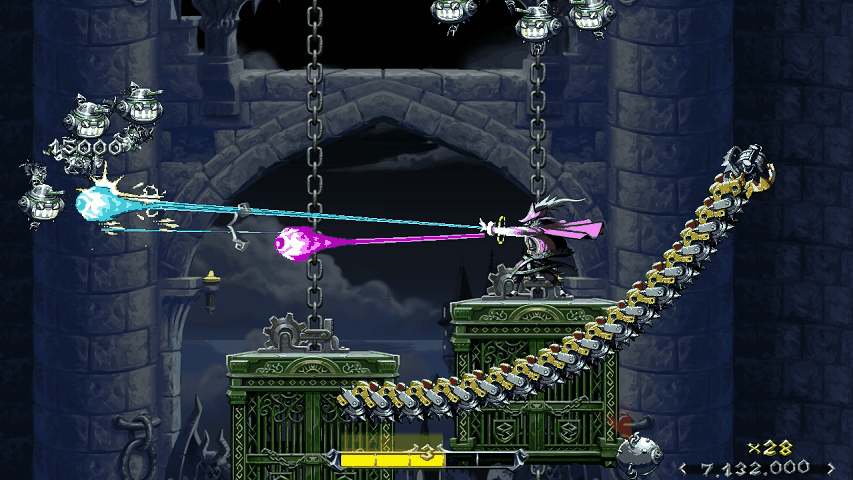
Savant is 30 minutes of head bopping, Guy Faux DBZ powered, musical mayhem.  I've played it at least a dozen times.  Money well spent.
            So, how long is too long for a game?  Is a game worth the money if it's only got a few hours, or hell, even a few minutes worth of gameplay?  What about AAA games?  Should they be held to a different standard than Indies and, if so, should we forgive artificial padding?  How much is a game worth if measured in hours.

            Angry Joe has a meme that is something infamous now, where he played Kane and Lynch 2, noting that, for $60, it only lasted 4 hours.  Foooouuuurrrr...hoouurrrssssss!!!  Same thing for Metal Gear Solid 5: Ground Zeroes, which can be beaten in 1 hour, 10 minutes or less if people ignore some of the extras.  And that game cost $40.  Savant Ascent, on the other hand, has about 30 minutes to an hour's worth of content, if you never replay it, for $3.  Is Savant worth the money?  Were Kane and Lynch and MGS 5: Ground Zeroes rip offs?  Or was the content delivered worth the money paid?

            Honestly, in the modern gaming landscape, this is a question that has no right answer.  It can only be examined on a case by case basis.  One series I absolutely love is Tiny Barbarian DX.  It had a free flash version and a Steam version for $10.  Both can be beaten in about an hour or less.  I was pretty satisfied with the amount of fun I got for my money, and even surprised that Tiny Barbarian was getting sequel-esque DLC episodes for free to anyone who'd bought the game, giving it an extra hour or two worth of play for each episode.  Yet, I can see how someone would say, "$10 for an hours worth of fun?!  That's such a rip off!  You can go to a two hour movie for less!" or something along those lines.  And...they're not wrong.  A valid point is made.  Call of Cthulhu: Dark Corners of the Earth squeezed out 10 hours before I quit it in frustration.  But those hours were so padded and wasteful that I felt cheated for paying the same $10 price tag as Tiny Barbarian.  And...I'm not wrong either.  If I wasn't having fun, that WAS a rip off.

It's like Conan.  But cute.  And tiny.  And fun.
            Price is a strange thing, as is the amount of fun to price ratio.  Many of us would be happier to drop $15 on Shovel Knight, play it for five hours, then be done, satisfied with a good experience.  Others would prefer to get value and pay $3 for two 20-30 hour RPGs in the form of Breath of Death 7 and Cthulhu Saves the World.  How can you argue with either?  You really can't, because all people are different and the games they go into are not always going to be conducive to providing a lot of value in terms of hours.  They will be able to provide value in terms of spectacle, satisfaction, or fun, however.  Usually, at least.  Some games will just blow either way.

Shovel Knight is a little short, but oh, is it ever satisfying.
            The best way of looking at it is this.  Did you enjoy the game enough that you don't feel bad you bought it?  Then, the money you paid for it was well worth it.  You can go back to it again to get more value or you can just enjoy the memories you made while playing at it.  If you have buyers remorse, like I did with Call of Cthulhu: Dark Corners of the earth...then the game was not worth the money.

I'll take short but sweet to long and getting lost, wandering around, and replaying sections in frustration because you died, thank you very much.
            I bring this simple thing up, however, because it IS important to remember that satisfaction is a wonderful thing, but we should not always let it be the only overriding factor as to whether or not a game is worth the price.  Why?  Because a game like Metal Gear Solid 5: Ground Zeroes released as a AAA game with the same length of an indie and the same price as a standard release.  This...is a problem.  Or rather, it could become one. 

Now, I can blow through a Metal Gear game like 2 or 3 in like 5 hours, but do we really want a game that's...an hour to beat and $40 retail?  Really?
            If developers, indie or otherwise, decide that they can get away with releasing a game piecemeal or without a lot of game time and selling it at the full price of $40 or $60, not only will we the consumer suffer, but so will the industry.  One of the reason games like Tiny Barbarian or Shovel Knight are successful is not just that they are good games, which they are, but because they are cheaper than the competition.  I could go and drop $60 on Titanfall or I could play the Forest on Steam for $15.  Will it sell as much?  No.  Is it the same genre?  No.  But can it be successful enough to fund a sequel or another game by the studio?  Yes.  Because it IS cheaper than the competition, or at least on the same level as games like Outlast or Amnesia.  However, if the Forest or Shovel Knight was released with a $40 price tag, like Metal Gear Solid 5: Ground Zeroes, they would crash and burn hard.  Not because they're bad, but because in this economy, we have so many games to choose from and yet very little money to spread around.  Cheaper games are more likely to succeed than expensive ones by selling more units at a decreased price, even if they don't have the ad or hype train behind them.  If games ever go the way of MGS 5, where players feel it's okay to pay $40 for a very brief experience, then...we could be headed for another video game crash.  Because fewer and fewer games will get sold, leading to indie devs starving and the few game studios with the money to survive less willing to take risks and provide unique titles like The Forest, Shovel Knight, or Bro Force.
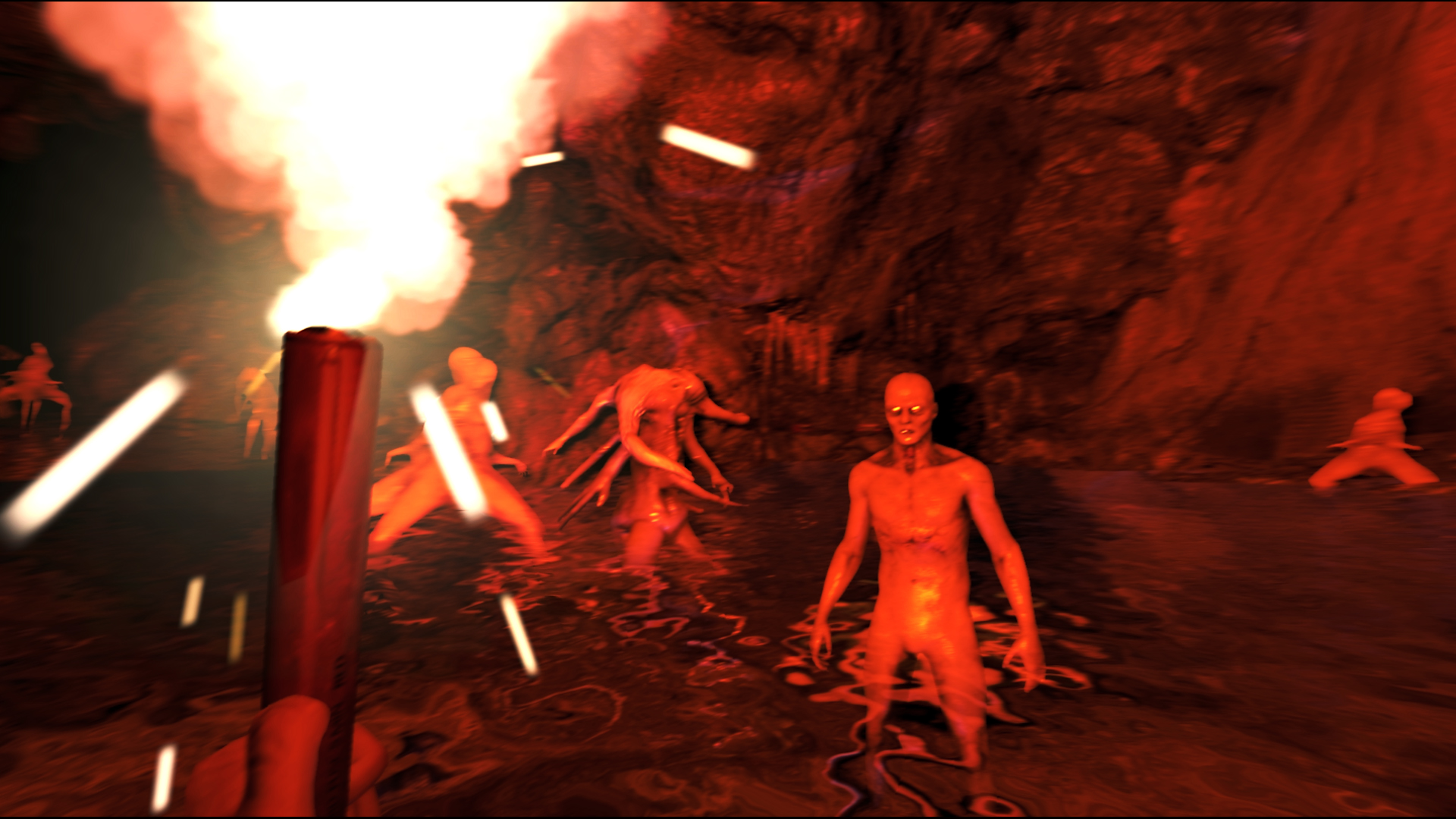
Survival horror wouldn't have survived as a genre if people weren't willing to drop the price and keep it low.  $15 for Amnesia, the Forest, or Outlast?  Yeah, I can afford that.
            The point I wanted to make with this little article is the simple idea that the only value a game has is what you take from it.  That being said, we do need to have standards.  In an ideal world, all games would sell for cheap, all the good ones would succeed, and everyone could play as much or as little as they want.  We do not live in an ideal world, however.  We have to differentiate between indies who are giving the best experience they can and AAA games who we should expect more from for the price.
This is just food for thought.  Don't let anyone else tell you what's really important when it comes to buying YOUR games.

            Ultimately, this question will remain.  But I leave it to you, the customers, the gamers, the players, to find your own answer.  This isn't meant to give you that answer...just food for thought.

Sunday, December 16, 2012

Manual Mayhem: Where Did Our cloth Maps Go?


I was born in 1988 and grew up in the grip of Nintendo mania.  During that time, I played a number of fantastic games from the NES and SNES, as well as the Sega Genesis and Master system.  However, the games were only half the fun for me, as a child.  My brother liked to hog the systems, so I amused my self with his copies of Nintendo Power or with the manuals that came with our games.  Why?  Because in that era, manuals for video games were works of art unto themselves.   Which is why today, it pains me to denounce the video games industry for their exceedingly pathetic supplemental material for modern video games.
3 pages.  Why is this manual 3 pages?!
            Now, for anyone born after 1998, this may raise a few eyebrows.  Video games come with manuals, naturally, but they aren't anything special.  They give you a little background into the game, the story, the characters, and tell you the controls.  However, as time wore on, the need for manuals seemingly decreased.  Games had tutorials for teaching players the mechanics and if they wanted story, they could just play the game.  However, this logic is, in my opinion, horribly flawed.  Game manuals and supplemental materials can do far more for video games than simply instruct.  They can immerse.

            For example, Final Fantasy 3(6) for the SNES was a crowning achievement in 16-bit RPGs, meshing charming graphics and an unforgettable score with a moving story full of unique characters.  However, the game wasn't the only part of Final Fantasy 3(6) which was special.


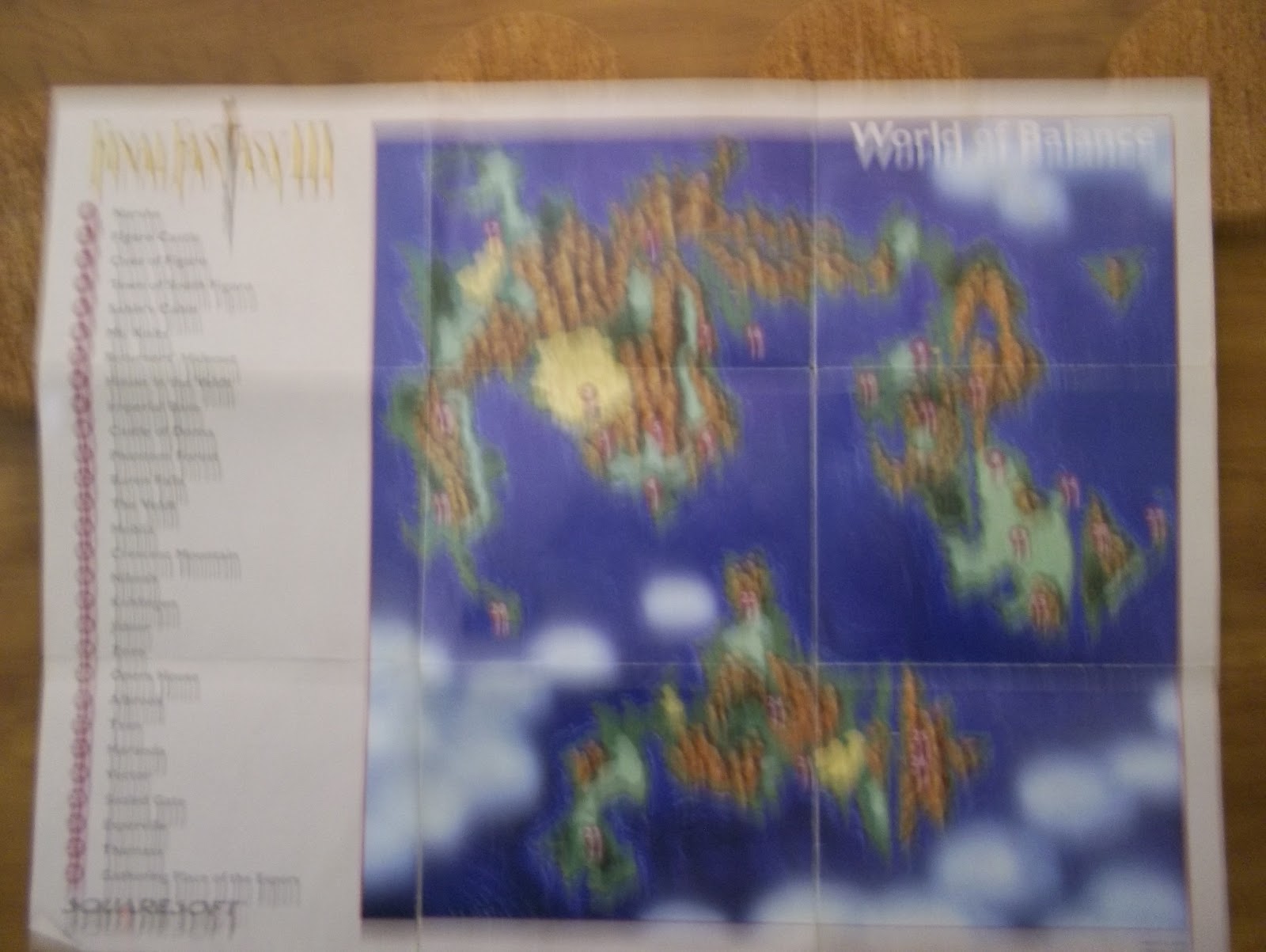
            Showcased above are images from the manual.  They are in color and chocked full of interesting illustrations from the Final Fantasy series's longest running character designer, Yoshitaka Amano.  It's more like an artbook than a manual in some places.  Next to each character is a small poetic description, meant to excite the players.  Along with these descriptions, the characters get their own illustrations and a thorough explanation on how their special moves work, some coming with necessary advice or tips to make them more effective.  The back of the manual is full of tips and advice, while the front contains a dramatic recounting of the War of the Magi, a conflict central to the plot of Final Fantasy 3(6).  It immerses players in the world's lore, while giving them advice on how to proceed.  It wasn't the only thing that came with the game though.  There was also a full color, double sided map to help keep players on track.  This entire package sold, at the time of its release, for near what a collector's edition sells for now.  However, this was just the standard edition.  Final Fantasy 3(6) came with all this standard.

            Other games in the early 90s, realizing how difficult they could be, had full color, hundred page strategy guides pre packaged with their games.  Phantasy Star 3 is one such example, offering complete maps, bestiaries, and item lists for gamers looking to get a little help with their RPGs.


            Even more basic games which didn't have name brand value at least gave it their all.  The game manual for the NES title Crystalis had explanations of all the items, a few tips, story bits, and illustrations based on the actual gameplay.  They had effort.


            Compare that to manuals of today.  In front of you is the manual for White Knight Chronicles 2, part of a pair of games that are incredibly complex, have a deep character driven plot, gorgeous graphics, and lots of story.  So, how do they do this epic justice?  With seven pages giving the most basic description of controls with no attempt made to actually educate gamers on some of the nuances of game play.  The manual comes up to fourteen pages if, and only if, players count the foreign language sections.  This is pathetic, showing no effort or attempt to immerse or engage the players.  It is the most bare bones, waste of space manual one can have. 

            When did manuals start receiving such disrespect?  I remember a time when the manual was an integral part of the game because it offered something the game couldn't.  Take the manual to Metal Gear Solid 2.  It contains within it a small comic that actually explains gameplay by showing how it would work in the game.  The main character dodges guards, avoids alarms, and uses his weapons or his fists in the comic in the same way the game uses them.  It shows an attempt to engage players with a unique approach to tutorials and interesting art design.

            But games do not even need to be this inventive.  Adapting gameplay into comic form is hard.  However, incorporating world building can be astonishingly easy for those with a little forethought.  Take the manual to Final Fantasy Legend on the Game Boy.  It contains many useful tips as well as information on players, the world, and items.  However in the very back of the book is an adventurer's diary.  It tells the first few levels of the game as if they were straight out of a novel or a diary of a fallen adventurer, talking about characters fighting, leveling up, and advancing through the game.  It is engaging and it is little more than a few words on a page with the occasional bit of art thrown in, like a helmet or a sword.  It requires no effort beyond someone typing up a few pages of fluff on a computer.  This.  Is.  Easy.  Why don't developers use this more?  After all, an engaged player is a player more likely to come back to the same game series and the same developer.
             Some games can have basic manuals, but can require players to think outside the box as well.  Literally.  The original Metal Gear Solid, along with its remake on the Game Cube, had players look on the back of the box for a code necessary to advance through the game.  This fourth wall breaking approach adds not only humor but a sense of involvement from the player in the game, making them more engaged.

            The current trend of pitifully uninspired game manuals saddens me greatly.  True, not all manuals need to be epic novels, but they are as much a part of the game as the story or gameplay.  They deserve respect.  And it is only in recent years that the plight of manuals have become so dire.  While I never owned any of the Ultima games, they came with special fluff books and cloth maps that fleshed out the game world.  These days, games with these "extras" require a premium price. 

            There are exceptions to this rule, of course.  Take the Last Story.  It was a game released in packaging that resembled a book, with an artbook inside as well as a fully equipped manual that gave character descriptions, world building elements, and tutorials.  However, this game was only released as such because it was a pre-order only release.  A re-release of Tactics Ogre on the Playstation Portable included a pack of tarot cards matching those used in the series.  But only if players pre-ordered it.  The Arc The Lad Collection on the Playstation 1 contained a huge full color art book that doubled as the instruction manual, included standard.  However, the collection was rare, as games localized by Working Designs were wont to be.  Only for a premium price or in rare cases do game manuals get the respect they deserve.


            Players who think that this is not an issue should take a short trip through time with me.  From 1993-1998, the Legend of Zelda games have included a delightful assortment of manuals.  They are all colorful, with cartoonish illustrations of items, fold out or separate maps, and in-depth character backgrounds.  Compare that to the White Knight Chronicles manual, with it's black and white walls of text meant to give as little imagination as possible.  Game manuals have slowly, but steadily been dying out or getting worse.  Even the Skyward Sword manual, which I no longer have, sadly, was in color, even though it lacked maps or character bios.

1992

1993
1998
            On one level, I understand.  The world of video games is going further and further towards digital releases.  Steam, XBLA, PSN, the Virtual Console.  All of these negate the need for manuals to a degree.  Yet, many still include manuals or instructions within the game.  So, let me make an ultimatum for game developers.  Games are constantly being re-released, released with pre-order only content, or released in collector's editions for this supplementary material which was once standard.  Yet mainstream games are criminally neglected.  It's time to make a choice.  Do not try to play both sides, games industry.  Either have your collector's editions, while giving us the manuals we deserve, that do world building, engage, inspire, etc...or eliminate them altogether and go digital.  I do not want to see manuals die out, as they helped me learn to read as a child.  However, the world is going in a new direction.  And sometimes we have to adapt to change.  But what I hate is a games industry trying to play both sides, by showing zero effort with their manuals on regular editions, but releasing "the good" versions for collectors just so they can milk another 10-60 dollars from players.  Do not short change manuals to save a buck if you're still going to pretend that they need to be there.  Go all or nothing.

            I grew up with video games which were fighting for their audience.  And all the pictures above are of games and supplemental material from my personal collection.  I decided to include them because I wanted to show how these older games had to engage players on a greater level than games of today.  They included guides, maps, colorful booklets...and that's why I lament seeing a tiny instruction manual like the one in White Knight Chronicles 2.  It shows a general lack of effort in the game industry, which has punctuated this generation of gaming.  A lack of effort which disengages gamers.  Why is this personally important to me?  Well, because I've got a list of modern games I thought I wanted to play.  But no matter how cheap they get, I can't bring myself to buy them, because they are so samey.  So unengaging.  So...boring.  Compared to the games I just mentioned, they are like trying to tell someone that a piece of lead is actually gold, painted grey.  And that is bad for the whole games industry...whether they realize it or not.

            That brings me back to the question asked in the title of this article.  Where have all our cloth maps gone?  They've either been trashed to save a few dollars, or they've been stuffed into an expensive collector's edition.  A cruel fate for something that can do so much for world building.  And without a solid foundation for world building...these game worlds will eventually come crumbling down.