Showing posts with label Diminutive Diatribes. Show all posts

Sunday, July 20, 2014

Diminutive Diatrubes: The Ongoing Question of Game Length

Ladies, gentlemen, I am exhausted.  This week I had a lot of training to do for my trip to China and I got 3 shots, and worked a huge amount of time at my job with very little sleep...this is not the time for a big brain hurty discussion.  But, since I have plans for the next week or two and am not sure if I will be able to get a post out, I feel I should at least do this much.  So, let's have a short talk about game length and the price/length ratio.


Diminutive Diatrubes: The Ongoing Question of Game Length

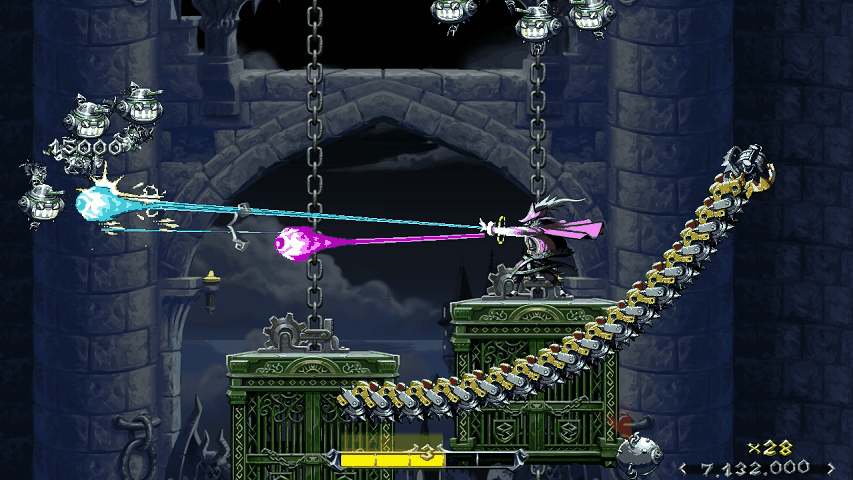
            Lately, something has weighed on my mind, while I've been debating another video review before a creator spotlight.  And that is the value of a game based on its length.  See, I had an interesting experience lately where I tried a game that boasted 60+ hours.  I was bored within about 10 and just stopped playing.  Then, I picked up Savant Ascent on Steam and spent almost the same amount of time playing it, loving every second.  The kicker though?  The game I stopped playing as a huge, spanning RPG that could easily last for hundreds of hours before being done.  Savant is a quick arcade title that I beat in 30 minutes.  However, I enjoyed the game so much I went back to it enough to equal the time I spent on the RPG.

Savant is 30 minutes of head bopping, Guy Faux DBZ powered, musical mayhem.  I've played it at least a dozen times.  Money well spent.
            So, how long is too long for a game?  Is a game worth the money if it's only got a few hours, or hell, even a few minutes worth of gameplay?  What about AAA games?  Should they be held to a different standard than Indies and, if so, should we forgive artificial padding?  How much is a game worth if measured in hours.

            Angry Joe has a meme that is something infamous now, where he played Kane and Lynch 2, noting that, for $60, it only lasted 4 hours.  Foooouuuurrrr...hoouurrrssssss!!!  Same thing for Metal Gear Solid 5: Ground Zeroes, which can be beaten in 1 hour, 10 minutes or less if people ignore some of the extras.  And that game cost $40.  Savant Ascent, on the other hand, has about 30 minutes to an hour's worth of content, if you never replay it, for $3.  Is Savant worth the money?  Were Kane and Lynch and MGS 5: Ground Zeroes rip offs?  Or was the content delivered worth the money paid?

            Honestly, in the modern gaming landscape, this is a question that has no right answer.  It can only be examined on a case by case basis.  One series I absolutely love is Tiny Barbarian DX.  It had a free flash version and a Steam version for $10.  Both can be beaten in about an hour or less.  I was pretty satisfied with the amount of fun I got for my money, and even surprised that Tiny Barbarian was getting sequel-esque DLC episodes for free to anyone who'd bought the game, giving it an extra hour or two worth of play for each episode.  Yet, I can see how someone would say, "$10 for an hours worth of fun?!  That's such a rip off!  You can go to a two hour movie for less!" or something along those lines.  And...they're not wrong.  A valid point is made.  Call of Cthulhu: Dark Corners of the Earth squeezed out 10 hours before I quit it in frustration.  But those hours were so padded and wasteful that I felt cheated for paying the same $10 price tag as Tiny Barbarian.  And...I'm not wrong either.  If I wasn't having fun, that WAS a rip off.

It's like Conan.  But cute.  And tiny.  And fun.
            Price is a strange thing, as is the amount of fun to price ratio.  Many of us would be happier to drop $15 on Shovel Knight, play it for five hours, then be done, satisfied with a good experience.  Others would prefer to get value and pay $3 for two 20-30 hour RPGs in the form of Breath of Death 7 and Cthulhu Saves the World.  How can you argue with either?  You really can't, because all people are different and the games they go into are not always going to be conducive to providing a lot of value in terms of hours.  They will be able to provide value in terms of spectacle, satisfaction, or fun, however.  Usually, at least.  Some games will just blow either way.

Shovel Knight is a little short, but oh, is it ever satisfying.
            The best way of looking at it is this.  Did you enjoy the game enough that you don't feel bad you bought it?  Then, the money you paid for it was well worth it.  You can go back to it again to get more value or you can just enjoy the memories you made while playing at it.  If you have buyers remorse, like I did with Call of Cthulhu: Dark Corners of the earth...then the game was not worth the money.

I'll take short but sweet to long and getting lost, wandering around, and replaying sections in frustration because you died, thank you very much.
            I bring this simple thing up, however, because it IS important to remember that satisfaction is a wonderful thing, but we should not always let it be the only overriding factor as to whether or not a game is worth the price.  Why?  Because a game like Metal Gear Solid 5: Ground Zeroes released as a AAA game with the same length of an indie and the same price as a standard release.  This...is a problem.  Or rather, it could become one. 

Now, I can blow through a Metal Gear game like 2 or 3 in like 5 hours, but do we really want a game that's...an hour to beat and $40 retail?  Really?
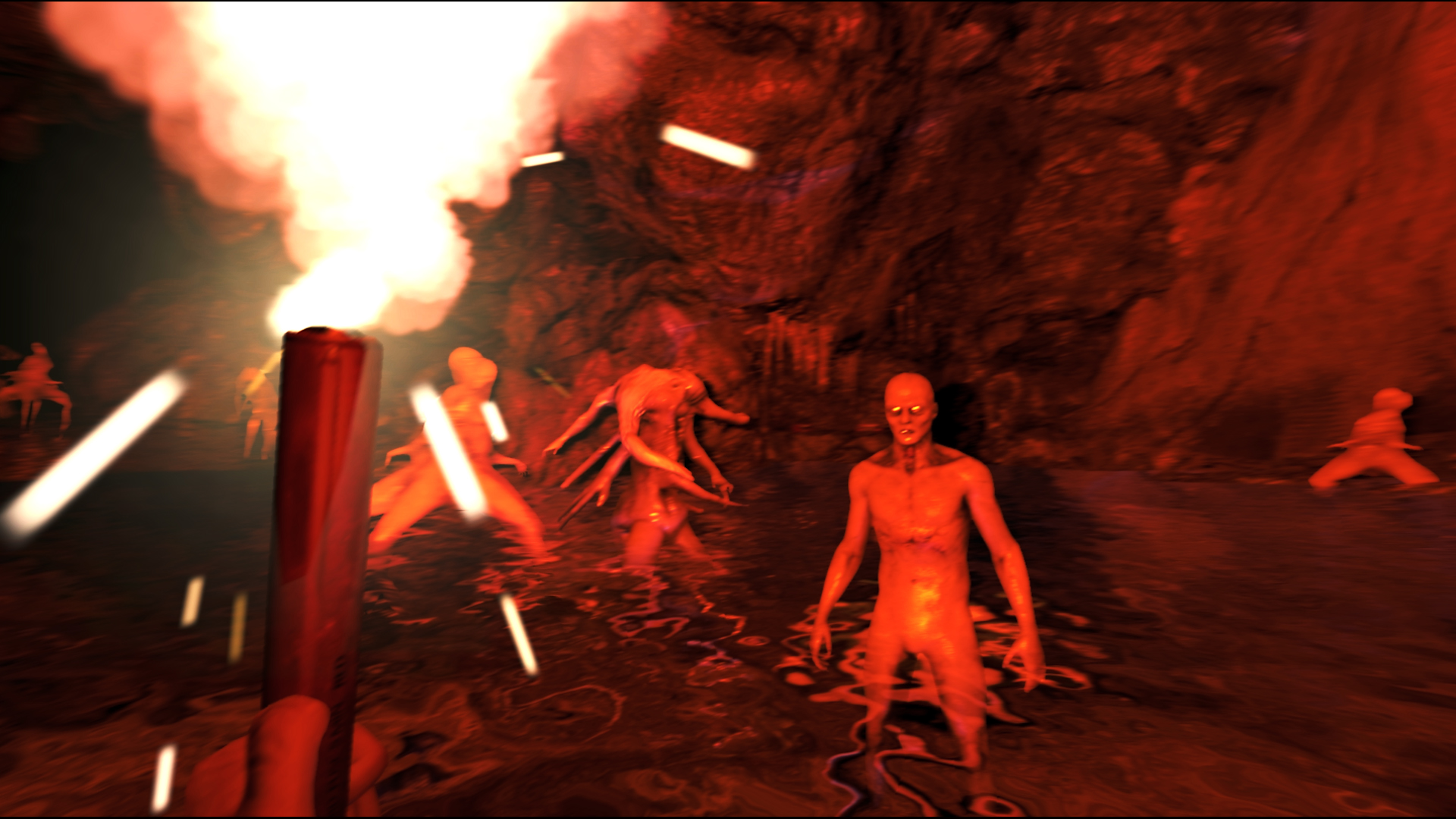
            If developers, indie or otherwise, decide that they can get away with releasing a game piecemeal or without a lot of game time and selling it at the full price of $40 or $60, not only will we the consumer suffer, but so will the industry.  One of the reason games like Tiny Barbarian or Shovel Knight are successful is not just that they are good games, which they are, but because they are cheaper than the competition.  I could go and drop $60 on Titanfall or I could play the Forest on Steam for $15.  Will it sell as much?  No.  Is it the same genre?  No.  But can it be successful enough to fund a sequel or another game by the studio?  Yes.  Because it IS cheaper than the competition, or at least on the same level as games like Outlast or Amnesia.  However, if the Forest or Shovel Knight was released with a $40 price tag, like Metal Gear Solid 5: Ground Zeroes, they would crash and burn hard.  Not because they're bad, but because in this economy, we have so many games to choose from and yet very little money to spread around.  Cheaper games are more likely to succeed than expensive ones by selling more units at a decreased price, even if they don't have the ad or hype train behind them.  If games ever go the way of MGS 5, where players feel it's okay to pay $40 for a very brief experience, then...we could be headed for another video game crash.  Because fewer and fewer games will get sold, leading to indie devs starving and the few game studios with the money to survive less willing to take risks and provide unique titles like The Forest, Shovel Knight, or Bro Force.

Survival horror wouldn't have survived as a genre if people weren't willing to drop the price and keep it low.  $15 for Amnesia, the Forest, or Outlast?  Yeah, I can afford that.
            The point I wanted to make with this little article is the simple idea that the only value a game has is what you take from it.  That being said, we do need to have standards.  In an ideal world, all games would sell for cheap, all the good ones would succeed, and everyone could play as much or as little as they want.  We do not live in an ideal world, however.  We have to differentiate between indies who are giving the best experience they can and AAA games who we should expect more from for the price.
This is just food for thought.  Don't let anyone else tell you what's really important when it comes to buying YOUR games.

            Ultimately, this question will remain.  But I leave it to you, the customers, the gamers, the players, to find your own answer.  This isn't meant to give you that answer...just food for thought.

Sunday, May 4, 2014

Diminutive Diatribes: The Power of Polish and Cunning of Commitment

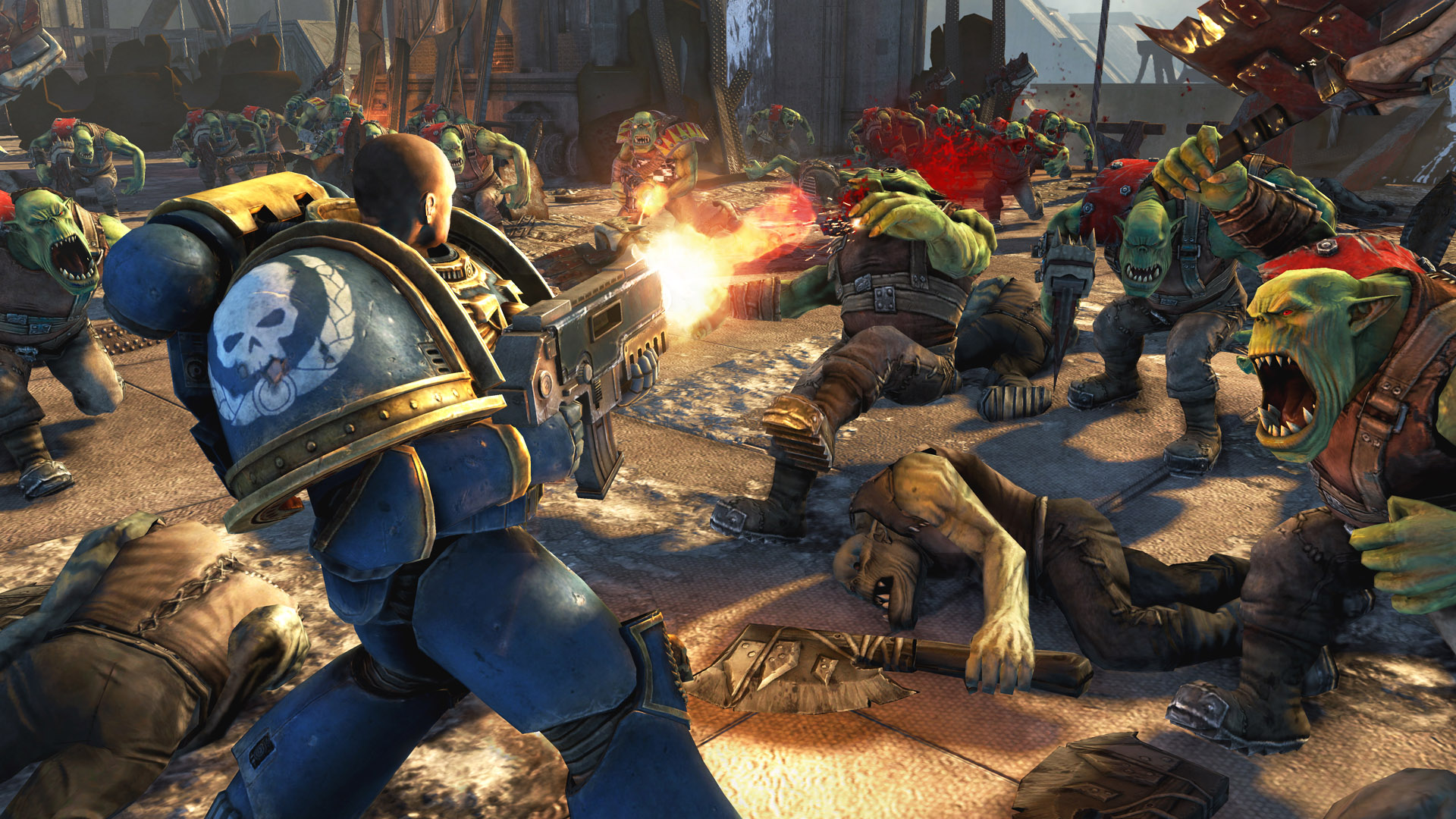
            I don't want to go into a whole brain hurty discussion this week, so let's keep it simple.  I love Warhammer 40K: Space Marine.   I probably should NOT love Warhammer 40K: Space Marine.  I probably should not love Splatterhouse on the PS3.  I probably shouldn't care for a LOT of games.  And yet, I do.  Why?
Dear lord, I love this game.  So committed to being in the 40K universe and so polished besides.  This is how you do a Space Marine.
            Because these games are not only polished(okay, Splatterhouse has some technical glitches, but gameplay wise they are all super polished) but also because they are committed to what they are.  Warhammer 40K is committed to being a love letter to the 40k lore.  It is committed to being a celebration of the beauty and the horror of war and carnage.  It is so dedicated to these elements, that many other parts of the game that would be easy to complain about are actually overlooked.  In that same vein, Splatterhouse is a loving remake of the original.  It isn't a watered down T for Teen game with some cute throwaway references to the original Splatterhouse, it is full on remake.  Blood, guts, carnage, style over substance, heavy metal infused game.  In my opinion, this will actually help a game stand out and achieve a level of appreciation, even if they are lacking in other regards.

Say what you want about the game, look at this visceral detail and tell me they weren't committed to making a game called "Splatterhouse."
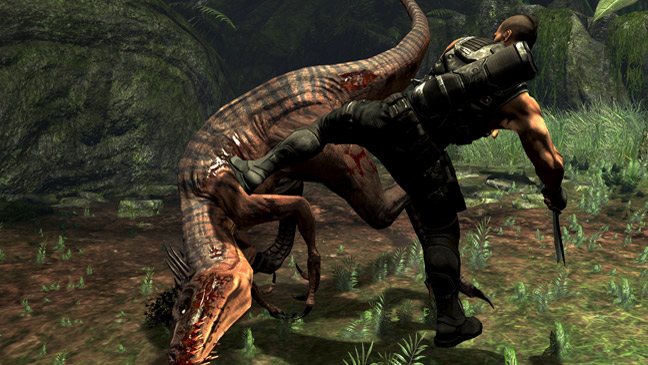
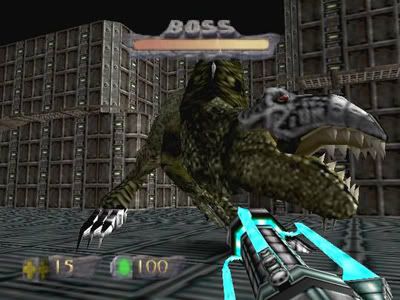
            Warhammer 40K: Space Marine is a third person shooter that is about space marines shooting aliens in a post-apocalyptic future world.  Sound familiar?  It should, because it's been ripped off and used by countless other more uninteresting games, like Turok, Haze, Syndicate, or any other titles.  These games failed largely because they were generic and uninspired...they didn't commit full way into their source material or into what they were trying to create, instead trying to have it both ways in many aspects to try and get as many buyers as possible.  Turok, for example, first appeared on the N64 and featured not only interesting alien species, but also dinosaurs being hunted by a Native American.  Was it stupid?  I'd say so, it featured you shooting a T-rex with a magic bow and arrow, however it was so committed to its lore, mythos, and purpose, and so polished besides, that it didn't matter if it was stupid.  it was still fun.  In the "remake" you are on an alien planet, blowing up human mercenaries and some dinosaurs as a grizzled space marine with guns...yeah, which one would you rather play?  It was trying to be a modern military shooter, like Call of Duty, but at the same time trying to cull members of the original fanbase.  It wasn't committed to the idea and it wasn't very polished besides.

Probably done this before, but...Better 1?
 
Or Better 2?  Cyborg Dinosaur vs alien gun wielding Turok...or regular Turok kicking a raptor.  Which one seems more committed to the stupid, but awesome premise?
            To me, that's kind of what makes all the difference.  Whether or not you like a game, whether or not it sold well, I think this is what makes a game, from an objective standard, pretty amazing.  Prey is a good example of this.  It features a story about Alien abduction, body horror, and the heritage of Native American mysticism.  It was at times stupid, as we have our hero slipping into a spirit world to attack the soul of an alien with spirit arrows before shooting it with guns, but it didn't wimp out...it featured tragedy and body horror, a conflicted hero, and super polished gameplay...and it was pretty amazing because of it.  And, let's not even look at some of the more unknown or so bad it's good games, let's look at critically acclaimed, successful titles, like, say...Kirby.  On the surface, it seems pretty dumb.  You are a pink puffball on an alien world who can eat enemies to absorb their powers.  Your arch enemy is a giant penguin wielding a hammer and your rival is as word wielding, bat caped swordsman.  Say all that out loud and try to say it's not dumb...but it's the commitment to the premise and how well polished it is that has made the series so endearing.  Kirby is a laid back, kid friendly experience that isn't especially dumbed down.  The mechanics are solid and polished and the commitment to the idea of this little puffball is what makes it work.  That's the truth for a lot of games.  Things as old as say, Bucky O'Hare for the NES to as recently as Bioshock Infinite.  While I may not have liked Infinite, it was committed to the idea of a story based around hyper time, it was committed to Bioshock-esque gameplay that was highly polished, and it went all in.

This rule of polish and commitment goes back to the NES era too.  How do you ground/make a game about a green, alien rabbit fighting toads more 'accessible?'  You don't need to...run with it.  Commit to the craziness.
            I'm not sure this principal can be applied to every game.  Some games seem bound and determined to be mediocre, like tie-in games, such as the Battleship movie game or the Amazing Spiderman...though, I'd like to believe that if you commit to the idea wholeheartedly and give it enough time and polish, it will turn out worthwhile.  The Puppeteer, for example, is a game about a puppet whose head was stolen and whose entire world is in a puppet show, which he can change using a pair of magic scissors.  Sony went into this whole heartedly, committing to the idea and polishing it to a mirror sheen and even if it sounds or looks silly, it's still a great game.

Some games, I just don't know if you can polish or commit to it enough to save it.  Battleship...mediocre movie, mediocre/terrible game.
            That also brings up another good question, though.  Can a game go too far with its commitment?  I don't want to say yes, because some developers would use that as a crutch to only do the work necessary to get a game made for a deadline rather than giving it the love, respect, and care it deserved, but...let's just say, I believe it's a delicate balance.  Splatterhouse, I wish we had more of.  Largely because the game ended on a cliffhanger, but also because it was a game that not only paid homage to the original, but also paid homage to horror tropes of the past...and I'd have liked to see a few more of those.  A monster from the black lagoon, a spectre from the after life, a laboratory full of experimental nightmares...it would have been great.  However, Warhammer 40K: Space Marine?  I want a sequel, certainly, but the game itself was perfectly well paced and contained all it needed to.  Rather than trying to balance multiple worlds and campaings, it was set all on a single planet, with just enough of the monsters from the Warhammer 40K universe to satiate fans.  References were made to other races, like Tau, Eldar, and Tyrannid, but it focused on the Orks and the Chaos soldiers.  It featured a complete story, about a planet under siege and saved by the Ultramarines, and while it may have ended on something of a downer, it was still satisfying.

I want polish and commitment, but I don't think you need to throw everything and the kitchen sink.  It's a balancing act.
 
Slight spoilers, but I for one am glad we did NOT have a daemon prince in this game...because...really...we didn't need it.  Woulda been cool, sure, but the game had enough and was so well put together and paced that it was unnecessary.
            To me, this is what makes a game fun and interesting...if it's committed to the world it's built and polished enough so as to be fun.  Any kind of game can be made, even something like a re-imagining of Dante's Inferno or a dating sim game with giant robots...if you commit and make a polished experience, then it will be fun and worthwhile, even if not everyone likes it.

Sakura Wars...dating sim mech fighting game.  And yet, it worked for me because it was so committed to the anime-esque insanity.
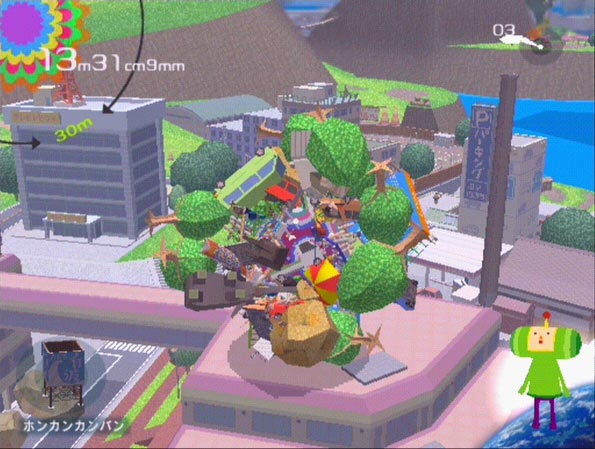
            This is something I'd like others to remember and take to heart.  If a game has passion, even if you don't like it, at least try to recognize that.  Whether or not it rips off gameplay or whatever, if it's fun, polished, and committed to it's story, world or whatever, then acknowledge it.  And for the developers, put passion into your work.  Even if a premise is stupid, don't compromise it for the sake of profit or because you think people won't be able to accept it.  Look at Katamary Damacy, after all...nothing like it on earth, and yet it's become a phenomenon.

I guess the best way to put it is, go hard or go home.  Katamary Damacy was polished and committed to the premise...and it worked.  It worked amazingly well.
            All that being said, forget what I said about how I SHOULDN'T like Splatterhouse or Warhammer 40K: Space Marine.  I like the lore of both games, the story, I like the commitment they put in, and they're both polished enough to be fun.  So...screw being ashamed, screw the idea of guilty pleasures...I like what I like and I like those two games.  There's nothing wrong with that at all.

I love this game.  Not ashamed.  It gripped me and dragged me into it's world...and I loved it, all the way.

            Also, just a short afterword here.  Once or twice in May, I will be unable to make my usual weekly quota, either because I have company, so I won't have the time/energy/focus to write, or because I will be going to a convention to sell wares of mine, for the sake of making some much needed cash.  What am I selling?  Why PERLERS OF COURSE!!!  You can see my back log, here.  Just want people to know, because I will be making an update telling them, but...I like giving advance notice.  I hope to get at least one more creator spotlight in before I have to take my days off, whenever they might be.

Sunday, April 27, 2014

Diminutive Diatribes: The Power of Goodwill


            With net neutrality being an issue at the moment, I'm reminded of the simple statements of Nash Bozard who said that, without goodwill, we will abandon a company the instant we are able.  He was referring to the abysmal business practices of ISPs and how they have frustrated and abused their customers to the points where the instant they are not needed, their customers will toss them aside.  Well, it's the same with game companies.

Shouldn't game companies do the same?
            Goodwill is kind of an essential thing in this era of gaming, where prices are higher, income is lower, and the options are much larger.  In the 80s and 90s, you had only a few options for play, namely Nintendo, Sega, PC, or perhaps a third party console like the Turbo Grafx.  But now, we have dozens of digital distribution websites, 3 major consoles, 3 backlogs of consoles from the previous generations, and not to mention handhelds.  There are literally hundreds if not thousands of games being released every month, in some way shape or form.  So, with that many options, you have to hold onto your fans with as much vigor as you can muster, not push them away or squeeze them dry with shady business tactics.  Because a fan whom you have treated well will stick with you through thick and thin.  They'll forgive a few botched experiments, so long as you let them know you respect and care about their business.

The options we have here are staggering.
            A good example of this is Nintendo.  Nintendo has made several unusual choices in gaming in the last decade or so.  They released the Gamecube with a distinctly child-like/toyish design, they made motion control a core part of the Wii and the Wii U is meant to emulate tablet gaming.  These experimentations might push away core fans if not for the simple fact that 90% of the time, when you buy a Nintendo game, you know you buy quality.  Nintendo may not french kiss all their fans and they've made their share of mistakes, but in the age of buggy launches, early access, and outright scams via Kickstarter or Steam, it's refreshing to pick up a Mario or Zelda game and know that 1) it will work right out of the box, no patches necessary, 2) it will be a high quality experience, regardless of any experimentation, and 3) it will be accessible by almost anyone.  Fans love Nintendo because they continue to give them quality, even if the games themselves sometimes seem to repeat.  More than that, Nintendo has also generated a pseudo culture around itself, where it appears friendly, offering fans rewards via the Nintendo Club and basically making themselves seem approachable.

You bought a Nintendo game?  Come on up and pick your reward!
            On the other hand, let's look at Steam, of late.  Steam used to be a great example of a company that understood and generated goodwill with its customers.  They have frequent sales of their games and until about 2011-2012, the products released on Steam were of proven quality.  They could have bugs or patches, but they were still strong, enjoyable games that were well worth the money.  However, recently, Steam has started to become unstable.  They have released a glut of shovelware titles onto their marketplace, which, with this new influx of trash, has become harder to navigate to find the quality items, their early access releases have no quality control so a game can be for sale at full price that is effectively broken or released as a scam to take money, and their attempt at getting new, innovative products through Greenlight has been a rather depressing failure, with some games being inspiring, such as Octodad, Bunny Must Die, or La-Mulana, while other releases have been appalling disasters, such as Guise of the Wolf which is laughably bad in every way and Kingdom Rush, which was so bugged upon release that it was unwinnable past level 3.  Worse, when you start abusing your customers like this, policies that you've implemented that weren't a big deal before start becoming more apparent.  The sometimes intrusive, sometimes not DRM Steam uses to both protect your games, but also monitor you, the no refund policy under most circumstances, and the abusable comment and review systems are only a few.  When compared to GoG, which will offer refunds if your game does not work, which frequently gives out free, classic games, and which still uses a high level of quality control, coupled with DRM free titles, Steam starts to seem less and less reliable.  And if they continue, they may lose many of their regular customers to GoG, Desura, or Green Man Gaming.

Oh, Steam...what have you been letting into your inner circle?
            Now, let's look at one of the worst.  EA.  EA has frequently screwed over its customers with DRM through online passes, released buggy games, such as Simcity, which was unplayable offline at all and unplayable online for the first few weeks, and forced players to register with their online service Origin if they want access to EA's games.  These kinds of policies push consumers away and have been lampooned by people far wittier than me(See Yahtzee Croshaw or Jim Sterling.)  The sad truth is that EA doesn't value its customers.  Apologists might argue otherwise, but EA sees them as a way of making a quick profit and will do anything to get more money, such as including micro-transactions in a full price game, forcing DRM to try and shut out pirates, and releasing games too early in order to gain some quick profits.  They may be pretty big, but EA has also dealt with a lot of controversy.  Lawsuits over Battlefield 4, the outcry and hilarious media disaster that was Simcity, piracy STILL happening despite their best efforts to force consumers to prove their loyalty, etc.  If these continue, EA will lose customers...they've already been losing customers.  A franchise players love will only care a company so far.

Need I say more about EA?
            My point with this is to try and emphasize the obvious.  If a company abuses its customers, even if the abuse is something as minor as releasing a buggy game that lacks polish, then they are risking losing them.  You have to engender goodwill in your consumers if you want them to be loyal.  Elder Scrolls fans have cried foul of Bethesda on many occasions because of the bugs, but mostly forgive the series because of how deep, enjoyable, and moddable it is.  Elder Scrolls Online has pushed that, requiring a sixty dollar commitment, a fifteen dollar further commitment if they want to play the game at all after buying it, and the option of using real money to buy things like horses.  They have cast aside a lot of goodwill there.  Likewise, Konami and Kojima productions are risking reprisal when Metal Gear Solid 5 gets released due to their $40 demo sold under the title, Metal Gear Solid 5 Ground Zeroes.  Sales may be strong now, but the internet remembers...the internet remembers and it does not always forgive.

75 dollar entry fee...was Elder Scrolls Online worth it?  Goodwill, wasted, needlessly.
            Even companies like Nintendo need to be aware of how they COULD be engendering more goodwill.  Mother fans would bow down and welcome their new god, Nintendo, if they announced the release of Mother 3.  RPG fans the world over and nostalgia buffs would flock to the Wii U if cult hits like Rygar, Terranigma, and other titles would grace the Virtual Console.  And Nintendo isn't above mistakes either...the Retro Remix games they have released is dangling dangerously close to cash in, with links to the Virtual Console to buy the full version of the sample game that you can play.

I've got my eye on you, Nintendo...
            In the age of dwindling sales, game companies need, more than ever, to be willing to bow their heads, take a little bit of a pay cut here and there, and say to their fans, "Thank you for sticking with us."  The truth is, we don't have as much money, but we do have more games and more options for buying and playing them.  Hell, it's at the point where we don't even need to pay games, since something like Hearthstone or Loadout are free to play with no required buy in.

100% free to play.
            So, what can companies do to let gamers know they care?  Well, first, they can be straight with them.  Be honest if you're having problems.  Don't hide it and push your buggy game onto the market.  Say you need more time...say it might not be up to snuff...gamers will respect you more for being honest than for trying to pretend things are okay when they're clearly not. 

A little honesty might have made this less painful, Gearbox...
            Next, companies can talk to gamers like people.  Communicate not corporation to consumer, but gamer to gamer or developer to gamer.  One thing Kickstarter does well is it allows the creators of games to directly talk with and engage their fans in updates and comments.  It wouldn't be that hard to implement for anyone who's bought a game digitally.  No cryptic salesman bull crap, but just talk like a normal person.  Hell, even a regular podcast would do wonders for PR. 

            Another good way to engender goodwill is freebies that aren't just being held back or that aren't just shovelware.  Think about what would happen if Sega gave a Steam gift code to one of their titles on Steam, like Beyond Oasis, Vectorman, or the Sonic games, with each new purchase of a current game.  Fans might not use them...but they might.  They'd remember that a good game was given to them, even if it was old.  And what does that cost Sega?  Nothing.  It's a digital game made years ago.  There's no real overhead.  Extras in game packages that AREN'T collector's editions also work well with this.  Soundtracks, figurines, posters, anything that makes a gamer feel like they're getting more than their money's worth is smart and a good way to engender goodwill.

Still awesome years later, an easy way to earn kudos points with gamers.  Give it to them for free.
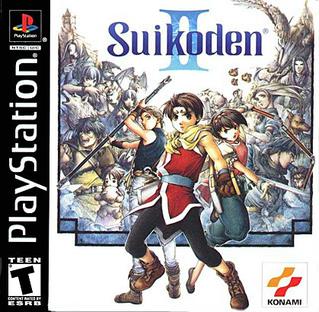
            Probably the best way to make gamers love you?  Listen to them and give them what they want.  Not in terms of game design I mean, since then we'd get more and more Call of Duty Clones, but for example, many Konami fans miss Suikoden or the Metroidvania style Castlevania games.  So, give them one.  If you can't make a new Suikoden game, for whatever reason, make the older ones more accessible.  Suikoden 2 is STILL awaiting release on the PSN...if it had been released 4 years ago, when the service was getting going, Konami would have been heaped with praise.  Now, we're just praying it doesn't get cancelled.  And these games?  Yeah, you might take a little loss on them at first, but think about all the people you will hold onto because you said, "We listen and we care."

C'mon, Konami, stop dragging your feet...
            The smaller things a game company can do to generate more goodwill is to not take advantage of the goodwill they've already got.  See, goodwill is like money in a bank.  It accrues interest the longer you have it and don't spend it.  If you keep getting goodwill, or even if you just don't abuse that goodwill, it will deliver in spades.  So, don't release buggy games if possible.  Don't force DRM.  Don't make on disc DLC.  Don't hold back content so you can release it AS DLC.  If you just release a game and put your all into it, you'll earn goodwill...and even if you don't, you won't squander it by abusing your consumers.

            I just wanted to write this up to remind people that sometimes, you need to play the long game.  Goodwill is like an investment.  You won't see an immediate return on it, but if you want to retire...it's a good thing to have.  It will keep making money even if you start to stumble or lose your way because you have respected and stood by your fans and they will, in turn, stand by you.  Companies need to take note, before it's too late.  You might make your money now, but sooner rather than later, your fans will abandon you when a new company, one that respects or at least doesn't abuse its players as much, joins the scene.  If you don't get people who will stand with you...then you'll have no one to help you when it all comes crashing down.

Not even great Galactus can do it alone...
            Woe to him that is alone when he falleth, for he hath not another to help him up.
                                                                                                - Ecclesiastes 4:10

Sunday, April 13, 2014

Diminutive Diatribes: Hardware Laments and The Future of Old Games...


Guys, gonna be honest, I am just dead this weekend.  I've worked myself too hard, taken a huge exam on Saturday, and been going through a lot of stress and emotional whosits and whatsits.  So...sadly, no creator spotlight this week.  I did write up a little something for you all though, so enjoy.  Fingers crossed we get back to our regularly scheduled program next week.


Diminutive Diatribes: Hardware Laments and The Future of Old Games...

            It's fair to say that nostalgia is a big thing in video gaming.  The resurgence of the 16-bit and 8-bit pixel art style in video games, chiptunes, emulation, virtual console, everything points to the fact that we have an infatuation with games from our past.  And this can be for various reasons.  Sometimes it's purely rose tinted glasses, where a bad game felt good because we played it when we were younger and needed it as an outlet.  Sometimes it really was very polished, because with the limited memory of the 8 and 16-bit eras, you had to have a focused, polished game, because there were no patches and you wanted to build brand loyalty.  However, I've often asked the question, what happens to our old games as time goes on?

What happens to our old games when there is no one to play or love them?
            Now, since nostalgia is popular, software itself is not necessarily something to be afraid of losing.  Clone consoles of the NES or SNES are available, right now, to play original or reproduction copies of old games.  Software that was originally only built to run on DOS is being retooled by GOG so that even a Windows 7 machine can run Math Blaster or King's Quest.  We have an almost infinite number of roms for emulation software available, ostensibly, for free on the internet.  So, that part of old gaming will actually never die.  It will be around in some form or another for as long as our digital age lasts.  However, there are some things that...concern me.

They save as many games as they can, but even GOG can't do everything.
            Has anyone ever watched the Angry Video Game Nerd and seen him have to fiddle with the Atari 2600 or the Magnavox Odyssey or the Action Max?  Those games have hardware components that make them nearly impossible to play on a traditional LCD flat screen television.  The display is off and the games with them seldom work properly...you need an old CRT television, which is what the machines were originally designed to work on.  These games are, for all intents and purposes, doomed to fall prey to the march of progress, where sooner or later the components that are necessary for them to work will simply no longer exist.  CRTs will be phased out or replacement parts, like the cable box for the Odyssey, will no longer be made.  For me...that's kind of scary.  And not just because of old gaming either.

When the Angry Video Game Nerd reviewed Pong Consoles, the game was the machine...so if the machine was broken, you were flat out of luck.  That's what scares me about our modern games...
            In the modern era, hardware has become a big seller of games, not just on graphical prowess, but on the promise of a new experience.  The Wii, Playstation Move, and Microsoft's Kinect all act upon the idea of motion controls.  While we're in the present era, few people have given any thought to whether or not these games, good or bad, will ever be unplayable because we will be unable to find the component parts needed to make them work or properly emulate said component parts on another platform, like a PC.  However, this is a very real concern that people need to be aware of.

A huge misstep, in my opinion.
            With the axing of backwards compatibility in the Playstation 4 and Xbox One era of gaming, this leaves a number of games in limbo.  For example, many early games on the PS3 used the sixaxis motion controls of the proprietary Playstation controllers to create key features in their games, such as Ratchet and Clank Future's tornado weapon, which was controlled by tilting the controller, Lair's dragon flying which functioned in the same way, or a personal favorite of mine, Folklore, which used the tilting of the controller to rip souls out of enemies.  Tell me, what happens when the PS3 becomes an antique in say, 20 years, and all the sixaxis controllers are broken?  Folklore would be left in the dust bin, unplayable because we lack the proprietary software.

To pull out the soul, you must tilt it into the proper alignment with the sixaxis controller in Folklore.  What happens when there are no more sixaxis controllers?
            So, I want people to take a minute and think about all the hardware gimmicks being pushed down our throats.  We bemoan many of them but at the same time, if we have any games amongst those that we like, we could be out of luck when the hardware stops working.  Think about how difficult it is for an emulation program to run a rom.  It basically copies the hardware settings on a PC that existed for the said console and maps the controls to the keyboard or a USB controller.  Relatively simple.  However, how can you tell a PC to handle gyroscopic motion controls?  How can you tell a PC to recognize a slash or a swipe with the controller for Dragon Quest Swords?  How do you tell a PC to tilt this way or that in a game?  This is harder, because the only real way to simulate it, at present, is with hardware, either the proprietary hardware or a similar cloned version.  Even if we don't like some of the hardware tricks, like the 3DS's 3d...this may be the only generation which gets to experience them.  I'd say treasure the unique experiences and try to preserve them, because for lots of gaming, the future is hardware failure and abandonment, avoiding complete oblivion only through the graces of youtube and wikipedia.

Don't take it for granted.  When it's gone, it might never come back.
            I don't have an answer for this problem other than be aware and try to preserve so that if we ever need to make a clone console or whatever, we can, but I also don't want to end this on such a downer.  The idea that swathes of games could be lost to the future because they are tied to a special piece of hardware that no one makes anymore is terribly sad...however, some savy gamers are trying to find ways around it.

            Software is a versatile thing and many hackers and programmers try to work around issues that the hardware had.  This can be shown through the creation of clone consoles and the like, but also with certain special projects online.  The BS Legend of Zelda project is an excellent example of this.  The BS Legend of Zelda games were three titles, technically four but let's not get into that, released only in Japan for the Satellaview, an add-on to the Super Famicom.  The Satellaview was a great example of a hardware system that we couldn't carry into the future, because it relied on satellite broadcasts for the games to work.  Orchestral music, game data, and live voices would be transmitted via the satellites and arrive at your console.  However, when service for the Satellaview cancelled and the satellites stopped transmitting, many games on it were thought either lost to time or to the few savy collectors who made back ups on blank cartridges.  Some savy hackers, however, managed to find the code for the Legend of Zelda games on Satellaview and repair the missing code, putting in a soundtrack for the music and adding cues to make up for the voices.  It's now available, online, right here.  And BS Zelda wasn't the only one.  Other games, like the fantastic Radical Dreamers were also saved through the use of the internet.

On the left, we have the NES Zelda, on the right the BS Legend of Zelda from Satellaview.  So glad this was saved ^_^
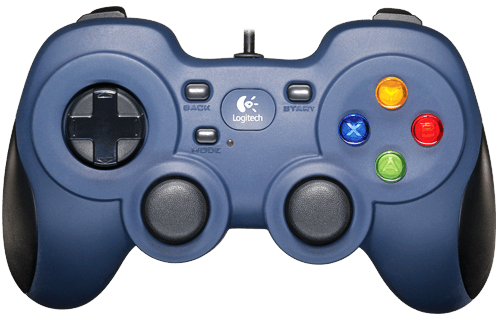
            Hope isn't dead yet for old games that rely on hardware.  As we advance into the future, some hackers or programmers realize the value of certain control schemes and can create mods or whole programs to simulate them.  The Logitech USB controller, for example, has a special program which not only lets you customize controls for PC games, even ones without controllers support, but can also simulate mouse movement with the analogue sticks.  If that is possible, perhaps even motion control could one day be simulated in our USB controllers.  Perhaps...

A miracle worker.  I've even played point and click games on this...
            While the thought of Folklore vanishing forever makes me sad, hope isn't lost.  If enough people remember and like a game and there are those who like it enough to try and fix it for the future, like the BS Zelda crew, then even hardware failures might not be the death of certain games.  We can keep them alive.

            However, the future isn't written.  We don't know if any of these hypothetical hackers will make it so we can emulate motion controls or make clone consoles of the Wii or 360 years and years down the line...and even if they could, will they?  Will they care?  So, I say take pleasure in the new experiences offered by new hardware...cause they won't be here forever.  Remember them.  Treasure them.  And try to keep their legacy alive, because I don't want us, as gamers, to lose any part of our history.  It's all valuable, even the bad parts.

What he said.
            The future isn't hopeless.  It's waiting for us to create...so we should try and create one worth living in.  A future where hardware laments don't exist, and old games are just as new as the day they were released, 30-50 years previously.

Sunday, March 30, 2014

Diminutive Diatribes: First Look at Dark Souls 2


Okay, so...don't usually do this, but I have a busy week, in particular Saturday, so I won't have time for my regular creator spotlight or article.  So, I thought I'd share a sort of first look at Dark Souls 2, give my critiques, and try to say how it stacks up to the original.  Probably less editing and pictures and more discussion for this one.  There will be minor spoilers, but nothing too specific, so relax.

The Good: Dark Souls 2 has fantastic game mechanics.  They copy much from the original, with the tight controls based around wielding an item in each hand, shield or weapon, and having spells and regular tools for use in specific slots.  The enemies follow similar rules, with varying degrees of speed and power, all with their proper tells and weaknesses, if you're willing to be patient and look.  It's a system that rewards patience and persistence, as well as a bit of mastery.  If you learn your weapon or spell or attack style and its use, then you can overcome almost anything, with the right amount of practice.

Alongside the game mechanics, there have been additions throughout the game.  The ability to duel wield adds new combos to an already established weapon at the risk of extra damage, and there is now an option to two hand items in either hand instead of just the one in your right.  There are more item and weapon slots, more ring slots, and a much more diverse range of weapons and spells in the game.  This includes twin blades that, while weak when wielded with one hand, are very powerful if wielded with two hands.

Yes, there is dual wielding.  It's pretty cool.
The graphics are beautiful and the design of everything from the buildings to the enemies is superb.  One enemy was literally a giant mass of corpses made to look like a person and the corpses wriggled about, while one vista had a tree that was the corpse of a giant, complete with a fruit I could harvest.  Everything here is worth taking a second to stop and examine, because the world is truly much more beautiful than the original Dark Souls.  It's a wonder to behold.
The game really is beautiful

Music is competent.  Regular music is ambient, while boss music is exciting, and the sound effects are nice and meaty, giving your weapons a powerful and satisfying feel.  Speaking of music, it really contributes to the atmosphere.  While not as lonely as the original Dark Souls, it has a very distinctive feel...in darkness, things are quiet, but also hectic, frightening, and will keep you on edge for fear of the blade in your back.  In day time, even when facing huge monsters, you have a feeling of ease and calm that is different from previous games...the disparity here really helps make the game a rollercoaster of experience.

Surprises.  The game is full of unexpected twists and turns that you won't really be expecting.  I don't just mean traps, either, like the mimic chests which will eat you.  I'm referring to anything from walls you can blow up on accident or which enemies can smash through, to hidden doors and areas, to NPCs who do the most unusual of things.  In one instance, I used a torch to help navigate a darkened area near the seaside and while it didn't do damage, some of the bestial enemies were visibly frightened by it, preferring to hide rather than fight.  In that same area, an enemy threw something at me that exploded in black tar...it didn't damage or even slow me down, but if I was hit with a flaming arrow or if I had my torch out, I'd explode.  In another area, if you douse yourself with water, you take reduced fire damage, while others have traps activated with certain key items.  It's an interesting mix of things you wouldn't expect, offering surprising complexity and richness of things to explore.

Yeah, walls can be destroyed, you can be jumped, and there are a lot of surprises waiting for you.
Side Stories:  The game has a few interesting side stories.  Talking to NPCs can get you items for listening, but sometimes the best stories are ones told by the world or that you see for yourself.  One area has a farm that is full of peasants and pigs, wielding farm equipment.  They are working until they see you, at which point they go feral and attack, rolling boulders at you and generally acting crazy.  Then, further on, you see a cultish ceremony and above them is a jovial pardoner, surrounded by corpses.  What happened here?  That is for us to piece together and it's delightfully creepy.  Very Resident Evil 4.  In another area, you hear tell of a mystic queen who bathed herself in poison to try and keep herself young...and if you're not careful, you'll have to battle here in a pit of poison, as she tries to reclaim her youth.  My personal favorite has to be a chapel surrounded by decaying knights where an old friend from a previous game waits.  If you go looking, the game has plenty of fascinating little stories to tell you.

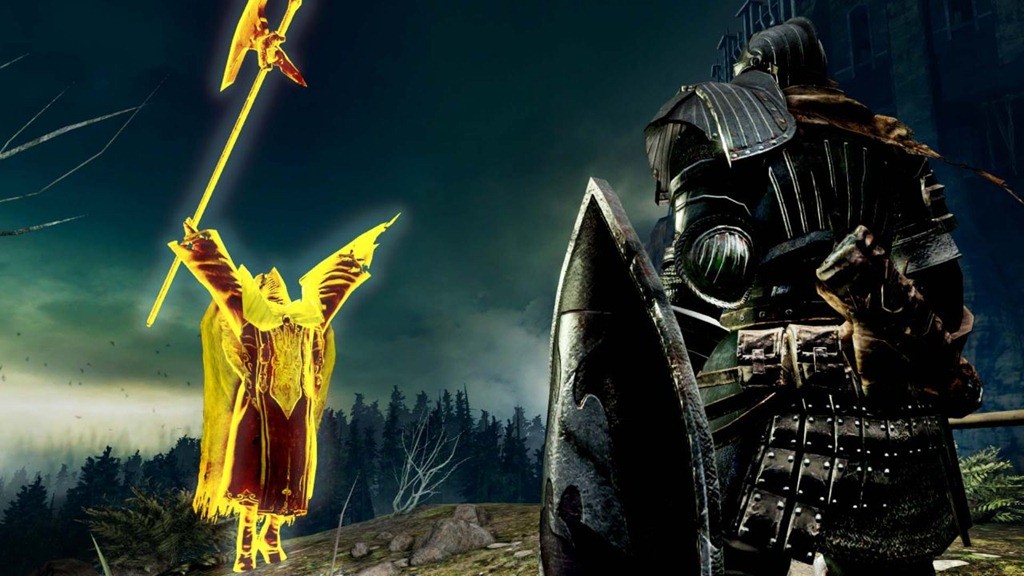
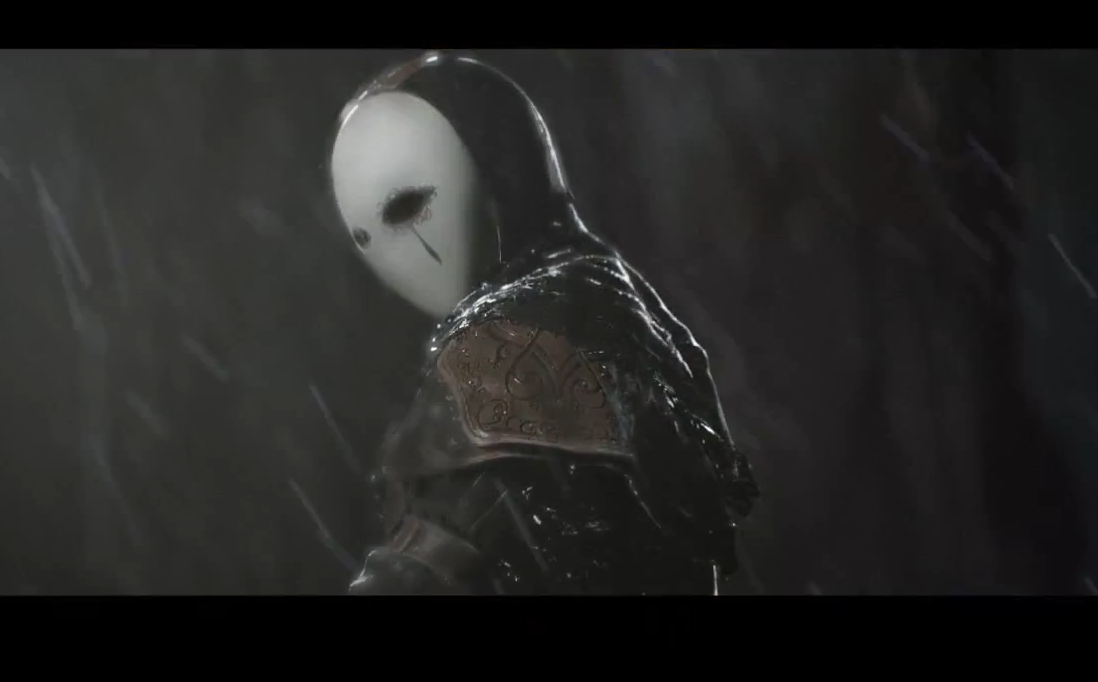
Hey, here's a familiar face! ^_^
The Bad: The main story is just tosh.  It's pretty uninvolving and kinda lame.  This does encourage players to make up their own reasons for fighting, but...I wanted more.

The enemy design may be pretty, but it's painfully uninspired.  While a precious few bosses are actually interesting looking, most enemies are guys in suits of armor.  Hell, even the bosses feel lame.  One is basically a giant slug that is almost impossible to die to, while another is a rat with a mohawk.  Some bosses get re-used later in the game as enemies and as major boss fights...it's disappointing that we didn't have a gaping dragon or a four kings...I hated those bastards, but I have to admit, they didn't look like regular enemies.  I've seen some interesting designs, but not enough, at least not after 40 hours.  Little depressing.

Hey...here's a familiar face -_-u
The new stat allocation system makes things a lot more complicated than I think it needed to be.  It also makes the game a helluva lot harder, with equip load and general speed being made into two stats unto themselves rather than being folded into other stats.  It's a little annoying, having to level up both vitality and endurance to be able to wield a sword, but also have the stamina to use it more than once.

Voice acting is just terrible.  Granted, it's not like people care, I tend to just read the dialogue and skip it, because we're here for the gameplay, but the characters seldom really emote and the script doesn't really give them the leeway too.  We get more character out of the environment than the NPCs.

Lack of gimmicks.  This one might seem a bit strange, but stick with me.  In Dark Souls, you could often do weird things to enemies, gimmicks, that would change the way a battle progressed, like cutting off a beast's tail, or using a Lloyd talisman to prevent them from using estus to heal, or nullifying a poisonous enemy with pyromancy.  And while there are some new wrinkles to combat and enemies with tricks in Dark Souls 2, several gimmicks were taken out...and that makes me sad, because I liked cutting off enemy tails or trying to outwit my opponents.

Know what you could do in Dark Souls?  Cut off tails and wield them as weapons.  Know what you can't do in Dark Souls 2?  Cut off tails and wield them as weapons...
Lack of explanation.  This has always bugged me a little in both Dark Souls games.  See, this is kind of a hallmark of the series.  It's part of the exploration...but god, is it frustrating at some points.  I have no idea how to even switch arrows.  Sometimes, this can be an interesting twist.  You don't always understand the controls, so you experiment.  You try and see what each item does or what each weapon's moveset is and, by comparison, this game does offer more explanation than Dark Souls did.  However, I still feel frustrated by a lack of explanation on certain controls.  Not just with how to switch arrows in the middle of combat, either.  Duel wielding is never explained.  You have to have two weapons of the same type, 1.5 times the stats of the highest stats required for the weapon, and hold triangle...that wasn't explained anywhere and I just discovered it while farting around with my weapons.  I get that that might be the point, but it limits the abilities of a player to progress and enjoy the game and I think that, even if you don't want to include it in the game, at least give us an instruction manual outlining all the controls.  Dark Souls 2 doesn't have an instruction manual.  It has a warranty slip...I am not kidding at all.

Lack of interconnectivity in the world is probably what makes me the saddest about this game.  Rather than a large, interconnected world where you could warp, but which you could actually scale from one end to the other, you have a hub area, a few basic areas attached to the hub, and warps to others areas.  They all go off in straight lines and never intersect and that's lame, to me.  I liked being able to go from the forest, to the city, to the shrine all in a few minutes of hectic sprinting in the original Dark Souls.  The reason for this is also something I hate.  Load walls.  Most of the starting areas are hidden behind doors that lock behind you, but which you can still open, and they do this to hide the areas loading.  The original Dark Souls never needed time to load.  It was all seamless.  Here though...while the separate areas are seamless, there are plenty of seams in between them and the hub and it feels awkward.  I wish more thought had been given to the world's layout.

The Mixed:  The hub town.  While this could have been an interesting idea, Majula, the main city, bothers me for how reminiscent it is of Demons Souls, the game I hate most in the Souls Series.  You HAVE to go back there a lot, because the only way to level up is there.  You can't do it by bonfire.  And really, plenty of NPCs may come there to live, but others don't, so you still have to warp around.  However, why is this mixed and not bad?  Well, two reasons.  It gives you some down time...a place to collect your thoughts and breathe and in Dark Souls 2, that's important.  And two, because I think it may have been an interesting psychological experiment.  This is only speculation, but I think that what with the load times and what not, they took away the ability to level up at the bonfire to wage a psychological battle with the player.  It's easier to horde souls now, rather than going to Majula to spend them, since you have to warp, and wait for the load, and talk to the NPC who levels you up...so it's easy to get overconfident and lose big.  If this was intentional, it is a stroke of genius in game design.  I'll be talking more about that in next week's article.

Get used to being here...you'll be coming back ALOT
Questionable design choices.  This mostly comes down to putting a bonfire so close to enemies that you can't use it once you get up, cause the enemies respawn.  This happened to me where a bonfire was right next to three archers who would start to snipe me as soon as I got up.  It forces you to kill them a dozen times to stop them respawning and...this happens in more than one place.  I don't know if this was intentional or not...it could go either way.

Enemy despawning.  So, in this game, you can actually farm an area of enemies until they no longer spawn.  This is an interesting idea because it forces you to move on, rather than grind.  And the game is balanced, for the most part, so that you don't need to grind.  You can sell items, you get souls, you can go to other areas, if you need souls, usually, you can get them.  However, this also means that if people mess up too much and despawn the only area they can handle, they could be in a real no win scenario...and have to restart the game.  It's a mixed bag, actually.  It adds to difficulty, but can also be convenient, if you just wanna run to the boss.  However, it can also be detrimental.

Secrets.  Yes, I love the surprises the game throws at you, but some secrets are so hard to find, like the hidden doors which you cannot tell from other areas of wall, that it makes the game stupid hard or annoyingly tedious when you wanna search for new items.  Just...frustrating.

Lack of starting options.  In the first Dark Souls, if you knew where to go, because of the connected world, you could be rolling in weapons, armor, and items right from the start.  However, in Dark Souls 2, you can't go everywhere right away...so you have to make do with your starting character's items.  What's more, lots of services like smiths or item vendors who buy your unused equipment are unlocked much later in the game...so you can't improve or get a quick boost of souls to help you out.  This is both good and bad.  Good in that it gives weight to your character choice early on and affects how you will play, since you won't have many other options, but bad because...you can't easily cover your weaknesses.  The starting merchants do make this less of an issue, but it's an interesting balancing act between starting in an interconnected world with lots of options, but making your starting choice meaningless or starting in a more divided world and making you really think about your class.

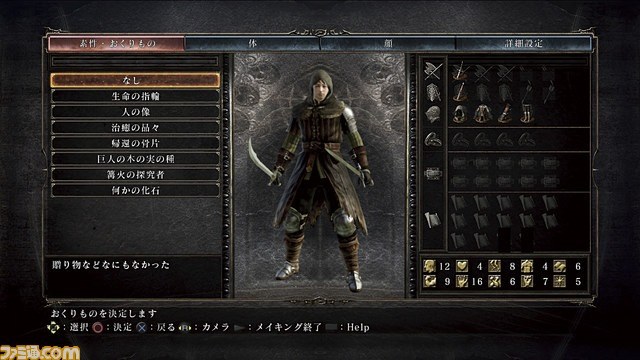
Choose wisely, cause this is all you'll get for a while.
Change in tone.  I enjoyed the solitary journey that was Dark Souls, but the change in tone puts more of an emphasis on the multiplayer and the NPCs.  You are not alone in this world, the game seems to say, and so you have to interact with either the NPCs or your fellow players.  While I'm not overly fond of this, it is going for a different feel than the original Dark Souls and it's not bad, just...different.  However, it is head scratching.  Many rewards for covenants can only be gotten through multiplayer in Dark Souls 2 and this is a stark contrast to the original, where even the multiplayer focused covenants had rewards that anyone and everyone could get.

This is a less lonely Dark Souls...more NPCs, more multiplayer, less solitude
How it stacks up:  Compared to the original Dark Souls, Dark Souls 2 is a definite improvement mechanically and graphically.  I think that Dark Souls was more polished and diverse than Dark Souls 2, probably because it was the first we'd seen anything like it, and I miss the open world and unique monster designs.  On the whole though, I wouldn't say that one is better than the other.  Part of Dark Souls charm was that the combat, while not perfect, was so tight and in so little need of improvement.  The improvements in Dark Souls 2 are nice, but some of the changes are annoying.  Dark Souls 2 has prettier worlds than Dark Souls.  Dark Souls has a more satisfying journey because of the interconnected worlds and characters.  You could make comparisons till you're blue in the face.  But I think Yahtzee Croshaw said it best.  It's like trying to decide which is better between Portal and Portal 2.  It's kinda pointless.  More of Dark Souls is never a bad thing.

Prepare to die...and love every second of it.
Dark Souls 2 is different from Dark Souls.  That's not better or worse, it's different.  Standing on it's own, it's a damn fine, very enjoyable, very HARD game.  I'd recommend both to anyone, because Dark Souls 2 is more fun to look at and explore, but I love the world of Dark Souls.  So far, they're on an even keel, I think, with me liking Dark Souls just slightly more than Dark Souls 2 because of the convenience of leveling up at the bonfire.

Before anyone asks, no, I don't have a problem with the system of death.  Losing incremental health actually feels like a nice balance to me between Demons Souls and Dark Souls.  It makes you want to get better, without making death consequenceless or too punishing.  It kind of encourages growth, but without actually making it too unfair, unless you screw up just way way too much.  I may not really like it or be jumping for joy about it, but it's okay.

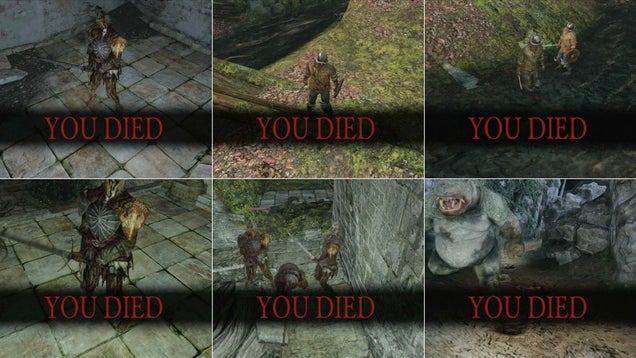
And that's a basic first impression of Dark Souls 2.  I have beaten it, I died 330 times(thank you for the death counter by the way, From Software) and it was DAMNED hard.  As hard as the original?  Dunno...there are changes that make the game easier and changes that make the game much much tougher.  Regardless, it's a good game, even if it is different from what I was expecting.
Don't expect this to be easy.  The players claiming this is easier than the original...yeah, no.