Showing posts with label Angryjoe. Show all posts

Sunday, July 20, 2014

Diminutive Diatrubes: The Ongoing Question of Game Length

Ladies, gentlemen, I am exhausted.  This week I had a lot of training to do for my trip to China and I got 3 shots, and worked a huge amount of time at my job with very little sleep...this is not the time for a big brain hurty discussion.  But, since I have plans for the next week or two and am not sure if I will be able to get a post out, I feel I should at least do this much.  So, let's have a short talk about game length and the price/length ratio.


Diminutive Diatrubes: The Ongoing Question of Game Length

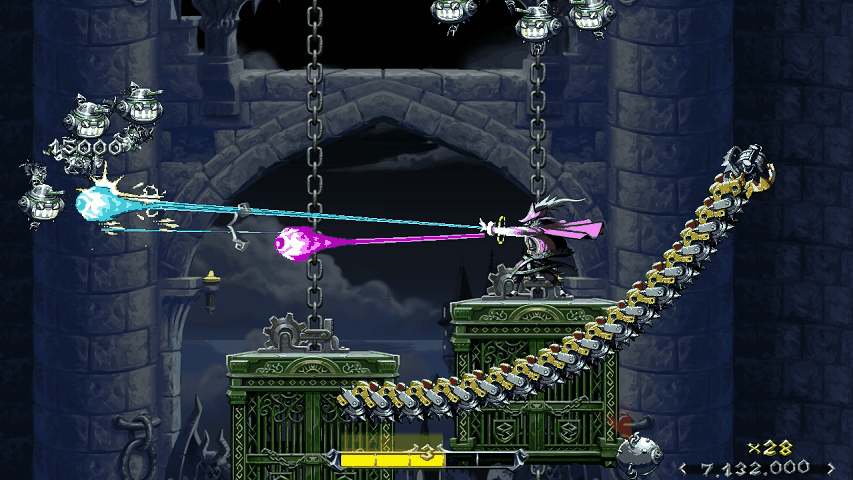
            Lately, something has weighed on my mind, while I've been debating another video review before a creator spotlight.  And that is the value of a game based on its length.  See, I had an interesting experience lately where I tried a game that boasted 60+ hours.  I was bored within about 10 and just stopped playing.  Then, I picked up Savant Ascent on Steam and spent almost the same amount of time playing it, loving every second.  The kicker though?  The game I stopped playing as a huge, spanning RPG that could easily last for hundreds of hours before being done.  Savant is a quick arcade title that I beat in 30 minutes.  However, I enjoyed the game so much I went back to it enough to equal the time I spent on the RPG.

Savant is 30 minutes of head bopping, Guy Faux DBZ powered, musical mayhem.  I've played it at least a dozen times.  Money well spent.
            So, how long is too long for a game?  Is a game worth the money if it's only got a few hours, or hell, even a few minutes worth of gameplay?  What about AAA games?  Should they be held to a different standard than Indies and, if so, should we forgive artificial padding?  How much is a game worth if measured in hours.

            Angry Joe has a meme that is something infamous now, where he played Kane and Lynch 2, noting that, for $60, it only lasted 4 hours.  Foooouuuurrrr...hoouurrrssssss!!!  Same thing for Metal Gear Solid 5: Ground Zeroes, which can be beaten in 1 hour, 10 minutes or less if people ignore some of the extras.  And that game cost $40.  Savant Ascent, on the other hand, has about 30 minutes to an hour's worth of content, if you never replay it, for $3.  Is Savant worth the money?  Were Kane and Lynch and MGS 5: Ground Zeroes rip offs?  Or was the content delivered worth the money paid?

            Honestly, in the modern gaming landscape, this is a question that has no right answer.  It can only be examined on a case by case basis.  One series I absolutely love is Tiny Barbarian DX.  It had a free flash version and a Steam version for $10.  Both can be beaten in about an hour or less.  I was pretty satisfied with the amount of fun I got for my money, and even surprised that Tiny Barbarian was getting sequel-esque DLC episodes for free to anyone who'd bought the game, giving it an extra hour or two worth of play for each episode.  Yet, I can see how someone would say, "$10 for an hours worth of fun?!  That's such a rip off!  You can go to a two hour movie for less!" or something along those lines.  And...they're not wrong.  A valid point is made.  Call of Cthulhu: Dark Corners of the Earth squeezed out 10 hours before I quit it in frustration.  But those hours were so padded and wasteful that I felt cheated for paying the same $10 price tag as Tiny Barbarian.  And...I'm not wrong either.  If I wasn't having fun, that WAS a rip off.

It's like Conan.  But cute.  And tiny.  And fun.
            Price is a strange thing, as is the amount of fun to price ratio.  Many of us would be happier to drop $15 on Shovel Knight, play it for five hours, then be done, satisfied with a good experience.  Others would prefer to get value and pay $3 for two 20-30 hour RPGs in the form of Breath of Death 7 and Cthulhu Saves the World.  How can you argue with either?  You really can't, because all people are different and the games they go into are not always going to be conducive to providing a lot of value in terms of hours.  They will be able to provide value in terms of spectacle, satisfaction, or fun, however.  Usually, at least.  Some games will just blow either way.

Shovel Knight is a little short, but oh, is it ever satisfying.
            The best way of looking at it is this.  Did you enjoy the game enough that you don't feel bad you bought it?  Then, the money you paid for it was well worth it.  You can go back to it again to get more value or you can just enjoy the memories you made while playing at it.  If you have buyers remorse, like I did with Call of Cthulhu: Dark Corners of the earth...then the game was not worth the money.

I'll take short but sweet to long and getting lost, wandering around, and replaying sections in frustration because you died, thank you very much.
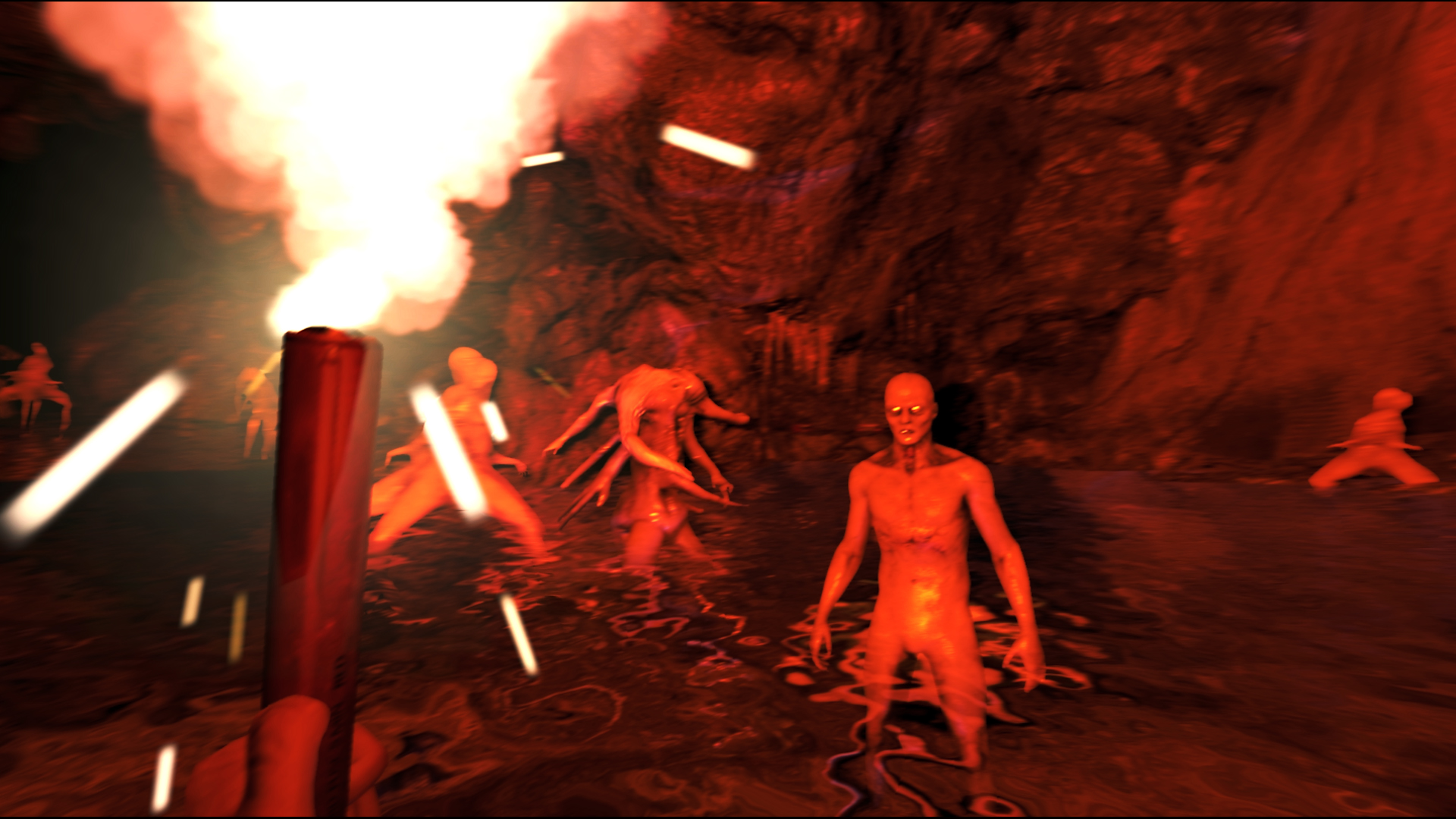
            I bring this simple thing up, however, because it IS important to remember that satisfaction is a wonderful thing, but we should not always let it be the only overriding factor as to whether or not a game is worth the price.  Why?  Because a game like Metal Gear Solid 5: Ground Zeroes released as a AAA game with the same length of an indie and the same price as a standard release.  This...is a problem.  Or rather, it could become one. 

Now, I can blow through a Metal Gear game like 2 or 3 in like 5 hours, but do we really want a game that's...an hour to beat and $40 retail?  Really?
            If developers, indie or otherwise, decide that they can get away with releasing a game piecemeal or without a lot of game time and selling it at the full price of $40 or $60, not only will we the consumer suffer, but so will the industry.  One of the reason games like Tiny Barbarian or Shovel Knight are successful is not just that they are good games, which they are, but because they are cheaper than the competition.  I could go and drop $60 on Titanfall or I could play the Forest on Steam for $15.  Will it sell as much?  No.  Is it the same genre?  No.  But can it be successful enough to fund a sequel or another game by the studio?  Yes.  Because it IS cheaper than the competition, or at least on the same level as games like Outlast or Amnesia.  However, if the Forest or Shovel Knight was released with a $40 price tag, like Metal Gear Solid 5: Ground Zeroes, they would crash and burn hard.  Not because they're bad, but because in this economy, we have so many games to choose from and yet very little money to spread around.  Cheaper games are more likely to succeed than expensive ones by selling more units at a decreased price, even if they don't have the ad or hype train behind them.  If games ever go the way of MGS 5, where players feel it's okay to pay $40 for a very brief experience, then...we could be headed for another video game crash.  Because fewer and fewer games will get sold, leading to indie devs starving and the few game studios with the money to survive less willing to take risks and provide unique titles like The Forest, Shovel Knight, or Bro Force.

Survival horror wouldn't have survived as a genre if people weren't willing to drop the price and keep it low.  $15 for Amnesia, the Forest, or Outlast?  Yeah, I can afford that.
            The point I wanted to make with this little article is the simple idea that the only value a game has is what you take from it.  That being said, we do need to have standards.  In an ideal world, all games would sell for cheap, all the good ones would succeed, and everyone could play as much or as little as they want.  We do not live in an ideal world, however.  We have to differentiate between indies who are giving the best experience they can and AAA games who we should expect more from for the price.
This is just food for thought.  Don't let anyone else tell you what's really important when it comes to buying YOUR games.

            Ultimately, this question will remain.  But I leave it to you, the customers, the gamers, the players, to find your own answer.  This isn't meant to give you that answer...just food for thought.

Monday, September 2, 2013

Sell Now, Fix Later: The Growing Problem of Unfinished Games


Okay, before I get started with this entry, I want to apologize for the infrequency I have been posting lately.  I recently lost my old job and have returned to school, so needless to say, it's been an adjustment period.  I've also had my hands in other projects, like my book or a sexism project in regards to video games for the sake of a friend of mine.  Anyway, enough apologies.  I may be a bit more infrequent for the next few months, but I do have some more posts in the pipeline so...please be patient with me.  Now, on with the post and your inevitable hate mail.

Sell Now, Fix Later: The Growing Problem of Unfinished Games
I'm going to say something that will probably earn me a good deal of flak.  I don't like Skyrim.  Before anyone throws hate mail my way or "You just haven't played it enough" or what have you, let me retort with, I spent sixty hours playing the game.  It's addicting, certainly, but...I can't really say I had FUN while playing it, just that I couldn't exactly stop.  I went from the start of the game to the end of the story missions, finished the civil war, and by the end was greatly disillusioned with it because Skyrim is an unfinished game, shoved out into the market because the developers thought it was "Good enough."

"Good enough" is not good enough when it comes to a $60 game.  Make.  It.  Better.
            What do I mean by that?  Well, in the modern game industry, the advent of consoles which regularly connect to the internet has spoiled video game developers somewhat.  You see, thanks to the ability to patch a game online, many developers feel it is alright to skip some of the crucial stages of QA testing in their games, shove it out into the world at large, and if there are problems down the road they can just release a patch for it.  While I know that releasing a patch is a huge hassle much of the time and does require a fair amount of manpower, this kind of nonsense would not fly ten years ago.  Ten years ago, a game with as many bugs and glitches as Skyrim would be laughed off the cutting room floor, not lauded with 9/10 and 10/10 scores from reviewers and given countless game of the year awards.  See, as consoles have grown closer and closer to PCs, an unsettling number of them have started to treat their games like PC games.

It's a good game, but...no.  Glitchiness should not get a free pass.  9/10 for a game with an insane amount of glitches is unacceptable, even for an Elder Scrolls game.
            There was a time when console video games could not be that glitchy.  One or two glitches might be acceptable if the developers missed them and they didn't obstruct gameplay, like the famous Final Fantasy 6 reviving General Leo glitch or the duplicating items glitch in Dark Cloud 2.  However, if a video game had noticeable problems just running normally then it would receive a lot of flak from reviewers and gamers alike.  For me, personally, Skyrim on the PS3 froze to the point where I had to manually restart my console about 6 times during my play through.  Many monsters would one shot me at full health, even if they were tiny.  I had, on two separate occasions, Dragon corpses draped over different houses in different cities that refused to disappear and which ragdolled and got trapped in the scenery.  Characters who could get trapped, both by scenery and IN scenery.  And overall just poor design on certain sections of the game.  Yet, despite all these problems, and these were in the most recently patched version, Skyrim's perfect "legendary edition," people still threw around awards of 10/10 for the game.  When the game was released in 2011, there were dozens if not hundreds more glitches, some of which made the game unplayable after sixty hours or more.  This kind of glitchy, unfinished console game would never even find release, save for the most unscrupulous of developers pre-2006.  The fact that it's a port of a PC game is little excuse, especially considering how high profile it is.  Be more critical, game journalists!  Skyrim did not deserve all those 10/10 scores it got.  I personally didn't like it, but that's personal preference.  I could see it being a solid 8/10 or a 7/10 because of all the options and the capacity for fun through organic gameplay...but with all the glitches, it did not deserve all the praise it got.  Just because a game has a massive amount of content does not forgive the fact that the game is unfinished in places.  In fact, "You can overlook a few glitches due to the amount of content"  should not be an excuse.  If anything, the amount of content raises the bar higher because if you can give us this much content, we expect it to all work.

You laugh, but this is kind of distracting...immersion breaking...and just unacceptable in a "game of the year" title.
            Here's the thing.  PC games have had this issue for a while where even seminal games can be plagued by glitches.  System Shock 2, I have no Mouth and I must Scream, Deus Ex, etc. have all had glitches that needed patching or which were just left in game, some of which were game breaking.  However, PC games are a different breed than console games.  PC games allow free modding, so that even if a developer abandons a game to glitchiness, the fans could program in a work around.  This is not possible with console games.  If you're going to release a console game, you have to recognize that internet access 24/7 is not all that likely, so patches will be harder to send out, and that there will not be a modding community, so you can't simply throw up your hands when an error comes in and say, "It's good enough.  Ship it with the glitches, we'll sort it out later."  Even for PC games, I think this is giving a bit too much leeway.  When you have to pay sixty dollars for a game, brand new, then it should work for you without fail.  It should be a finished game.  No one pays ten grand for a car that's missing wheels or missing an engine when it's been advertised as complete and no gamer should pay full price for a game that clearly is not finished.  "Good enough" is not an excuse.

I love Splatterhouse, but...get ready to rage as it glitches up over and over.  A game like this should not have been released, at least not for full price, even if it's dirt cheap now.
            Yet, in the current generation, this happens more and more, even with games that aren't patched.  I could definitely keep kicking Bethesda, since Elder Scrolls 4: Oblivion also had glitches and Fall Out 3 and New Vegas were prone to freezing a fair bit, but let's look at some games that aren't PC ports.  Splatterhouse for the PS3 and Xbox 360.  I love Splatterhouse.  For all its flaws, it's very fun.  But even I raised an eyebrow and sighed when I saw the ending.  There was a massive sound glitch where the entire audio track, music, sound effects, voices, the works, just stopped working during a cinematic.  This happened several times, where audio would fail, video would get choppy, or where I would die just because of a game glitch.  I love Splatterhouse, but it should not have been released as it was.  The developers had to have known about this issue and they should have fixed it.  There's no excuse for it.  Or Pandora's Tower.  I've already gushed about how much I adore Elena and Pandora's Tower for the Wii.  But even I yelled at my game when it started to glitch out.  You see, at one point in the game, the player can through one of two towers, which are connected.  One tower, randomly chosen, causes the game to freeze.  If you reload the game and choose the other tower, you're usually fine.  But every other time I tried to go into these towers, the game would freeze and I would have to reload.  And judging from forums about the game, this kind of glitch is just one of many. This is hard to miss, given the nature of the glitch and the game's pacing.  How could QA have screwed up so badly?

See that chain?  That's the glitch gateway.  After running down it to enter the last tower, prepare for a game freeze.
            Now, I'm not an idiot here.  I know that glitchy, unplayable console games have been released in the past, such as the LJN licensed games on the NES, however look back on those games.  They typically saw very poor sales and were reviled by the gaming community.  Compare that to Skyrim or even Pandora's Tower.  Skyrim has sold millions of copies and even been named game of the year, while Pandora's Tower has been ported to the US after the massive fan campaign, Operation Rainfall.  These are high profile titles in the gaming community.  And their mistakes are just getting overlooked.  This is something I cannot stand.  We paid full price, so we should get a finished game.

            I can be sympathetic up to a point.  Sometimes, developers think they've caught all the mistakes possible.  They think they've fixed their game to the point where it's not "Good Enough" but that it's actually "Complete."  Then it ships, a player does something the developers weren't prepared for, and a glitch is discovered.  This is a real possibility, especially with older PC games like Deus Ex or even newer games, like Aquaria or FEZ.  And it's not restricted to AAA developers, as the previous two games were indie titles.  When that happens, I understand that it was probably unforeseeable.  However, in a game like Skyrim, which released with a huge number of bugs, then was re-released as a "Legendary" or "Complete" or "Game of the Year" edition...I have no sympathy.  You sold us a broken game you thought was good, okay, we understand, just do what you can to patch it.  You sold us a game you KNEW was broken and just went ahead with it because of the money?  Screw you.

Legendary Edition, my ass.  These games may have the latest patches, but still have a plethora of glitches.  Try, plebian edition.
            This seems almost like a parody of video game business models.  A parody of Skyrim was featured in an independentfilm by Doug Walker called "Dragonbored."  In this film, a Bethesda stand in released a game called Skyguard, which had a glitch that released the in-game character into the real world.  Impossible?  Certainly.  Funny?  At times.  But then, the film ends with a stinger showing the developer's coder talking to the boss.  They talk about a glitch which sent someone back in time.  The developer's response?  "Go ahead and release it.  We can patch it later."  This may have been a parody, but think about that mentality.  About a developer or publisher caring nothing for your satisfaction as a customer, because they can do something about issues "later" so long as they get your money "now."  This kind of short sighted business decision is scummy beyond compare.  Now, for EA.  We all knew this was coming.  The Sim City 2013 release.  EA released a game that suffered disastrous launch failures, which despite being online only and patched regularly still had numerous glitches, several of which were server glitches directly under EA's supervision, and was ultimately reviled as one of the most botched launches in gaming history.  However, months after the fact, EA called it a success.  Why?  Because they sold several million units and got them working "eventually."  They thought that selling their users a broken game was fine, so long as they got their money now and the users got their finished game "At some point."

Don't worry...we'll fix it eventually.  Unacceptable, EA.  Unacceptable anyone.  Stop selling unfinished games!
            Truthfully, the internet isn't the only thing that has led us to this current embarrassment in game design.  It's the bloated AAA industry.  Lately, the AAA video game industry has become like scummy, short sighted politicians or Wall Street businessmen.  They follow the mantra of "Profits now, who cares later."  They shove their games, broken or not, into our face and expect us to buy them up like good little sheep.  The prices rise, but the quality drops and we continue to purchase their games, regardless.  Longer, more expensive development times means they can afford to do no less.  They don't have time or money for "polish."  The fact that they can get away with it means they don't hesitate to release an incomplete game.

            And really, who is to blame for this?  Well, the companies, obviously, but also, us, the gamers.  We put up with this nonsense.  Every time we buy a Skyrim and give it a 10/10 despite it's numerous frustrating glitches, every time we buy into another EA pyramid scheme, every time we shrug and say, "Oh well, it's good enough" while playing a game, every time we buy a broken game just because of brand loyalty or without looking into it, like good little sheep, we are contributing to the problem.  Developers have gotten spoiled thanks to the idea of a console having free access to the internet.  But then again, so have gamers.  It's why so many people put up with on-disc DLC or why online passes were overlooked for a time.  Because we were spoiled by the internet and forgot a time when consoles didn't have the net.  They only had their games, to stand or fall on their merits alone.  And we need to remember.  I personally connect my PS3 to the internet maybe once a year.  Thousands if not hundreds of thousands never connect their systems at all.  We need to go back to a time, such as when the PS2 launched, where connecting to the internet was the exception, not the norm.  Where games had to stand on their own merits, rather than on what they maybe, possibly, could be once they were fixed.

Still don't believe my warnings?  Well brand loyalty and buying up games like good little sheep gave us Final Fantasy 13-2.  And Lightning returns.  Yeah.  Be afraid.
            The games industry is and has always been a business.  But Jim Sterling put it best.  No longer are game companies trying to create a title that will polarize and attract new gamers.  They are now trying to squeeze as much money out of what dwindling fan bases they have as fast as possible.  Gearbox shoving Aliens: Colonial Marines while advertising with a demo that was a blatant lie is proof of that.  A broken game, shoved out with promises of tweaks, which seem really unlikely, for the masses to lap up.  There was a time when a developer didn't need to release a broken game to squeeze money from a fan base.  There was a time when releasing a game dead on arrival was just that, dead, not dead until fixed.  But as the AAA industry becomes more bloated and ridiculous, I imagine we will see a good deal more releases that are functionally unfinished and which need to be patched.  Patches may be a great thing, allowing a developer to fix their mistakes post mortem, however, I also expect to see games released which are functionally unfinished even AFTER patches or which receive no patches at all.  If they haven't already been released by the time of this posting.

This is the game Gearbox sold to us as finished.  Yeah...remember what happened?  Oh, right.  Fan outrage.
            So, what can be done?  Well, compromise for one.  If you're going to release a game that has bugs or glitches that you know about, scummy as that may sound, give gamers a price drop.  A decent price drop.  A $20-$30 price drop.  That way, they at least know what they're getting into.  Value for less than stellar efforts.  Or, on the flip side, if you think it's good but bugs crop up anyway?  Well, how about some special content for people free of charge?  Some developers do this and while it's not a perfect solution, especially for gamers who play offline, it's at least something.  Hell, some game companies like Nintendo have multi-media sites that can give rewards or game credit as an apology if they so chose to do so.  However, there is one thing we can do beyond simply compromise.  We can stop settling for less.

            Angry Joe and Kotaku both played Saint's Row 4 when it came out and I have been flabbergasted by the excuses they make for the game's many glitches.  When a car clips into scenery?  "It's fine!  It's funny and I can just get out of the car."  No.  A game doesn't function the way it should, you need to raise a little more hell.  "The game froze on me, but it's still fun, so I'll excuse it."  Ummm...doesn't a game freezing make you repeat a section, thus killing some of the fun?  Own up to it!  "The game's so outrageous these glitches almost seem like they were built into it."  Really?  Are you really that desperate to defend what you love?  I love Splatterhouse.  I think it's an underrated game that's really fun.  But I would not pay full price for it.  I waited to buy it on the cheap because I knew it was flawed.  And even though it's fun, I can admit the glitches hurt my appreciation of the game.  Reviewers, gamers, and yes, even developers...stop settling for less.  Stop making excuses for your games.  I know you love them, but part of love is honesty...don't sweep their failings under the rug.  Be fair.

Yeah, these glitches were intentional...it's parody!  Keeeeeeep telling yourself that.  Whatever lets you sleep easy at night.  Seriously, give games a fair shake, both for good or for ill.  If they screw up, bash them, even if you love them.
            What game companies and even gamers forget is that we have the power.  We have the money.  And if game companies want it, they need to do a better job.  My final suggestion is to stop buying games on release day, honestly.  Let the lifetime sales of a game speak for its merit, not just a million over the weekend.  Wait until you know a game is actually finished or worth playing before dropping your money down on it.  Don't follow a brand or a series or a developer like sheep just because they've released hits in the past.  Gearbox, Square Enix, EA, Bethesda, even Nintendo have all released major smash hits in the past but they've also all released unfinished games as well.  Don't settle for "Good enough."  Don't settle for the excuse of, "Oh we'll fix it later, we'll patch it."  Don't defend it just because it's "fun."  If the game is unfinished, own up to it and demand a game that is worth the money you're plopping down for it.
Thursday, June 20, 2013

Video Game Piracy: A Victimless Crime?


So...piracy.  The games industry loves to blame all their problems on piracy and used video games.  But...is it really as big a deal as they say?  Is piracy the crippling blow to the industry that publishers decry it as or is it, as many pirates claim, a victimless crime?  Taking money from the already bloated, over stuffed, often dishonest publishers for products that are not worth said money to begin with.  I'm not, nor will I ever be, a pirate.  I disagree with it on a moralistic level.  However I do understand the ideas behind piracy in the modern age.  So...I'd like to discuss for a bit about piracy in the video games industry and how it both hurts, and is actually beneficial, to said industry, despite claims to the contrary.

Everyone loves pirates, right?  Err...right?
            First, let's look at the definition of piracy.  Before copyright came to be, it was robbery or illegal violence at sea.  Robbery seems to be what stuck with people, as these days piracy has been morphed into a catchall term for unauthorized reproduction or use of a copyrighted material in its original form, I.E. copyright theft.  These restrictions have been relaxed in recent years to allow these materials to be used so long as they are altered, such as with commentary from a let's play, or through a review.  However, the idea that piracy equates robbery has always stuck with any industry that thrives off copyrighted material.  And to some extent, I sympathize.  Artists need to make money in order to keep producing art.  Even if they love it, if they can't afford to eat off their art, they probably won't have time to make it because they'll be too busy doing something that puts food on the table.  However, with the rise of corporations who use and abuse the artists for their personal profit and the advent of independent releases on the internet as opposed to something that HAD to have a publisher to ever see the light of day, I think that piracy has become sort of a buzzword that many people use to frighten others and imply that they are a victim.
In this day and age, piracy has become like the word communist or socialist.  It's just a buzzword to scare people and justify things that should not be justified.
             First, let me say this.  Piracy should only be used as a term if a product is on the market, being sold for profit, by either the original creator or a duly appointed seller, I.E. a publisher, and if this said product is being taken and either being used or redistributed without providing proper remuneration for those who created it.  What does this mean?  Well, essentially, this is my way of saying I do not believe that video game emulation should be considered piracy.  For the most part, at least.  When emulation was first on the rise, many video game companies feared they would be out millions as people could simply download the game code on the internet for free and use their computers to mimic console hardware so they could essentially play any console video game they wanted for free.  At the time of emulation's creation, I could understand these concerns.  However, they have gotten far stupider as time has gone on.  Emulation, for those not in the know, is where a video games code is downloaded from the internet in the form of a ROM, then a player, which emulates a video game console such as the SNES or the Sega Genesis, reads these ROMs and plays them as if they were the actual game.  Largely, it is excused if you delete the ROMs in a 24 hour period, as a trial run, or if you already own a physical copy of the game.

Emulation of current games shouldn't be allowed, but emulation in and of itself?  Not really piracy.  It's people getting a chance to enjoy games that are no longer for sale, and thus do not hurt the developer in the least.  Unless they've re-released it, of course.
            I want to ask people to take a moment and think about emulation and its potential to hurt and its potential to preserve.  It has been seen as a tool for piracy by many, but is it really?  Well, in some cases, yes.  If an emulator for a modern console, like an Xbox 360 or a Playstation 3 were released along with ROMs for games that you could still buy in stores it would be piracy without a doubt.  The developers and publishers are still making sales off these products and they are still in production, so there are costs to consider.  However, what so many people overlook is that emulators are almost ubiquitously used to play older games on the Atari 2600, the NES, the SNES, the Genesis, etc.  These games are no longer sold in most stores and even if they are, their sale does not profit the publishers or the developers any longer.  Many publishers or developers of older games have ceased to be, actually, so sales of these games are strictly between private owners, not a retail outlet which pays for the games to be stocked.  In this case, emulators are not really a form of piracy.  They do not steal money from a publisher or developer, as the product is no longer in use.  In many ways, it is like the copyright has become invalid as soon as production and sales of these games have ceased, making them seem like fair use products.  They are not, I assure you, but...I do not see the harm, either.  Emulation has the potential to hurt consoles currently still on the market, however, it is also a tool for preserving and re-experiencing video games from a bygone era that you may not have had a chance to play or buy during your youth.  Emulation under these circumstances should not, I believe, constitute piracy.  However, if these games are ever re-released, I believe that playing them on an emulator, even if their ROM is from a cartridge no longer being sold, then it WOULD constitute piracy.  The Wii and Wii U, for example, frequently re-release older games that they have the rights to.  In this case, downloading Super Metroid for free, online, to play on an emulator, when a legitimate copy is being sold, for very little might I add, is piracy.  Simple as that.  Emulation is used by many as a way of expressing love for video games and as such, I believe that a bit of good faith is in order.  If the games you love are available in such a way that benefits their creators then buy them.  Support the creators.  However, if games are not for sale, then feel free to emulate them.  You may even stir interest for sequels or re-releases by keeping their memories alive.
Guys, I defend emulation for how it preserves bygone games, but if those bygone games can be bought legitimately...just do it.  If we do, we support good developers and show interest, which may lead to sequels or improvement.s
            Now for the prickly subject that no one wants to talk about.  Emulation is widely regarded as okay, by gamers and even by some publishers when it meets the circumstances I outlined above.  However, there are some forms of piracy that many try to legitimize, which have no bearing in reality.  Yes, if the game is no longer being made for profit and the sales are no longer going to the creator, there should not be a concern as to who plays it for free.  Many gamers, however, feel justified in piracy just because they cannot pay for games.  I understand this dilemma.  Games are growing more and more expensive to buy and with the economy in its present state there is less and less money to go around.  So, you feel justified in pirating a game since all your money is going to supporting yourself.  I get it.  But if you ever want the industry and the world at large to actually accept this as kosher, then you need to act in good faith.  What does that mean?  Well, essentially it means supporting the games even if you do commit acts of piracy.  The host of a radio show I listen to, for example, once openly admitted to buying a copy of Skyrim on Steam, then getting a cracked copy for free online.  Why?  Because he does not like how Steam interferes with his experience, through its pop in menus and glitches.  However, he already paid for his game, so the developers have already profited.  This is what one might consider an act of good faith.  Pirates who buy the game, disagree with some of its design choices, like the recent always online DRM of Sim City, and decide to get a pirated version regardless.  This is not a problem, provided you DO act in good faith. 

If piracy is to be allowed/overlooked, it needs to be done in good faith.  So you bought SimCity and it's servers are so broken you can't play it?  Feel free to get a cracked or pirated version.  You already bought a legitimate version, so the developers already have your money...now that you've done the right thing as a person, do what's fun for you.
            Pirates who try a game and play it all the way through, then buy it to support the developers show good faith.  I would even argue that pirates who try a game for a little bit, dislike it, stop playing it, and don't pay for it act in good faith, as this is akin to buying a game, trying it, disliking it, then taking it back to the store for a full refund.  However, I have to call out the pirates who do not act in good faith.  Pirating a game that is available for retail, playing it all the way through, keeping the pirated copy on your computer, and then never paying for a retail copy is stealing.  This may sound accusatory, but it is.  And I know that in this day and age publishers are over bloated, toxic to their own customers, far too controlling, and often downright dishonest with us.  I know this.  But you cannot simply pick who to like in the games industry when it comes to piracy.  What do I mean by that?  Well, what I mean is if I said to hell with the publishers I hate, I would also have to accept that indie developers bending over backwards to make their games easy to play, download, pay for, and DRM free shouldn't get any consideration either.  Or that people giving away games in bundles like on Steam or the Humble Bundle also are beneath consideration.  If you were to pick and choose like that, it would be akin to a police officer having the option to pick and choose who to arrest.  Or a bank picking and choosing who to foreclose on, leaving their favored customers alone while bullying new customers.  These acts are dishonest and they spit in the face of the idea that we are all equal under the law.  The same principle applies with game piracy.  You can hate a company and its games and not buy them, that's fine, that's capitalism.  However, you cannot pirate the games of one company you don't like, then turn around and say people should buy games from another studio.  That's simply dishonest and hypocritical.

Piracy in good faith.  Either you support the developers for work you've enjoyed or you have stolen from them.  No one should begrudge you a free look or playthrough, but if you take it without paying for it, that is a crime.
            In a subject like this, if you won't act in good faith, then you are not allowed to pick and choose who you decide to screw over.  If you don't buy a game because you don't like it, fine, you've chosen with your wallet.  If you pirate a game, like it, but never pay for it...you are stealing.  You cannot argue otherwise.  I sympathize with not having money to pay for a game at this moment, but that is why good faith is in order.  If you pay for it down the line...great.  If not...thief.  Remember, this is only games being sold for profit, so emulators or gamers who want to pirate games that are no longer sold but which are still not freeware?  I have no issue with you and neither should the game industry.  But I do have issue with the people who hurt developers who genuinely need support.

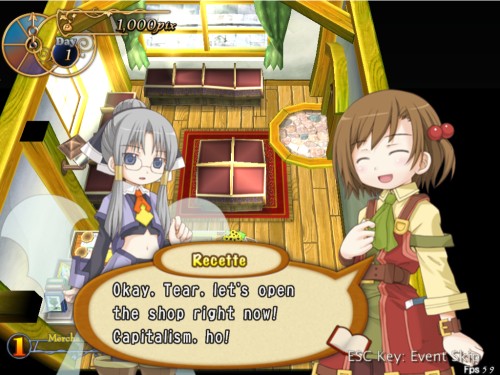
            Like all things, the video games industry is a business.  Not everyone, however, plays by the rules of the over bloated AAA industry and smaller indie developers put their heart, souls, savings, and life into making great games that they enjoy and want to share.  I think it's fair that these people get remuneration for their efforts.  When Derek Yu and Alec Holowka made Aquaria, it was a labor of love by two talented game designers and for their efforts, their game enchanted tens of thousands.  But how many sales were lost due to piracy?  How many people profess love for a game, then offer the creators nothing for their efforts?  This is not acceptable.  In fact, sometimes, it is heartbreaking.  Recettear is an indie game about a girl running an item shop and in the demo, it talks about why she runs it.  She's in debt.  And the developers threw in a tiny gag at the end of the demo, where the girl pleads with the audience to not pirate the game, otherwise she will never get out of debt.  And this isn't just meant as humor.  Indie developers can live or die off a few thousand sales, since they have very little overhead and sometimes don't have to give publishers a cut.  The fact that this game, which does everything it can to be as open and available as possible, has to plead with its audience to not steal it is heartbreaking.  You might ask, "What's the worst that could happen?"  Well...how about no more games from indie developers.  No more Fez.  No more Aquaria.  No more Dust.  No more Minecraft.  If everyone pirated these games, the developers would die.  There would be little to no point in making the games.  No sequels would be made.  No new projects.  It would end them.  The pirates I take the most issue with are those that do not act in good faith and willfully steal from these developers who need all the help they can get.  But, as Jim Sterling pointed out, there is one breed of pirate who is the worst of all.

Like it or not, we live in a capitalist world.  If you're good at something, you should get paid for it.  And that goes for game developers too.  Piracy in bad faith is criminal because it takes money from people who've worked hard to create something beautiful and fun.
            Pirates who steal from charity.  My jaw literally dropped over a year ago when I saw Jim Sterling's article on just how many people had pirated the Humble Indie Bundle.  For those unaware, the Humble Indie Bundle is an organization that, with the creator's permission, periodically releases indie games at far below their normal price in a large bundle and gives a portion of their profit to the charity Child's Play.  You can pay a fair amount, like 10-15 dollars and get extra games or content.  Or you can pay a single penny and get the basic bundle.  A single penny for anywhere from 4-6 games.  And yet some people still felt that that was beneath them.  I understand piracy.  I understand wanting to try before you buy.  I understand wanting to recapture the past.  I understand not having money to pay for a game.  But this is willful, malicious greed and should never, ever be excused.  I will agree that game companies do treat their customers too harshly in the battle against pirates.  But those who not only act in bad faith but who will turn their nose up at honest, noble attempts to deliver great games at a low cost which benefits charity?  I have no pity for them.  In the least.

The Humble Bundle is an effort by game developers to give games out to the fans for very cheap and at the same time, support a worthwhile charity.  To pirate this is to be absolutely morally bankrupt.
            So, is piracy a victimless crime?  No.  No its not.  Not everything should be considered piracy, I admit.  Emulation can prove to be a great way for those who are broke to experience older games without hurting anyone by getting a chance to play games that are no longer sold for profit.  However, piracy on the whole does take away money from those who desperately need it.  Piracy in bad faith, that is.  I would actually argue that piracy in good faith does more for the industry than any amount of advertising could.  Piracy in good faith spreads the word about a game to people who may want to buy it, without acting as if they are justified in their theft, since the pirates also want to support the game and will eventually buy it.  This kind of press cannot be bought with any amount of money and will be beneficial to any game that was made with passion and not created as just another assembly line piece of shovelware.  Many indie developers have been gracious in the face of piracy because it does spark interest.  I say, good for you for being so gracious, but you still deserve to be paid.  Piracy is not a victimless crime.  But it does not always have to hurt people either.  I imagine in the olden days, pirates could not only steal gold and silver from ships, but also medicine for sick families who could not afford it.  Piracy is not evil in and of itself.  However, when performed in bad faith, it deserves no sympathy.
Piracy is freedom, to a degree.  It is the ability to choose whether to purchase a game blindly or try it out, then decide what to do.  Piracy is no more evil than freedom.  It is only evil if you choose to use it as such.
            I should end this discussion with that, however I just want to bring up something Daniel Floyd and James Portnow have said in the Extra Credits Series.  You want to stamp out piracy?  Then offer a better service.  This is simplicity itself.  Why do people pirate?  Because of DRM.  Because games are too expensive.  Because there are no other options.  Give them other options, and the pirates will beat a path to your door and fling their money at you whole heartedly.  Most of them will, at least.  There will always be those who think it beneath them to pay, who believe the internet and anonymity entitles them to do as they please...but for most pirates, offer them what they can only get through piracy, and then one up that offer, and you will win over hundreds of thousands if not millions of customers.  Steam uses DRM.  However it is not intrusive, games connect directly to the Steam forums and community through it for troubleshooting and support, it can be deactivated to play offline, and Steam offers trading and great sales to bring the cost of games down.  GOG does one better, allowing players to, after paying for them once, re-download their games as much as possible, potentially allowing limitless sharing.  The games themselves are also completely DRM free with sales that happen just as frequently as Steam sales.  These are things that piracy cannot always do.  If a torrent disappears, your source to a game is gone.  But so long as you have a GOG account, it will always be there for you to re-download.  So, how do you stop piracy?  Make it seem like more of a hassle than buying the games legitimately.

Want to stamp out piracy?  Offer a better service.
            Just in case anyone is wondering, yes, I saw E3, I know about the PS4, the Xbone, and the Wii U.  No, I'm not going to discuss them.  While I do believe the issues of ownership that the Xbone and some other companies have been screwing around with are important, and a core reason as to why people pirate, they have already been thoroughly explained by people more entertaining than me.  If you want to see why they are going to cause an issue, check out Angry Joe's rant on the Xbone or Video Games Awesome's coverage of E3.
Sorry, I couldn't resist.  I know Microsoft flip flopped on their DRM policy recently, but it's sad that the Xbone ever got this far without someone raising a hand and going "Ummm...are we sure this is a good idea?"  This is the kind of attitude that breeds piracy.  Restriction.

Saturday, February 2, 2013

The Lost Art of Fixed Cameras


Well, I'm back after a long and somewhat miserable Christmas and New Year with perhaps one silver lining.  You see, one of my big presents for Christmas in 2012 were some Amazon Gift cards, which I promptly used to get a few older games for my collection.  One of these games was called Koudelka and I've spent the last few weeks playing it.  When I finished, I had two big thoughts about Koudelka.  The first, was how much the fixed cameras annoyed me, having to constantly switch perspectives and being only able to move and see within a specific area.  And the second was how much I enjoyed the atmosphere, because the fixed cameras kept the game very focused, very intense, and with a lot of details for a relatively unknown release at the time.  As such, I wanted to talk a little about fixed cameras.

Sure don't make em like this anymore.  More's the pity...
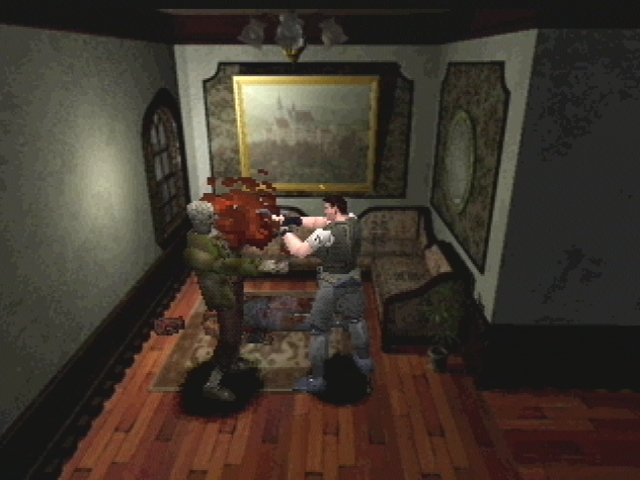
            Fixed cameras were used in place of free moving cameras for a number of reasons in the early days of 3d gaming.  There were limitations on how the camera could or should be moved without having it dissolve into the scenery or cause graphical distortions, it meant having to create less environments since you could basically show the player exactly what you wanted to and how you wanted them to see it, it was easy to use for puzzle mechanics, etc.  However, once free moving cameras using the second analogue stick of most controllers became the norm, fixed cameras sort of fell out of fashion, associated more with the tank controls of Resident Evil rather than the atmosphere.  I think this is a mistake.  Now, I'm not saying that everything was better with fixed cameras.  They had a number of issues and limitations.  But, they were a specific kind of tool for a specific kind of job.  And I think that, like most tools, there is an art to wielding it effectively that too many people are unaware of.
A fixed camera shot like this is highly atmospheric,  showing the characters as small compared to the monstrous laboratory around them.  Without any words, this shot conveys exactly the emotions we should feel when we first walk into this lab.
            Fixed cameras, to me, are a little like cinematography tricks.  They can be used most effectively for emphasizing mood.  Placing a camera at a low angle can make the main character seem larger than life, either to emphasize power or to deceive them about what is coming.  Placing it at a higher angle can emphasize weakness, useful for chase sequences or introducing elements that could harm players.  It is key in showing rather than telling a player how they ought to feel.  In this same vein of thought, I am reminded of an adage which made me truly appreciate cinematography. 
Putting the monster in the forefront and having it come in after the character de-emphasizes the player, making them seem weaker and unprepared for the larger than life beast coming at them.  Why don't we use these cinematography tricks as much anymore?!
Bob Chipman, also known as Movie Bob on the Escapist, once compared the original John Carpenter's "The Thing" to theremake/prequel in 2011.  While he praised the original's practical effects, as having something to interact with in a movie always seems more natural than CGI, he said something else that caught my interest.  "A lot of the old practical effects only looked good from a certain angle, so they forced film makers to shoot in a very specific way."  Fixed cameras are a lot like that idea.  There are some scenes which will have more meaning or will only make sense if viewed from a specific vantage point.  This is one of the driving ideas behind extended cut scenes in gaming.  However, because fixed cameras no longer limit how a scene can be shot, many developers seem to be getting sloppier with their work, at least in my eyes.  They haven't learned the basics of framing a scene.  If you want to talk cinematic game design, that is, game design that takes cues from cinema, fixed cameras are an important tool.  Because they are basically like looking through a camera in a movie that the audience cannot control.
Crappy CG of the 2011 Thing vs gorgeous practical effects of John Carpenter's version
Not hard to see which took more effort to create shot to shot, is it?
            Another benefit of fixed cameras comes from developers on a limited budget.  Most game designers like to break into the games industry using 3d games based off of existing engines.  However, this leads to a small problem.  You need to model and texture every wall, every floor, every ceiling, and every piece of furniture, plant, npc, etc. in any given area.  If they used a fixed camera, only one vantage point would need to be modeled because that would be the only vantage point seen.  It could save on development time and on costs.  However, because of how easy it is to misuse fixed cameras, they would need some basic skills with cinematography, as outlined above.
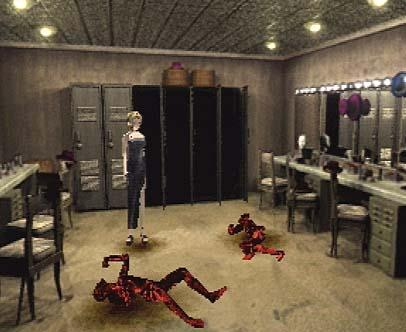
Take a good look at this scene.  A free roaming camera would need the whole room to be crafted from all angles.  A fixed camera only requires three walls, a floor, and some ceiling fixtures from only one angle.  Which do you think is cheaper to make?
            Because of that, I actually believe it might be useful for many aspiring developers to start with fixed cameras.  Use them to create more inexpensive 3d games and learn some basic cinematography skills.  One thing in particular I think that not only aspiring developers but even seasoned veterans could learn from fixed cameras is the adage, "Is it necessary?"  In the modern games industry, excess is a major problem.  Everything, from characters to environments are overblown, over designed, and often garish.  Ask the simple question of, "does seeing all this do anything for the player?"  Fixed cameras are all about economy.  What can be in a shot, what developers need to create for that shot, what can be conveyed with that shot, etc.  I think that going back to basics might help with some of the excess, slim down the games industry from the bloated monster needing to churn out cookie cutter AAA hits into a leaner, more experimental beast that is unafraid to try something new.
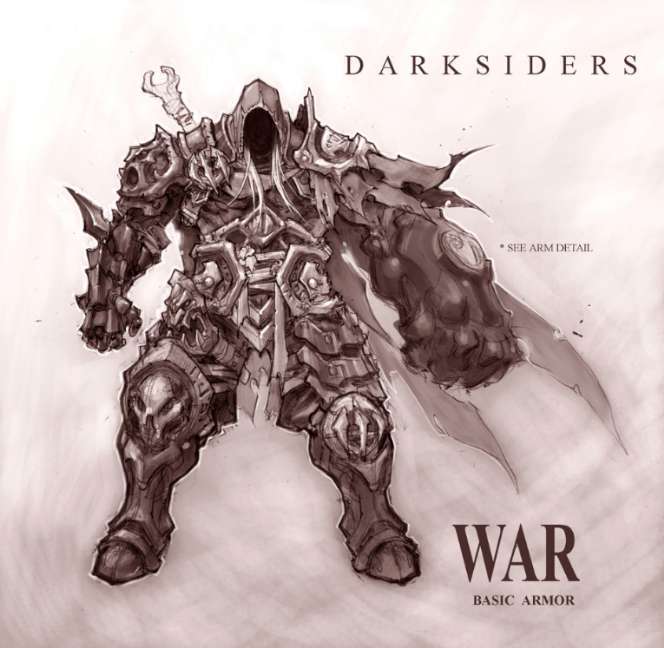
I love Darksiders, but look at this image.  This is the basic armor.  Do we really need all those lines, details, and polygons on the basic model?  Is it necessary at all?  Why?
          Koudelka was, for it's time, something new.  It was a survival horror tactical RPG, the likes of which were seldom seen after and have all but disappeared in the modern era.  However, it was not alone in using fixed cameras.  Resident Evil, Parasite Eve, even Final Fantasy pioneered using fixed cameras and did so with smaller, more capable teams than what the industry currently requires.  A part of me yearns for the experimental days of game design, with the atmosphere of a survival horror game being punctuated by a fixed camera showcasing just enough space for a window to break and a dog to leap through or an RPG showing you a gorgeous vista from the only angle that it actually can be gorgeous from.
Koudleka wasn't the only game to benefit from the use of fixed cameras.  Parasite Eve, Resident Evil, and countless others were made better through the focus they provided.
            This is not base nostalgia, either.  It is something that has been expressed by other gamers and reviewers in recent years.  Joe Vargas, better known as Angry Joe from Angryjoeshow.com, when reviewing Resident Evil 6 said something to the effect of "if Capcom cannot generate horror without all the overblown, crowdpandering, idiocy that was RE6, then perhaps they should return to the fixedcamera controls, since at least there you can build atmosphere."
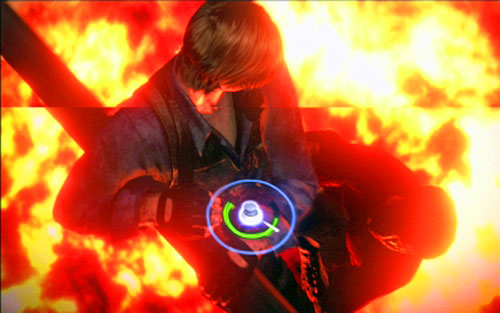
Lackluster quicktime events more suited for an action game than Resident Evil 6...you SURE you don't wanna go back to fixed cameras, Capcom?
            I think fixed cameras are an under utilized tool.  Even if they were done out of limited graphics, not every game needs to look as pretty as Halo 4 or Call of Duty 4.  It is okay to have a game with limited, even polygonal graphics if the gameplay and/or story is solid.  After all, look at Minecraft.  It is blocky, it isn't the shiniest or most impressive of graphics, and the monsters are almost laughable, but it stands on its own because it is fun.  Sadly, even indie designers prefer to avoid using fixed cameras by using user controlled cameras or games that cannot make use of it, like 2-d games.
Not every game has to be this sleek to be good
            Closing out this discussion, let me just say two things.  First, I encourage people to try and release more games with fixed cameras, provided they can do it right.  Older Playstation and N64 games with these fixed cameras, and even into the PS2 era, were able to be more experimental, use them in unique ways, or just create a riskier game with them because there was less of a cost investment due to not having to make as many environments.  There's no reason why indie developers or even mainstream developers and publishers, Capcom, Square, Konami, etc. can't use these advantages to take a few risks, test the water with new properties, or just do something new.  If it costs less and it fails, it's less of a risk.  If it costs less and it succeeds, you get a high return on a low investment.  If you put all your money on the big AAA games or the samey numbered reiterations of sports games or what have you, then...you're asking to fail when the industry eventually turns on your "tried and true" game design.
Where have all the fixed cameras gone?  As time passes...
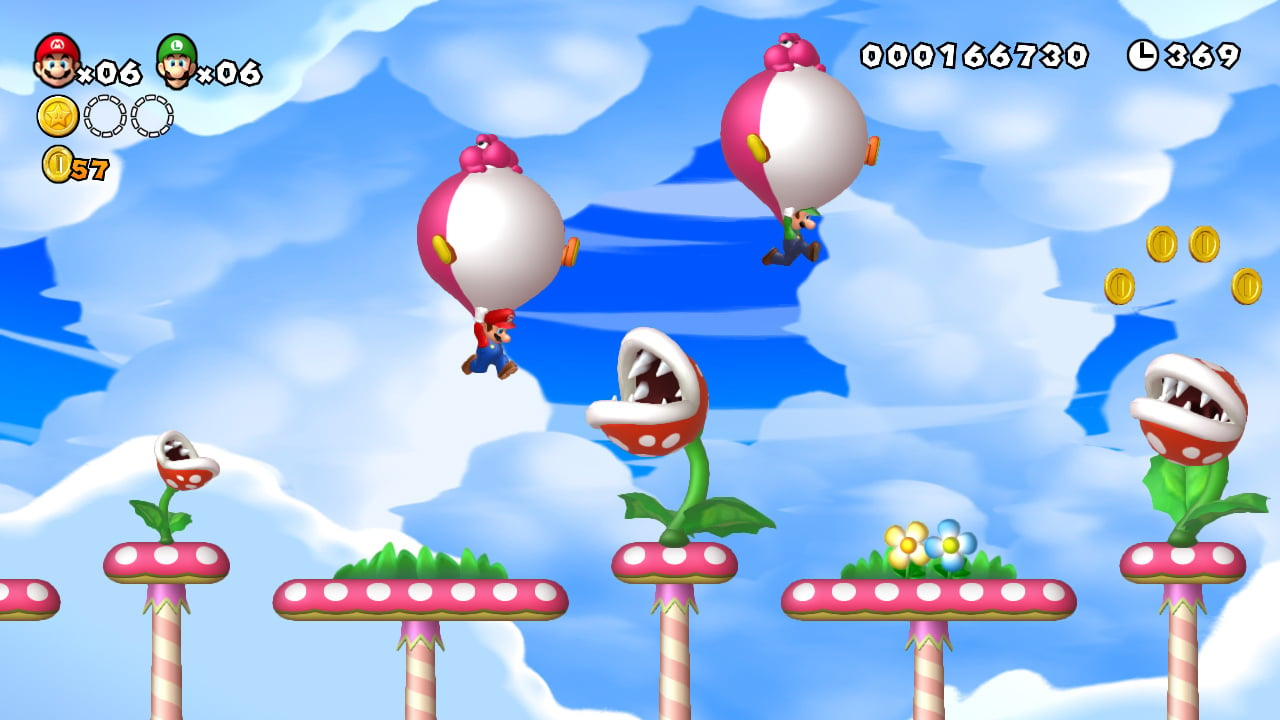
            Second, I want to say this.  Don't feel like you HAVE to used fixed cameras.  They are a tool and a useful one, but not for every game.  A game like Contra Rebirth or New Super Mario Brothers Wii U don't need a fixed camera and would actually be hindered by it.  However, understand what you can do with a fixed camera.  The cinematic way of building atmosphere without giving exposition or even having the characters speak at all.  How one shot can say all that it needs to in order to make a character in awe, uneasy, or at peace.  Because those skills will help immensely when the time comes to use the free moving cameras, since you'll know how to frame a shot.
Not every game NEEDS a fixed camera, but the lessons you can learn from them shouldn't be forgotten.
            Fixed cameras are part of the game industry's history.  We shouldn't forget about them.  We should learn from them.  Learn how they were used and to what effect.  It will undoubtedly help game design in the long run. 

Anyway, that's my take on fixed cameras.  Yeah, they can be annoyingly restrictive at times, but sometimes a game NEEDS to be restrictive to convey the right message, mood, or atmosphere...or keep costs down.  Something to remember.