Showing posts with label Jim Sterling. Show all posts

Sunday, August 24, 2014

Twelve Tips for Indie Game Developers: The Outsiders Perspective


            Alright.  Let's be honest, I am not a game developer, I am not a PR guy, I am not an analyst.  What I am is a gamer.  And as a gamer, I wanted to just give a few ideas to the community as a whole, the indie gaming community, that, from a gamer's perspective, will actually help you.  Because, corporations may need advice, but they won't take it.  Indie devs tend to just be a group of a few people and they can and sometimes will use advice, so...here it is.

Considering the shit AAA devs are doing...yeah, I love Indie
            I've been seeing a lot of...shall we say, shady behavior on the indie scene, lately.  For every War Z or Guise of the Wolf, we get tons of decent games like Shovel Knight or Cubesis, certainly, but the fact that people think they can screw with their customers, on the indie level no less, is kinda disconcerting.  This doesn't just go for people trying to mess with critiques or lie to others, this goes for blow ups like with Phil Fish or even levels of mediocrity, like the dozens of RPG maker games that are starting to appear on steam.  So, let's start with some easy tips.

1) A New Developer Starts with nothing.

            As a new developer, you start with zero.  Zero faith, zero goodwill, but also zero bad will and zero vitriol.  You can build your image from the ground up.  So, play to the audience you want and respect that audience.  You can make a name that is meant to show your ambitions or what have you, like Wayforward or you can just have it sound cool, like Super Giant Games.  But, you start on an even keel, so use that to your advantage.  Use it as a jumping off point to show your audience, you respect them and you care.  They WILL start to judge you from the first screen shot you post, but when all you have is a name and a title, you start with nothing, so use that to your advantage.

All developers are born with neither good will nor bad will.  Use that to your advantage.
2) The Value of Goodwill.

            Indie developers can live and die on goodwill.  See, many indie developers work their jobs part time while doing other jobs or can survive on other means while waiting to hit it big.  However, if they do hit it big, this means they can work full time.  Indie devs are no different from big companies in this regard, as if their name has weight it can mean the difference between a boycott and massive sales.  Even if it just means you get a few hundred extra sales, since you try and deliver games cheaply and without much overhead, like a publisher or retailers cut, it can still help.

If you give to gamers, gamers will give to you, devs.
3) Be courteous, but don't be phony. 

            Your customers need to trust you and be willing to return your own goodwill, spreading word of mouth, doing reviews, talking to friends, what have you.  So, how can you build goodwill?  Well, a good way to start is to think about how you as a customer want to be treated.  Everyone hates that sir or ma'am crap we get when talking to corporate pawns like the cable company or healthcare and we hate automated systems even more.  We want to be spoken with as equals, by real people.  We want to be spoken to as people who are helping with the gaming experience, not lavished with false praise and titles.  If we make a suggestion, be glad for it.  Even if you can't use it, remember that someone cared enough that they wanted the game to be better so they could play it more. 

We all hate automated machines telling us our time is valuable to them.  Treat us courteously, but not like robots.
4) Be a nice person. 

            In spite of all vitriol, nothing builds goodwill like a developer who will act in a mature way when being insulted or demeaned.  This.  Is.  HARD.  Phil Fish may not be a guy I like, but he was insulted on a daily basis and demeaned the point he quit the game industry after many, MANY choice words.  It's probably good he did because after those words...he lost a LOT of good will from fans.  Thing is, Zeboyd put it best.  It's just good for all of us if we try and be nice guys.  Not fake nice, but if someone disagrees with you, let them, don't explode.  If they're being an asshole to you, ignore them.  If they're being an asshole to your community, feel free to ban them, since you have your community to think of.  But in general, just be a nice guy that people feel they can talk to. 

Gamers can be a vitriolic bunch but indie devs rely on them so...you kinda have to be the bigger man here.  Act maturely, even if we don't.
5) Man up to your mistakes. 

            All developers have made mistakes, wasted money, or generally had delays that prevent them from keeping promises in a timely manner.  Lying or making excuses to your fans and customers is not the way out.  Be upfront with them and share the experience.  If you're having problems, let them know but assure them of your commitment.  If you can't deliver, all there is to do is apologize, take the heat, and try to make it right how you can.  While you might lose some goodwill for doing the right thing, people remember those who are honest with them and respectful.  They respect those who don't cut and run and will try and do the right thing.  That, in turn, will get you more good will. 

People might never let you forget a mistake, but if you own up to them, don't make excuses, and say you'll do better, they're more likely to forgive and respect you.
6) Share with and go the extra mile for your community. 

            Everyone loves seeing games progress, either in development or in updates and bug fixes.  Share with them how things are going, maybe if you added something new, secrets maybe, but keep them involved, because that shows you care.

These are basic tips relating to good will.  In general, just think how you as a gamer or a customer want to be treated by others and...do that.

Community is a powerful tool in the game industry.  Treat them right.
7) Do not lie to your customers

            This is to cover all bases.  We talked about manning up to mistakes or problems, but don't sugar coat things.  If your game is a piece of ass, at least let them know going in that it's a piece of ass and that you are trying to learn to either fix it or do better the next time.  Don't bill it as a Call of Duty killer and then it turns out to be a generic shooter with copy paste graphics from the Unreal Engine with no trace of originality.  Don't use misleading clips or CGI or in general try and deceive them, because you will be found out and your attempts to hide it WILL be catalogued.  In the age of screen capture and mass media, nothing can just be covered up anymore.  You cannot cover up a lie in the games industry, so it's better to simply not lie.  Your rep and your goodwill will thank you.

If you lie, your customers will find out...and they will be PISSED.
8) Do not censor

            I know it may hurt to see something you worked hard on or which isn't finished take a verbal pounding from players who are basically ripping it apart for fun, but like I said before, if you try and cover that up and lie, it WILL be found out.  Garry's incident and Guise of the Wolf are the most notorious cases of censorship gone bad when Total Biscuit had his first impression videos taken down by people abusing the Youtube Copyright system.  He tore them apart in a mature manner, showing their wrongs in detail, catalogued, and eventually they had to relent.  Jim Sterling also covered those who took down steam reviews that were unflattering.  All incidents left a trail and the stories were picked up by Kotaku and other news outlets and the developers were treated as the scummy, money grubbing asses they were.  Don't censor.  It never ends well.  Take the vitriol on the cheek, turn the other cheek, and let it be forgotten, making way for fans who WILL appreciate your game.  Everyone hates a villain and if you act villainously, like trying to abuse the system to censor bad press, you will be slain by some righteous heroes of the net.
Best way to lose goodwill and become a gaming development pariah?  Try and censor your customers because they don't like your product.  Own up to your mistakes or you are going to burn.  The internet does not forget.

9) Don't belittle and don't fear comparison

            Not everything has to be original, but don't be afraid to have something compared to your game and don't belittle others who might be compared to it.  Many people hated the calling of Terraria a "2-d Minecraft."  Sure, they are different, but that kind of comparison...is not bad.  Minecraft is a big hit and a game like it?  That's not saying a bad thing, you could be compared to worse.  And Terraria never set off to compete with Minecraft, they didn't claim they were better.  They were just different.  They didn't speak ill of them.  This is good.  I remember playing The Last Dream for Steam and didn't much care for it because it took too much of the original Final Fantasy and not enough of the sequels, with a bland class based system and not enough interesting story or music.  However, think about that sentence I just said.  Took too much from the original Final Fantasy.  Final Fantasy purists, who enjoyed the original NES games will eat a game like that up.  Don't fear comparison.  It's just someone else's way of pitching your game to a friend in a nutshell.  Don't belittle because whether or not someone who is making a game similar to yours is better, the fact that you treat them with the same respect you treat your customers, that is to say a lot, will earn you a fair bit of goodwill and possibly partners in the future.  Who knows?  They may want to work for the masters for their sequel.

Comparison isn't necessarily a bad thing.  Don't fear it, because it's just part of how people associate your game.
10) Don't nickel and dime your customers

            I see this happen a fair bit.  I'm not of the mind that all micro transactions are bad.  Some DLC definitely deserves the money, like Dark Souls 2's Sunken Crown DLC.  It clearly took extra time to make and was not part of the original product.  However, a game like Warlock 2, which looks like it should have been an expansion pack sold as a full retail release?  It makes customers raise an eyebrow and hurts your brand.  We don't like to feel like content is withheld from us.  Held hostage from us.  If you want to offer certain extras you can't get elsewhere, like behind the scenes footage or art books, maybe, but if you are withholding characters, music, whole levels even, BEFORE the game has even launched?  You are going to anger a lot of people.  Some DLC, we are okay with, but when it's been cut out of the finished product to make more money?  Many of us will skip the finished product entirely, since it's being sold to us piecemeal.
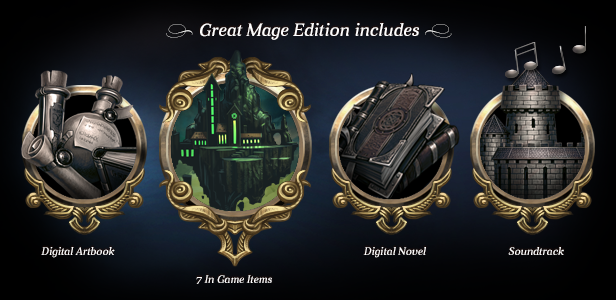
When your customers realize you hacked out in game items to sell a more expensive edition, they may just say to hell with your game.  It shows a lack of disrespect.

11) Spread the word, but don't bribe

            Disclosure has become a hot topic lately with youtubers.  It's the idea that a game developer is offering special goodies or money or deals to reviewers for a favorable look at their game.  This is a bad idea.  Why?  Because if you don't have enough faith in your game for it to stand on its own, you probably shouldn't be selling it.  Don't bribe reviewers, don't even try to sweeten a deal.  Just advertise that you have something cool to show people.  Spread the word through the medias and the fans, but don't try and buy publicity.  Market, but don't try and get "special attention."

Full disclosure, not non disclosure.  Don't bribe, don't lie, don't keep things from your customers.
12) Don't panic

            Even good games can receive bad reviews.  Why?  Because the game wasn't what that particular player wanted to experience, even if the videos and screenshots seemed like it might be.  And that's okay.  Sometimes, wires cross.  But if you are proud enough of your game that you would play and enjoy it, then others will too.  Don't panic if you get a bad review or if something happens to derail spreading the word or getting it to your customers.  In the end, most players will remember how you act and resolve issues as well as how they like the game.  I may not like FTL, but I give mad props to the developers for improving it and offering the updates for free.  I might buy another game from them, if it were released.  Whatever happens, just go with the flow and do your best to deliver your product to your customer.  If they like it, they like it, if they don't, they don't, but someone will like it.  Have faith in that.
This isn't my kind of game, but it is for someone.  Just cause I don't like it doesn't mean others won't.  Don't panic.  Keep calm and carry on.
            It's a little sad that the indie scene has been sullied by some developers who try and lie or abuse the system to their own benefit, but for every Guise of the Wolf or Garry's Incident, we get a dozen Shovel Knights, Valdis Story, Sang-Froid, Tiny Barbarian DX, etc.  It's easy to misstep as an indie developer, sure, but from a gamer's standpoint, these points above are what matter to us of the developers we trust.  Something to keep in mind for the aspiring game developers.  And something for games to keep in mind when picking a title on name value alone.

In the end, being a good developer and being a decent human being aren't mutually exclusive.  That is the best bit of advice I can offer.

Saturday, April 5, 2014

Mind Games: The Good and the Bad of Psychological Warfare in Gaming


            Okay, so last week, while I was writing up my discussion on the goods, bads, and confusing elements of Dark Souls 2, I touched a little bit on my belief that the game was actually trying to engage in some psychological warfare.  I intend to go into that here, because, for what the game is trying to do, I think this type of mind game is actually pretty amazing.  Before we do, though, there are probably a few questions people might have about psychological warfare with games that need to be addressed first.

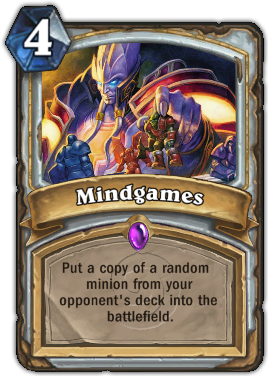
Yep, we're gonna be talkin about you today, Hearthstone...you and your MIIIIIIIND GAMEEEEESSSS
            Psychological warfare in a video game does not mean a psychological thriller, necessarily, like Silent Hill 2.  While there can be elements of psych warfare in that type of game, Silent Hill 2 and many games with a psychological bend are more interested on looking at the character they've given to the player and exploring their development in a nonlinear manner, showing their strengths, weaknesses, and growth through their actions and the world around them.  No, when I talk psych warfare, I am referring to when games perform something that does not affect story or the world they are in, but which elicit a particular response from a player that is contrary to what they know or believe the way things should be done.
Psychological thrillers and psychological torment is not the same as psychological warfare.
             Free to play games are probably the ones people might know best for psych warfare.  Free to play games operate under the idea that, a player goes into the game knowing full well that they DO NOT want to pay for it.  They want to get the maximum enjoyment out of the game as possible without having to spend a dime.  However, the way the game is built, it makes the game easier and ultimately more enjoyable if you will actually pay.  The game gives you the option to do what you believe is correct, but ultimately is trying to drive you towards something you don't want to do.  Hearthstone is a good example of this because it is subtle...it's not in your face about it.  It puts a 100 gold win cap per day on individual players, so they can't win more than 100 gold from matches per day, and gives them quests every day to win gold, which they can use to buy new cards or participate in the game's arena mode, for free.  However, 100 gold a day buys you one, count them, ONE pack of cards.  The Hearthstone store allows you to buy up to 40 at once...provided you are willing to pay real world money.  So, for a starting out player, who gets trounced by the guys wielding expensive cards...this is a real temptation.  It defines pay to win and wants to goad the players into spending, even though in their mind, they know that's not what they want to do.  This is psychological warfare.  It is trying to elicit an action from players contrary to what they might do in normal circumstances.  It aims to mess with your mind.

Behold the Hearthstone Store.  Funny how all the boosters above one cost real world money, huh?
            Now, free to play games are inherently at war with a player and that is our choice, if we agree to play them.  I deal with Hearthstone's frustrations and the psychological warfare because I like it and that is my choice.  However, like any great power, psych warfare can be easily abused.  Jim Sterling coined the term "fee to play" where a player pays a fee to buy a game, sometimes as much as 60 dollars, and then have the option of performing microtransactions and paying the game to give them more content that is behind a pay wall right off the bat.  This style of game tends to harass players into spending money rather than giving them the option.  It can never force them to, but it teases them, while still requiring them to pay, and this type of psychological warfare is pretty devious, because it tries to squeeze as much money from a single player as possible without enhancing the experience.  In truth, fee to play games are the worst kind of psych warfare because while free to play allow a richer experience if you are willing to put down a little money, fee to play negates much of your hard work, because you are paying to make a game you've already paid for easier and shorter.

Paying to make a game that you've already paid for easier and shorter...just seems kinda counter intuitive, doesn't it?  Or is that just me?
            With that outline on the basics and the negatives of how psych warfare works in gaming, let me move onto the meat of this discussion.  How psych warfare in a video game can actually be used to enhance the experience.  I'll start with a baseline example, then move into Dark Souls 2, as I think it's pretty amazing what they've done there. 

            I find that most old school JRPGs invoke just a little bit of psych warfare, so let's start with them.  Final Fantasy 5 has an area called Gil Turtle's cave, where you fight an INSANELY tough monster called Gil Turtle every few steps in a long, straight, one square corridor that there's no way to go around.  Now, you don't have to do this.  The area is completely optional.  However, what's interesting about it is that the game keeps the camera pulled just far enough back that you can't see the end of the corridor from the overhead view.  You don't know if there's treasure in there, or if there's nothing at all.  However, there's this compulsion to know, since this cave is right next to one of the big cities we've been using as a base for the last few hours.  More than that, in JRPGs there's this knowledge that if you fight a boss, you will ultimately get a powerful reward.  So, players might waste time dying against the Gil Turtle monster or spend a lot of money trying to get equipment specially made to beat it or devote time to leveling up skills they think might help.  Even though in the back of their mind, they know they ought to either move on and come back later, or just ignore it, since they're not strong enough or what have you.  The game teases you with possibilities of what is hidden and so we persevere and find...nothing but money.  And not even that much money to begin with.  Frustrating, perhaps, but we did this to ourselves.  Final Fantasy 5 goaded us into the cave and into fighting Gil Turtle, sometimes as many as a dozen times for the very unlucky, just for money, but we're ultimately the ones who gave into it.  However, let's look at this from the other perspective.  I just gave you an example of how good psych warfare makes a game frustrating, but from a separate perspective, it can also force players to get better and start thinking more strategically.  For example, some players discovered that Gil Turtle was an undead and took damage from the bard spell requiem and holy magic, making the battle much easier if you have those who can cast it.  Also it was discovered that Gil Turtle largely uses physical attacks, so if you have a knight protecting players, or a spell that gives them evasion, it's doable without much risk.  However, no matter which perspective you take, you have to admit that your experience was drastically changed by the game's use of psych warfare.  Maybe it made you a better player, maybe it gave you a feeling of accomplishment for beating a hard boss...maybe it just taught you not to be so obsessed with treasure that you risk your own life...either way, it created a unique experience for you.

Get used to this screen...it's gonna happen A LOT.
            That, I believe is the power of psychological warfare in gaming.  It can alter how we decide to play games and give us a unique experience.  Heroes of Might and Magic does this in a very simplistic way, putting a large stack of enemies in between a player and great riches.  They know they probably won't beat the enemies at their current level, so they focus on building an army to get the riches...only to have their opponents take them apart because they were focusing on the monsters guarding the treasure instead of their true enemies.  It's a way of messing with the player, and possibly teaching them a few harsh lessons.  Either way, it alters the way we play games based on our own weaknesses as humans(greed makes us want treasure, curiosity makes us explore areas we shouldn't just yet, impatience makes us play sloppy, etc.) and ultimately changes how we experience a game.

That demon is guarding sooo much treasure...if only I had a dimension door...
            Now, I want everyone to understand that what I am about to say is purely speculation on the part of Dark Souls 2.  I don't know if this is the case, but I believe it to be so based on the game design.  Alright.  Now, in Dark Souls 2, you have a hub town.  This is where you level up, this is where you strengthen your recovery items, this is where you upgrade and buy items and weapons, this is where you are safe.  Problem.  You have to warp back to it for any of this, and that takes you out of combat, breaks the flow of the game, and puts you behind a loading screen.  I heard many players during the beta talking about how it was an issue for them.  About how the original Dark Souls allowed them to repair items at a bonfire, level up at a bonfire, improve recovery items at a bonfire, all taking only a minute or so and just like that, they were back in combat.  This new system seemed frustrating and baffling and I felt the same way...at first.  However, I realized after several painful deaths involving the loss of over a hundred thousand souls(the in game currency and experience points), that the game was messing with me.  You see, all those benefits to the hub town?  They're supposed to be inconvenient to get back to.  Not so inconvenient as to make the game frustrating, but juuuuuuussssttttt inconvenient enough that you don't want to go back to them from the middle of battle, even though you KNOW you should.  This is where the psychological warfare comes in.

Quaint little town, isn't it...it's a trick!
            In the original Dark Souls, one of the rules of gameplay was to spend your souls as soon as you got them, level up often, never wait, because death was right around the corner.  However, that mantra changes a little bit when you're taken out of combat and put behind load screens, short as they may be, because it's no longer easy to spend souls quickly and efficiently.  You  have to warp back to your home town of Majula, talk to the Emerald Herald NPC, talk to others to see if they have new wares in or to fix items, it completely takes you out of the "YEAH, I AM KICKING ASS" mentality for players doing well or the "MUST GET SOULS BACK/MUST GET REVENGE" mentality of players doing poorly.  And most players don't want to lose that mentality.  They're having fun, so they don't want to stop, even though, in their mind, they know they really should, because they're carrying a lot of souls they could use to level up or buy/improve items.  And this...this is where the game gets diabolical.  I believe that the hub town and the NPC who you have to level up with were all intentional.  The developers were trying to wage psychological war with players to try and get them to act recklessly, because everything in Dark Souls 2 is surmountable if you are careful or if you're open to experimentation.  However, neither of those is conducive to the fast pace of an action game or the impatience of many players.  So, they get sloppy and die.  And when they die, they lose A LOT of souls.  Why?  Because it was just a little too inconvenient to go back to Majula and spend them. 

You'll stay by our side until hope withers, eh?  We shouldn't take your words lightly, Emerald Herald.
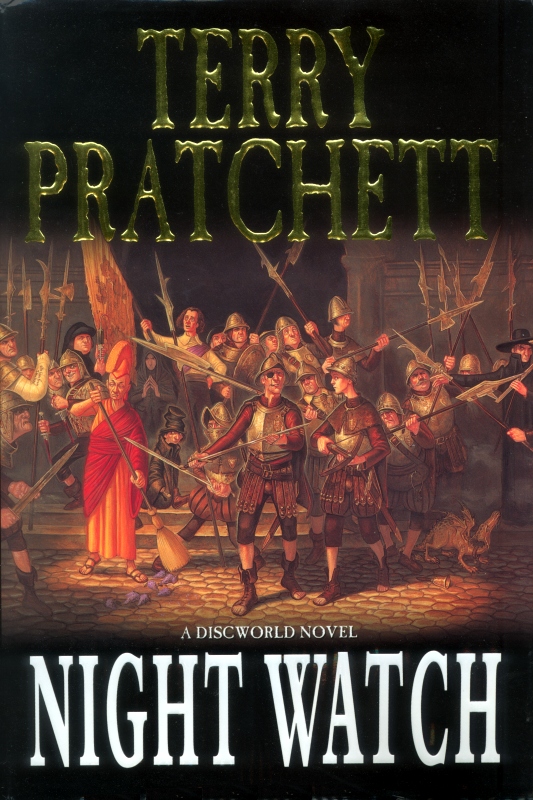
            In many ways, this is a better difficulty scaler than anything.  You see, the game is only hard if you're reckless.  If you don't spend souls as soon as you know you have enough.  Because you'll lose them.  Samuel Vimes in Terry Pratchet's "Night Watch" once said, "I have to get lucky all the time.  They only have to get lucky once," in regards to people trying to assassinate him.  The same mentality applies here.  You have to keep being lucky, because no matter how skilled a player, eventually there will be a mistake.  The enemies only have to get lucky once...and that's devious, because it lets you know the status quo...that all your assets are in this hub town...but then encourages you to ignore it at your own peril.

You're wise beyond your years, Sir Samuel.
            Even the rewards for the game encourage this to an extent that is rather shocking.  There are two items in Dark Souls 2 that are based around this same principal of making the players go against what they know is proper.  Illusory Ring of the Conqueror is awarded to players who beat the game without dying.  Illusory Ring of the Exalted is awarded to players who beat the game without using a bonfire.  Now, dying to experiment with different play styles or strategies and using the bonfire to heal and warp are cornerstones of Dark Souls 2...and encouraging players to get these rings by ignoring them is playing a bit of mind games with them.  You can only get these rings if you go against the game design and against convenience, as the inability to use a bonfire, for example, means you cannot warp or repair items and have to walk everywhere and deal with broken weapons at a regular basis.  It also means you cannot easily get rid of your souls via leveling up.  Yet, the game encourages players to try this...it is setting them up for failure, but it is a failure that they themselves could easily stop if they just did what they knew was the right choice.  And these rings?  They only make the item you're holding in each hand invisible.  Useful for PvP perhaps, but hardly worth the effort.  Yet some players are already working towards them.  This is what leads me to believe the game is messing with players.  It is more difficult than the original Dark Souls, but only if you let it get to you.  Let it get into your head and ignore the warnings.  This is psychological warfare.

I hope the ring was worth all the psychological warfare you subjected yourself to.
            Now, there are plenty of examples of varying degrees of psych warfare at play in the games industry.  I've only scratched the surface.  There are plenty of ways to mess with someone's mind.  Conditioning, for example.  In Pandora's Tower, you grow closer to Elena because the game conditions you to, with the relationship meter and the fact that she will do things for the player if they talk with her.  She can improve your items, give you buffs or healing tools, or many other things.  However, if you just want to play the game, she's a bit of a barrier, as you need to talk with her regularly...however the game is trying to convince you she is not a barrier and condition you to like her.  This happens, A LOT with games.  Some do it well, and I do believe Pandora's Tower does it well, others, like Final Fantasy 13, do it poorly and just make the character an annoying anchor around your neck.  However, ultimately, that brings me to an interesting question I asked myself while playing Dark Souls 2.  Is psychological warfare in a game beneficial to the player?  Is it "good?"

What can I say?  I'm a softie for Elena...
            Now, that's not an easy question to answer.  Some of it is clearly ripe for abuse, such as in free to play games.  Dungeon Keeper on mobile platforms abuses it's psychological warfare to try and bully, harass, and goad the players into spending real world money.  The NPC guide of Dungeon Keeper mobile actually says, "Who says money can't buy time?"  Now, with this level of abuse, especially in the fee to play games that Jim Sterling has outlined like Dead Space 3, psychological warfare is a bad thing.  It is meant to squeeze money out of players.  It does not serve the game, it serves the publisher.  In this case, I'd say psychological warfare is something to be wary of and try to be aware of as soon as possible and avoid.

This is psychological warfare in gaming at its absolute worst.  Manipulating the players for the profit of the publisher.
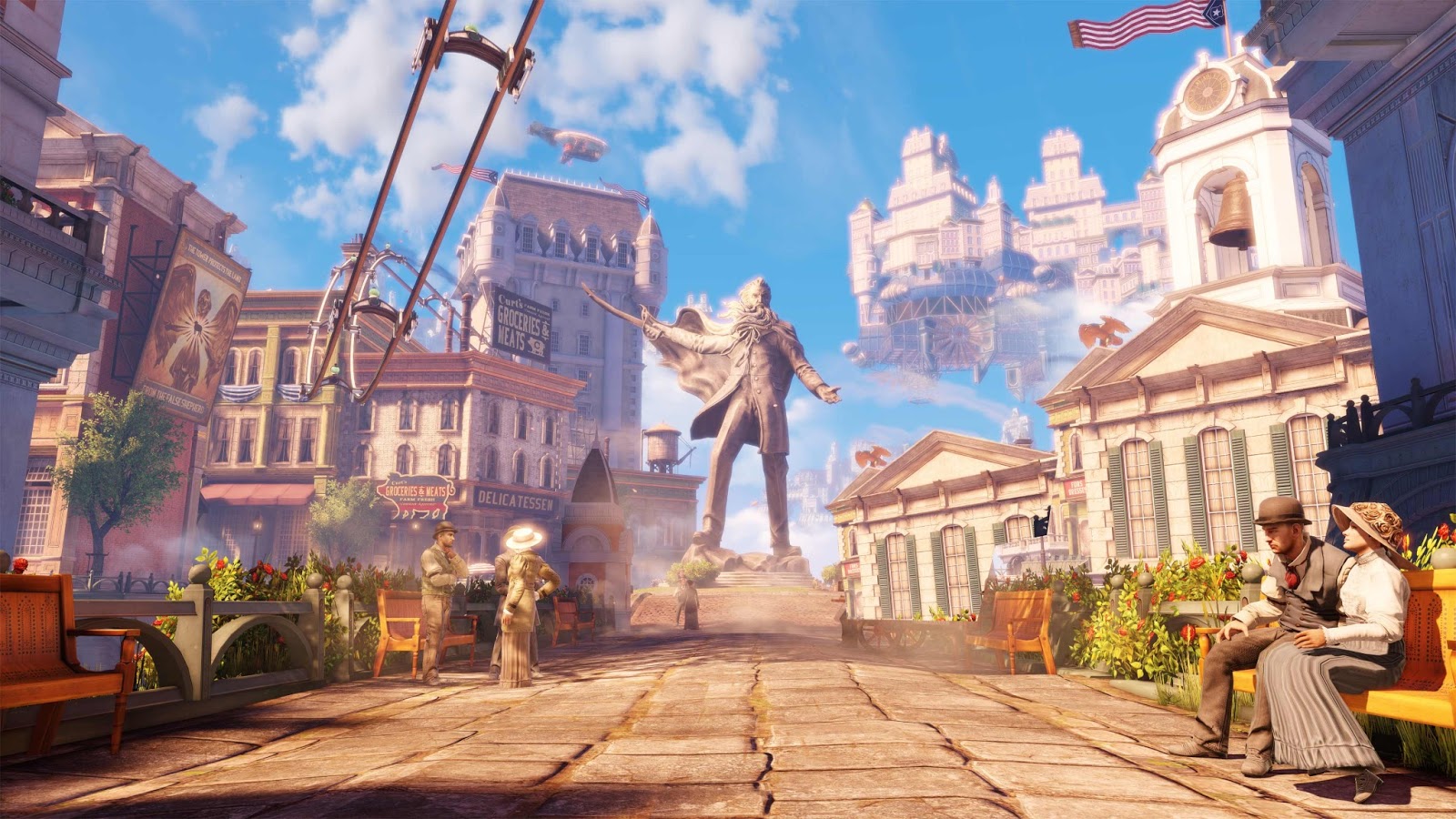
            Along that same note, I want to say that I consider psychological warfare to be completely different from brain washing.  Many games, some with political messages, some with ideological messages, or what have you, will try to brainwash its players into thinking a certain way.  This isn't warfare, it is programming...and that's just despicable, in my opinion.  Good players will agree or disagree or make their own decisions about how a game's views and agendas play out.  You can like or dislike the extreme racist views of Columbia in Bioshock Infinite because it doesn't necessarily play them out as good or bad, just a product of the times.  However a game made specifically to convince a player that their beliefs are wrong or invalid and that the beliefs of the game designer are right and thusly they need to change how they think?  That's not a game.  That's a piece of trash.  Most of the time, you don't see games like this sold commercially, because no one will pay money to be talked down to and have their beliefs belittled, but it is something to keep in mind for certain freeware games or for game design in the future.

Racist and insane as it may be, at least Columbia isn't trying to brainwash you into believing it's right...or if it is, it's doing a damn crappy job of it.
            HOWEVER...when a game doesn't try to brainwash or belittle a player?  When it doesn't have microtransactions?  When it is actively trying to make the player experience the world in a different way?  I actually think these types of mind games enhance the titles more than hinder them.  I freely admit to allowing myself to be taken in by the conditioning of Pandora's Tower and really growing attached to Elena and...that made the game better for me.  Playing Final Fantasy 5 and getting stuck in Gil Turtle's cave actually gave me some perspective onto how brutal some of the secret bosses could be and helped me work through strategies on how best to defeat other secret bosses, like Omega and Shinryu, which I did.  And in Dark Souls 2...I have to admit, it made me be a bit more aware of my actions.  I knew that the risk I was taking was stupid, sometimes, but it enhanced the thrill of the game when I did it...and it also made me feel smart when I chose not to, spent my souls in Majula, and died moments after going back to battle.  It taught me how to better play the game.

I praise the sun for this victory!
            Thing is, it takes work to put psychological warfare into a video game without microtransactions.  It takes work to design Gilgame's cave to make it so difficult to pass through but so easy to avoid.  It takes work to try and condition players to like characters, even if it fails, like with Vanille in Final Fantasy 13.  It took work to make Dark Souls 2 function the way it does, with an NPC to level you up and a hub town behind a loading screen to spend your souls at.  And why do all this work if not for the benefit of the players and the experience?  I know that some people might get a little iffy about being played or having their mind messed with, but in most games, psychological warfare is actually meant to enhance the experience.  Recognizing it actually kind of changes the game too, because you can choose to be taken in by it or to play it without being messed with, further enhancing a game's replayability or it's value.

            Psychological warfare in games isn't meant to program you to think a certain way, even though conditioning can make you look at characters more fondly...the point of it is to enhance the experience for the player so that they will buy the sequel or recommend the game to others.  If a game tries to overstep that bound and doesn't serve the player, that's when we have a problem.  That's why I have such disdain for games like Dungeon Keeper mobile or other fee to play games.  Because they don't want to enhance the game for the player...they are there to serve the publisher or some other party.

            Let me close out by saying that you don't need to recognize psych warfare to enjoy a game or to be swayed by it into playing it differently.  In fact, if done well, it should be very hard to recognize indeed.  However, it is a very interesting little look at how some game designers go out of their way to make a game better by trying to understand how a player will think and then work against them or with them(in some cases) to try and make the experience more unique and fulfilling.

Monday, September 2, 2013

Sell Now, Fix Later: The Growing Problem of Unfinished Games


Okay, before I get started with this entry, I want to apologize for the infrequency I have been posting lately.  I recently lost my old job and have returned to school, so needless to say, it's been an adjustment period.  I've also had my hands in other projects, like my book or a sexism project in regards to video games for the sake of a friend of mine.  Anyway, enough apologies.  I may be a bit more infrequent for the next few months, but I do have some more posts in the pipeline so...please be patient with me.  Now, on with the post and your inevitable hate mail.

Sell Now, Fix Later: The Growing Problem of Unfinished Games
I'm going to say something that will probably earn me a good deal of flak.  I don't like Skyrim.  Before anyone throws hate mail my way or "You just haven't played it enough" or what have you, let me retort with, I spent sixty hours playing the game.  It's addicting, certainly, but...I can't really say I had FUN while playing it, just that I couldn't exactly stop.  I went from the start of the game to the end of the story missions, finished the civil war, and by the end was greatly disillusioned with it because Skyrim is an unfinished game, shoved out into the market because the developers thought it was "Good enough."

"Good enough" is not good enough when it comes to a $60 game.  Make.  It.  Better.
            What do I mean by that?  Well, in the modern game industry, the advent of consoles which regularly connect to the internet has spoiled video game developers somewhat.  You see, thanks to the ability to patch a game online, many developers feel it is alright to skip some of the crucial stages of QA testing in their games, shove it out into the world at large, and if there are problems down the road they can just release a patch for it.  While I know that releasing a patch is a huge hassle much of the time and does require a fair amount of manpower, this kind of nonsense would not fly ten years ago.  Ten years ago, a game with as many bugs and glitches as Skyrim would be laughed off the cutting room floor, not lauded with 9/10 and 10/10 scores from reviewers and given countless game of the year awards.  See, as consoles have grown closer and closer to PCs, an unsettling number of them have started to treat their games like PC games.

It's a good game, but...no.  Glitchiness should not get a free pass.  9/10 for a game with an insane amount of glitches is unacceptable, even for an Elder Scrolls game.
            There was a time when console video games could not be that glitchy.  One or two glitches might be acceptable if the developers missed them and they didn't obstruct gameplay, like the famous Final Fantasy 6 reviving General Leo glitch or the duplicating items glitch in Dark Cloud 2.  However, if a video game had noticeable problems just running normally then it would receive a lot of flak from reviewers and gamers alike.  For me, personally, Skyrim on the PS3 froze to the point where I had to manually restart my console about 6 times during my play through.  Many monsters would one shot me at full health, even if they were tiny.  I had, on two separate occasions, Dragon corpses draped over different houses in different cities that refused to disappear and which ragdolled and got trapped in the scenery.  Characters who could get trapped, both by scenery and IN scenery.  And overall just poor design on certain sections of the game.  Yet, despite all these problems, and these were in the most recently patched version, Skyrim's perfect "legendary edition," people still threw around awards of 10/10 for the game.  When the game was released in 2011, there were dozens if not hundreds more glitches, some of which made the game unplayable after sixty hours or more.  This kind of glitchy, unfinished console game would never even find release, save for the most unscrupulous of developers pre-2006.  The fact that it's a port of a PC game is little excuse, especially considering how high profile it is.  Be more critical, game journalists!  Skyrim did not deserve all those 10/10 scores it got.  I personally didn't like it, but that's personal preference.  I could see it being a solid 8/10 or a 7/10 because of all the options and the capacity for fun through organic gameplay...but with all the glitches, it did not deserve all the praise it got.  Just because a game has a massive amount of content does not forgive the fact that the game is unfinished in places.  In fact, "You can overlook a few glitches due to the amount of content"  should not be an excuse.  If anything, the amount of content raises the bar higher because if you can give us this much content, we expect it to all work.

You laugh, but this is kind of distracting...immersion breaking...and just unacceptable in a "game of the year" title.
            Here's the thing.  PC games have had this issue for a while where even seminal games can be plagued by glitches.  System Shock 2, I have no Mouth and I must Scream, Deus Ex, etc. have all had glitches that needed patching or which were just left in game, some of which were game breaking.  However, PC games are a different breed than console games.  PC games allow free modding, so that even if a developer abandons a game to glitchiness, the fans could program in a work around.  This is not possible with console games.  If you're going to release a console game, you have to recognize that internet access 24/7 is not all that likely, so patches will be harder to send out, and that there will not be a modding community, so you can't simply throw up your hands when an error comes in and say, "It's good enough.  Ship it with the glitches, we'll sort it out later."  Even for PC games, I think this is giving a bit too much leeway.  When you have to pay sixty dollars for a game, brand new, then it should work for you without fail.  It should be a finished game.  No one pays ten grand for a car that's missing wheels or missing an engine when it's been advertised as complete and no gamer should pay full price for a game that clearly is not finished.  "Good enough" is not an excuse.

I love Splatterhouse, but...get ready to rage as it glitches up over and over.  A game like this should not have been released, at least not for full price, even if it's dirt cheap now.
            Yet, in the current generation, this happens more and more, even with games that aren't patched.  I could definitely keep kicking Bethesda, since Elder Scrolls 4: Oblivion also had glitches and Fall Out 3 and New Vegas were prone to freezing a fair bit, but let's look at some games that aren't PC ports.  Splatterhouse for the PS3 and Xbox 360.  I love Splatterhouse.  For all its flaws, it's very fun.  But even I raised an eyebrow and sighed when I saw the ending.  There was a massive sound glitch where the entire audio track, music, sound effects, voices, the works, just stopped working during a cinematic.  This happened several times, where audio would fail, video would get choppy, or where I would die just because of a game glitch.  I love Splatterhouse, but it should not have been released as it was.  The developers had to have known about this issue and they should have fixed it.  There's no excuse for it.  Or Pandora's Tower.  I've already gushed about how much I adore Elena and Pandora's Tower for the Wii.  But even I yelled at my game when it started to glitch out.  You see, at one point in the game, the player can through one of two towers, which are connected.  One tower, randomly chosen, causes the game to freeze.  If you reload the game and choose the other tower, you're usually fine.  But every other time I tried to go into these towers, the game would freeze and I would have to reload.  And judging from forums about the game, this kind of glitch is just one of many. This is hard to miss, given the nature of the glitch and the game's pacing.  How could QA have screwed up so badly?

See that chain?  That's the glitch gateway.  After running down it to enter the last tower, prepare for a game freeze.
            Now, I'm not an idiot here.  I know that glitchy, unplayable console games have been released in the past, such as the LJN licensed games on the NES, however look back on those games.  They typically saw very poor sales and were reviled by the gaming community.  Compare that to Skyrim or even Pandora's Tower.  Skyrim has sold millions of copies and even been named game of the year, while Pandora's Tower has been ported to the US after the massive fan campaign, Operation Rainfall.  These are high profile titles in the gaming community.  And their mistakes are just getting overlooked.  This is something I cannot stand.  We paid full price, so we should get a finished game.

            I can be sympathetic up to a point.  Sometimes, developers think they've caught all the mistakes possible.  They think they've fixed their game to the point where it's not "Good Enough" but that it's actually "Complete."  Then it ships, a player does something the developers weren't prepared for, and a glitch is discovered.  This is a real possibility, especially with older PC games like Deus Ex or even newer games, like Aquaria or FEZ.  And it's not restricted to AAA developers, as the previous two games were indie titles.  When that happens, I understand that it was probably unforeseeable.  However, in a game like Skyrim, which released with a huge number of bugs, then was re-released as a "Legendary" or "Complete" or "Game of the Year" edition...I have no sympathy.  You sold us a broken game you thought was good, okay, we understand, just do what you can to patch it.  You sold us a game you KNEW was broken and just went ahead with it because of the money?  Screw you.

Legendary Edition, my ass.  These games may have the latest patches, but still have a plethora of glitches.  Try, plebian edition.
            This seems almost like a parody of video game business models.  A parody of Skyrim was featured in an independentfilm by Doug Walker called "Dragonbored."  In this film, a Bethesda stand in released a game called Skyguard, which had a glitch that released the in-game character into the real world.  Impossible?  Certainly.  Funny?  At times.  But then, the film ends with a stinger showing the developer's coder talking to the boss.  They talk about a glitch which sent someone back in time.  The developer's response?  "Go ahead and release it.  We can patch it later."  This may have been a parody, but think about that mentality.  About a developer or publisher caring nothing for your satisfaction as a customer, because they can do something about issues "later" so long as they get your money "now."  This kind of short sighted business decision is scummy beyond compare.  Now, for EA.  We all knew this was coming.  The Sim City 2013 release.  EA released a game that suffered disastrous launch failures, which despite being online only and patched regularly still had numerous glitches, several of which were server glitches directly under EA's supervision, and was ultimately reviled as one of the most botched launches in gaming history.  However, months after the fact, EA called it a success.  Why?  Because they sold several million units and got them working "eventually."  They thought that selling their users a broken game was fine, so long as they got their money now and the users got their finished game "At some point."

Don't worry...we'll fix it eventually.  Unacceptable, EA.  Unacceptable anyone.  Stop selling unfinished games!
            Truthfully, the internet isn't the only thing that has led us to this current embarrassment in game design.  It's the bloated AAA industry.  Lately, the AAA video game industry has become like scummy, short sighted politicians or Wall Street businessmen.  They follow the mantra of "Profits now, who cares later."  They shove their games, broken or not, into our face and expect us to buy them up like good little sheep.  The prices rise, but the quality drops and we continue to purchase their games, regardless.  Longer, more expensive development times means they can afford to do no less.  They don't have time or money for "polish."  The fact that they can get away with it means they don't hesitate to release an incomplete game.

            And really, who is to blame for this?  Well, the companies, obviously, but also, us, the gamers.  We put up with this nonsense.  Every time we buy a Skyrim and give it a 10/10 despite it's numerous frustrating glitches, every time we buy into another EA pyramid scheme, every time we shrug and say, "Oh well, it's good enough" while playing a game, every time we buy a broken game just because of brand loyalty or without looking into it, like good little sheep, we are contributing to the problem.  Developers have gotten spoiled thanks to the idea of a console having free access to the internet.  But then again, so have gamers.  It's why so many people put up with on-disc DLC or why online passes were overlooked for a time.  Because we were spoiled by the internet and forgot a time when consoles didn't have the net.  They only had their games, to stand or fall on their merits alone.  And we need to remember.  I personally connect my PS3 to the internet maybe once a year.  Thousands if not hundreds of thousands never connect their systems at all.  We need to go back to a time, such as when the PS2 launched, where connecting to the internet was the exception, not the norm.  Where games had to stand on their own merits, rather than on what they maybe, possibly, could be once they were fixed.

Still don't believe my warnings?  Well brand loyalty and buying up games like good little sheep gave us Final Fantasy 13-2.  And Lightning returns.  Yeah.  Be afraid.
            The games industry is and has always been a business.  But Jim Sterling put it best.  No longer are game companies trying to create a title that will polarize and attract new gamers.  They are now trying to squeeze as much money out of what dwindling fan bases they have as fast as possible.  Gearbox shoving Aliens: Colonial Marines while advertising with a demo that was a blatant lie is proof of that.  A broken game, shoved out with promises of tweaks, which seem really unlikely, for the masses to lap up.  There was a time when a developer didn't need to release a broken game to squeeze money from a fan base.  There was a time when releasing a game dead on arrival was just that, dead, not dead until fixed.  But as the AAA industry becomes more bloated and ridiculous, I imagine we will see a good deal more releases that are functionally unfinished and which need to be patched.  Patches may be a great thing, allowing a developer to fix their mistakes post mortem, however, I also expect to see games released which are functionally unfinished even AFTER patches or which receive no patches at all.  If they haven't already been released by the time of this posting.

This is the game Gearbox sold to us as finished.  Yeah...remember what happened?  Oh, right.  Fan outrage.
            So, what can be done?  Well, compromise for one.  If you're going to release a game that has bugs or glitches that you know about, scummy as that may sound, give gamers a price drop.  A decent price drop.  A $20-$30 price drop.  That way, they at least know what they're getting into.  Value for less than stellar efforts.  Or, on the flip side, if you think it's good but bugs crop up anyway?  Well, how about some special content for people free of charge?  Some developers do this and while it's not a perfect solution, especially for gamers who play offline, it's at least something.  Hell, some game companies like Nintendo have multi-media sites that can give rewards or game credit as an apology if they so chose to do so.  However, there is one thing we can do beyond simply compromise.  We can stop settling for less.

            Angry Joe and Kotaku both played Saint's Row 4 when it came out and I have been flabbergasted by the excuses they make for the game's many glitches.  When a car clips into scenery?  "It's fine!  It's funny and I can just get out of the car."  No.  A game doesn't function the way it should, you need to raise a little more hell.  "The game froze on me, but it's still fun, so I'll excuse it."  Ummm...doesn't a game freezing make you repeat a section, thus killing some of the fun?  Own up to it!  "The game's so outrageous these glitches almost seem like they were built into it."  Really?  Are you really that desperate to defend what you love?  I love Splatterhouse.  I think it's an underrated game that's really fun.  But I would not pay full price for it.  I waited to buy it on the cheap because I knew it was flawed.  And even though it's fun, I can admit the glitches hurt my appreciation of the game.  Reviewers, gamers, and yes, even developers...stop settling for less.  Stop making excuses for your games.  I know you love them, but part of love is honesty...don't sweep their failings under the rug.  Be fair.

Yeah, these glitches were intentional...it's parody!  Keeeeeeep telling yourself that.  Whatever lets you sleep easy at night.  Seriously, give games a fair shake, both for good or for ill.  If they screw up, bash them, even if you love them.
            What game companies and even gamers forget is that we have the power.  We have the money.  And if game companies want it, they need to do a better job.  My final suggestion is to stop buying games on release day, honestly.  Let the lifetime sales of a game speak for its merit, not just a million over the weekend.  Wait until you know a game is actually finished or worth playing before dropping your money down on it.  Don't follow a brand or a series or a developer like sheep just because they've released hits in the past.  Gearbox, Square Enix, EA, Bethesda, even Nintendo have all released major smash hits in the past but they've also all released unfinished games as well.  Don't settle for "Good enough."  Don't settle for the excuse of, "Oh we'll fix it later, we'll patch it."  Don't defend it just because it's "fun."  If the game is unfinished, own up to it and demand a game that is worth the money you're plopping down for it.