Showing posts with label Terraria. Show all posts

Sunday, August 24, 2014

Twelve Tips for Indie Game Developers: The Outsiders Perspective


            Alright.  Let's be honest, I am not a game developer, I am not a PR guy, I am not an analyst.  What I am is a gamer.  And as a gamer, I wanted to just give a few ideas to the community as a whole, the indie gaming community, that, from a gamer's perspective, will actually help you.  Because, corporations may need advice, but they won't take it.  Indie devs tend to just be a group of a few people and they can and sometimes will use advice, so...here it is.

Considering the shit AAA devs are doing...yeah, I love Indie
            I've been seeing a lot of...shall we say, shady behavior on the indie scene, lately.  For every War Z or Guise of the Wolf, we get tons of decent games like Shovel Knight or Cubesis, certainly, but the fact that people think they can screw with their customers, on the indie level no less, is kinda disconcerting.  This doesn't just go for people trying to mess with critiques or lie to others, this goes for blow ups like with Phil Fish or even levels of mediocrity, like the dozens of RPG maker games that are starting to appear on steam.  So, let's start with some easy tips.

1) A New Developer Starts with nothing.

            As a new developer, you start with zero.  Zero faith, zero goodwill, but also zero bad will and zero vitriol.  You can build your image from the ground up.  So, play to the audience you want and respect that audience.  You can make a name that is meant to show your ambitions or what have you, like Wayforward or you can just have it sound cool, like Super Giant Games.  But, you start on an even keel, so use that to your advantage.  Use it as a jumping off point to show your audience, you respect them and you care.  They WILL start to judge you from the first screen shot you post, but when all you have is a name and a title, you start with nothing, so use that to your advantage.

All developers are born with neither good will nor bad will.  Use that to your advantage.
2) The Value of Goodwill.

            Indie developers can live and die on goodwill.  See, many indie developers work their jobs part time while doing other jobs or can survive on other means while waiting to hit it big.  However, if they do hit it big, this means they can work full time.  Indie devs are no different from big companies in this regard, as if their name has weight it can mean the difference between a boycott and massive sales.  Even if it just means you get a few hundred extra sales, since you try and deliver games cheaply and without much overhead, like a publisher or retailers cut, it can still help.

If you give to gamers, gamers will give to you, devs.
3) Be courteous, but don't be phony. 

            Your customers need to trust you and be willing to return your own goodwill, spreading word of mouth, doing reviews, talking to friends, what have you.  So, how can you build goodwill?  Well, a good way to start is to think about how you as a customer want to be treated.  Everyone hates that sir or ma'am crap we get when talking to corporate pawns like the cable company or healthcare and we hate automated systems even more.  We want to be spoken with as equals, by real people.  We want to be spoken to as people who are helping with the gaming experience, not lavished with false praise and titles.  If we make a suggestion, be glad for it.  Even if you can't use it, remember that someone cared enough that they wanted the game to be better so they could play it more. 

We all hate automated machines telling us our time is valuable to them.  Treat us courteously, but not like robots.
4) Be a nice person. 

            In spite of all vitriol, nothing builds goodwill like a developer who will act in a mature way when being insulted or demeaned.  This.  Is.  HARD.  Phil Fish may not be a guy I like, but he was insulted on a daily basis and demeaned the point he quit the game industry after many, MANY choice words.  It's probably good he did because after those words...he lost a LOT of good will from fans.  Thing is, Zeboyd put it best.  It's just good for all of us if we try and be nice guys.  Not fake nice, but if someone disagrees with you, let them, don't explode.  If they're being an asshole to you, ignore them.  If they're being an asshole to your community, feel free to ban them, since you have your community to think of.  But in general, just be a nice guy that people feel they can talk to. 

Gamers can be a vitriolic bunch but indie devs rely on them so...you kinda have to be the bigger man here.  Act maturely, even if we don't.
5) Man up to your mistakes. 

            All developers have made mistakes, wasted money, or generally had delays that prevent them from keeping promises in a timely manner.  Lying or making excuses to your fans and customers is not the way out.  Be upfront with them and share the experience.  If you're having problems, let them know but assure them of your commitment.  If you can't deliver, all there is to do is apologize, take the heat, and try to make it right how you can.  While you might lose some goodwill for doing the right thing, people remember those who are honest with them and respectful.  They respect those who don't cut and run and will try and do the right thing.  That, in turn, will get you more good will. 

People might never let you forget a mistake, but if you own up to them, don't make excuses, and say you'll do better, they're more likely to forgive and respect you.
6) Share with and go the extra mile for your community. 

            Everyone loves seeing games progress, either in development or in updates and bug fixes.  Share with them how things are going, maybe if you added something new, secrets maybe, but keep them involved, because that shows you care.

These are basic tips relating to good will.  In general, just think how you as a gamer or a customer want to be treated by others and...do that.

Community is a powerful tool in the game industry.  Treat them right.
7) Do not lie to your customers

            This is to cover all bases.  We talked about manning up to mistakes or problems, but don't sugar coat things.  If your game is a piece of ass, at least let them know going in that it's a piece of ass and that you are trying to learn to either fix it or do better the next time.  Don't bill it as a Call of Duty killer and then it turns out to be a generic shooter with copy paste graphics from the Unreal Engine with no trace of originality.  Don't use misleading clips or CGI or in general try and deceive them, because you will be found out and your attempts to hide it WILL be catalogued.  In the age of screen capture and mass media, nothing can just be covered up anymore.  You cannot cover up a lie in the games industry, so it's better to simply not lie.  Your rep and your goodwill will thank you.

If you lie, your customers will find out...and they will be PISSED.
8) Do not censor

            I know it may hurt to see something you worked hard on or which isn't finished take a verbal pounding from players who are basically ripping it apart for fun, but like I said before, if you try and cover that up and lie, it WILL be found out.  Garry's incident and Guise of the Wolf are the most notorious cases of censorship gone bad when Total Biscuit had his first impression videos taken down by people abusing the Youtube Copyright system.  He tore them apart in a mature manner, showing their wrongs in detail, catalogued, and eventually they had to relent.  Jim Sterling also covered those who took down steam reviews that were unflattering.  All incidents left a trail and the stories were picked up by Kotaku and other news outlets and the developers were treated as the scummy, money grubbing asses they were.  Don't censor.  It never ends well.  Take the vitriol on the cheek, turn the other cheek, and let it be forgotten, making way for fans who WILL appreciate your game.  Everyone hates a villain and if you act villainously, like trying to abuse the system to censor bad press, you will be slain by some righteous heroes of the net.
Best way to lose goodwill and become a gaming development pariah?  Try and censor your customers because they don't like your product.  Own up to your mistakes or you are going to burn.  The internet does not forget.

9) Don't belittle and don't fear comparison

            Not everything has to be original, but don't be afraid to have something compared to your game and don't belittle others who might be compared to it.  Many people hated the calling of Terraria a "2-d Minecraft."  Sure, they are different, but that kind of comparison...is not bad.  Minecraft is a big hit and a game like it?  That's not saying a bad thing, you could be compared to worse.  And Terraria never set off to compete with Minecraft, they didn't claim they were better.  They were just different.  They didn't speak ill of them.  This is good.  I remember playing The Last Dream for Steam and didn't much care for it because it took too much of the original Final Fantasy and not enough of the sequels, with a bland class based system and not enough interesting story or music.  However, think about that sentence I just said.  Took too much from the original Final Fantasy.  Final Fantasy purists, who enjoyed the original NES games will eat a game like that up.  Don't fear comparison.  It's just someone else's way of pitching your game to a friend in a nutshell.  Don't belittle because whether or not someone who is making a game similar to yours is better, the fact that you treat them with the same respect you treat your customers, that is to say a lot, will earn you a fair bit of goodwill and possibly partners in the future.  Who knows?  They may want to work for the masters for their sequel.

Comparison isn't necessarily a bad thing.  Don't fear it, because it's just part of how people associate your game.
10) Don't nickel and dime your customers

            I see this happen a fair bit.  I'm not of the mind that all micro transactions are bad.  Some DLC definitely deserves the money, like Dark Souls 2's Sunken Crown DLC.  It clearly took extra time to make and was not part of the original product.  However, a game like Warlock 2, which looks like it should have been an expansion pack sold as a full retail release?  It makes customers raise an eyebrow and hurts your brand.  We don't like to feel like content is withheld from us.  Held hostage from us.  If you want to offer certain extras you can't get elsewhere, like behind the scenes footage or art books, maybe, but if you are withholding characters, music, whole levels even, BEFORE the game has even launched?  You are going to anger a lot of people.  Some DLC, we are okay with, but when it's been cut out of the finished product to make more money?  Many of us will skip the finished product entirely, since it's being sold to us piecemeal.
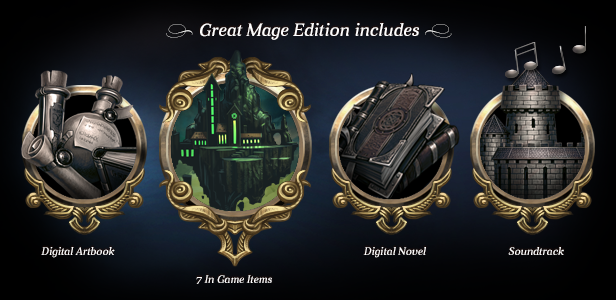
When your customers realize you hacked out in game items to sell a more expensive edition, they may just say to hell with your game.  It shows a lack of disrespect.

11) Spread the word, but don't bribe

            Disclosure has become a hot topic lately with youtubers.  It's the idea that a game developer is offering special goodies or money or deals to reviewers for a favorable look at their game.  This is a bad idea.  Why?  Because if you don't have enough faith in your game for it to stand on its own, you probably shouldn't be selling it.  Don't bribe reviewers, don't even try to sweeten a deal.  Just advertise that you have something cool to show people.  Spread the word through the medias and the fans, but don't try and buy publicity.  Market, but don't try and get "special attention."

Full disclosure, not non disclosure.  Don't bribe, don't lie, don't keep things from your customers.
12) Don't panic

            Even good games can receive bad reviews.  Why?  Because the game wasn't what that particular player wanted to experience, even if the videos and screenshots seemed like it might be.  And that's okay.  Sometimes, wires cross.  But if you are proud enough of your game that you would play and enjoy it, then others will too.  Don't panic if you get a bad review or if something happens to derail spreading the word or getting it to your customers.  In the end, most players will remember how you act and resolve issues as well as how they like the game.  I may not like FTL, but I give mad props to the developers for improving it and offering the updates for free.  I might buy another game from them, if it were released.  Whatever happens, just go with the flow and do your best to deliver your product to your customer.  If they like it, they like it, if they don't, they don't, but someone will like it.  Have faith in that.
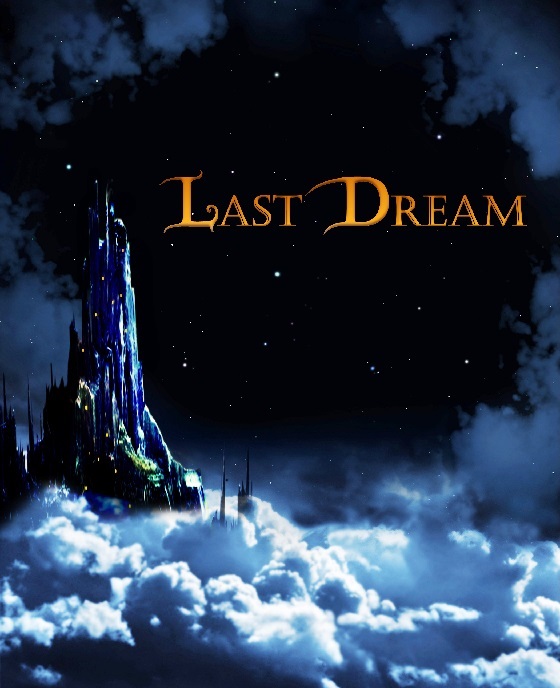
This isn't my kind of game, but it is for someone.  Just cause I don't like it doesn't mean others won't.  Don't panic.  Keep calm and carry on.
            It's a little sad that the indie scene has been sullied by some developers who try and lie or abuse the system to their own benefit, but for every Guise of the Wolf or Garry's Incident, we get a dozen Shovel Knights, Valdis Story, Sang-Froid, Tiny Barbarian DX, etc.  It's easy to misstep as an indie developer, sure, but from a gamer's standpoint, these points above are what matter to us of the developers we trust.  Something to keep in mind for the aspiring game developers.  And something for games to keep in mind when picking a title on name value alone.

In the end, being a good developer and being a decent human being aren't mutually exclusive.  That is the best bit of advice I can offer.

Wednesday, August 8, 2012

Limitations: Why the 16-bit Generation has the Best Games Ever


            First, let me apologize for being away so long.  Work is stealing my soul as well as my time.  Anyway, somehow, I managed to get this piece composed this piece, so let’s talk video games!

            Okay, the title of this article may set off a few people’s alarm bells.  First, let me tell everyone to relax.  This isn’t going to be a rant about why the SNES or Sega Genesis is the best system ever and the game industry was better when during the 16-bit generation.  Some of my favorite games are from later generations, especially the PS2.  However, I think that in the rush to improve and make graphics more photo-realistic, music more symphonic, and gameplay more complex, that something important has been lost.  I think that many games have lost their way because there is just so much that can be done with modern technology.  Some people may argue against that.  That having a huge sandbox to explore is amazing for game development, offering near limitless possibilities.  However, in my mind, knowing ones limitations is just as important as having the boundless freedom to explore and do as one wish’s.
Okay, we've got all this space to design!  So, umm...where do we actually go?
            And really, that’s why I have such admiration for the 16-bit era.  Its limitations.  The games in the 16-bit era managed to gain enough power as opposed to the 8-bit that they could expand and push the boundaries of what games at the time could do, creating prettier sprite based graphics, gameplay and AI that was more complex, and music that was less pixelated and more symphonic.  However, there were still clear limits to what could be done and the game designers had to work within those limitations to get the best out of their games without making them impossible to fit onto the console.  This meant that programmers had to put a great deal more care into their game design. 
Most of the time a great deal of care was put into game design...translation...sometimes fell by the wayside.
             With increased space, stories could become more complex and scripts more well refined.  However, because of the limitations, the story was carried more on the weight of the script rather than the performance of those reading it.  It allowed the players to create their own voice or interpret the script in their own way.  Likewise, composers had some space to flex their musical muscle, however music couldn’t be ripped from outside sources and had to rely on the sound chip within the console, so most music had to be original or at least converted in such a way that was pleasing to hear.  Along that same line, it did not take scores of orchestras to record the music or dozens of composers, as what could be done was so limited.  And most importantly, the sprite based graphics of the 16-bit era used graphical tricks that were cheap and easy to implement as opposed to the time consuming process of 3d modeling.  A single 3d model can take days, or even weeks, to create, render, rig to look and act natural, and even more time if it needs to emote.  However, with sprite based gaming, a set of pixels just needed to be altered and the character could look like they were laughing, crying, in pain, exhausted, etc.  These graphics were pleasing to the eye and allowed much more expression than 8-bit sprites, which were limited in color and detail.  However, they were not so complicated that it took an excessively long time to create them.
Remember when games could look pretty without a billion polygons?  Yeah...those were good times...
             The point I am trying to make with this tirade is that instead of bloated budgets for gaming which focused more on graphical fidelity and realism or on game design that is complex and unwieldy, 16-bit games had to be lean, using simple tools to achieve great feats.  The two Lufia games on the SNES, for example, had some of the most devious logic puzzles in all of gaming and they managed to do it using a simple system of lifting, pushing, and pulling objects.  In modern games, however, a puzzle game without a physics engine would be laughed out of the room.  What is easier to design and less prone to hiccups?  A physics engine that has thousands of variables or a simple system of pushing, pulling, and lifting that is based on a simple grid based puzzle system?
Simple, devious, and without the need for a physics engine...Why aren't we making more puzzles like this again?
            If nothing else, modern games have also proven how advances in technology can make games more beautiful.  People have given Heavy Rain, Modern Warfare 3, and other games which focus on realism heavy props for their graphical power.  However, how many systems can use those without delays?  How many computers can play graphically taxing games like Diablo 3 or Starcraft 2 without significant upgrades?  And how ridiculous will these purported realistic graphics look in twenty years when graphics are even more advanced?  Worse yet, however, is the propensity for excessive cut scenes.  Now, there is nothing wrong with cut scenes in games.  They can move along the plot or pump up the player for a confrontation, however using them as a crutch, focusing on graphics over gameplay or storytelling, is folly.  I think that an emphasis on using the latest toys and making things look pretty has made people forget what the core of game design is all about.  Substance over graphical flair.
Yes, Metal Gear 4, you're very pretty...now how about some gameplay with my 30 minute cut scenes?
            A number of people may argue against the idea that limitations are a necessary part of good game design.  Like how such limitations will hamper a game’s fun factor by hurting atmosphere, gameplay, music, etc.  However, take a look back at the game industry during the early 2000s.  Many of the games which endure are not the realistic ones, but those that use cartoony, cel-shaded, or alternative graphical schemes to the more realistic ones.  Jim Sterling made a brilliant argument on the Escapist about this, saying that the best games for HD televisions were not the grim, gritty, and realistic, but the colorful, cel-shaded, and lively.  Games like Rogue Galaxy, Killer 7, and Final Fantasy Tactics still look as good today as the day they came out.  And many games thrive on limitations.  Horror games in particular.  In Silent Hill and Silent Hill 2, there were a huge amount of limitations that needed workarounds for the games to function properly.  Pop in graphics were common.  So, to hide the pop in, they world was draped in an eerie mist or in darkness or in snow that hid the monsters and made the players feel both alone, and surrounded, creating an atmosphere of crushing dread.  Forcing games to work within limitations often brings out the best in them.  By comparison, the modern Silent Hill games after Silent Hill 4 have been lacking some of the atmosphere of the previous ones, because the monsters have to be so well defined in their grotesqueness, the graphics need to pop and be eye catching, and the voice acting has to be spot on. There is no room left for the scary atmosphere created by the mist, snow and darkness of previous games.  Although, some people do seem to be learning from such mistakes, as games like Silent Hill: Shattered Memories or Silent Hill: Downpour indicates.
Would you believe one of the most terrifying experiences in gaming was born of necessity rather than graphical fidelity?
             Others may argue that it would be impossible to create 16-bit style games with the same sensibilities that we have now and that they are a relic because of their limitations.  However, I also dispute this claim as well.  Modern programming teams have created 16-bit style games using tools such as RPGmaker or other game engines to experiment with 16-bit games in ways that, while not implemented during the 16-bit generation itself, are still ground breaking and creatable without a bloated budget.  To the Moon, for example, is a game that looks, on the surface, like a Final Fantasy 6 style RPG.  However, it actually is a graphic novel style of game that is more closely related to a point and click adventure.  It focuses on tight writing and the emotional poignancy of the graphics and music to deliver a moving experience.  Lone Survivor, on the other hand, creates a claustrophobic 16-bit world that uses tricks learned from the 16-bit generation to inspire a world of surreal horror which is genuinely terrifying and unsettling.  So, one question I might ask is that, if these games are easier to create than mainstream games, can be just as much fun, can experiment more than their contemporaries, and are cheaper to both make and for customers to buy, then…why don’t we see more 16-bit revivals?  Lone Survivor is available on Steam and To the Moon from Freebirdgames.com but both are somewhat niche titles that have not met a huge level of financial success.  However, 16-bit games in the modern era that achieve success are growing less rare.
16-bit.  Modern Sensibilities.  Damn scary.  We need more of this.
             A number of 16-bit style games as well as other games that embrace their limitations have been created recently that are both innovative and successful.  And, perhaps most importantly, exist outside the bloated AAA games market.  Cthulhu Saves the World was a game that was built to look like a 16-bit RPG and was heavily praised for its writing, game design, graphics, and music, all of which used the same tricks of its forbearers, such as swapping out sprites to emote or create unique appearances and looped animations for walking or simple expressions.  Terraria is a beloved exploration based action RPG which uses a sprite based 16-bit aesthetic and game design to create an engrossing experience.  More surprisingly, it was crafted by only 2 people over 4 months.  Even the graphically impressive Dear Esther knew its limitations and gave people the freedom to move, but to find the story, left them with little else they could do.  These games, have met with critical and commercial success precisely because they used their limitations to create a unique experience and focus on a specific aspect of their game design, be it story with Dear Esther, customization and exploration with Terraria, or solid game mechanics with Cthulhu saves the world.
Four months in the making and 200,000 sold in its first week.  Take note, AAA developers.
             One of the reasons I love 16-bit games and games from the PS1 and PS2 over the PS3 or high end PC games is that they embraced their limitations to a degree and knew when to stop.  Their scripts had to be tighter, their game design more innovative, and their music less hackneyed and repetitious.  Often times, modern game design tries to do everything and fails to really stand out or fails to be enjoyable as a whole.  Granted, this is only my opinion, however, I think that to forget ones limitations is to invite folly.  You do need space to stretch.  My favorite game, Odin Sphere, uses sprites that could never fit on a 16-bit system and would only really be possible on the Playstation 2 or greater.  However, if you get too much space, you probably won’t know what to do with it all.

Bloated game design also raises the bar for entry.  In the days of the Commodore 64, people could create their own homebrew games that they could sell.  While I believe the Commodore 64 was very limited, it showed that regular people could learn programming and build games.  Modern AAA game design requires up to 4-6 years of school in a specific skill, such as modeling, photoshop, etc. to even get an entry level position.  However, if something like Terraria is any indication, it is possible to build and put a game on the market in less than half a year with simpler tools that anyone can use.

Ultimately, I don’t think the game industry needs to return to its 16-bit roots.  I love 16-bit games and I’d love to see more.  I’d love for Actraiser, or Terranigma, or Final Fantasy 6 to return to grace, but they’ve had their time in the sun.  We need to keep moving forward.  However, forcing people to create a game that needs a million units sold to make enough money to repay all the time and effort put into it is just not good business.  Limitations on what game developers can do or CHOOSE to do could lower the bar for entry into the games industry, allow innovation, as cheaper games give more opportunity to try new ideas, and give them a tidy profit that doesn’t require a huge team to work on.  This is why Indie games are so good for the industry.  They know their limits and work within them to create the best experience possible.  While I am not sure exactly where, I do recognize that the web series Extra Credit has tackled this issue far better than I from a business perspective, but it bears repeating.
These games had their time in the sun.  I don't think the world needs to return to 16-bit.
Yet, we can make games like this much easier now than in the 1990s.  Why don't we make more?
 On the whole, I think that 16-bit games exemplify this kind of ideal perfectly.  Most took no more than a year or two to create, as opposed to the abysmal 2-5 year cycle of modern AAA games, most used simple concepts, such as turn based combat or simple eight directional over head movement to experiment with established formulas and create new ones, and it gave aspiring artists and composers a chance to stretch their legs without having to work themselves half to death.  And if the game industry is to survive, major publishers need to start embracing these kinds of design practices.  They need to give AAA style attention and funding to smaller games which can be produced quickly, but which also have the necessary quality and fun factor behind them.  Games which embrace their limitations to do certain things very well.  I don’t think all games need to be like this, in fact the landscape of gaming would change for the worse if that were the case, but publishers should at least dabble in it.  Otherwise, the game industry will have a revolution where the AAA market is toppled by the indie developers and digital distributors.  Which…on second thought, might not be too bad for us, the consumers.

Once again, any material that people believe I have used inappropriately or without permission, please contact me and I will address the issue.  Otherwise, I hope some fun was had reading my take on games and their limitations.

Friday, July 13, 2012

Stupid, Pointless, Annoying, Frustrating, No Good, Lazy Deaths and Why They Don’t Need to be in Video Games


             Hello, everyone.  For those who enjoy these, sorry for the near constant delays.  I've started a new job that seriously eats up my time.  Working on keeping these posted at least once every week or two, but who knows how long that'll last.  Anyway, not here to complain.  Now, onto the discussion:


            In video games, death is an eventuality.  No matter how good a player is, he will eventually end up losing.  They may have to get the phone and be unable to pause a game, get distracted by family, or just lose their concentration.  There is no shame in dying or in losing a game.  Death can be an instrumental part of what makes a game fun.  It can offer challenge, replayability, or it can be a way for a player to learn and better themselves.  However, in recent years, this has too often become the exception, not the rule.

           Video games are meant to be fun.  And constantly dying for no good reason only to lose all your progress and start out at an arbitrary point several minutes, or hours, back is seriously not fun.  It can be made fun, but it usually isn’t.  Many game designers see death as a way to arbitrarily lengthen their game or be a hurdle that players need to get through.  Or worse, a way to lock them onto the plot rail road.  These kinds of choices smack of bad game design and will more often than not infuriate players rather than make them have a good time, hurting their game’s image and limiting their potential for customers to become repeat buyers down the line.
Dragon's Lair is the worst offender in this regard.  Plot railroad deaths, deaths to lengthen the game, unavoidable deaths...it's got it all.
            A perfect example of this is the game Silent Hill 3, a game I recently finished for the second time.  I applaud Silent Hill 3, because it wanted to do something special with deaths in it.  At certain points in the game, when the main character dies, usually to enemies, a strange figure emerges and drags her body away.  This is creepy, unsettling, and hints that there is more going on than we understand just from a surface examination.  It adds to the main character and the overall plot in a subtle, nuanced way.  However, there’s a problem.  I never saw these scenes my first time through, because all my deaths were caused, not by the game’s enemies, but by the game’s poor design.  If you get too close to a hole, the game arbitrarily kills you.  Certain scenes in the game will also arbitrarily kill you unless you do a specific action that is not always clear.  They lack poetry or meaning, they are just hurdles to keep a player from advancing.  And this is hugely disappointing, since Silent Hill 3 became less about the horror and more about how damn frustrating it was to keep dying because a train, that I was supposed to summon, kept running me over because I couldn’t figure out how to avoid it.
Don't get used to seeing a creepy monster drag off your body in Silent Hill 3.  Deaths that actually lead to this are rarer than first aid kits.
            Another example is Battletoads or Silver Surfer for the NES.  These games are notoriously hard, sometimes called the hardest in existence.  However, rather than being hard because of challenging gameplay or mechanics, they were made intentionally hard so that players couldn’t rent them and had to buy them, thus giving money to the developers rather than Blockbuster.  In these games, players need to completely memorize every aspect of gameplay, from the level layout to how each and every enemy reacts to avoid dying.  In games like this, death can be so arbitrary, usually involving one hit deaths and then having to replay the whole level.  These games used the concept of death ingame in an attempt to arbitrarily lengthen themselves to prevent players from beating them in one sitting.  However, even if death is a part of video games as we know it, it must be balanced by good game design that is not conducive to frustration, because if a game is frustrating, then people won’t really want to play it.  LordKat, a gamer notorious for beating the hardest games ever, made thispoint perfectly during his playthrough of Silver Surfer.  After giving several tips for surviving in Silver Surfer, he had one final piece of advice.  “Don’t buy this game.  I don’t know who it was made for but it certainly wasn’t for the average human being.”
This is why people don't play Silver Surfer.  More time is spent at the game over screen than actually playing the game.
             So, I thought it might be good to lay out a few ways death in video games has been done properly and some incredibly stupid ways that developers have utilized death that really needs to stop in this industry.

            First, the bad stuff.  Death ingame can be incredibly discouraging to players.  While some may take the chance to learn, others may see it as a waste of their time if the game is so ludicrously hard that people cannot beat it.  Most gamers have limited time to play and if a game is not rewarding or beating it seems impossible, they won’t spend their time on it.  While challenge is good, cheap deaths, deaths that are either unavoidable or are so common that players become frustrated rather than being challenged, are the bane of gaming.  Cheap deaths need to be avoided at all costs.  Random death because of something uncontrollable is bad game design.  Creating instant death traps that do not respawn you close to where you died is frustrating.  And having enemies you can usually defeat pull out an instant kill move that you are not prepared for and cannot forsee is a terrible way to make a foe more powerful.  It says “We couldn’t be bothered to make the enemy smarter, so instead we gave him this move you have to look out for.”
That about sums it up.  No matter how bad ass you are, the game will still screw you over.
These kinds of deaths were common during the NES era of gaming, which is understandable since the architecture of the Nintendo game console was somewhat limited.  This is why some of the most difficult and frustrating games ever made were on the NES.  Ninja Gaiden had poor programming to blame for ludicrously powerful enemies and instant kill birds which could knock players into a pit mid jump.  Castlevania had a problem where players were helpless on stairs and would fall to their deaths if they took a single hit.  In other games, like Silver Surfer, it was easy to simply program one hit deaths rather than make a life bar.  These were all issues surrounding death that were based around the hardware.
Ninja Gaiden was full of cheap deaths...Ninja Gaiden was also made in 1988.
However, times have changed since the 1980s and the amount of processing power in games has increased immensely.  There should be no excuse for the kind of cheap deaths that were common in the NES.  Programming in respawns or just health loss after instant death pits is simple now.  Avoiding unnecessary frustration through better programming has made it possible.  Yet, even in modern games like Splatterhouse for the Xbox 360 and PS3 or New Super Mario Bros. on the Wii, there are moments of archaic design, such as pre-scripted events where failure leads to death, quick time event deaths that are pointless at best and frustrating at worst, or a lives system, meant to justify the constant stream of instant death pits as a challenge.

However, death in gaming can be so much more than just cheap, frustrating and ultimately lazy way to lengthen a title.  While some people repeat the mistakes of the past, there are others who have learned from the mistakes of our forefathers and made death something special in games.  Here are just a few ways that death can and has been used to improve gameplay rather than frustrate gamers.
1.      Death can create a new experience for players.
2.      Death and rebirth can be an integral part of game design.
3.       Death doesn’t end a game, but does punish the players somewhat.
4.      Death can have true impact with the players.

Really innovative ways to handle death approach it not as a way of keeping a player from advancing, but as a way to instruct and help players to get stronger.  Examining these different takes on death shows that there are plenty of alternative to the frustrating, pointless, and stupid deaths we’re all familiar with.

First, death can create a new experience for players.  When a player dies, they are kicked back to a check point, but things change because of their death.  This can be something arbitrary, such as they are greeted upon waking up by a stranger who explains what they did wrong or elements of the stories changing or they can be more dynamic, with enemies changing or growing smarter.  Lots of games use pre-scripted deaths as a way to show how players have grown later, using death as a way to give them a new experience story wise.  This has been done in Xenogears, Final Fantasy, and countless other RPGs since the mid 90s.  However, death can also alter play for people.  Dungeons might be randomized after each death, similar to how Diablo 2 randomizes dungeons every time someone leaves a game, or enemies can alter their tactics, like in Demon’s Souls, where death makes enemies stronger and smarter.  This gives players new things to do after a death and keeps them coming back for more so they can see what has changed.
Death, especially story deaths, can drastically change a game's impact on players.
Next, death and rebirth can be an integral part of design.  If players are expected to die, they can play with the mechanics of death so that the next time through they are better prepared.  Roguelike games do this often, where death means going back to the first level and losing all your items and progress.  However, you can save certain items in store houses, so next time you have the leg up on the enemies.  This allows players to plan out how death will affect them and forces them to choose which items they want to save for the next death and which ones they want to keep with them to try and push forward with.  Shiren the wanderer and Azure Dreams do this very well, where death is annoying, but it is also a part of growing, as you can prepare better for each death the next time around.  It makes players think and plan for the future.
Death my be inevitable here, but that doesn't mean you can't prepare for it.
Moving on, Death doesn’t actually need to end a game.  This is fairly common in games like Dragon Quest or Dark Souls.  If a player dies, they return to a check point with no fewer items, no lost progress, and no less levels.  However, their money is decreased by half or they dropped something they have to go pick up again.  This kind of mechanic allows players to gradually get stronger, even if they die, and ensures that no one wants to reset, because then they’d lose their experience.  It’s a way to prevent players from feeling that death is cheap, because even in death you keep your progress and levels, meaning you can be stronger after dying than when you first loaded up the game.
Death doesn't have to be the end...it can be a new beginning
Finally, something that is taking on a more important role in gaming is the true impact of death.  That is, when a character dies, they can’t be saved or resurrected.  Players have to learn to live without them.  Or, if the player dies, the game wipes their saves.  These kinds of mechanics add tension and challenge to a game and, thankfully, are usually choices players can make.  They can be toggled on and off.  It gives weight to death, but also doesn’t make it frustrating, as very few games rely on permanent death as a regular mechanic.  Fire Emblem does, and it makes players really care about their characters and decide often about what is an acceptable loss as even if a character dies, the game itself will usually continue on without them.  Terraria also has a hardcore mode where one death means game over for good.  It offers a nice challenge that players can choose to indulge in rather than be forced to overcome.
Careful, guys.  Death here is permanent.
I wanted to bring up these ideas to show how cheap deaths in this day and age are pointless.  There are always better alternatives and death can actually be a really meaningful part of game design, if handled properly.  However, while I think I have shown that the kind of plot railroad deaths, where death is an invisible wall, or the cheap deaths meant to artificially lengthen games are pointless and out of place, there is one more issue that needs to be addressed.

Death and finality in games are important.  Taking away that finality can gravely hurt a game.  Bioshock, for all intents and purposes, is a great game, with a beautiful story and truly inspired game design.  However, when players die, they warp back to a respawn chamber, losing none of their weapons or ammo, and with no penalty.  This does not encourage them to be careful or plan, but rather to go full tilt into a battle because they know they will just respawn.  To remove death or cheapen it to the point where it doesn’t work with the game design is a huge misstep.  While some games can work fine without death, such as Harvest Moon, if a game is meant to have some degree of finality towards it, you cannot cheapen the idea of death.  Before it was patched, Terraria offered no penalty for death.  So, players would freely take on enemies they couldn’t beat, knowing that when they respawned they’d have all their life back and could just whittle enemies down.  This was fixed later, however it allowed players to abuse the death mechanic.  And really, while cheap deaths are frustrating, removing any finality from death makes games boring.  A careful balance must be made between challenge and frustration for a game to be truly enjoyable.
Congrats on finding your first Vita Chamber.  You are now immortal.
Death in video games needs to be examined with more finesse and detail in the modern games industry.  The concept of death continues being refined and changed in games to make them unique and more enjoyable to the player, which is how it should be, but every so often, there is a designer who is lazy or who doesn’t have time to program a game properly and we get cheap, annoying, pointless, unfair deaths.  And this really needs to stop.  With the advent of more powerful gaming machines, many of which can fit into a person’s phone, there is no excuse for lazy game design.  Not for games that make death cheap and frustrating and not for games that remove the threat of death entirely.  There needs to be balance.  Not every game has to be as unique as Dark Souls or Shiren in relation to how death is handled, but they need to at least make sure that it is treated with respect and programmed so as to make a game fun for players.  Games where even death can be fun are truly masterpieces of design.