Showing posts with label Ninja Gaiden. Show all posts

Friday, August 2, 2013

The Myth of the Useless Female Lead: Putting Things in Context


             Women in gaming get a bad rap.  Even when they're not dressed in skimpy attire or being used as nothing more than a plot device, the idea that gaming is a "Boy's Club" activity tends to marginalize and discriminate against women, both those who play games and those who are in games.  However, I don't know if our perceptions about female characters in video games are quite as accurate as we think.  For the longest time, I was on the bandwagon that certain tropes were a bad thing in video gaming.  That the kidnapped princess from Nintendo titles or the loyal wife in games like Harvest Moon were often subversive and hurt feminism.  The idea that these tropes objectified and made the female characters useless.  Now though, I'm beginning to reconsider.  I don't deny that there is a deplorable double standard in video gaming, but...well, just hear me out on this one.

Another useless and ineffectual princess?  Maybe not...
            A female gamer online responded to a feminist's criticisms of some of gaming's more useless female characters with some interesting ideas that made me take stock of my own beliefs.  Her arguments were two-fold when it came to useless or objectified female characters.  The first argument was for people to look beyond the obvious and to see implications of how a female character's presence and absence affects the world.  The second was that personality makes a character and that even in the midst of these tropes, a good personality can create a female character who is strong and memorable regardless of what role she's been given by the developers.

            The example this female gamer used involved Princess Peach from Super Mario Brothers.  Nintendo often gets a lot of flak for making largely incidental female characters.  Arguments typically range from Princess Peach being a useless monarch to Zelda being a figurehead and prize when not cross dressing.  These are targets people have been using for decades.  But stop for just one moment and think about Princess Peach and the implications her kidnappings create.  When she is kidnapped, it sends the Mushroom Kingdom into chaos, forcing Mario to have to save her to restore order.  However, when she is still in power, the kingdom is at relative peace and stability.  Even if she may not be able to defend herself, does this not prove her worth as a capable ruler?  The kingdom isn't suffering from a high deficit, the toads aren't planning a bloody rebellion to overthrow their tyrannical ruler, and Bowser is so envious of her beauty, grace, and apparently her skill as a ruler that he feels the need to make her his own.  Looking at it from this angle, Peach seems a bit stronger and more capable than most of us give her credit for.  Another thing to think about is that Mario only gets his time in the spotlight if she's kidnapped...otherwise he's just a friend/defender of the realm.  It's easily as much his fault as Peach's that she keeps getting kidnapped, since he KNOWS this is how the story goes and just lets it happen, so he can have his games.

How peaceful and idyllic.  Princess Peach must be doing something right.
            Now, this might be looking a bit too far into things.  Nintendo's plots are largely simplistic and don't take into account real world logic, but upon hearing the female gamer discuss these issues, an idea was planted.  Of all the female leads we call useless, how many really are?  And once I started thinking, I saw so many leads others called weak or bland or lifeless as having new life.  Elena from Pandora's Tower is a great example of this.  On the surface, she seems kind of like a prize, as the hero, Aeron, is killing monsters for her sake and building up a relationship meter with her for a reward at the end.  But look at it from Elena's perspective.  She is afflicted with a curse that transforms her into a monster if she doesn't eat the meat Aeron brings her.  She is reliant on him, but despite this, she tries her best to stand on her own and assist him when possible.  She has reconciled the fact that she can't go with him, as she's frail and cannot wield a sword, so she wants to do her part back at their base by translating helpful documents, making medicine or treats, tending to Aeron's wounds, upgrading his equipment, etc.  Elena finds something she CAN do and runs with it, trying to make the best of a poor situation.

Does having a love interest or being domestic really make a woman weak?  I'm not so sure.  Elena might not be able to wield a sword, but she still tries to be strong in her own way.
            Some might argue that this locks her into a stereotypical housewife role and that that's negative, but...I disagree.  Elena has agency and chooses to put her faith in Aeron while doing what she can from the sidelines.  Her culture forbids her to eat meat, but she does so to honor Aeron's efforts as well as to survive.  And even if she is stuck in a housewife's role...have you ever seen a hardcore housewife?  They are some of the toughest, strongest people you can know, as they have to look after their home, children, they have to keep food in stock and ready, etc.  They have so many responsibilities.  On top of that, Aeron is a soldier and frequently away.  Ask any significant other of an armed forces member how hard it is for them when their love is out fighting for their sake and you will see that Elena is not just a cringing flower, eclipsed by Aeron's greatness.  She is strong and bears with his absences largely without complaint, dealing with the worry and fear of losing a loved one because that is what she can do to help.  Even in her darkest hour, when she starts transforming into a monster because the player didn't give her meat fast enough, do you know what Elena does?  She waits at the door for Aeron and despite her grotesque appearance, forces herself to smile and says "Welcome home," as if nothing is wrong.  Some might argue this is all still very demeaning to her as she is bound in a relationship to a man, and I can't argue that she and Aeron are inextricably intertwined...but what gets me angry is when people talk about Elena, or Peach, or Zelda like they're totally worthless just because we don't see them hefting a sword over their shoulder and slaughtering baddies.  That isn't all there is to being strong.  Sometimes, the quiet resolve of someone doing the best they can in a bad situation is truer strength than a hero going out and smashing heads.

Bless you, Elena.  Despite your pain, you're trying so hard to be brave.  And succeeding spectacularly.
            This brings me to the second argument that made me start re-examining my ideas of how female characters are viewed.  Personality.  I know for certain that personality is one of the most important things in determining if a character is...well, a character or if they're just a non-entity.  For example, Elena has a personality.  She is shy and demure at times, but also studious and adaptable, with a love of cooking and crafting.  She enjoys singing and is a skilled dancer.  Elena also tries to hide her sadness and doubt so as not to worry Aeron.  She has a great appreciation for nature and loves to chat with people.  These are all traits you can pin down about Elena that help define her.  By contrast, let's look at Skyrim, one of the most critically acclaimed games of 2011.  Skyrim makes a number of mistakes with female characters.  While some have...marginal characteristics, many women in the game are blank slates with no defining traits besides their gender.  For example, in Skyrim you are afforded a number of vassals called House-Carls who will follow you and be your steadfast allies.  Lydia, a female warrior, is the first House-Carl you'll typically get.  Lydia is a non-entity.  While you may be able to appreciate Lydia as a warrior and for helping you, she has no personality, will not do anything without your orders, serves you constantly either by watching your house or by fighting alongside you, and even if you marry her, she does not open up to you.  She merely opens a shop and gives all her money to you.  This is the kind of characterization that objectifies and makes women ultimately pointless in video gaming.  After spending almost forty hours fighting alongside Lydia, I could not tell you any of her interests, what her usual moods were like, or even if she had goals beyond serving me.  And it wouldn't have been THAT hard to make her more fleshed out.  Have her make reference to her past, complain about certain issues like if you're in a sewer, have her tell you about her likes and dislikes, etc.  You could even have a conversation option to have the hero ask Lydia about hobbies or goals.  Can you see the difference?  Lydia may be able to wield a sword and fight battles, but that doesn't make her a character.  And she's not the only lifeless doll in Skyrim.  Not by a long shot.

Get used to that bland, lifeless, face, because she's your bodyguard...she's a title, not a character.
            Now, alot of people might think, "Well Lydia's not the lead, so it doesn't matter if she's bland and lifeless," or "Elena's not really important because we're playing as Aeron."  To those people, let me just say that I think you're missing the point.  A character isn't worthless or weak just because they cannot fight.  And being able to fight does not automatically make them a good character.  Look at the game Recettear.  It is a charming little title about Recette, a girl who is largely abandoned by her father and saddled with a huge debt she has to pay off.  So, what does she do?  Go out and hunt monsters to make back the money?  No.  She's a child of around eight or so.  Killing monsters is a little beyond her.  Instead, she converts her house into an item shop to try and buy low and sell high until she gets enough money to pay off the debt.  The girl is not a warrior and may be filling a domestic role, but considering her circumstances, she is acting with remarkable maturity and strength.  The entire game is about paying off the debt by making the best damned item shop you can.  And what I love is that the characters in this game play an often overlooked role in the world at large.  They are supporters for other adventurers.  Looking at it from their perspective, they aren't useless, or bland, or lifeless at all.  They are working towards success by using their skills and available resources to the fullest.  In my opinion, that's quite admirable.  Alongside that, the personalities of Recette and her associate Tear are quite likable, if a bit silly.  Recette is a child.  She loves sweets, has a knack for crafting, is very capitalistic, but also trusting, naive, and honest.  Tear is her partner, who acts as a teacher, a surrogate mother, and a loan shark holding the sword of Damocles over her head.  This is why Recettear is a good example of how female characters in often overlooked roles can be seen as strong and not useless or objectified.  If you look at it from their perspective, what they do or don't do may be just as important to the world as what the hero does.  And, if they have strong personalities, the players will resonate with them.

Recette is silly and adorable.  She's also an item shop owner, has paid off a huge debt while at the age of eight, and tends to brighten everyone's day with her cheerful nature.  Deep?  Maybe not.  But a likable, mature, and independent female character?  I'd say so.
            This is not to say that gaming has improved the quality of female characters in general, however.  Too often we get developers making women who are bland, fan-service sex dolls, or who might as well be men with no real defining characteristics besides anger and a will to fight.  There is still a long way to go.  However, I want people to exercise their brains when examining female characters who may not be in the spotlight or who might get a knee jerk reaction from feminists for having a domestic role.  Look at them from a different angle or perspective and try to understand what their life is like in this world.  Pay attention to their personality and see if they actually have some.  You might be surprised.

            That being said, don't be fooled.  There ARE several female characters who are just fan service or who don't contribute to their games at all.  TRUE useless female leads.  And they are damned frustrating.  Shadows of the Damned, for example, has Paula, who is kidnapped from minute one.  Now, this could create a situation like with Peach where her presence creates stability and her absence creates chaos.  However the hero, Garcia Hotspur, openly admits to hunting demons before meeting her, so her presence didn't cause him to become a demon hunter, and he dotes on her, basically taking care of any and all eventualities.  Paula is totally reliant on Garcia, since she does not have a job or any noticeable skills beyond sex appeal, as emphasized in the game by her being perpetually in white lingerie.  Even if you were to look at her personality, Paula is a weak character.  She has so little screen time that her personality goes from whiny, to hysterical, to vindictive, to submissive, to psychotic with little to no consistency or transition.  Her only purpose in the story is to give Garcia a princess to rescue and to try and look sexy.  This is the epitome of an objectified female character.  She does nothing and is largely useless, save for her purpose as a plot device. 
Now THIS is objectified.  Paula is shallow, bland, whiny, and her only purpose in the game is sex appeal, as she clings on Garcia and relies on him completely, with no thought or will of her own.
  
            However, like I said earlier with Lydia, it is sometimes difficult to differentiate between a character that is strong and does their own thing in the world she is in, even if it looks like they don't, and a character that seems to be important, but is really useless.  Sylvia, in No More Heroes, might appear to be a confident, sexy, in control woman who acts as an agent for assassins, however near the end of the game and in the sequel this illusion is destroyed, showing that she is a self absorbed liar and a con-artist, whose frivolous actions eventually leave her destitute, forcing her to take refuge in a whore house frequented by perverted customers.  She has no point other than titillation and to move the plot forward.  In comparison, Rachel from Ninja Gaiden, while forced to wear armor that is sexist, stupid, and largely pointless, does at least prove herself to be strong enough to fight demons, does not swoon over or cling to Ryu Hayabusa, the hero of the game, and is working towards her own goals.  While she does spend some time as a hostage for Ryu to save, she has some strong characteristics buried under the unfortunate sexism that has become a hallmark of Team Ninja games.  Can you see the difference?  True, some of it might be the developers trying to cover their asses, but at least they're TRYING to show some degree of personality in a female character...many games have shown that developers can and often do just turn women into bouncing boobies for the enjoyment of a male audience.  Mores the pity.
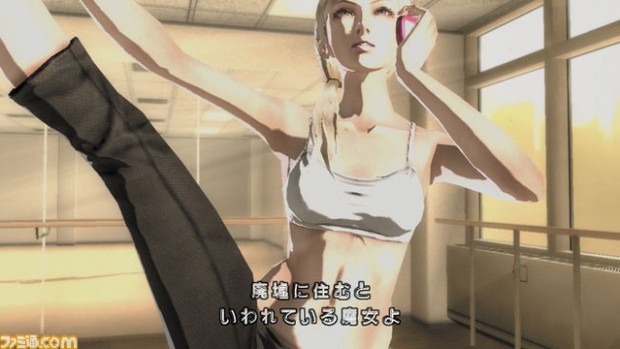
Some gamers might try and defend Sylvia as strong because of how she uses Travis in No More Heroes and is confident and what not, but she's really just a liar, a con-artist, and eventually driven to prostitution...charming.  Sylvia might not be bland, but she's definitely objectified.
            I want to encourage players to look at female characters with a bit of a more discerning eye after this discussion.  Look at their situation and circumstances, look at their skill sets and their choices, look at their personality, and think about what they themselves are going through.  You might be surprised at how strong they may be, in spite of how poorly they come across. 

Rachel from Ninja Gaiden may be forced to wear sexist clothing and oversexualized, but at least she tries to be strong.  At least she can fight on her own, doesn't hang off of Ryu Hayabusa, and values saving her sister above everything else.  She's not a perfect role model or anything, but at least it's something...that's more than we get in a lot of games.
            Now, I don't claim that these views are the end all be all.  In fact, these views may be quite flawed.  I may be a feminist, but I am not a woman, so there may be key issues that I have overlooked.  Like many of my posts, these are opinions meant to spark discussion.  See, I find that female characters get a bad rap just because of how they are perceived...or not perceived as the case may be.  Just because one doesn't look strong doesn't mean they aren't going through their own trial by fire.  Just because they appear ineffectual doesn't necessarily mean their presence isn't important.  And the ability to fight on par with male counterparts does not automatically make them strong characters.  They need a strong heart to be impressive, not guns or muscles.  Make no mistake, there are many women in gaming who are ineffectual.  Who pander to the male audience.  Who are depressingly one dimensional.  But then again, there are many who aren't, even if they look that way.  Look at the characters from all angles, then decide for yourself whether you're dealing with an ineffectual female lead or a strong willed woman doing the best she can, given the circumstances.

Thursday, June 13, 2013

Month of Characters Follow up: What Makes a Good Character?


Following my month of characters, I thought I might give some context to the lists and discuss what makes a good character and how so many writers and designers end up screwing up potentially iconic characters.

            First, let's start with heroes.  There are two basic types of heroes in video gaming that are very common.  The first are heroes who we find admirable, personable, or otherwise likable.  They are our avatars, but they are not us.  They have their own character, their own arcs, and their own agenda.  What makes a good hero?  Well, for starters, they need vulnerability.  The story may suggest that the hero can never die, however a hero is only compelling if the illusion of failure is hinted at through fallacies and weaknesses that the hero possesses.  For example, a personable hero having specific emotional triggers, phobias, or personality flaws is very humanizing, as we can often recognize those within ourselves.  These are sometimes the hardest to pull off in video game characters convincingly, because while a tragic past is rather easy to concoct, it can be difficult to make a hero vulnerable and weak, but still admirable and strong. 

Kratos is just not a well designed character from a story standpoint.  He's angry before his tragedy, he's angry after his tragedy and his back story barely ever comes up.  As a character, he's just a ball of rage with no reason to be but to kill.
            Kratos from the God of War series is an excellent example of a hero who fails to be relatable.  While he does have a tragic past, his personality is all rage, sarcasm, cruelty, and disdain.  He never shows signs of human weakness during battle or even during much of the plot.  And when he does attempt to show some weakness, it feels contrived because the character has not been built to actually support that weakness.  It is being jammed in where it is not wanted.  On the flipside of that, we have Ness from the Earthbound/Mother series.  Despite being a largely silent protagonist, Ness has several humanizing factors to him through game design.  Over the course of the game, Ness can come down with a number of status ailments that make it clear that he is, in fact, still just a kid and not some immortal super being.  Ness can get homesick and need to call his mother for support.  Ness can get the flu or a cold and need medicine.  Ness can get sick from allergic reactions and need homeopathic healing.  These small touches show that Ness is in fact a kid and vulnerable to childhood maladies, both physical and psychological.  It provides a nice perspective, showing that for all the new age hippies or knife wielding thugs you can take down with your psychic powers, you do still need a cuddle from your mommy or a teddy bear to start the day.  Watching a character act human is so much more relatable than a tragic back story.  If you are going to give a character a tragic back story, have it directly relate to their character and their vulnerabilities.  Dante, in the original Devil May Cry on the Playstation 2, lost his mother to demons.  While a great deal of information is not given, it comes out that this was a momentous event for him that shook him, through the story.  He takes a job from a woman named Trish primarily because of her resemblance to his mother.  When she betrays him, it hits the devil hunter very hard and after she is killed, he sheds tears for her.  His past directly relates to his character development in the game and it shows that he is vulnerable to being deceived because of his past.
Despite his cocky attitude, Dante has a tragic backstory that actually affects how he decides to act in the game, causing him to both grow and show signs of vulnerability.  This makes him a far more well rounded character than Kratos or your average shooter character.

        The other type of character is a power fantasy character.  Largely, these characters are avatars for the human players, with little to no personality of their own, allowing players to feel strong by playing the role of these characters in the game.  While this can lead to some interesting political, religious, or philosophical commentary, too often it is used for somewhat...reprehensible dreams.  A power fantasy character done wrong is where the game is built around appealing to the most base instincts of the human psyche, things like the desire to fornicate, the desire for wealth or power, the desire to kill in order to feel strong.  Modern warfare shooters appeal to players by allowing them to fit the stereotypical soldier, a walking death machine who kills without remorse in the name of the greater good(in the narrative at least) without consequence.  God of War, while not strictly a power fulfillment game as Kratos isn't a blank slate, does allow players to have sex with random women without consequence, and actually rewards the act.  Sexual games in Japan are also catered towards this style of play, allowing gamers to take on a character they can put themselves into as they either woo or abuse women for their own enjoyment.  These kinds of games do, sadly, fill the power fantasy requirement of giving characters the ability to make themselves feel strong, virile, or well off, however the actions that give off these feelings are, in my opinion, tragically flawed and can at times promote unhealthy views towards different races, genders, or the world in general. 

Ninja Gaiden 3 is power fantasy done very poorly.  It outright forces you to do acts that are horrific, even if they are empowering, without any set of consequences...they even reward you for it.  The infamous scene of Ryu killing a begging soldier, being forced to kill a begging soldier, is a sign of how flawed the game approaches making players feel tough.
            So, how do you pull of power fantasy heroes?  Well, there are a few good ways to do this.  The first is to supplant some of the more base desires and hit the itch to explore.  Power fantasies aren't just about base instincts, they are about being able to do in a game what you cannot do in real life.  Crafting a world or an environment that fosters exploration and rewards it, not necessarily with money or items, but with sights and experiences they cannot see elsewhere really helps grant players a reward for their effort.  Dark Souls does this quite well.  Though the world may be bleak and lonely, it offers a unique experience where the very act of exploring allows players to see things they could never hope to see in the real world, be it giant monsters, or unforgettable sights, such as crawling through a huge tree to reach an acid lake at the bottom.  Another good way to do power fantasy characters is to make the hero generally a good guy.  This allows you to not only enjoy the world that's been crafted around you, but also it allows some of those baser instincts to be sated without some of the guilt.  Adol Christian, for example, is an explorer and a swordsman who frequently makes romantic acquaintances with beautiful women the world over.  However, Adol does not take advantage of their affections as he is a character who acts with honor.  Adol is silent, so the interactions of those around him give us context to this effect, making the players accept the lack of ability to take advantage of those around us.  Also, Adol is a skilled swordsman and the combat in the Ys games is fast and enjoyable, allowing players to feel good about defeating monsters and protecting the innocent, rather than killing other human beings for some vaguely defined hyper masculine idea of patriotism.  Above all else, power fantasy should be about freedom, though.  Freedom to explore, freedom to challenge conventions, freedom to do as you wish.  This may lead some players to running over hookers in Grand Theft Auto, but a good power fantasy game does show that your actions have negative consequences, such as increased notoriety score and the possibility of being arrested or killed, and that while it is possible for you to hurt others for your own enjoyment...it's not the wisest idea.  In this way, they can subtly guide the player to a more fulfilling experience.  Power fantasy characters use the world and our own human impulses to affect us, often without our realizing.

While often cited as a highly adult game, Grand Theft Auto actually does do power fantasy very well.  You can do horrific acts to people around you, but it comes with consequences, like being arrested or killed.  In contrast, if you act like a good citizen, the game actually will award you money for saving people.
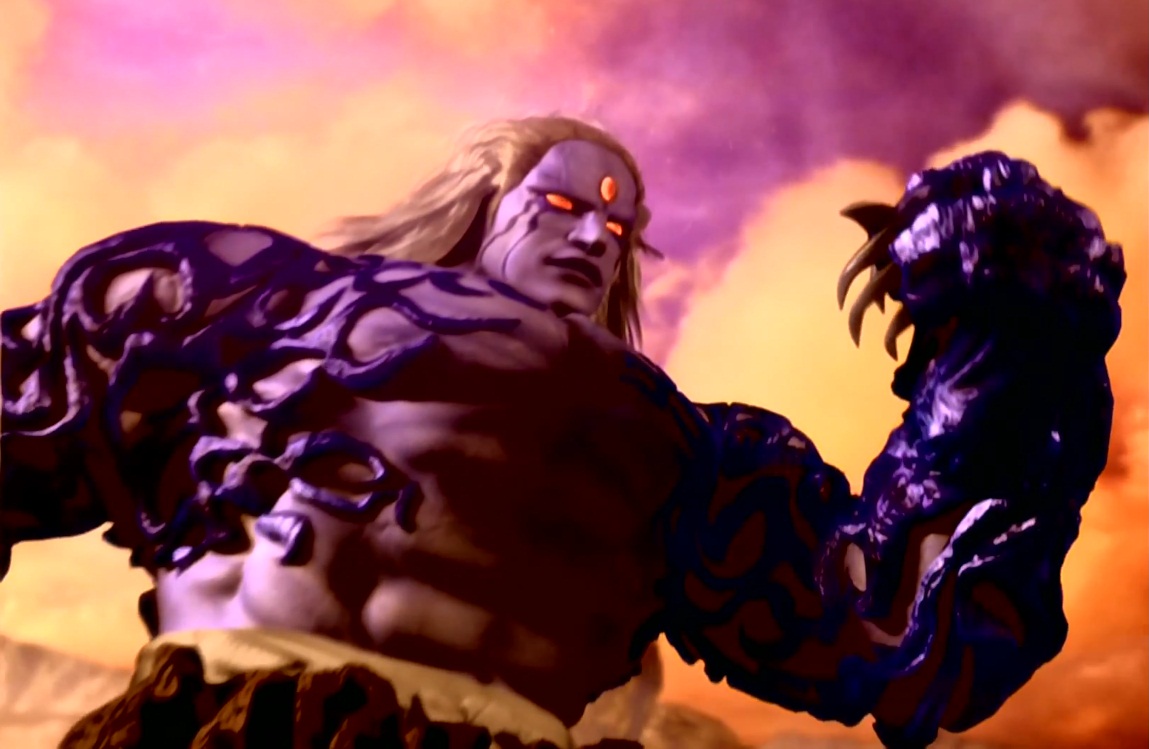
            Now, for villains.  Once again, there are two main types of villains.  Tragic villains and despicable villains.  Before we go into that, however, let me just say that in many games, villains are much easier to make than heroes.  If you do not have a villain who looms over the party for much of the game, you merely have to create a character at the end who has ties to the characters or the game world, has a view that is horrific or unjust, and who has a good reason to fight the main characters.  Final Fantasy Legend is a good example of this, in my opinion.  There are six main villains.  The four who guard the main worlds, Ashura, and the Creator.  The four who guard the main worlds are using their power to oppress the peoples of their worlds and/or block the way up the tower, as the higher up characters get, the stronger they become and are therefore more of a threat to these villains.  We don't have much prior contact to them, but the facts that they act in a manner that is clearly evil, that they don't replace someone more interesting or who we've had an investment in, and that they have a reason to want to stop us justifies these actions.  Ashura and the Creator are very similar in this regard.  However, they make ingratiating offers of the player, showing that while they have views that may be unjust, they are not entirely unreasonable, feral, or evil for the sake of being evil.  This shows some depth and allows the players to feel as if they have made a real triumph in refusing the offers these two make.

Bowser is fine as a simple villain.  He opposes Mario and wants to rule the Mushroom Kingdom.  Simple and to the point.
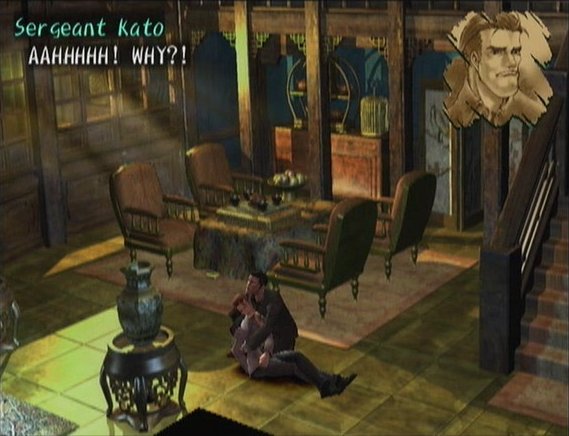
            Now, that said, that kind of template only works for the most basic of villain.  Really interesting and memorable villains are those with nuance, who you develop an emotional attachment to, and who are iconic in their own right.  Tragic villains usually have a back story that is depressing or has altered their view points so that they are acting in a manner that seems evil, but which is justified to them.  Like characters with tragic back stories, for these villains to really succeed, you need to interweave their current actions with their past, otherwise they become stock villains.  Evoland is a game which charts the history of adventure and role playing games in a satirical fashion and the main villain, who comes out of nowhere, is revealed to have a tragic backstory of his race being hunted for some reason, despite never mentioning it, hinting at it, or showing and trace of bitterness or regret until the final battle.  This is the definition of a stock villain, and Evoland created him in that way to parody the RPG stock villains of past and future.  A tragic villain with some bite is one who knows that what they are doing may not be justifiable, but still believe it is best for them or those dear to them.  Kato from Shadow Hearts: Covenant is this kind of villain.  He carries himself with an air of melancholy and early on he and Yuri discuss the loss of his love.  This melancholy and reference to his tragic past carry on throughout the game through his interactions with his superiors, who he has contempt for, and his resurrection of his lost love, albeit without her memories.  In the end, Kato decides to try and alter fate for the sake of love.  While he recognizes all the people he can and likely will hurt through these actions, to him it is justified because of all that he has lost.  This is a really well defined villain that players feel for and grow attached to.  They are lucid, reasonable, likable even, and are not deluded about the course of actions they have chosen to take.  A good way to mess up writing a tragic villain, apart from a stock backstory that is only mentioned once for the sake of pathos, is to have them be unreasonable, petulant, and whiny about their tragedy.  I honestly believe that Luc, from the Suikoden series, is a rather poor villain because he not only does he have immense power, but he has fought on the side of justice before and has a stern, but loving teacher and girl friend.  He should be perfectly content with his life.  However, the source of his power, his "true rune" of wind, which grants him mastery over wind and eternal life, seems to cause him distress as he believes his destiny is not his own.  So, he seeks to free himself from this burden by destroying the true rune, in an experiment which could wipe out an entire country.  Really, this is like saying "Wah!  Wah!  My whole life, people have made choices for me, I never got to live MY life!"  The truth is, Luc HAS lived his life, has made choices, and even if it felt like his destiny was being controlled, it was still ultimately up to him.  We all have choices.  But this attitude makes him seem whiny and ungrateful.  A sharp contrast from his previous appearances.

Kato is an excellent tragic villain, having his tragic backstory shown in the original Shadow Hearts and explained fully in the sequel.  His back story affects his actions and he sees what he is doing as justified, even if he has to commit horrors to do it.
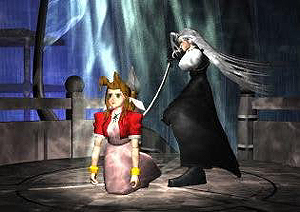
            Despicable villains can be a bit more fun than tragic villains, as they're not meant to be liked.  They are meant to be hated for their actions, which are still justified in their eyes.  Despicable villains do what makes them happy or what advances them without care for others, so they can be pretty shallow character wise.  However, their actions can speak great depths about the kind of person they are and give them some memorability.  Going back to Suikoden again, in Suikoden 2, Luca Blight is the main villain for most of the game.  He has his father poisoned and wages a bloody war across the country to spill as much blood as possible to empower the "beast" rune inscribed in his castle.  However, he really just likes killing.  Luca is a textbook case of an anti-social psychotic who gets enjoyment out of bloodshed.  Yet, he's not an impotent villain who just loves killing because it makes him feel big.  He's trained his whole life as a warrior and can hold his own, frequently taking part in the killing himself.  In fact, to bring Luca down it takes a squad of six soldiers against him, after he's been wounded, a barrage of arrows, and a final duel against the enemy commander while he is near death, bleeding out, and pumped full of holes.  This kind of villain is memorable because of how despicable he is.  Same for Kefka.  He's insane.  He wants power for his own sake, so that he can do as he pleases and takes great pleasure in causing suffering.  He's not afraid to fight on his own, but he's memorable for his quirky personality, something Luca was rather missing, and his unique visual appearance, resembling a harlequin.  Despicable villains can be well spoken or thoughtful as well, such as Grahf from Xenogears musing on the nature of human existence or on the darkness and evil which resides within us all, even though he freely kills his subordinates and wants to destroy all.  So, how do you destroy a good despicable villain?  Make their plan not make sense within the context of the world or for their character.  Barthandelus from Final Fantasy 13 is a good example.  Despite having a memorable look, his plan is very, very stupid.  He wants to reduce the entire world to nothing.  Now, you could argue that this is stupid, and I have, because he acts as a god, lives in luxury, and his children basically rule the world.  But, devil's advocate, let's say he's gone insane and wants to reduce the world to nothing.  Why doesn't he do it himself?  He is a god after all.  Why does he need to rely on proxies to do it for him?  And why does he think destroying the world will bring his creator/father back when there doesn't seem to be any evidence it will?  Why does he, if he wants himself to die to, fight and hound the players?  See, a despicable villain does not have to be terribly deep, but their plan needs to make sense from a certain perspective.  Luca likes killing, so he starts a war.  Simple.  Kefka wants power and is selfish, so he weasels his way into a position of power and then turns himself into a god of magic.  A bit contrived, but sensible.  Barthandelus wants to reduce the world to nothing, so he and his organization actively try and stop the people he manipulated into becoming the tools for the end of the world...wait, what?

Luca Blight is an excellent despicable villain who simply has a deep rooted need for slaughter.  He is absolutely reprehensible, but very memorable because, as he said, it took hundreds to bring him down, but he killed thousands with abject glee.
            Aside from a poorly realized master scheme, there are two final pratfalls to avoid when writing villains.  The first is comparison.  If you are going to have a really impressive villain in your game, one who follows the outlines set up above, you don't want to create something more impressive or more dangerous or more interesting than them.  This will leave the audience feeling cheated, as they invested time in believing your important villain was important, but then something bigger, cooler, and more evil comes along.  This is why you don't have a giant evil demon boss BEFORE you have your human trying to force people to act a certain way for the greater good.  The taste of the villain sours after you've had something bigger and more impressive.  Second is supplanting the main villain.  Especially with tragic villains, we, the audience, grow just as attached to the bastard we want taken down as we do to the heroes.  So, if we spend most of the game hating and fighting and preparing to fight one big villain, only to have him be replaced by a lamer, stupider, less powerful/intimidating villain, it will really sour the games taste.  Seymour Guado in Final Fantasy 10 should've been our final final boss, but he was replaced by Yu Yevon, who was barely alive to begin with.  Satan killed the Lord of Necromancers in Castlevania: Lords of Shadows because "Evil muahahahahaha!"  Look, I get that you want a twist, but you can do better.  Replacing an iconic villain like Vaz in Far Cry 3 will just make us call bull shit.  The only time when this can work is if you have a villain we are equally familiar with, either masquerading as a hero or hiding in the sidelines where we still know he exists but he's not the top priority, come out and one up our main villain.  The twist in the original Bioshock where Andrew Ryan is replaced is one of the more subtle and brilliant plot twists in modern gaming.  It can be done, but it takes finesse, proper scripting, and good pacing.  Not to be tried by amateurs and not to be used for shock value.  You will only piss off your audience if you throw in a twist just for the sake of having a twist.

Vaz is the face of evil in Far Cry 3...so why isn't he the final final boss?  Why waste such a good character?!
            And so, that's my follow up to the month of characters.  Aspiring designers, script writers, or storytellers, take notice.  I've given you the secret to making good heroes and villains on a silver platter.  It amazes me how, even to this day, poorly written characters just get a pass.  We, as gamers, demand better from our heroes and villains.  We want them to be memorable, but not for how bad they are.  So, I hope this has given a little bit of context to why I did the month of characters in May.

Friday, July 13, 2012

Stupid, Pointless, Annoying, Frustrating, No Good, Lazy Deaths and Why They Don’t Need to be in Video Games


             Hello, everyone.  For those who enjoy these, sorry for the near constant delays.  I've started a new job that seriously eats up my time.  Working on keeping these posted at least once every week or two, but who knows how long that'll last.  Anyway, not here to complain.  Now, onto the discussion:


            In video games, death is an eventuality.  No matter how good a player is, he will eventually end up losing.  They may have to get the phone and be unable to pause a game, get distracted by family, or just lose their concentration.  There is no shame in dying or in losing a game.  Death can be an instrumental part of what makes a game fun.  It can offer challenge, replayability, or it can be a way for a player to learn and better themselves.  However, in recent years, this has too often become the exception, not the rule.

           Video games are meant to be fun.  And constantly dying for no good reason only to lose all your progress and start out at an arbitrary point several minutes, or hours, back is seriously not fun.  It can be made fun, but it usually isn’t.  Many game designers see death as a way to arbitrarily lengthen their game or be a hurdle that players need to get through.  Or worse, a way to lock them onto the plot rail road.  These kinds of choices smack of bad game design and will more often than not infuriate players rather than make them have a good time, hurting their game’s image and limiting their potential for customers to become repeat buyers down the line.
Dragon's Lair is the worst offender in this regard.  Plot railroad deaths, deaths to lengthen the game, unavoidable deaths...it's got it all.
            A perfect example of this is the game Silent Hill 3, a game I recently finished for the second time.  I applaud Silent Hill 3, because it wanted to do something special with deaths in it.  At certain points in the game, when the main character dies, usually to enemies, a strange figure emerges and drags her body away.  This is creepy, unsettling, and hints that there is more going on than we understand just from a surface examination.  It adds to the main character and the overall plot in a subtle, nuanced way.  However, there’s a problem.  I never saw these scenes my first time through, because all my deaths were caused, not by the game’s enemies, but by the game’s poor design.  If you get too close to a hole, the game arbitrarily kills you.  Certain scenes in the game will also arbitrarily kill you unless you do a specific action that is not always clear.  They lack poetry or meaning, they are just hurdles to keep a player from advancing.  And this is hugely disappointing, since Silent Hill 3 became less about the horror and more about how damn frustrating it was to keep dying because a train, that I was supposed to summon, kept running me over because I couldn’t figure out how to avoid it.
Don't get used to seeing a creepy monster drag off your body in Silent Hill 3.  Deaths that actually lead to this are rarer than first aid kits.
            Another example is Battletoads or Silver Surfer for the NES.  These games are notoriously hard, sometimes called the hardest in existence.  However, rather than being hard because of challenging gameplay or mechanics, they were made intentionally hard so that players couldn’t rent them and had to buy them, thus giving money to the developers rather than Blockbuster.  In these games, players need to completely memorize every aspect of gameplay, from the level layout to how each and every enemy reacts to avoid dying.  In games like this, death can be so arbitrary, usually involving one hit deaths and then having to replay the whole level.  These games used the concept of death ingame in an attempt to arbitrarily lengthen themselves to prevent players from beating them in one sitting.  However, even if death is a part of video games as we know it, it must be balanced by good game design that is not conducive to frustration, because if a game is frustrating, then people won’t really want to play it.  LordKat, a gamer notorious for beating the hardest games ever, made thispoint perfectly during his playthrough of Silver Surfer.  After giving several tips for surviving in Silver Surfer, he had one final piece of advice.  “Don’t buy this game.  I don’t know who it was made for but it certainly wasn’t for the average human being.”
This is why people don't play Silver Surfer.  More time is spent at the game over screen than actually playing the game.
             So, I thought it might be good to lay out a few ways death in video games has been done properly and some incredibly stupid ways that developers have utilized death that really needs to stop in this industry.

            First, the bad stuff.  Death ingame can be incredibly discouraging to players.  While some may take the chance to learn, others may see it as a waste of their time if the game is so ludicrously hard that people cannot beat it.  Most gamers have limited time to play and if a game is not rewarding or beating it seems impossible, they won’t spend their time on it.  While challenge is good, cheap deaths, deaths that are either unavoidable or are so common that players become frustrated rather than being challenged, are the bane of gaming.  Cheap deaths need to be avoided at all costs.  Random death because of something uncontrollable is bad game design.  Creating instant death traps that do not respawn you close to where you died is frustrating.  And having enemies you can usually defeat pull out an instant kill move that you are not prepared for and cannot forsee is a terrible way to make a foe more powerful.  It says “We couldn’t be bothered to make the enemy smarter, so instead we gave him this move you have to look out for.”
That about sums it up.  No matter how bad ass you are, the game will still screw you over.
These kinds of deaths were common during the NES era of gaming, which is understandable since the architecture of the Nintendo game console was somewhat limited.  This is why some of the most difficult and frustrating games ever made were on the NES.  Ninja Gaiden had poor programming to blame for ludicrously powerful enemies and instant kill birds which could knock players into a pit mid jump.  Castlevania had a problem where players were helpless on stairs and would fall to their deaths if they took a single hit.  In other games, like Silver Surfer, it was easy to simply program one hit deaths rather than make a life bar.  These were all issues surrounding death that were based around the hardware.
Ninja Gaiden was full of cheap deaths...Ninja Gaiden was also made in 1988.
However, times have changed since the 1980s and the amount of processing power in games has increased immensely.  There should be no excuse for the kind of cheap deaths that were common in the NES.  Programming in respawns or just health loss after instant death pits is simple now.  Avoiding unnecessary frustration through better programming has made it possible.  Yet, even in modern games like Splatterhouse for the Xbox 360 and PS3 or New Super Mario Bros. on the Wii, there are moments of archaic design, such as pre-scripted events where failure leads to death, quick time event deaths that are pointless at best and frustrating at worst, or a lives system, meant to justify the constant stream of instant death pits as a challenge.

However, death in gaming can be so much more than just cheap, frustrating and ultimately lazy way to lengthen a title.  While some people repeat the mistakes of the past, there are others who have learned from the mistakes of our forefathers and made death something special in games.  Here are just a few ways that death can and has been used to improve gameplay rather than frustrate gamers.
1.      Death can create a new experience for players.
2.      Death and rebirth can be an integral part of game design.
3.       Death doesn’t end a game, but does punish the players somewhat.
4.      Death can have true impact with the players.

Really innovative ways to handle death approach it not as a way of keeping a player from advancing, but as a way to instruct and help players to get stronger.  Examining these different takes on death shows that there are plenty of alternative to the frustrating, pointless, and stupid deaths we’re all familiar with.

First, death can create a new experience for players.  When a player dies, they are kicked back to a check point, but things change because of their death.  This can be something arbitrary, such as they are greeted upon waking up by a stranger who explains what they did wrong or elements of the stories changing or they can be more dynamic, with enemies changing or growing smarter.  Lots of games use pre-scripted deaths as a way to show how players have grown later, using death as a way to give them a new experience story wise.  This has been done in Xenogears, Final Fantasy, and countless other RPGs since the mid 90s.  However, death can also alter play for people.  Dungeons might be randomized after each death, similar to how Diablo 2 randomizes dungeons every time someone leaves a game, or enemies can alter their tactics, like in Demon’s Souls, where death makes enemies stronger and smarter.  This gives players new things to do after a death and keeps them coming back for more so they can see what has changed.
Death, especially story deaths, can drastically change a game's impact on players.
Next, death and rebirth can be an integral part of design.  If players are expected to die, they can play with the mechanics of death so that the next time through they are better prepared.  Roguelike games do this often, where death means going back to the first level and losing all your items and progress.  However, you can save certain items in store houses, so next time you have the leg up on the enemies.  This allows players to plan out how death will affect them and forces them to choose which items they want to save for the next death and which ones they want to keep with them to try and push forward with.  Shiren the wanderer and Azure Dreams do this very well, where death is annoying, but it is also a part of growing, as you can prepare better for each death the next time around.  It makes players think and plan for the future.
Death my be inevitable here, but that doesn't mean you can't prepare for it.
Moving on, Death doesn’t actually need to end a game.  This is fairly common in games like Dragon Quest or Dark Souls.  If a player dies, they return to a check point with no fewer items, no lost progress, and no less levels.  However, their money is decreased by half or they dropped something they have to go pick up again.  This kind of mechanic allows players to gradually get stronger, even if they die, and ensures that no one wants to reset, because then they’d lose their experience.  It’s a way to prevent players from feeling that death is cheap, because even in death you keep your progress and levels, meaning you can be stronger after dying than when you first loaded up the game.
Death doesn't have to be the end...it can be a new beginning
Finally, something that is taking on a more important role in gaming is the true impact of death.  That is, when a character dies, they can’t be saved or resurrected.  Players have to learn to live without them.  Or, if the player dies, the game wipes their saves.  These kinds of mechanics add tension and challenge to a game and, thankfully, are usually choices players can make.  They can be toggled on and off.  It gives weight to death, but also doesn’t make it frustrating, as very few games rely on permanent death as a regular mechanic.  Fire Emblem does, and it makes players really care about their characters and decide often about what is an acceptable loss as even if a character dies, the game itself will usually continue on without them.  Terraria also has a hardcore mode where one death means game over for good.  It offers a nice challenge that players can choose to indulge in rather than be forced to overcome.
Careful, guys.  Death here is permanent.
I wanted to bring up these ideas to show how cheap deaths in this day and age are pointless.  There are always better alternatives and death can actually be a really meaningful part of game design, if handled properly.  However, while I think I have shown that the kind of plot railroad deaths, where death is an invisible wall, or the cheap deaths meant to artificially lengthen games are pointless and out of place, there is one more issue that needs to be addressed.

Death and finality in games are important.  Taking away that finality can gravely hurt a game.  Bioshock, for all intents and purposes, is a great game, with a beautiful story and truly inspired game design.  However, when players die, they warp back to a respawn chamber, losing none of their weapons or ammo, and with no penalty.  This does not encourage them to be careful or plan, but rather to go full tilt into a battle because they know they will just respawn.  To remove death or cheapen it to the point where it doesn’t work with the game design is a huge misstep.  While some games can work fine without death, such as Harvest Moon, if a game is meant to have some degree of finality towards it, you cannot cheapen the idea of death.  Before it was patched, Terraria offered no penalty for death.  So, players would freely take on enemies they couldn’t beat, knowing that when they respawned they’d have all their life back and could just whittle enemies down.  This was fixed later, however it allowed players to abuse the death mechanic.  And really, while cheap deaths are frustrating, removing any finality from death makes games boring.  A careful balance must be made between challenge and frustration for a game to be truly enjoyable.
Congrats on finding your first Vita Chamber.  You are now immortal.
Death in video games needs to be examined with more finesse and detail in the modern games industry.  The concept of death continues being refined and changed in games to make them unique and more enjoyable to the player, which is how it should be, but every so often, there is a designer who is lazy or who doesn’t have time to program a game properly and we get cheap, annoying, pointless, unfair deaths.  And this really needs to stop.  With the advent of more powerful gaming machines, many of which can fit into a person’s phone, there is no excuse for lazy game design.  Not for games that make death cheap and frustrating and not for games that remove the threat of death entirely.  There needs to be balance.  Not every game has to be as unique as Dark Souls or Shiren in relation to how death is handled, but they need to at least make sure that it is treated with respect and programmed so as to make a game fun for players.  Games where even death can be fun are truly masterpieces of design.

Thursday, June 7, 2012

Replacing the Villain: Pratfalls of Making Twist Final Bosses


Greetings!  This is going to be a blog dedicated to examining issues in the video game industry, from pitfalls people fall into to how companies which are failing can be improved.  I know blogs like these are a dime a dozen on the internet, but I feel that I have a few things to say that others haven’t.  I’ll try to be mature about this though, so this doesn’t degenerate into nonsensical ranting.  That said, these posts will often include spoilers, so fair warning.

Replacing the Villain: Pratfalls of Making Twist Final Bosses

(SPOILER WARNING for Final Fantasy 4 and The After Years, Ninja Gaiden, and Castlevania: Lords of Shadow)
            A common trope of the video gaming world is replacing the final villain of a game with a “hidden” enemy that no one saw coming.  These types of bosses are meant to shock and screw with a player’s expectations.  While this kind of trope can be used to great effect, one must be incredibly careful when replacing the established villain.  The main bad guy in most video games is the cause of a hero being called to action.  The player can be a hero of prophecy who must save the world, a youth in search of revenge, an honor bound soldier, or just someone who’s being obstructed by the final villain.
For all heroes there must be obstacles to growth.  In video games, these usually take the form of villains
This creates a personal link between both the character and the player with the final boss.  The whole goal of the game from start to finish, once a final boss is known, is to become strong enough to take this ultimate foe down, as he is usually immensely powerful and could wipe out the characters if not for a few contrived events.  The players grow with the villain, learning about him and their own characters, coming to either sympathize to a degree with the villain or hate him for his barbarity.  However, all this growth, all this characterization, and the ultimate goal is rendered ultimately meaningless when this boss, that we have expected from the start, is replaced out of nowhere.
Heroes and villains grow together.  It hurts the story for this relationship to be disrupted
This kind of twist CAN be used to great effect if properly planned out.  It can create a sympathetic supporting character out of villains or at least add something to the story.  However, when poorly implemented, it leaves the player scratching their heads at just what in the hell the developers were thinking, at best.  At worst, it will leave the players angry and pissed off that some no name idiot came and replaced the person they were expecting to be the boss.
Wait, you're the final boss?!  Who or what are you?!  And why should we care?!
Over the past two decades, this idea has been used in video games a bit more than necessary and each time it is used it becomes more and more clumsy.  This kind of storytelling is easy enough to plan out before the actual work on the game starts, so it is baffling as to why people continue to make these same mistakes.  Let me show you three examples of this trope.  How it can be done effectively, how it can at least be used to help characterize someone or resolve their growth, and how it can be used to disastrous effect.
Final Fantasy 2/4 does an excellent bait and switch for the final boss
The first game we will be examining is Final Fantasy 4.  Final Fantasy 4, released to the U.S. as Final Fantasy 2 in 1991 for the Super Nintendo, is an excellent example of the villain being replaced at the last minute done effectively.  The main character, Cecil, learns a few hours into the game that his home, the country of Baron is being manipulated by the wicked sorcerer Golbez.  Worse yet, Cecil’s best friend, Kain is under the sorcerer’s mind control.  Golbez’s goal is to gather crystals from around the world, which he ultimately does.  However, just as he initiates his plan to use the crystals to power a doomsday weapon, a new character that Cecil discovered after finding his way onto the moon reveals that Golbez was, himself, under mind control.  And that he is Cecil’s brother.
You really can't choose your family, can you?
This offers several new dimensions to the story.  Suddenly, the main villain is seen as a victim and he ultimately aids the heroes in trying to stop the NEW main villain, Zemus.  He is not forgiven for his cruel actions and willingly exiles himself onto the moon to pay for his crimes.  He acts in a very human manner.  More than adding new dimensions to the plot, however, the transition to a new villain is handled excellently.  The introduction of mind control with Kain is subtle and it is hinted at that his own jealousy and dark impulses are the reason why he was able to be swayed.  In subsequent remakes of Final Fantasy 4, scenes are added showing that Golbez also suffered from jealousy of his younger brother, making him a prime candidate for manipulation.  Golbez is also shown to not be all powerful.  He is defeated several times before the reveal about Zemus is made.  He is defeated in a cutscene at first by the sage Tellah, then in battle by Cecil and his friends, severely undermining his threat.  If he isn’t strong enough to beat the main characters, then it can be assumed there might be someone stronger.  The bread crumbs are laid and when the reveal is made it is believable.  What’s more, in the sequel, the After Years, Golbez’s former henchman comment on how, even though the players saw him as evil, the only one who cared about them was Golbez.  The four fiends of the elements are shown to be sorrowful at being made to fight their former master.
            This is the best way to handle replacing the main villain near the end of the game.  It helps to characterize both the heroes and the villains while giving new directions for the story to progress.  It is not entirely surprising, as the clues are left behind and finally make sense once the reveal is made, but it is hidden well enough that no one expected this.

One of last generation's hardest games has a deep, dark, secret
             Moving on, the next example is Ninja Gaiden, released in 2004 for the Xbox.  Ninja Gaiden handles switching villains with less finesse, but it at least adds some characterization to the story and explains the hero’s actions at the end.  The game focuses on Ryu Hayabusa, a ninja whose clan is charged with guarding the Dark Dragon Blade, a weapon of supreme power that is cursed and very dangerous.  Suddenly, Ryu's village is attacked and the blade is stolen by a fiend working for the Vigoor Empire.  Ryu fights his way through the Vigoor Empire, becoming cursed along the way, before coming face to face with the Vigoor Emperor, a demonic being who now holds the blade.  The Emperor’s death is the only thing that can cure Ryu of his curse and the only way he can secure the blade.  However, once Ryu finishes off the emperor a masked man steps out of the shadows and takes the Dark Dragon Blade.  This is the final boss.  A person Ryu has had almost no encounters with for the whole game.
The true villain!  Whom Ryu has...never even met...
            This is frustrating, however it does serve a purpose and it doesn’t come completely out of nowhere.  The start of the game features a character training Ryu who laments that the Dark Dragon Blade cannot be used, as it is incredibly powerful and elegant.  Then, throughout the game, the masked man and his assistant are occasionally cut to during cinematics where they are watching Ryu and monitoring his progress.  The masked man’s assistant even contacts Ryu to help him.  After Ryu destroys the Vigoor Emperor, they step out of the shadows to take hold of the Dark Dragon Blade, revealing that the masked man was Ryu’s mentor.  He kills his assistant, becomes possessed by the blade, then charges at Ryu.  This replacing of the main villains is annoying, but it does show how dangerous the Dark Dragon Blade can be and justifies Ryu’s decision to destroy it at the end of the game.  It is hinted at that there is someone in the shadows, however they have no real emotional attachment to the characters or players throughout the majority of the plot.  However, the final boss does at least justify Ryu’s actions.  There is a purpose to this switch up and it does not ruin the experience, especially since the difficulty of facing Ryu’s mentor in the first stage is redoubled for the final battle with his demonic form.
While superfluous on the surface, Murai's transformation into a demon shows just how dangerous the Dark Dragon Blade is
            While this method of switching villains is not ideal, it serves a purpose and even though it may annoy players, it will not alienate them from the plot.  It does not feel entirely like a cop out just to make the game harder or to throw in a new boss for no good reason.
Disappointment, they name is Lords of Shadow
            The final example in this little study is Castlevania: Lords of Shadow, released in 2010 for the Playstation 3 and the Xbox 360.  This game features what is easily the most pathetic and contrived attempt at replacing the main villain in recent memory and shows an incredibly flawed effort at shocking players to set up a sequel…and the most disappointing part of this is that the shock ending wasn’t even necessary for a sequel.  In fact, it is head scratching that the developers chose to do this.  All right, before I get ahead of myself, let’s start at the beginning.
            Gabriel Belmont has lost the love of his life and fights against evil in an attempt to find a way to revive her.  He finds that, through a powerful mask which has been split into three pieces and held by the most evil creatures in the world, the Lords of Shadow, he may revive his beloved.  To retrieve these mask pieces he must fight the lord of werewolves, the lord of vampires, and the lord of necromancers.  Throughout the journey, we find mysterious deaths and strange visions plague Gabriel and all the while he is guided towards his ultimate goal by Zobek, a warrior who works for the same order as Gabriel.  Zobek narrates the story and guides Gabriel to kill the lord of werewolves and the lord of vampires, gaining two pieces of the mask.  Then, foreshadowing begins.  We see more visions of Gabriel wearing an odd and demonic mask, while Zobek’s dialogue starts to hint at a hidden agenda and he appears to kill some of the people Gabriel encounters after he leaves them.  Finally, when Gabriel reaches the lord of necromancers it is revealed to be…Zobek!  Zobek manipulated Gabriel into killing his beloved through a demonic mask and has given him a dark artifact early on which Zobek can control, forcing Gabriel to wound himself while Zobek takes the mask.  Zobek has planned all this to gain the power of the divine mask and now, as the final boss, he is ready to take over the world.  Until Satan pops out of the ground and kills him.  No.  You did not misread that.  SATAN comes out of the ground and kills the final lord of shadow.  You, the player, DO NOT FIGHT ZOBEK.  No.  Your final boss is Satan.
The final boss is...the Devil.  This is never hinted at, never mentioned before or after, and is ultimately a waste of what was a brilliant setup
            This reveal comes out of nowhere, is never hinted at, and, worse, destroys all the foreshadowing done earlier in the game.  Zobek’s cryptic dialogue, his dark word choices, his mysterious appearances alongside Gabriel’s strange visions all make perfect sense…and yet, he is killed by Satan in the last five minutes of the game.  This makes absolutely no sense.  The setup was brilliant, with an ally turning into an enemy, giving the final battle a personal touch, and putting Gabriel at a disadvantage, as he knew and trusted Zobek, only to be betrayed and revealed to be a murderer, not just of his wife, but of others, through Zobek’s manipulation.  However, Satan appears and destroys this setup.  There is absolutely no reason for this switch up and it cheats the players out of their revenge.  Worse yet, the supposed “reason” for the change was that Satan granted Zobek his power…which actually runs counter to the idea that Zobek is a darker version of a holy warrior in heaven, which the game goes out of its way to establish.  And the purpose of this switch up, to hint that the army of Satan is moving against Gabriel, who has somehow become a vampire and immortal in the epilogue, could easily be avoided, as Zobek is revealed to be alive.  He could have come to challenge Gabriel or any other enemy could have done things to the same effect.
            This is the most head scratching uses of swapping the main villain.  It adds nothing to the story and in fact cheats the players of their vengeance.  It contradicts the in game logic and really has no purpose in the game.  It is completely pointless.  There was no build up, no hinting that Satan was the mastermind, nothing…it was something that was pulled straight from the scriptwriter’s ass for no good reason other than “Satan is cool, people will love to fight the devil.”
            This is a problem with writing in video games in the modern age.  They constantly feel the need to shock or surprise the player, so they will often create twist ending villains who the players have no real attachment to.  It shows a type of laziness to plot out an adequate twist that would be laughed out of even the most rudimentary creative writing class.  When a major villain will be replaced, it needs to be hinted at, serve a purpose, and it needs to make sense within the context of the world which the game has created.  To simply shove a villain onto the stage for the “Coolness” factor or to make the player do a head turn is lazy and will ultimately alienate players from the story of the game and possibly the franchise as a whole.  While Final Fantasy 4’s twist actually makes for an interesting bit of characterization that is elaborated upon in the sequel and which actually makes a sequel possible, Lords of Shadow is a twist that is lazy, comes out of nowhere, and may actually alienate people from returning to the game out of pure frustration.  Ninja Gaiden’s twist is at least self contained and justified, so that it does not offend and ultimately adds to the experience even if it was unnecessary to the plot.
            It’s been suggested that ultimately, game developers and movie writers aren’t reading books when trying to write scripts.  They are watching movies and trying to emulate them.  I can understand this and it frustrates me to no end.  For a piece of fiction to be taken seriously, it must be properly laid out and make sense in context, which is a cornerstone of even the most basic writing courses.  People who keep writing these contrived and annoying shock villains and endings need to take a refresher course in basic plotting.  The games industry does not need shock endings that come out of nowhere.  People may not expect it, but nor do they want it.  Just tell a good story.  If a twist happens that makes sense, run with it.  But don’t shove in a character, villain or no, for the coolness factor or to appease the corporate side.  It will only hurt your final product.

All images used were appropriated for use under the Fair Use Act and is not meant to infringe on any copyrights.  If there are any complaints from the owners in regards to the use of pictures in this post, please contact me and I will remove them immediately.