Showing posts with label Shadows of the Damned. Show all posts

Sunday, February 9, 2014

I Has Opinions. You Has Them Too. That's A Good Thing

Before we jump right into a discussions on how we all have valid opinions on the internet...yes, really...I wanted to give a brief update on the direction of this blog.  First, I need to apologize.  I've neglected it just a tad.  But, that's going to change.  I'm going to make the attempt to update the blog at least once a week with new gaming tidbits.  I'm going ahead with a game spotlight section, which along with diminutive diatribes will be short enough for me to keep up with while I finish my longer articles.  I'm also going to add a developer spotlight section so that special developers or members of the gaming community get some real notice.  Think of the Justin Carmical memorial as one of those.

We can go more into that next week though.  For now, let's talk about opinions on the interwebs.


            Considering how much vitriol, anger, and criticism I dish out regularly, I'd like to take a moment to actually try and be positive for a change.  I'd like to discuss opinions a little bit here.  This is less to do with publishers or developers, but more the game industry as a whole and our growth overall.  See...our industry, our culture, is still relatively new in the eyes of the world at large.  And it shows.  While the internet, and internet culture, has allowed people from all walks of life to feel included or to find something they love that they can share, gamers sometimes have...a bit too much passion.  And they don't really take kindly to people expressing opinions or views that don't fall in line with their own.  Things that they feel might threaten the medium they love so much.  However...an opinion isn't an absolute truth.  It's not a law that needs to be changed.  It's not even a pressure against this medium they care about.  It is a thought.  An idea.  We all have them.  You have them.  I have them.  And truth be told, that's not a bad thing.

Opinions are important for the game industry.  They affect everything from review scores to editorial articles to the very content of games...so we should respect them.  For they have power.
            Story time.  When I was younger, say about 16-17, I got Final Fantasy X-2 for Christmas.  I loved the game.  While I found the story only passable, the combat was enthralling, using the idea of changing the female characters' clothes as a job system...however, I admit freely that sometimes I'd have the characters dress in the skimpier outfits because I found them attractive.  Looking back, this strikes me as rather sexist, objectifying the characters for a sexual thrill.  Know how I came to this conclusion?  Anita Sarkeesian.

Yes, I played the Final Fantasy dress up game.  Sue me, I was in my late teens and a huge fan of the series.  Surprisingly fun to play, though.
            Let me put a bullseye on my back and say, I really don't like Anita Sarkeesian.  Probably said it before, but let me just put this out there.  I don't like her internet persona.  I find it a bit abrasive, extreme, and smug.  That being said, I don't dislike her as a person or really disagree with most her opinions.  I don't agree with all of them, but at the same time being exposed to them changed me.  They probably helped kick start me thinking about feminism in video games and the objectification of female characters in fiction in general.  I always considered myself a feminist and was overly fond of strong female characters like Terra Branford from Final Fantasy 6 or Gwendolyn from Odin Sphere but except for the most extreme examples, I'd never really connected feminism to video games...I was one of those "last bastion of fun" kinda players, trying to keep my games in a glass bubble.  However, even if I don't like Anita's internet persona and even if I don't agree with all her opinions, they have helped me grow out of that glass bubble.  They've helped me to change.  And that's a good thing.  Many gamers threatened Anita with things too reprehensible to repeat here and too despicable for me to want to.  Some carry a huge amount of hatred for her and her discussions of feminism on youtube, Feminist Frequency.  I admit, I'm not a fan...but I still respect that she has a right to her opinion.  Not only that, but her opinions carry merit and I for one am grateful that they are floating out there on the internet.  Why?  Well, because it's another voice.
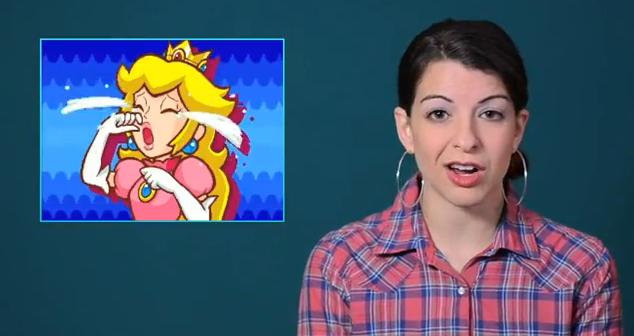
Okay, look.  I don't like Anita Sarkeesian.  But she is not a coward for disallowing comments on her youtube pages, she is not ruining gaming by making feminist critiques, and she is not trying to subvert some twisted glass bubble we all think games exist in.  Just leave her alone and let her voice her opinion like anyone else, okay?
            Human beings are formed by the experiences, opinions, views, etc. around them as they grow.  Truthfully, humans don't ever really stop growing until death, so we are constantly growing, learning, and being molded by our experiences and the world around us.  They help us to mature.  All opinions help us to grow in one way or another.  Exposure to crass commercialism could lead to people becoming highly consumeristic and wanting everything they see on the TV or it could make them jaded about many products which are too in your face with false promises.  It could even lead to them being middle of the road about it, liking some thing but being a discerning customers in their own right.  Exposure to racist ideas could horrify, intrigue, elate, or just depress others.  It could make them staunch civil right activists or bigots...but either way, the fact that the opinion exists means that it will affect our growth.

Never gonna evolve if you don't try new things and get out of your comfort zones.
            Going back to Anita, I have to say that rather than trying to destroy her or discredit her or just make ourselves nuisances...why not simply let her speak?  She has as much right to an opinion as anyone and her opinion will help mold us and those who come after us.  When you have an opinion, you have a right to put it out.  Others have a right to criticize it.  And likewise, we have the right to criticize the critics.  This creates countless voices, many mimicking the opinions of others, but some speaking out, taking ideas in different directions, and ultimately offering something to the world.

It may be a chaotic maelstrom, but the sea of opinions in this world can change us...it's an eerily beautiful thing, in my opinion.  Hehe...see what I did there?
            Now, let's take this one step further.  We all have opinions.  So, how about we respect that?  In fact, how about we stop seeing all the bad in opinions and start trying to examine the good that we can see.  Every opinion can have something good attached to it, if you're willing to see it.  If a bigot appears in a comments section discussing the merits and shortcomings of creating a tribalistic class of enemies in Resident Evil 5, where is the good?  Well, it does spark some interesting awareness of both insensitivity in the issue at hand and for the community at large.  If someone is so rooted in that kind of belief, would not this rude awakening to a casual reader that will help either shock them out of their own complacency, reinforce their stance against racism, or even take the discussion in a totally new direction?  It might not seem like a good thing on the surface, but it can lead to a positive effect.  It can also lead to a negative effect, certainly, such as people being offended or the discussion turning into a flame war, however I'm trying to look at the positive possibilities.
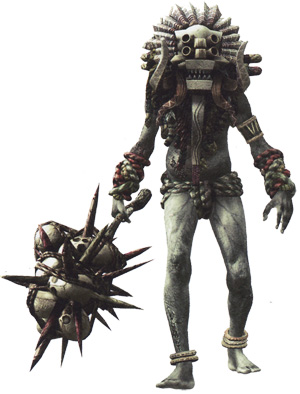
Discussing racism is not easy, even if it's just exaggerated in a game like Resident Evil 5.  But we kinda need to...we shouldn't turn away from an opinion or something in front of us just because we dislike it...we may not want to, but we need to know, good or bad, what's out there.
            Going back to respect, I think it important to do two things if you disagree with someone else's opinion.  First, appreciate that you could be the one giving the opinion next.  Think about how you would feel if you put someone down just because you disagree with it.  Try and take into account perspective.  Imagine how Anita must have felt when, in trying to further feminism and highlight some ways the game industry could have improved, she started receiving death threats...now imagine if it were you.  This is the basic respect people should have for one another.  Phil Fish, sometimes an abrasive developer, quit the game industry and cancelled the sequel to his popular game, Fez, because he was so heavily criticized and insulted for his opinions by a pundit named Beer.  What if it had been Beer or any of the other critics who had to take the abuse Fish had to?  Would they then have been so willing to hurl abuse at the opinions and of others if it had been them?  Second, understand that there may be some truth to the opinion you disagree with.  Accept that you may be wrong in your beliefs or that they may be flawed.  Take into account the possibility to be wrong and if nothing else that there is something worthwhile about the opinion of your opponent.  This too, is respect.  The respect of someone to make decisions on their own and share their views with the world.  Bottom line, you are welcome to disagree.  But do it constructively and in a civil manner.  Take into account your own flaws in perception and the perspective of others and don't try to spread anger, but create something good.

The chance for a sequel to the breakout hit, Fez, died because people didn't respect Phil Fish or his opinions.  A tragedy for all of us.
            Now, why does this matter for gaming?  Well, our industry is full of vitriol.  Anger.  We tend to be very dismissive of any criticism because our industry is very young.  Our culture is less than forty years old, at most.  So, we don't like people from the previous generations criticizing video games and gaming culture when they do not understand it.  This tends to make us very defensive.  I would even go so far as to say abusively defensive, where we will get very angry and mean to people who disagree with any facet of our current game industry, such as gender issues set in place since the 1980s, ideas of corporate reliability such as the value of the Nintendo or Konami brand, or the issue of violence in video games.  Some of these issues have changed.  Some need to change.  And we fear change.  But...we really shouldn't.  Our industry, our culture, is only going to grow if people aren't afraid of change.  If we can share our opinions freely and learn from them.  So, every time I voice an opinion about how bloated video game publishers have become?  It has the potential to inform people about the situation the game industry and perhaps take notice, perhaps work for change, support indies, etc.  When Anita tries to make a change through her feminist examination of video games as a whole she has the potential to raise awareness of issues of gender in video games, encourage further learning, perhaps even cause an indie developer or a major publisher to make a change to their game for the sake of the issues she has raised, such as the Last of Us focusing on Ellie as well as Joel.  Even Jack Thompson, hated, reviled, and despicable attorney who so railed against violent video games can make people reexamine their views on game violence and cause change for the better.  Opinions shape our industry just as they shape us.  They help it to grow.  However, if we try to squelch these opinions, we will never grow.  We will stagnate.

This isn't the 1980s, guys.  If we want to keep improving, we can't be afraid of change.
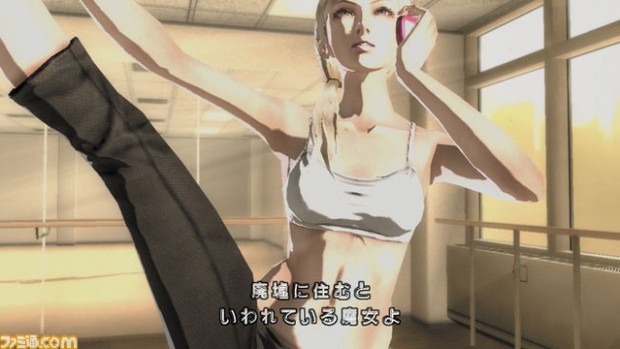
            Some people are of the opinion that the game industry is fine as it is.  And, these opinions still have merit, despite what I have said previously.  These kinds of opinions can highlight what makes our current industry good and, once again, mold it to help retain these properties.  However, the people who have opinions that differ from these shouldn't clash.  Just because we have differing views does not mean we want differing things.  Sometimes we do.  Some people want Suda51 to make more games where you can freely walk on a stripper as part of a psychedelic experience as in Shadows of the Damned.  I personally don't.  The first opinion may argue for artistic merit, anti-censorship, or just playing to a specific niche audience.  All of these are good points.  I may argue feminism, offensiveness, and maturity.  While we want differing things and argue different points, both myself and this hypothetical person making the first opinion each want to improve or maintain the game industry.  We may disagree, but we should respect the opinions of our opponents as well as our compatriots because I think it's fair to say that we all want what we believe is best.  By respecting and understanding the opinions of others, we can work towards this goal.  Everyone believes they are the hero of their own story and that extends to their opinions, which they believe to be just.  You cannot bold facedly tell someone they are wrong and expect them to simply change when they are the hero of their own story.  However, you may be able to make someone rethink their opinion and gain some perspective if you can plant that seat in their mind with your own opinions.

Immature or not, Suda51's games have a place in our industry and people can like or dislike them as they please.  Their opinions are all valid.
            Opinions have power.  The Xbox One, which used a number of DRM features and required an always online connection, changed because of the opinions of the gaming public.  Opinions won the fans of Mass Effect an extended ending for the third game in the series.  Opinions are how Steam games get greenlit.  More than that though, opinions are interwoven into every purchase we make.  We are showing our opinion for a specific genre, publisher, developer, or even just the game itself each time we decide to purchase it, recommend it, etc.  And we shouldn't belittle people for these kinds of opinions.  Much as I despise the DOA Beach Volleyball series, people like it.  That's okay.  I disagree with it, but I respect their right to play any game they please.  If we start being judgmental on opinions, it is a slippery slope, as they say.

Opinions can change things.  Sometimes, an entire console.  Sometimes an entire people.
            Obviously, I'm being a bit idealistic here.  Opinions are like assholes.  Everyone has one and some people have bigger ones than others.  But, I think it's important to remember that we are learning creatures.  We learn from every experience we have.  That includes opinions.  So...how about we make the best of opinions?  Let's learn from them.  Let's respect those who give them.  And let's stop being so angry.  The other thing about opinions?  If you don't like them, you can always ignore them.  A game that someone criticizes and receives a 1/10 on Metacritic doesn't destroy every version of the game in existence.  You can still play the game...you don't have to listen to the opinion if you don't want to.  You might not learn anything from it, but that too is your choice.
Love it or hate it, Metacritic doesn't destroy the games you love...they still exist.  So...quit obsessing over scores.
             For me, opinions, criticisms, views, etc. are a lot like video games, movies, and books.  Even if they're not always good, the fact that they exist is almost always a good thing because they have something to offer.  A bad book or movie can be entertaining, a boring game can be an object lesson, and any opinion can have something to be gleaned from.  Opinions put something into the world.  They offer something that others can look at and grow from, or not if they so choose.  And it's far harder to bring something into the world than destroying something already in the world.  So, respect people for their opinions...because they are the product of their life and their presence in the world, one way or another, will shape us all.

            I have opinions.  You have opinions.  Everyone has opinions.  And there's nothing wrong with that.

Just want to take a moment to step back from my position as an editorialist and say I try to live by a simple mantra.  Do no harm to others.  That, alongside some interesting discussions about Anita Sarkeesian and similar personalities have led me to write this.  Gamers are often self entitled and frustratingly abusive in their opinions...and I cannot for the life of me figure out why.  I mean...why would you want to make someone else suffer?  It is such an alien concept to me...so, I want to encourage others to respect the opinions people have and to address them with respect and intellect rather than vitriol and ignorance.  I may not always be able to live by my mantra, but I try...and that's all I ask of any readers I have.  Try.

Friday, August 2, 2013

The Myth of the Useless Female Lead: Putting Things in Context


             Women in gaming get a bad rap.  Even when they're not dressed in skimpy attire or being used as nothing more than a plot device, the idea that gaming is a "Boy's Club" activity tends to marginalize and discriminate against women, both those who play games and those who are in games.  However, I don't know if our perceptions about female characters in video games are quite as accurate as we think.  For the longest time, I was on the bandwagon that certain tropes were a bad thing in video gaming.  That the kidnapped princess from Nintendo titles or the loyal wife in games like Harvest Moon were often subversive and hurt feminism.  The idea that these tropes objectified and made the female characters useless.  Now though, I'm beginning to reconsider.  I don't deny that there is a deplorable double standard in video gaming, but...well, just hear me out on this one.

Another useless and ineffectual princess?  Maybe not...
            A female gamer online responded to a feminist's criticisms of some of gaming's more useless female characters with some interesting ideas that made me take stock of my own beliefs.  Her arguments were two-fold when it came to useless or objectified female characters.  The first argument was for people to look beyond the obvious and to see implications of how a female character's presence and absence affects the world.  The second was that personality makes a character and that even in the midst of these tropes, a good personality can create a female character who is strong and memorable regardless of what role she's been given by the developers.

            The example this female gamer used involved Princess Peach from Super Mario Brothers.  Nintendo often gets a lot of flak for making largely incidental female characters.  Arguments typically range from Princess Peach being a useless monarch to Zelda being a figurehead and prize when not cross dressing.  These are targets people have been using for decades.  But stop for just one moment and think about Princess Peach and the implications her kidnappings create.  When she is kidnapped, it sends the Mushroom Kingdom into chaos, forcing Mario to have to save her to restore order.  However, when she is still in power, the kingdom is at relative peace and stability.  Even if she may not be able to defend herself, does this not prove her worth as a capable ruler?  The kingdom isn't suffering from a high deficit, the toads aren't planning a bloody rebellion to overthrow their tyrannical ruler, and Bowser is so envious of her beauty, grace, and apparently her skill as a ruler that he feels the need to make her his own.  Looking at it from this angle, Peach seems a bit stronger and more capable than most of us give her credit for.  Another thing to think about is that Mario only gets his time in the spotlight if she's kidnapped...otherwise he's just a friend/defender of the realm.  It's easily as much his fault as Peach's that she keeps getting kidnapped, since he KNOWS this is how the story goes and just lets it happen, so he can have his games.

How peaceful and idyllic.  Princess Peach must be doing something right.
            Now, this might be looking a bit too far into things.  Nintendo's plots are largely simplistic and don't take into account real world logic, but upon hearing the female gamer discuss these issues, an idea was planted.  Of all the female leads we call useless, how many really are?  And once I started thinking, I saw so many leads others called weak or bland or lifeless as having new life.  Elena from Pandora's Tower is a great example of this.  On the surface, she seems kind of like a prize, as the hero, Aeron, is killing monsters for her sake and building up a relationship meter with her for a reward at the end.  But look at it from Elena's perspective.  She is afflicted with a curse that transforms her into a monster if she doesn't eat the meat Aeron brings her.  She is reliant on him, but despite this, she tries her best to stand on her own and assist him when possible.  She has reconciled the fact that she can't go with him, as she's frail and cannot wield a sword, so she wants to do her part back at their base by translating helpful documents, making medicine or treats, tending to Aeron's wounds, upgrading his equipment, etc.  Elena finds something she CAN do and runs with it, trying to make the best of a poor situation.

Does having a love interest or being domestic really make a woman weak?  I'm not so sure.  Elena might not be able to wield a sword, but she still tries to be strong in her own way.
            Some might argue that this locks her into a stereotypical housewife role and that that's negative, but...I disagree.  Elena has agency and chooses to put her faith in Aeron while doing what she can from the sidelines.  Her culture forbids her to eat meat, but she does so to honor Aeron's efforts as well as to survive.  And even if she is stuck in a housewife's role...have you ever seen a hardcore housewife?  They are some of the toughest, strongest people you can know, as they have to look after their home, children, they have to keep food in stock and ready, etc.  They have so many responsibilities.  On top of that, Aeron is a soldier and frequently away.  Ask any significant other of an armed forces member how hard it is for them when their love is out fighting for their sake and you will see that Elena is not just a cringing flower, eclipsed by Aeron's greatness.  She is strong and bears with his absences largely without complaint, dealing with the worry and fear of losing a loved one because that is what she can do to help.  Even in her darkest hour, when she starts transforming into a monster because the player didn't give her meat fast enough, do you know what Elena does?  She waits at the door for Aeron and despite her grotesque appearance, forces herself to smile and says "Welcome home," as if nothing is wrong.  Some might argue this is all still very demeaning to her as she is bound in a relationship to a man, and I can't argue that she and Aeron are inextricably intertwined...but what gets me angry is when people talk about Elena, or Peach, or Zelda like they're totally worthless just because we don't see them hefting a sword over their shoulder and slaughtering baddies.  That isn't all there is to being strong.  Sometimes, the quiet resolve of someone doing the best they can in a bad situation is truer strength than a hero going out and smashing heads.

Bless you, Elena.  Despite your pain, you're trying so hard to be brave.  And succeeding spectacularly.
            This brings me to the second argument that made me start re-examining my ideas of how female characters are viewed.  Personality.  I know for certain that personality is one of the most important things in determining if a character is...well, a character or if they're just a non-entity.  For example, Elena has a personality.  She is shy and demure at times, but also studious and adaptable, with a love of cooking and crafting.  She enjoys singing and is a skilled dancer.  Elena also tries to hide her sadness and doubt so as not to worry Aeron.  She has a great appreciation for nature and loves to chat with people.  These are all traits you can pin down about Elena that help define her.  By contrast, let's look at Skyrim, one of the most critically acclaimed games of 2011.  Skyrim makes a number of mistakes with female characters.  While some have...marginal characteristics, many women in the game are blank slates with no defining traits besides their gender.  For example, in Skyrim you are afforded a number of vassals called House-Carls who will follow you and be your steadfast allies.  Lydia, a female warrior, is the first House-Carl you'll typically get.  Lydia is a non-entity.  While you may be able to appreciate Lydia as a warrior and for helping you, she has no personality, will not do anything without your orders, serves you constantly either by watching your house or by fighting alongside you, and even if you marry her, she does not open up to you.  She merely opens a shop and gives all her money to you.  This is the kind of characterization that objectifies and makes women ultimately pointless in video gaming.  After spending almost forty hours fighting alongside Lydia, I could not tell you any of her interests, what her usual moods were like, or even if she had goals beyond serving me.  And it wouldn't have been THAT hard to make her more fleshed out.  Have her make reference to her past, complain about certain issues like if you're in a sewer, have her tell you about her likes and dislikes, etc.  You could even have a conversation option to have the hero ask Lydia about hobbies or goals.  Can you see the difference?  Lydia may be able to wield a sword and fight battles, but that doesn't make her a character.  And she's not the only lifeless doll in Skyrim.  Not by a long shot.

Get used to that bland, lifeless, face, because she's your bodyguard...she's a title, not a character.
            Now, alot of people might think, "Well Lydia's not the lead, so it doesn't matter if she's bland and lifeless," or "Elena's not really important because we're playing as Aeron."  To those people, let me just say that I think you're missing the point.  A character isn't worthless or weak just because they cannot fight.  And being able to fight does not automatically make them a good character.  Look at the game Recettear.  It is a charming little title about Recette, a girl who is largely abandoned by her father and saddled with a huge debt she has to pay off.  So, what does she do?  Go out and hunt monsters to make back the money?  No.  She's a child of around eight or so.  Killing monsters is a little beyond her.  Instead, she converts her house into an item shop to try and buy low and sell high until she gets enough money to pay off the debt.  The girl is not a warrior and may be filling a domestic role, but considering her circumstances, she is acting with remarkable maturity and strength.  The entire game is about paying off the debt by making the best damned item shop you can.  And what I love is that the characters in this game play an often overlooked role in the world at large.  They are supporters for other adventurers.  Looking at it from their perspective, they aren't useless, or bland, or lifeless at all.  They are working towards success by using their skills and available resources to the fullest.  In my opinion, that's quite admirable.  Alongside that, the personalities of Recette and her associate Tear are quite likable, if a bit silly.  Recette is a child.  She loves sweets, has a knack for crafting, is very capitalistic, but also trusting, naive, and honest.  Tear is her partner, who acts as a teacher, a surrogate mother, and a loan shark holding the sword of Damocles over her head.  This is why Recettear is a good example of how female characters in often overlooked roles can be seen as strong and not useless or objectified.  If you look at it from their perspective, what they do or don't do may be just as important to the world as what the hero does.  And, if they have strong personalities, the players will resonate with them.

Recette is silly and adorable.  She's also an item shop owner, has paid off a huge debt while at the age of eight, and tends to brighten everyone's day with her cheerful nature.  Deep?  Maybe not.  But a likable, mature, and independent female character?  I'd say so.
            This is not to say that gaming has improved the quality of female characters in general, however.  Too often we get developers making women who are bland, fan-service sex dolls, or who might as well be men with no real defining characteristics besides anger and a will to fight.  There is still a long way to go.  However, I want people to exercise their brains when examining female characters who may not be in the spotlight or who might get a knee jerk reaction from feminists for having a domestic role.  Look at them from a different angle or perspective and try to understand what their life is like in this world.  Pay attention to their personality and see if they actually have some.  You might be surprised.

            That being said, don't be fooled.  There ARE several female characters who are just fan service or who don't contribute to their games at all.  TRUE useless female leads.  And they are damned frustrating.  Shadows of the Damned, for example, has Paula, who is kidnapped from minute one.  Now, this could create a situation like with Peach where her presence creates stability and her absence creates chaos.  However the hero, Garcia Hotspur, openly admits to hunting demons before meeting her, so her presence didn't cause him to become a demon hunter, and he dotes on her, basically taking care of any and all eventualities.  Paula is totally reliant on Garcia, since she does not have a job or any noticeable skills beyond sex appeal, as emphasized in the game by her being perpetually in white lingerie.  Even if you were to look at her personality, Paula is a weak character.  She has so little screen time that her personality goes from whiny, to hysterical, to vindictive, to submissive, to psychotic with little to no consistency or transition.  Her only purpose in the story is to give Garcia a princess to rescue and to try and look sexy.  This is the epitome of an objectified female character.  She does nothing and is largely useless, save for her purpose as a plot device. 
Now THIS is objectified.  Paula is shallow, bland, whiny, and her only purpose in the game is sex appeal, as she clings on Garcia and relies on him completely, with no thought or will of her own.
  
            However, like I said earlier with Lydia, it is sometimes difficult to differentiate between a character that is strong and does their own thing in the world she is in, even if it looks like they don't, and a character that seems to be important, but is really useless.  Sylvia, in No More Heroes, might appear to be a confident, sexy, in control woman who acts as an agent for assassins, however near the end of the game and in the sequel this illusion is destroyed, showing that she is a self absorbed liar and a con-artist, whose frivolous actions eventually leave her destitute, forcing her to take refuge in a whore house frequented by perverted customers.  She has no point other than titillation and to move the plot forward.  In comparison, Rachel from Ninja Gaiden, while forced to wear armor that is sexist, stupid, and largely pointless, does at least prove herself to be strong enough to fight demons, does not swoon over or cling to Ryu Hayabusa, the hero of the game, and is working towards her own goals.  While she does spend some time as a hostage for Ryu to save, she has some strong characteristics buried under the unfortunate sexism that has become a hallmark of Team Ninja games.  Can you see the difference?  True, some of it might be the developers trying to cover their asses, but at least they're TRYING to show some degree of personality in a female character...many games have shown that developers can and often do just turn women into bouncing boobies for the enjoyment of a male audience.  Mores the pity.

Some gamers might try and defend Sylvia as strong because of how she uses Travis in No More Heroes and is confident and what not, but she's really just a liar, a con-artist, and eventually driven to prostitution...charming.  Sylvia might not be bland, but she's definitely objectified.
            I want to encourage players to look at female characters with a bit of a more discerning eye after this discussion.  Look at their situation and circumstances, look at their skill sets and their choices, look at their personality, and think about what they themselves are going through.  You might be surprised at how strong they may be, in spite of how poorly they come across. 

Rachel from Ninja Gaiden may be forced to wear sexist clothing and oversexualized, but at least she tries to be strong.  At least she can fight on her own, doesn't hang off of Ryu Hayabusa, and values saving her sister above everything else.  She's not a perfect role model or anything, but at least it's something...that's more than we get in a lot of games.
            Now, I don't claim that these views are the end all be all.  In fact, these views may be quite flawed.  I may be a feminist, but I am not a woman, so there may be key issues that I have overlooked.  Like many of my posts, these are opinions meant to spark discussion.  See, I find that female characters get a bad rap just because of how they are perceived...or not perceived as the case may be.  Just because one doesn't look strong doesn't mean they aren't going through their own trial by fire.  Just because they appear ineffectual doesn't necessarily mean their presence isn't important.  And the ability to fight on par with male counterparts does not automatically make them strong characters.  They need a strong heart to be impressive, not guns or muscles.  Make no mistake, there are many women in gaming who are ineffectual.  Who pander to the male audience.  Who are depressingly one dimensional.  But then again, there are many who aren't, even if they look that way.  Look at the characters from all angles, then decide for yourself whether you're dealing with an ineffectual female lead or a strong willed woman doing the best she can, given the circumstances.