Showing posts with label Phil Fish. Show all posts

Sunday, August 24, 2014

Twelve Tips for Indie Game Developers: The Outsiders Perspective


            Alright.  Let's be honest, I am not a game developer, I am not a PR guy, I am not an analyst.  What I am is a gamer.  And as a gamer, I wanted to just give a few ideas to the community as a whole, the indie gaming community, that, from a gamer's perspective, will actually help you.  Because, corporations may need advice, but they won't take it.  Indie devs tend to just be a group of a few people and they can and sometimes will use advice, so...here it is.

Considering the shit AAA devs are doing...yeah, I love Indie
            I've been seeing a lot of...shall we say, shady behavior on the indie scene, lately.  For every War Z or Guise of the Wolf, we get tons of decent games like Shovel Knight or Cubesis, certainly, but the fact that people think they can screw with their customers, on the indie level no less, is kinda disconcerting.  This doesn't just go for people trying to mess with critiques or lie to others, this goes for blow ups like with Phil Fish or even levels of mediocrity, like the dozens of RPG maker games that are starting to appear on steam.  So, let's start with some easy tips.

1) A New Developer Starts with nothing.

            As a new developer, you start with zero.  Zero faith, zero goodwill, but also zero bad will and zero vitriol.  You can build your image from the ground up.  So, play to the audience you want and respect that audience.  You can make a name that is meant to show your ambitions or what have you, like Wayforward or you can just have it sound cool, like Super Giant Games.  But, you start on an even keel, so use that to your advantage.  Use it as a jumping off point to show your audience, you respect them and you care.  They WILL start to judge you from the first screen shot you post, but when all you have is a name and a title, you start with nothing, so use that to your advantage.
All developers are born with neither good will nor bad will.  Use that to your advantage.
2) The Value of Goodwill.

            Indie developers can live and die on goodwill.  See, many indie developers work their jobs part time while doing other jobs or can survive on other means while waiting to hit it big.  However, if they do hit it big, this means they can work full time.  Indie devs are no different from big companies in this regard, as if their name has weight it can mean the difference between a boycott and massive sales.  Even if it just means you get a few hundred extra sales, since you try and deliver games cheaply and without much overhead, like a publisher or retailers cut, it can still help.

If you give to gamers, gamers will give to you, devs.
3) Be courteous, but don't be phony. 

            Your customers need to trust you and be willing to return your own goodwill, spreading word of mouth, doing reviews, talking to friends, what have you.  So, how can you build goodwill?  Well, a good way to start is to think about how you as a customer want to be treated.  Everyone hates that sir or ma'am crap we get when talking to corporate pawns like the cable company or healthcare and we hate automated systems even more.  We want to be spoken with as equals, by real people.  We want to be spoken to as people who are helping with the gaming experience, not lavished with false praise and titles.  If we make a suggestion, be glad for it.  Even if you can't use it, remember that someone cared enough that they wanted the game to be better so they could play it more. 

We all hate automated machines telling us our time is valuable to them.  Treat us courteously, but not like robots.
4) Be a nice person. 

            In spite of all vitriol, nothing builds goodwill like a developer who will act in a mature way when being insulted or demeaned.  This.  Is.  HARD.  Phil Fish may not be a guy I like, but he was insulted on a daily basis and demeaned the point he quit the game industry after many, MANY choice words.  It's probably good he did because after those words...he lost a LOT of good will from fans.  Thing is, Zeboyd put it best.  It's just good for all of us if we try and be nice guys.  Not fake nice, but if someone disagrees with you, let them, don't explode.  If they're being an asshole to you, ignore them.  If they're being an asshole to your community, feel free to ban them, since you have your community to think of.  But in general, just be a nice guy that people feel they can talk to. 

Gamers can be a vitriolic bunch but indie devs rely on them so...you kinda have to be the bigger man here.  Act maturely, even if we don't.
5) Man up to your mistakes. 

            All developers have made mistakes, wasted money, or generally had delays that prevent them from keeping promises in a timely manner.  Lying or making excuses to your fans and customers is not the way out.  Be upfront with them and share the experience.  If you're having problems, let them know but assure them of your commitment.  If you can't deliver, all there is to do is apologize, take the heat, and try to make it right how you can.  While you might lose some goodwill for doing the right thing, people remember those who are honest with them and respectful.  They respect those who don't cut and run and will try and do the right thing.  That, in turn, will get you more good will. 

People might never let you forget a mistake, but if you own up to them, don't make excuses, and say you'll do better, they're more likely to forgive and respect you.
6) Share with and go the extra mile for your community. 

            Everyone loves seeing games progress, either in development or in updates and bug fixes.  Share with them how things are going, maybe if you added something new, secrets maybe, but keep them involved, because that shows you care.

These are basic tips relating to good will.  In general, just think how you as a gamer or a customer want to be treated by others and...do that.

Community is a powerful tool in the game industry.  Treat them right.
7) Do not lie to your customers

            This is to cover all bases.  We talked about manning up to mistakes or problems, but don't sugar coat things.  If your game is a piece of ass, at least let them know going in that it's a piece of ass and that you are trying to learn to either fix it or do better the next time.  Don't bill it as a Call of Duty killer and then it turns out to be a generic shooter with copy paste graphics from the Unreal Engine with no trace of originality.  Don't use misleading clips or CGI or in general try and deceive them, because you will be found out and your attempts to hide it WILL be catalogued.  In the age of screen capture and mass media, nothing can just be covered up anymore.  You cannot cover up a lie in the games industry, so it's better to simply not lie.  Your rep and your goodwill will thank you.

If you lie, your customers will find out...and they will be PISSED.
8) Do not censor

            I know it may hurt to see something you worked hard on or which isn't finished take a verbal pounding from players who are basically ripping it apart for fun, but like I said before, if you try and cover that up and lie, it WILL be found out.  Garry's incident and Guise of the Wolf are the most notorious cases of censorship gone bad when Total Biscuit had his first impression videos taken down by people abusing the Youtube Copyright system.  He tore them apart in a mature manner, showing their wrongs in detail, catalogued, and eventually they had to relent.  Jim Sterling also covered those who took down steam reviews that were unflattering.  All incidents left a trail and the stories were picked up by Kotaku and other news outlets and the developers were treated as the scummy, money grubbing asses they were.  Don't censor.  It never ends well.  Take the vitriol on the cheek, turn the other cheek, and let it be forgotten, making way for fans who WILL appreciate your game.  Everyone hates a villain and if you act villainously, like trying to abuse the system to censor bad press, you will be slain by some righteous heroes of the net.
Best way to lose goodwill and become a gaming development pariah?  Try and censor your customers because they don't like your product.  Own up to your mistakes or you are going to burn.  The internet does not forget.

9) Don't belittle and don't fear comparison

            Not everything has to be original, but don't be afraid to have something compared to your game and don't belittle others who might be compared to it.  Many people hated the calling of Terraria a "2-d Minecraft."  Sure, they are different, but that kind of comparison...is not bad.  Minecraft is a big hit and a game like it?  That's not saying a bad thing, you could be compared to worse.  And Terraria never set off to compete with Minecraft, they didn't claim they were better.  They were just different.  They didn't speak ill of them.  This is good.  I remember playing The Last Dream for Steam and didn't much care for it because it took too much of the original Final Fantasy and not enough of the sequels, with a bland class based system and not enough interesting story or music.  However, think about that sentence I just said.  Took too much from the original Final Fantasy.  Final Fantasy purists, who enjoyed the original NES games will eat a game like that up.  Don't fear comparison.  It's just someone else's way of pitching your game to a friend in a nutshell.  Don't belittle because whether or not someone who is making a game similar to yours is better, the fact that you treat them with the same respect you treat your customers, that is to say a lot, will earn you a fair bit of goodwill and possibly partners in the future.  Who knows?  They may want to work for the masters for their sequel.

Comparison isn't necessarily a bad thing.  Don't fear it, because it's just part of how people associate your game.
10) Don't nickel and dime your customers

            I see this happen a fair bit.  I'm not of the mind that all micro transactions are bad.  Some DLC definitely deserves the money, like Dark Souls 2's Sunken Crown DLC.  It clearly took extra time to make and was not part of the original product.  However, a game like Warlock 2, which looks like it should have been an expansion pack sold as a full retail release?  It makes customers raise an eyebrow and hurts your brand.  We don't like to feel like content is withheld from us.  Held hostage from us.  If you want to offer certain extras you can't get elsewhere, like behind the scenes footage or art books, maybe, but if you are withholding characters, music, whole levels even, BEFORE the game has even launched?  You are going to anger a lot of people.  Some DLC, we are okay with, but when it's been cut out of the finished product to make more money?  Many of us will skip the finished product entirely, since it's being sold to us piecemeal.
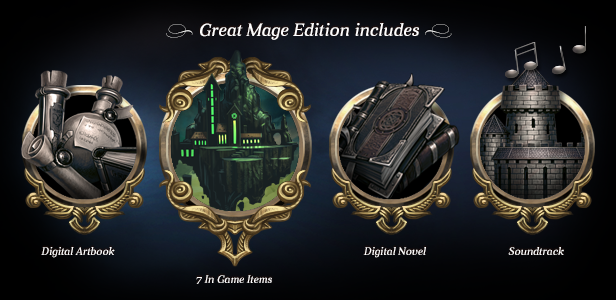
When your customers realize you hacked out in game items to sell a more expensive edition, they may just say to hell with your game.  It shows a lack of disrespect.

11) Spread the word, but don't bribe

            Disclosure has become a hot topic lately with youtubers.  It's the idea that a game developer is offering special goodies or money or deals to reviewers for a favorable look at their game.  This is a bad idea.  Why?  Because if you don't have enough faith in your game for it to stand on its own, you probably shouldn't be selling it.  Don't bribe reviewers, don't even try to sweeten a deal.  Just advertise that you have something cool to show people.  Spread the word through the medias and the fans, but don't try and buy publicity.  Market, but don't try and get "special attention."

Full disclosure, not non disclosure.  Don't bribe, don't lie, don't keep things from your customers.
12) Don't panic

            Even good games can receive bad reviews.  Why?  Because the game wasn't what that particular player wanted to experience, even if the videos and screenshots seemed like it might be.  And that's okay.  Sometimes, wires cross.  But if you are proud enough of your game that you would play and enjoy it, then others will too.  Don't panic if you get a bad review or if something happens to derail spreading the word or getting it to your customers.  In the end, most players will remember how you act and resolve issues as well as how they like the game.  I may not like FTL, but I give mad props to the developers for improving it and offering the updates for free.  I might buy another game from them, if it were released.  Whatever happens, just go with the flow and do your best to deliver your product to your customer.  If they like it, they like it, if they don't, they don't, but someone will like it.  Have faith in that.
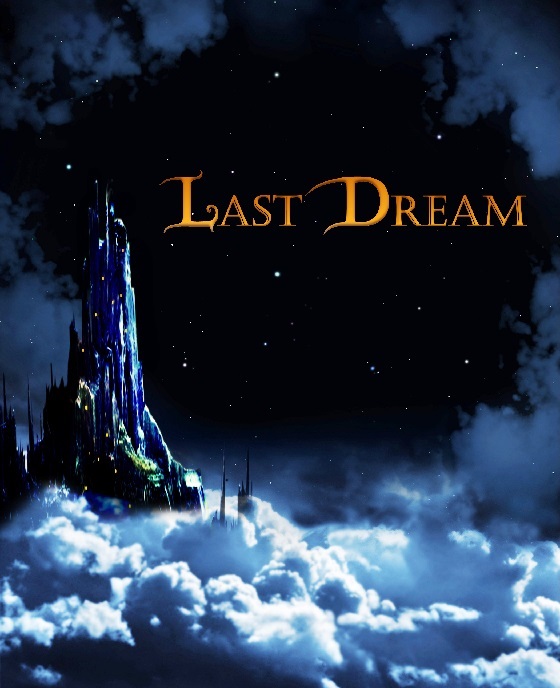
This isn't my kind of game, but it is for someone.  Just cause I don't like it doesn't mean others won't.  Don't panic.  Keep calm and carry on.
            It's a little sad that the indie scene has been sullied by some developers who try and lie or abuse the system to their own benefit, but for every Guise of the Wolf or Garry's Incident, we get a dozen Shovel Knights, Valdis Story, Sang-Froid, Tiny Barbarian DX, etc.  It's easy to misstep as an indie developer, sure, but from a gamer's standpoint, these points above are what matter to us of the developers we trust.  Something to keep in mind for the aspiring game developers.  And something for games to keep in mind when picking a title on name value alone.

In the end, being a good developer and being a decent human being aren't mutually exclusive.  That is the best bit of advice I can offer.

Sunday, February 9, 2014

I Has Opinions. You Has Them Too. That's A Good Thing

Before we jump right into a discussions on how we all have valid opinions on the internet...yes, really...I wanted to give a brief update on the direction of this blog.  First, I need to apologize.  I've neglected it just a tad.  But, that's going to change.  I'm going to make the attempt to update the blog at least once a week with new gaming tidbits.  I'm going ahead with a game spotlight section, which along with diminutive diatribes will be short enough for me to keep up with while I finish my longer articles.  I'm also going to add a developer spotlight section so that special developers or members of the gaming community get some real notice.  Think of the Justin Carmical memorial as one of those.

We can go more into that next week though.  For now, let's talk about opinions on the interwebs.


            Considering how much vitriol, anger, and criticism I dish out regularly, I'd like to take a moment to actually try and be positive for a change.  I'd like to discuss opinions a little bit here.  This is less to do with publishers or developers, but more the game industry as a whole and our growth overall.  See...our industry, our culture, is still relatively new in the eyes of the world at large.  And it shows.  While the internet, and internet culture, has allowed people from all walks of life to feel included or to find something they love that they can share, gamers sometimes have...a bit too much passion.  And they don't really take kindly to people expressing opinions or views that don't fall in line with their own.  Things that they feel might threaten the medium they love so much.  However...an opinion isn't an absolute truth.  It's not a law that needs to be changed.  It's not even a pressure against this medium they care about.  It is a thought.  An idea.  We all have them.  You have them.  I have them.  And truth be told, that's not a bad thing.

Opinions are important for the game industry.  They affect everything from review scores to editorial articles to the very content of games...so we should respect them.  For they have power.
            Story time.  When I was younger, say about 16-17, I got Final Fantasy X-2 for Christmas.  I loved the game.  While I found the story only passable, the combat was enthralling, using the idea of changing the female characters' clothes as a job system...however, I admit freely that sometimes I'd have the characters dress in the skimpier outfits because I found them attractive.  Looking back, this strikes me as rather sexist, objectifying the characters for a sexual thrill.  Know how I came to this conclusion?  Anita Sarkeesian.

Yes, I played the Final Fantasy dress up game.  Sue me, I was in my late teens and a huge fan of the series.  Surprisingly fun to play, though.
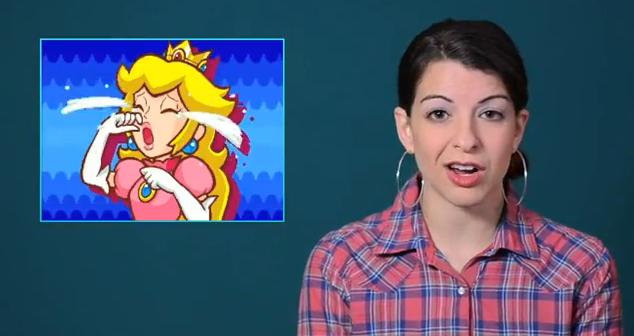
            Let me put a bullseye on my back and say, I really don't like Anita Sarkeesian.  Probably said it before, but let me just put this out there.  I don't like her internet persona.  I find it a bit abrasive, extreme, and smug.  That being said, I don't dislike her as a person or really disagree with most her opinions.  I don't agree with all of them, but at the same time being exposed to them changed me.  They probably helped kick start me thinking about feminism in video games and the objectification of female characters in fiction in general.  I always considered myself a feminist and was overly fond of strong female characters like Terra Branford from Final Fantasy 6 or Gwendolyn from Odin Sphere but except for the most extreme examples, I'd never really connected feminism to video games...I was one of those "last bastion of fun" kinda players, trying to keep my games in a glass bubble.  However, even if I don't like Anita's internet persona and even if I don't agree with all her opinions, they have helped me grow out of that glass bubble.  They've helped me to change.  And that's a good thing.  Many gamers threatened Anita with things too reprehensible to repeat here and too despicable for me to want to.  Some carry a huge amount of hatred for her and her discussions of feminism on youtube, Feminist Frequency.  I admit, I'm not a fan...but I still respect that she has a right to her opinion.  Not only that, but her opinions carry merit and I for one am grateful that they are floating out there on the internet.  Why?  Well, because it's another voice.

Okay, look.  I don't like Anita Sarkeesian.  But she is not a coward for disallowing comments on her youtube pages, she is not ruining gaming by making feminist critiques, and she is not trying to subvert some twisted glass bubble we all think games exist in.  Just leave her alone and let her voice her opinion like anyone else, okay?
            Human beings are formed by the experiences, opinions, views, etc. around them as they grow.  Truthfully, humans don't ever really stop growing until death, so we are constantly growing, learning, and being molded by our experiences and the world around us.  They help us to mature.  All opinions help us to grow in one way or another.  Exposure to crass commercialism could lead to people becoming highly consumeristic and wanting everything they see on the TV or it could make them jaded about many products which are too in your face with false promises.  It could even lead to them being middle of the road about it, liking some thing but being a discerning customers in their own right.  Exposure to racist ideas could horrify, intrigue, elate, or just depress others.  It could make them staunch civil right activists or bigots...but either way, the fact that the opinion exists means that it will affect our growth.

Never gonna evolve if you don't try new things and get out of your comfort zones.
            Going back to Anita, I have to say that rather than trying to destroy her or discredit her or just make ourselves nuisances...why not simply let her speak?  She has as much right to an opinion as anyone and her opinion will help mold us and those who come after us.  When you have an opinion, you have a right to put it out.  Others have a right to criticize it.  And likewise, we have the right to criticize the critics.  This creates countless voices, many mimicking the opinions of others, but some speaking out, taking ideas in different directions, and ultimately offering something to the world.

It may be a chaotic maelstrom, but the sea of opinions in this world can change us...it's an eerily beautiful thing, in my opinion.  Hehe...see what I did there?
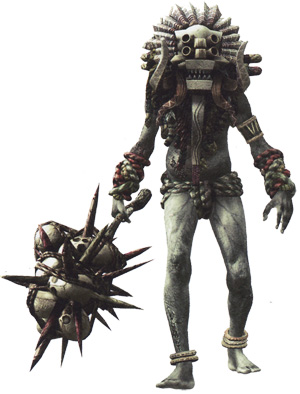
            Now, let's take this one step further.  We all have opinions.  So, how about we respect that?  In fact, how about we stop seeing all the bad in opinions and start trying to examine the good that we can see.  Every opinion can have something good attached to it, if you're willing to see it.  If a bigot appears in a comments section discussing the merits and shortcomings of creating a tribalistic class of enemies in Resident Evil 5, where is the good?  Well, it does spark some interesting awareness of both insensitivity in the issue at hand and for the community at large.  If someone is so rooted in that kind of belief, would not this rude awakening to a casual reader that will help either shock them out of their own complacency, reinforce their stance against racism, or even take the discussion in a totally new direction?  It might not seem like a good thing on the surface, but it can lead to a positive effect.  It can also lead to a negative effect, certainly, such as people being offended or the discussion turning into a flame war, however I'm trying to look at the positive possibilities.

Discussing racism is not easy, even if it's just exaggerated in a game like Resident Evil 5.  But we kinda need to...we shouldn't turn away from an opinion or something in front of us just because we dislike it...we may not want to, but we need to know, good or bad, what's out there.
            Going back to respect, I think it important to do two things if you disagree with someone else's opinion.  First, appreciate that you could be the one giving the opinion next.  Think about how you would feel if you put someone down just because you disagree with it.  Try and take into account perspective.  Imagine how Anita must have felt when, in trying to further feminism and highlight some ways the game industry could have improved, she started receiving death threats...now imagine if it were you.  This is the basic respect people should have for one another.  Phil Fish, sometimes an abrasive developer, quit the game industry and cancelled the sequel to his popular game, Fez, because he was so heavily criticized and insulted for his opinions by a pundit named Beer.  What if it had been Beer or any of the other critics who had to take the abuse Fish had to?  Would they then have been so willing to hurl abuse at the opinions and of others if it had been them?  Second, understand that there may be some truth to the opinion you disagree with.  Accept that you may be wrong in your beliefs or that they may be flawed.  Take into account the possibility to be wrong and if nothing else that there is something worthwhile about the opinion of your opponent.  This too, is respect.  The respect of someone to make decisions on their own and share their views with the world.  Bottom line, you are welcome to disagree.  But do it constructively and in a civil manner.  Take into account your own flaws in perception and the perspective of others and don't try to spread anger, but create something good.

The chance for a sequel to the breakout hit, Fez, died because people didn't respect Phil Fish or his opinions.  A tragedy for all of us.
            Now, why does this matter for gaming?  Well, our industry is full of vitriol.  Anger.  We tend to be very dismissive of any criticism because our industry is very young.  Our culture is less than forty years old, at most.  So, we don't like people from the previous generations criticizing video games and gaming culture when they do not understand it.  This tends to make us very defensive.  I would even go so far as to say abusively defensive, where we will get very angry and mean to people who disagree with any facet of our current game industry, such as gender issues set in place since the 1980s, ideas of corporate reliability such as the value of the Nintendo or Konami brand, or the issue of violence in video games.  Some of these issues have changed.  Some need to change.  And we fear change.  But...we really shouldn't.  Our industry, our culture, is only going to grow if people aren't afraid of change.  If we can share our opinions freely and learn from them.  So, every time I voice an opinion about how bloated video game publishers have become?  It has the potential to inform people about the situation the game industry and perhaps take notice, perhaps work for change, support indies, etc.  When Anita tries to make a change through her feminist examination of video games as a whole she has the potential to raise awareness of issues of gender in video games, encourage further learning, perhaps even cause an indie developer or a major publisher to make a change to their game for the sake of the issues she has raised, such as the Last of Us focusing on Ellie as well as Joel.  Even Jack Thompson, hated, reviled, and despicable attorney who so railed against violent video games can make people reexamine their views on game violence and cause change for the better.  Opinions shape our industry just as they shape us.  They help it to grow.  However, if we try to squelch these opinions, we will never grow.  We will stagnate.

This isn't the 1980s, guys.  If we want to keep improving, we can't be afraid of change.
            Some people are of the opinion that the game industry is fine as it is.  And, these opinions still have merit, despite what I have said previously.  These kinds of opinions can highlight what makes our current industry good and, once again, mold it to help retain these properties.  However, the people who have opinions that differ from these shouldn't clash.  Just because we have differing views does not mean we want differing things.  Sometimes we do.  Some people want Suda51 to make more games where you can freely walk on a stripper as part of a psychedelic experience as in Shadows of the Damned.  I personally don't.  The first opinion may argue for artistic merit, anti-censorship, or just playing to a specific niche audience.  All of these are good points.  I may argue feminism, offensiveness, and maturity.  While we want differing things and argue different points, both myself and this hypothetical person making the first opinion each want to improve or maintain the game industry.  We may disagree, but we should respect the opinions of our opponents as well as our compatriots because I think it's fair to say that we all want what we believe is best.  By respecting and understanding the opinions of others, we can work towards this goal.  Everyone believes they are the hero of their own story and that extends to their opinions, which they believe to be just.  You cannot bold facedly tell someone they are wrong and expect them to simply change when they are the hero of their own story.  However, you may be able to make someone rethink their opinion and gain some perspective if you can plant that seat in their mind with your own opinions.

Immature or not, Suda51's games have a place in our industry and people can like or dislike them as they please.  Their opinions are all valid.
            Opinions have power.  The Xbox One, which used a number of DRM features and required an always online connection, changed because of the opinions of the gaming public.  Opinions won the fans of Mass Effect an extended ending for the third game in the series.  Opinions are how Steam games get greenlit.  More than that though, opinions are interwoven into every purchase we make.  We are showing our opinion for a specific genre, publisher, developer, or even just the game itself each time we decide to purchase it, recommend it, etc.  And we shouldn't belittle people for these kinds of opinions.  Much as I despise the DOA Beach Volleyball series, people like it.  That's okay.  I disagree with it, but I respect their right to play any game they please.  If we start being judgmental on opinions, it is a slippery slope, as they say.

Opinions can change things.  Sometimes, an entire console.  Sometimes an entire people.
            Obviously, I'm being a bit idealistic here.  Opinions are like assholes.  Everyone has one and some people have bigger ones than others.  But, I think it's important to remember that we are learning creatures.  We learn from every experience we have.  That includes opinions.  So...how about we make the best of opinions?  Let's learn from them.  Let's respect those who give them.  And let's stop being so angry.  The other thing about opinions?  If you don't like them, you can always ignore them.  A game that someone criticizes and receives a 1/10 on Metacritic doesn't destroy every version of the game in existence.  You can still play the game...you don't have to listen to the opinion if you don't want to.  You might not learn anything from it, but that too is your choice.
Love it or hate it, Metacritic doesn't destroy the games you love...they still exist.  So...quit obsessing over scores.
             For me, opinions, criticisms, views, etc. are a lot like video games, movies, and books.  Even if they're not always good, the fact that they exist is almost always a good thing because they have something to offer.  A bad book or movie can be entertaining, a boring game can be an object lesson, and any opinion can have something to be gleaned from.  Opinions put something into the world.  They offer something that others can look at and grow from, or not if they so choose.  And it's far harder to bring something into the world than destroying something already in the world.  So, respect people for their opinions...because they are the product of their life and their presence in the world, one way or another, will shape us all.

            I have opinions.  You have opinions.  Everyone has opinions.  And there's nothing wrong with that.

Just want to take a moment to step back from my position as an editorialist and say I try to live by a simple mantra.  Do no harm to others.  That, alongside some interesting discussions about Anita Sarkeesian and similar personalities have led me to write this.  Gamers are often self entitled and frustratingly abusive in their opinions...and I cannot for the life of me figure out why.  I mean...why would you want to make someone else suffer?  It is such an alien concept to me...so, I want to encourage others to respect the opinions people have and to address them with respect and intellect rather than vitriol and ignorance.  I may not always be able to live by my mantra, but I try...and that's all I ask of any readers I have.  Try.