Showing posts with label Castlevania. Show all posts

Thursday, May 30, 2013

Month of Characters: Top 10 Villains I Hate For All The Wrong Reasons:


Well, anyone who knows me could probably guess that this was coming.  We have tons of great villains in games.  Well rounded villains who are relatable, lucid ones who are charming and brilliant, and the most scummy ones who you hate because of how evil they are.  However, here's the thing...when the story does it's job right, you hate the villain because that's the way it should be.  When the story screws up, you hate the villain because you want to smack the game designer and go "What were you thinking?!"  These are 10 villains I utterly despise, but for all the wrong reasons.  Needless to say, there will be spoilers.

SPOILER WARNING!!!


Satan(Castlevania Lords of Shadow)
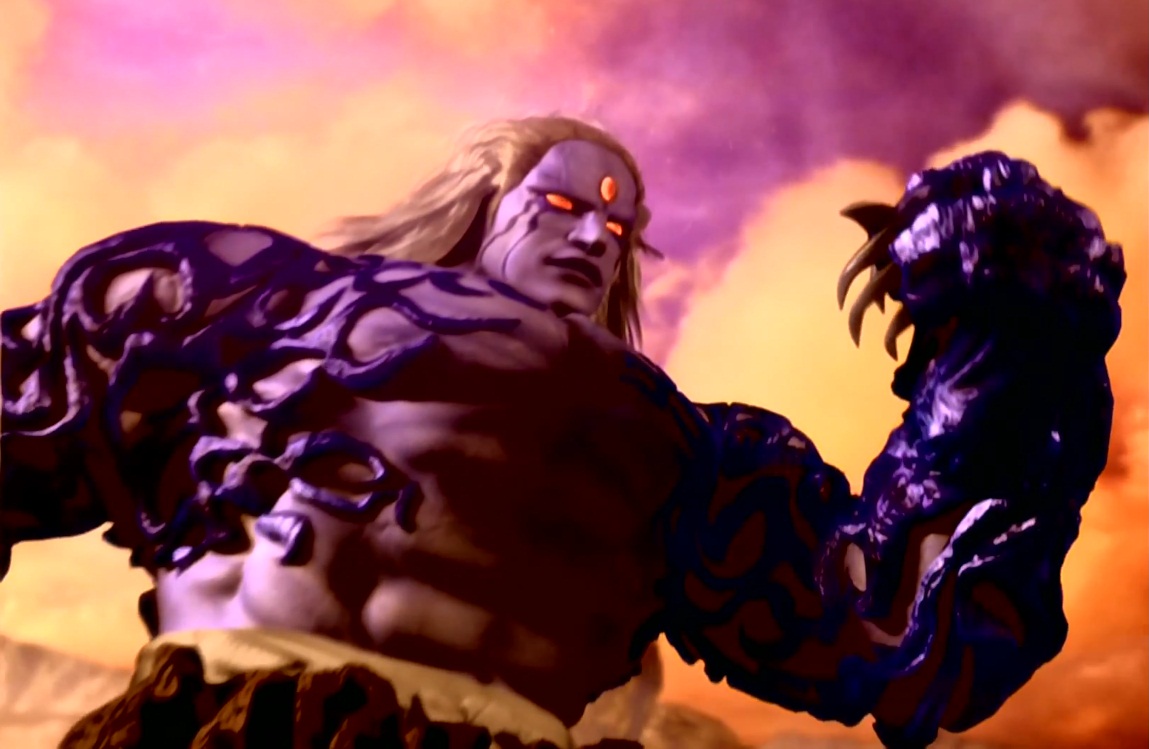
I've talked about this one before, so do I really need to go on?  Satan as the final boss of a Castlevania game?!  I mean, c'mon...where's Dracula?!  But, for completeness sake, let me explain, again, why this is such a stupid decision.  First off, he's never been introduced, mentioned, or even hinted at throughout the 30+ hour game and we're supposed to care about fighting him at the end?  Bull crap.  I know lots of games sometimes do the fake out, where the main boss you've been fighting gets killed off and a new guy appears, but it does not make it any less stupid.  Also, if Satan is the head baddy, why would he kill one of the Lords of Shadow?  Because he kills the Lord of Necromancers right at the end of the game.  Finally, by killing the Lord of Necromancers, Satan ACCIDENTALLY SAVES YOUR LIFE.  Gabriel Belmont had been used and tricked by the Lord of Necromancers all game and had unwittingly come into contact with a possessed artifact that the Lord of Necromancers could use to kill him.  In fact, after you create the item you've been looking for the whole game, the God Mask, he uses the possessed artifact to start to kill Gabriel and take the mask as his own.  Then Satan kills him and suddenly, your possessed artifact no longer has a master, so bam, you're saved and you defeat Satan to win the game.  Evil would have won if the prince of darkness had butted out.  Just pathetic storytelling.  I mean, I was told for over 30 hours that the three Lords of Shadow were my opponents.  In fact, it's in the title!  Yet Satan comes out and just goes "Fooled ya!  I'm the final boss!"  That is just stupid to the utmost degree.

The unholy one is a banished servant of the divine.  He holds no power, despite believing himself deserving of greatness and is worth more pity than fear.
Geldoblame (Baten Kaitos series)
For most head scratching appearance, let's give it up for Emperor Geldoblame.  Throughout most of Baten Kaitos, he is manipulating powerful forces to gather together the pieces of an ancient god and use them to control the world.  Then he gets killed, betrayed by his partner who is smarter and more nihilistic than he is.  It was a satisfying end for the tyrant, out witted and with his ambitions in shambles.  Then, at the end of the game after the players have killed the elder god which was summoned and their homes which had been floating in the sky touch down on the earth, he appears again.  Geldoblame's giant head made of stone pops out of the ground and attacks the players in a battle they pretty much can't lose.  Why?  Why did this need to be here?  He had his moment, died for his hubris, but now we have to fight him again?  Why?!  Oh, so the whale can come here and restore the ocean or something, whatever, alright...it just feels wasteful and stupid.  Geldoblame was a decent villain...until he came back from the dead as a giant stone head.  Then I scratched my head and started hating him.
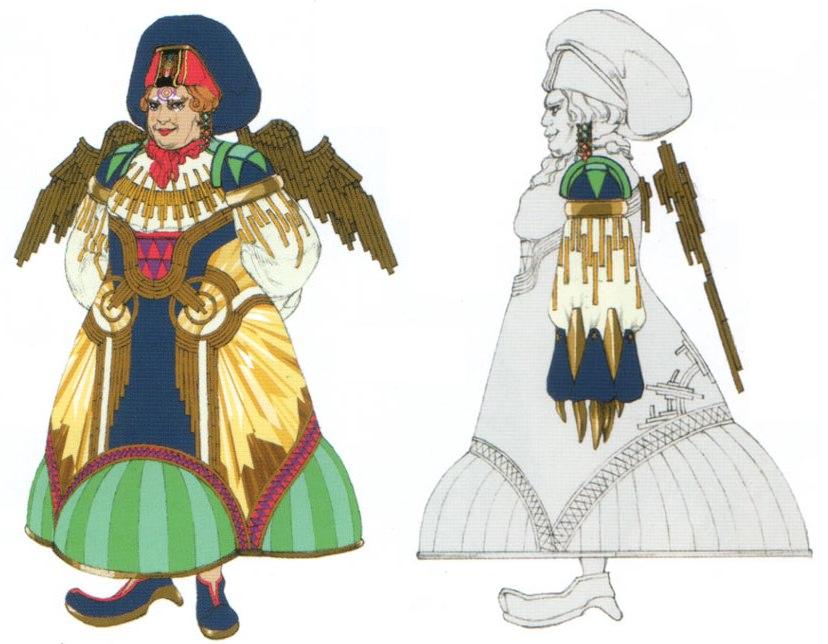
The emperor held great power and ambition, but was ultimately brought low by his own desires.  Despite that, he clung to life and the memory of the tyrant was replaced by the memory of a pitiful ghost who could not let go of his greed.
True form of King Allant (Demons Souls)
I hated Demons Souls.  For a lot of reasons.  But that aside, what annoyed me probably the most is the final boss, which is basically a slug-like form of King Allant, the man who unleashed catastrophe on his kingdom and basically started the game.  He sought power and unleashed a monster which merged with and ultimately corrupted him.  He's pathetically weak and can be slain in a single blow.  Now, I know why that is and I know why we should hate him.  We should hate him for his greed and arrogance and ultimately pity him, for in trying to gain power he doomed himself to a cursed half existence as a monster, alone in the chamber of the beast he made a deal with.  But really, I was so annoyed at all this.  I'd cursed, sweated, and struggled through the other dozen or so bosses, each a nightmare unto themselves, and my final battle was against the "False King" a truly wicked bastard who killed me a number of times before I dropped him.  And then I am told I must go fight the real monster, the mastermind behind the whole event, and it's just Allant after become a slug like monster?  What a freakin disappointment!  This, especially, after fighting my way through hundreds of lives to reach the ending.  Dark Souls, its sequel, has you fight the specter of a god who, despite having lost much of his power, can rip you apart if you're not careful.  Not the hardest boss in the game, but not easy, either.  A climactic battle is what players want, since it makes the ending we fought so hard for that much sweeter.  But for just being completely pathetic and ultimately leaving a bad taste in my mouth after such hard work, I hate King Allant.  He's the epitome of pathetic.

The hanged man was once a king.  However, his intense desire for power and his fear made him weak, pitiful, and ultimately destroyed him.  All that remains is a shell.  To slay him is a mercy.
Barthandelus (Final Fantasy 13)
I.  DESPISE.  Barthandelus.  He comes right out of nowhere, has motivations which are not only selfish, but utterly stupid, he's been spying on the party for most of the game, manipulating them, and wants them to destroy him and all of creation.  Why?  Because the creator of the Fal'cie went away and they're throwing a fit, so they want to call him back through mass genocide.  Worse is that Barthandelus kind of makes the entire story irrelevant, since the players are basically in the palm of his hand from the start and guided by him throughout the story.  However, this opens a huge number of plot holes.  How could he have predicted the players would be turned into L'cie with the power to destroy all of creation?  How could he have orchestrated it all when everyone's actions were a comedy of errors?  Why, if he wanted you to destroy him, do HIS soldiers try to corner and kill you for the first FORTY HOURS?!  I mean, what would have happened if we'd lost?  If YOUR soldiers actually cornered and killed us?  Did you ever think of that, Barthandelus?  For that matter, why doe HE fight the players?  He's basically a mechanical god, with immense power, yet he wants the players to kill him and destroy everything, right?  So, why does he fight?  Why not just lay down and take it?  The character is so bland, stupid, and frustratingly cliche.  Even if you forgive the plot holes, let's just examine the situation closely for one moment.  Despite watching over humanity for millenia, ruling them in luxury, and basically being worshipped as a god, Barthandelus wants the main party to set off the apocalypse by killing him just so he can call his creator back and "Start over".  Say that out loud for a moment.  Then, join me in saying, "Barthandelus, you are made of stupid."

The world ruled over all as a god since time immemorial.  However, even this was not enough for him.  He desired to return to nothing and start again, if only because he was bored, with no thought to those he would hurt or his children, which he would betray for his own petty desires.
The White Witch (Ni No Kuni)
This one is so easy it's kind of sad.  Ni No Kuni is subtitled "Wrath of the White Witch."  But despite the fact that the we see the witch "controlling things as a puppetmaster," she doesn't really do much and is pretty irrelevant to the story until the last...3-4 hours?  She runs a shadowy council and seems all intimidating and kills our hero Oliver's mom, but...she isn't the main villain.  Oliver and company don't even know she exists till she announces herself.  The main villain for most of the game is Shadar, the Dark Djinn, who has a much more tragic and satisfying backstory, far better reasons for being the villain, and a pay off at the end which is incredibly satisfying.  By the time I got to fight the White Witch, I felt like saying "Why are you here?  Bring back Shadar!"  She and her council are the final bosses, but they feel like they shouldn't even be in the game.  I mean, the plot could've been altered slightly to not include her and everything would've worked out fine.  Oh, White Witch...why do you even exist?

The priestess watched over the world from her gilded seat, unwilling to save it but more than willing to condemn it.  However, her vanity was such that she would not even rule it...instead giving that honor to her servant.  None know the priestess.  None care for the priestess.  The priestess need not be.
Maximillian (Growlanswer 2: The Sense of Justice)
Maximillian is actually a pretty interesting villain, but ultimately he feels shoved in at the last minute and has to be compared to the much more interesting monster named Gevas.  See, you meet Maximillian at the start of the game, you become friends, then, on a routine military expedition, you and he discover a cave with an ancient mask that he takes to go research.  Maximillian wants to rid the world of war and believes anything toward that goal is just.  At the end of the game, he finds that the mask is a subjugation artifact and that he can use it to mind control people into not fighting. And, for the sake of justice and free will, the player must stop him.  Here's the thing, though.  For most of the game, a character named Arrieta, with a dual personality, has acted as the main villain.  When cornered, she reveals herself to be possessed by Gevas, a world crushing monstrosity that the heroes of Growlanswer 1 fought and defeated.  Now it's returned and we have to fight it.  And after it's dead, we then go fight Maximillian.  To me, that just seems kinda pointless.  Not only did we defeat the ultimate evil, but we did it and the game didn't end...it only ends after we defeat Maximillian?  Lame.  Maximillian's plot and his final boss status seems kinda thrown in at the last moment, but they were alright.  They'd be fine if they didn't have to compare to Gevas, which we'd already beaten.  I hate this battle because the comparison just kills any tension, as Gevas was a far more final boss.
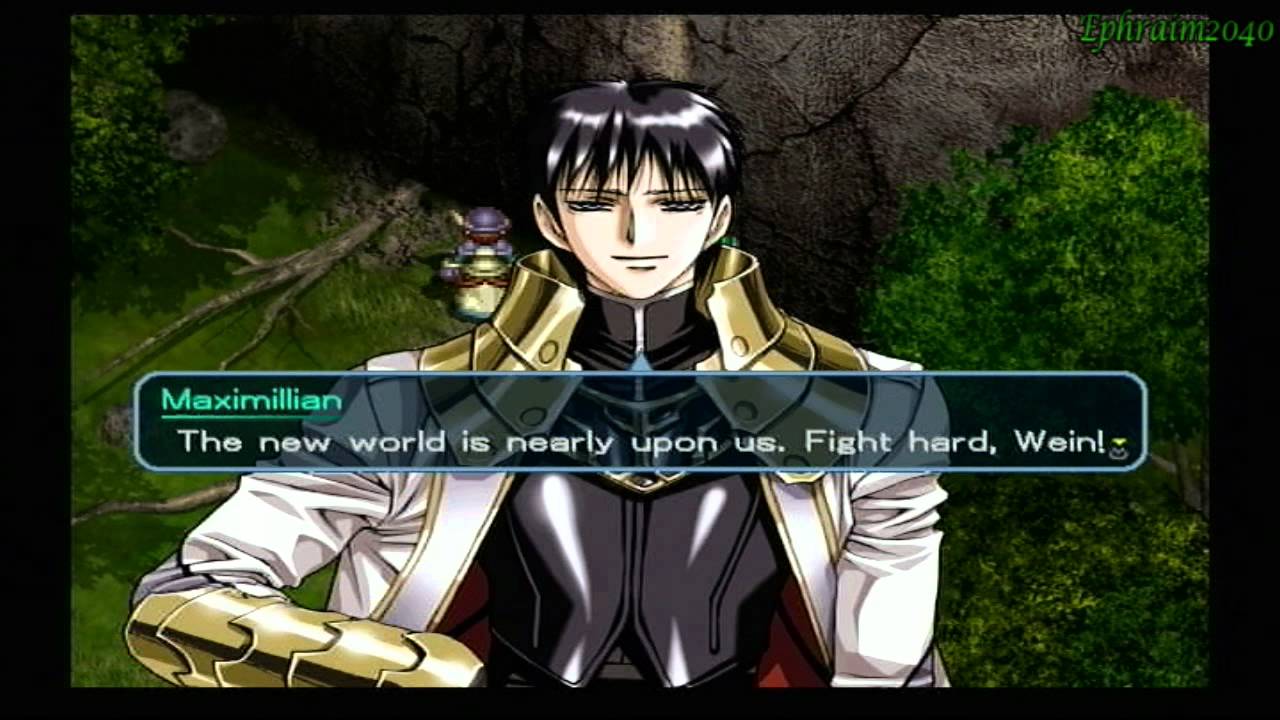
Judgement holds his answer as the truth above all others and will bring an end to the cycle of death and rebirth.  He seeks to end war, strife, and power, though his means be unjust.  The sad truth is that while he may judge, he holds no power compared to the vast will of the world.
Wilhelm (Xenosaga 3: Also Sprach Zarathustra)
Wilhelm is more baffling to me than hateful.  But, in a series with a ton of great villains, including the space pope, a man who blows his own head off, steps on it, then regenerates it, a body snatcher, and a space samurai, we have Wilhelm as the grand mastermind of some vaguely evil scheme.  Wilhelm is a CEO of a technology corporation in the far future, who looks to be about...age fifteen, tops, and has no emotions.  Or if he has them, he doesn't use them.  Wilhelm is boring.  And I have no idea why I'm fighting him, save that he's trying to...destroy the universe?  I guess?  And Wilhelm is the main villain.  He has private shock corps made up of better fallen villains.  He pisses me off because I have no reason to fight him, no reason to be invested, no reason to even care.  He's not even in the final battle.  He uses "The circle of Zarathustra" which I have no idea what its supposed to do, with a kid named Abel in the center, to try and kill the party.  Wilhelm seems about as bored as I am.  That's why I hate him.  The best thing a villain can be is memorable.  Some are memorable for good reasons, some for how lame or annoying they were, but they are still remembered.  The worst thing a villain can be is boring because no one will remember them.

The hermit does not indulge to enter the world.  He is content to stay back, emotionless, uninterested, holding his philosophy above all others.  There is nothing he has to say.  There is nothing he has to teach.  He may as well return to solitude.
Yu Yevon (Final Fantasy 10)
This villain is a thief.  As annoying and poncy as Seymour Guado was, he was still a pretty cruel, sadistic, nihilistic, evil villain, and fitting for the final boss role.  But no.  Instead, after fighting our way inside the colossal monster, SIN, which has rained untold destruction on the world, after putting Jecht to rest and outwitting the REAL villain, Seymour, we fight...a giant tick.  Yu Yevon was a summoner who formed the core of SIN by corrupting the summoned beasts, Aeons, and using them as an armor for its soul.  But Yu Yevon itself is nothing without the Aeons.  I doubt very much that its even capable of thought, much less malice.  It's a villain that was thrown into the final enemy slot because...I don't even know.  Players cannot lose the battles with Yu Yevon, no matter how weak they are.  What makes me so angry at this boss is that, despite how stupid he looked, Seymour was clearly the main villain.  And Square could have made him the final boss.  SIN was always a threat, yeah, but Yu Yevon wasn't really controlling it, just hiding inside it.  Yu Yevon is a pathetic waste of a boss, because he barely even exists and doesn't affect the story at all, save for stealing the final boss status from Seymour, who rightfully deserves it for all his dickish behavior.  Yu Yevon as a boss is a nonentity.  It's something that exists without reason.  That's even worse than being boring. 

The fool is a blind, deaf, idiot, dancing to his own tune, oblivious to the whims of others.  He may infuriate or annoy, but it matters not.  He is all sound and fury, ultimately accomplishing nothing, save for being a nuisance.
Xemnas (Kingdom Hearts 2)
Ultimately, I feel like miscasting was the downfall of Xemnas.  He's not really a bad villain, but he's so bland, generic, and boring that I can't help but yawn.  He uses his light saber swords, fights Sora and Riku, then disappears into nothingness, blah blah...we had so many other more interesting members of Organization 13 who could've taken the number 1 spot.  Saix was interesting and his relationship to Axel would've made him a moving final antagonist.  And his death, where he laments his lost heart and asks where it has gone is pretty heavy, for a villain dying.  If not him, why not Xigbar, who actually fought the original Keyblade masters in Birth by Sleep?  He seems more capable than Xemnas.  But no, Ansem's nobody had to be the final battle.  It depresses me because you do so many cool things in the battle, but Xemnas as a villain is so blah.  He's just there.  He doesn't make an impression like Xehanort did, doesn't have any really good lines and is constantly being one upped by his subordinates.  Xemnas.  So boring his battle almost killed me by putting me to sleep.

The nothingness holds no substance or value.  Merely a cheap copy of the truth, it has no reason to be here, save that it was recognized.  Though the idea of nothingness may intrigue others, it is without any lasting power.
Zachariah Comstock (Bioshock Infinite)
Originally, I had intended to include Demon King Malladus from Legend of Zelda: Spirit tracks...however, then I played Bioshock Infinite.  Literally the week before this post was to go up, I discovered one of the most frustrating and annoying villains I've ever seen in a video game.  Zachariah Comstock, the "prophet" of Columbia, a floating city in the sky.  I hate Comstock because, as a villain, I just want him to go away.  Not kill him, mind, I just want him to leave the story.  He is a loud, annoying, narcissistic, psychotically religious hypocrite with none of the charm and intellect of Andrew Ryan or the warped ideals of Sofia Lamb.  Comstock has NOTHING of value to say, but keeps going on and on about how he is the chosen one, how he will cleanse the sodom below, how everyone who is against him is against god, stock religious super villain nonsense.  And he seems so insecure, frequently building monuments the size of islands to his greatness when he cannot fight himself.  He's a frail old man who uses machines and his zealots, who are idiots for following him by the way, to do his dirty work for him.  At the best of times, he seems like he's using religion to his benefit, like any number of scam priests in stories.  At the worst of times, he seems pants on head insane, believing whole heartedly that stealing a baby from an alternate dimension, raising her in isolation, and frequently beating, torturing, maiming, and brainwashing her as an adult is somehow god's will and will save the world.  Comstock isn't compelling, intelligent, or even very well spoken.  He's an insane religious zealot with an inferiority complex.  Worse yet is that his character, when we learn the truth, makes absolutely no sense, as he actually didn't used to be Zachariah Comstock, but was another person.  A smart person.  A capable person.  A person who WASN'T pants on head insane.  Comstock ruined Bioshock Infinite for me.

The heirophant's arrogance knows no bounds.  He believes himself divinely blessed by god and will justify any atrocities in that name.  He says nothing of merit and is insecure in his own power.  Only a fool devoid of thought would follow his words.
            And there you have it.  These characters fail for a number of reasons, most relating to story and writing, sadly.  Any number of them could have been unforgettable main villains who embedded themselves in people's minds as amazing, well spoken, scary even, if they had a better script to work with or if the story was more refined.  Place Maximillion before the huge final boss battle...have Seymour Guado kill Yu Yevon and take his place inside SIN.  Have Satan at least HINTED at to some extent in the game.  Give Comstock ANYTHING interesting to discuss beyond how awesome it is to be a racist Catholic white man with a god complex.  These villains weren't brought low by our heroes.  They were brought low by the scriptwriters, the translators, and the story boarders who failed them.  Failed to make them compelling and instead opted for shock value or to cop out near the end of the game.

            There you have my month of characters.  Each of the character lists show an important aspect of the games industry, some that need to be focused on, like making compelling villains, admirable heroes, or great worlds to explore, and some that need to be stopped, such as making the villains so depressingly generic or unsatisfying.  Bear in mind, these characters are all just from my experience.  If you want, share in the comments some of your favorite heroes, villains, power fantasies, or characters you just can't stand and why.

Friday, November 23, 2012

Ignorance is Idiocy. AKA, Use it or Lose it

Well, crap, it's been over a month since my last post.  Life has basically given me a swift kick to the nether regions in this absence, but, hey, I'm back with more insight into the wonderful world of video gaming.  Enjoy.


Ignorance is Idiocy.  AKA, Use it or Lose it

            In the current era of console and even PC gaming, there is little that holds more power than a sequel.  Sequels are signs of success and comfort for many gamers, as they bring back stories and game concepts that enraptured players from the start.  Sequels are not free money...however, they almost always have an audience, no matter how small.  They do not need to prove themselves in the same way that original property does.  A Bioshock sequel, no matter how poor, has a greater audience by far than an original property which uses the same concepts, even if it is superior.  However, in this era of sequels, there is a disturbing trend.
My thoughts exactly.
            Halo.  Call of Duty.  Far Cry.  All of these games are, in their own right, very well made and with a specific audience in mind.  They cater to gamers who enjoy war games and in sequels offer them more of the same.  They have proven themselves.  However, countless other games mimic and copy the successes of these titles, but without even a modicum of the same originality, polish, or passion.  In fact, as sequels keep going into larger and larger numbers, many gamers collectively grown because there is stagnation.  They do not bring back great gameplay or tell epic stories, it is merely more of the same.  A game such as Fracture or Turok copy from the Halo formula in hopes of cashing in on its success, but ultimately glut the market.  Ironically, however, this glut is not, in and of itself, the trend I was speaking of.  What I refer to is the tendency to ignore one's own property in favor of chasing after someone else's.
Damn right
            Let us return to my previous example.  The original Turok: Dinosaur Hunter was a Nintendo 64 game about a time traveling and dimension hopping Native American warrior, equipped with outlandish weaponry fighting aliens and dinosaurs with everything from probes that bored into enemy skulls to magic tribal arrows fired from a regular bow.  The newer version of Turok rips off countless things from Halo, such as regenerating health, guidance markers, character archetypes, etc. It makes Turok a space marine, removes his interesting character traits, and gives him samey, boring weapons.  It is essentially, a clone trying to cash in on a previous game's fans.  No different from the atrocious Golden Axe: Beast Rider game for the Playstation 3 and Xbox 360 or the mediocre Altered Beast game for the PS2.  They take the original game's concept and completely alter it to fall more in line with modern trends, hoping that name value alone will sell titles, ultimately creating a generic experience with a thin veneer of the original coating the property.
Believe it or not, this is the good one.  This is the FUN one.
            And that is really the biggest shame of all.  Turok: Dinosaur Hunter was not a smash hit, however it garnered a cult following and earned a sequel on the Nintendo 64.  However, many of the fans probably felt betrayed by this new game, which used name value only to try and sell its property.  This is one of the bigger problems in the game industry.  Ignorance.  Many companies either forget what made their titles superb and beloved in the first place in favor of following modern trends.  Or worse, game companies forget that they even own said properties and leave loyal fans who are willing to pay money out in the cold.
Say it ain't so!
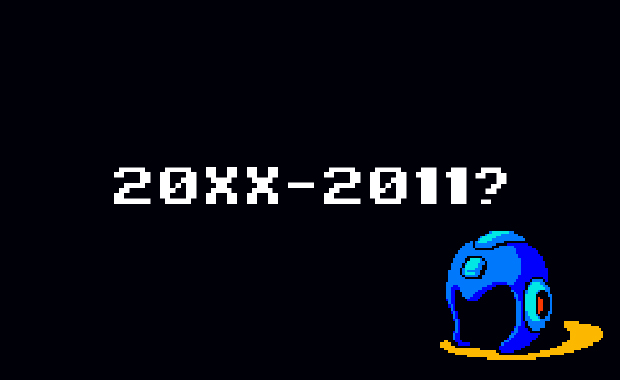
            There are a number of examples for this.  So many it is actually quite depressing.  Capcom is perhaps the most egregious offender.  Capcom is often known as the house that Megaman built.  However, when Keiji Inafune left the company, so to did much of its love for the blue bomber.  Megaman has been around for over two decades, yet lies almost completely forgotten of late.  The main series, Megaman X, Megaman Zero, and the countless spin offs are things of the past.  New Megaman games are practically nonexistent past 2010.  There was talk of Megaman Legends receiving the third game which fans had craved for almost a decade, however it was canceled at the last moment.  Capcom is letting the franchise that built them die.
Capcom...with all due respect...are you out of your damn mind?!
            To be fair, if a franchise has outlived itself or grown stagnant or had a satisfactory conclusion, it may be fair to allow it to rest.  The Shadow Hearts series created a nice little timeline for itself and ended with a satisfying conclusion, having only  one spin off that was mostly inoffensive tacked on at the end.  However, Megaman fans still cry out for sequels.  And Capcom ignores them.  It is not only Megaman, however.  Breath of Fire, a staple RPG series from the SNES era into the Playstation 2 era has withered and disappeared, last seen as a poor PSP port of the third game in a series of five.  Other series get drowned before they have a chance to flourish.  The Okami series had room for sequels, but after just one it seems a lost cause to hope for more.  The same can be said of Viewtiful Joe.  This habit of abandoning the properties that make game companies money is baffling to me.  There are fans.  Megaman has fans.  Breath of Fire has fans.  Viewtiful Joe has fans.  Yet save for cameos, these series remain dormant.  To release a game with one of these names would guarantee at least a few thousand sales, if not tens or hundreds of thousands, which is more than many original properties can guarantee.  So, why not revive them?  Gargoyle's Quest was a series which only lasted for three games, but which disappeared after the SNES era.  Why not bring it back?  Fans remember.  And fans are loyal.  Not to companies, often enough.  Capcom has proven to be quite ruthless with on disc and frivolous DLC releases, lock out procedures, and policies meant to enrage their own customers, but fans are loyal to games.  If you make them, they will come.
It's been almost 18 years since Firebrand's last solo game.  Isn't it time for a comeback?
            However, like developers following modern trends, game companies seem bound and determined lately to forget what made them so successful to begin with.  While not as apparently blind as Capcom, Konami has let Castlevania rot, of late.  Castlevania has always been popular in its 2-d iterations, yet there has not been a 2-d release for years, unless you count the storyless, rehashed multiplayer fair that is Harmony of Despair.  Instead, the closest thing we get is a "reboot" called Castlevania: Lords of Shadows, which is more interested in stealing ideas from God of War and Shadow of the Colossus than rewarding the loyalty of fans.  True, it had unique ideas and was a fine game in its own right, but it is following the trend of cramming what sells into any game with fan recognition.  And this is a terrible idea.  Betraying fans means losing potential sales in the long run.  Sales in the long run are everything for game companies.  Short term sales are needed to keep it afloat at the moment, but to have any longevity, game companies need to think in the long term.
Remember when you made games like this, Konami?  Fun, colorful, insane games?
            Perhaps worse than sequels which betray the concept of the original, however, are sequels that only aim to tease the fans, rather than placate them.  Franchises often build up a large shared universe, with rules that must be followed.  Even the disconnected Final Fantasy series has many elements in common, such as the character Cid, summoned beasts like Bahamut, and monsters such as Tonberries, Behemoths, and Ahrimans.  However, trying to copy these elements into a bastardized version of a game may only enrage fans rather than placate them.  They ask the question "Why isn't this in the world or in the style that I know and love?"  And when that question is asked, the game is already lost, no matter how fine a product.  Suikoden Tierkreis is a fine example of this.  It is not a bad game on its own merits and stays true to some of the styles of the Suikoden series, however it is set in an alternate universe.  There are none of the alliances or relationships, none of the recurring characters or elements, and no continuing story from previous games.  This is almost like a slap in the face to fans of the series, who wait patiently for a new iteration to a favorite series of theirs only to be rewarded with something that looks similar, plays similar, but isn't what they want.  It is akin to trying to buy a Halo game but coming out with Turok.  All the elements are there, but it is still lacking.  This plays into ignorance of what made the game in the series enjoyable to begin with.
What don't I see here...ah, right, Tierkreis.  Take the hint, Konami.
            In that same vein, I must reluctantly point out that Square Enix has followed a similar pathway.  Final Fantasy has seldom been a sequelized property.  Each new game has additional numbers beside it, but each is its own story.  The games have evolved with the times, keeping a strong story, music, and gameplay that the fans have recognized.  However, Square, after its merger with Enix, ignored all that and started fresh.  Final Fantasy 11 and onwards have followed the gameplay of MMORPGs and while financial success has followed, it has been with even more bloated development costs, critical pandering, and the scorn of long time fans.  If you wanted to make a new game series, why not make a new game series, rather than enrage fans?  The point I wish to make to all game companies is to ignore your properties, either what made them good to begin with or to ignore them entirely, is rank stupidity. 
Go back in time ten years.  Would ANYONE have thought this was a Final Fantasy game back then?
            Many games have fans slavering for a sequel.  The Legacy of Kain series, which Square now owns, ended after five games with several plot lines unresolved and a canceled game to follow.  If fans were shown that they still matter with a collection or a finale, then it would doubtless be at the very least a modest success.  However, the time for sequels and franchises passes quickly.  Legacy of Kain as a series was released in the 1990s and held power into the early 2000s, but has been dormant a long time.  Many of the voice actors who provided the performances that made it so memorable are either dead or growing too old to wait for a sequel.  The same is true of any franchise.  There are still many who yearn for Megaman, for the old Final Fantasy games, for Gargoyle's Quest, Breath of Fire, and Suikoden.  However, these gamers are getting older.  They are doggedly staying loyal to old favorites or they are moving on with their lives.  If Capcom, Konami, and many others do not move soon, they risk losing the power their franchises once had.  In twenty years time, the name Megaman may be worth less than nothing, when in the 1980s, it sold games without a second thought.
Time is running out for this Legacy, sadly.
            Many game companies have horded rights to franchises or sequels through acquisitions.  Through mergers, seizures, and purchases, many of these companies have a large library of names that they simply ignore.  And some defunct companies, like Quintet, have great titles that are fondly remembered whose rights could be bought for a pittance.  However, if these rights are shelved and sat upon, waiting for their value to appreciate, then eventually...they will stop being worth anything at all.  An Action Comics #1 is worth a great deal these days...but only to those who are willing to pay for it.  If the companies wait too long, people will give up hope on a Megaman 3...or build one themselves.  And then where will Capcom be?  They will have lost fans and by extension, lost sales.  Worse, they will be hated by their fans for not being more faithful to them, the people who pay their bills.
Hording rights is like hording comics.  They're only worth a crap if someone actually wants to pay for them.  Wait too long and eventually...no one will care.
           In the world of game development, modern trends can be useful.  Showing what is possible and what is profitable, they can be a great way for smaller companies to follow the big boys while still making something that is theirs, something special and enjoyable.  However, ignoring past successes just to chase modern trends is utter folly.  When it comes to game franchises, names, and sequels, you need to either use it...or lose it.

Thursday, June 7, 2012

Replacing the Villain: Pratfalls of Making Twist Final Bosses


Greetings!  This is going to be a blog dedicated to examining issues in the video game industry, from pitfalls people fall into to how companies which are failing can be improved.  I know blogs like these are a dime a dozen on the internet, but I feel that I have a few things to say that others haven’t.  I’ll try to be mature about this though, so this doesn’t degenerate into nonsensical ranting.  That said, these posts will often include spoilers, so fair warning.

Replacing the Villain: Pratfalls of Making Twist Final Bosses

(SPOILER WARNING for Final Fantasy 4 and The After Years, Ninja Gaiden, and Castlevania: Lords of Shadow)
            A common trope of the video gaming world is replacing the final villain of a game with a “hidden” enemy that no one saw coming.  These types of bosses are meant to shock and screw with a player’s expectations.  While this kind of trope can be used to great effect, one must be incredibly careful when replacing the established villain.  The main bad guy in most video games is the cause of a hero being called to action.  The player can be a hero of prophecy who must save the world, a youth in search of revenge, an honor bound soldier, or just someone who’s being obstructed by the final villain.
For all heroes there must be obstacles to growth.  In video games, these usually take the form of villains
This creates a personal link between both the character and the player with the final boss.  The whole goal of the game from start to finish, once a final boss is known, is to become strong enough to take this ultimate foe down, as he is usually immensely powerful and could wipe out the characters if not for a few contrived events.  The players grow with the villain, learning about him and their own characters, coming to either sympathize to a degree with the villain or hate him for his barbarity.  However, all this growth, all this characterization, and the ultimate goal is rendered ultimately meaningless when this boss, that we have expected from the start, is replaced out of nowhere.
Heroes and villains grow together.  It hurts the story for this relationship to be disrupted
This kind of twist CAN be used to great effect if properly planned out.  It can create a sympathetic supporting character out of villains or at least add something to the story.  However, when poorly implemented, it leaves the player scratching their heads at just what in the hell the developers were thinking, at best.  At worst, it will leave the players angry and pissed off that some no name idiot came and replaced the person they were expecting to be the boss.
Wait, you're the final boss?!  Who or what are you?!  And why should we care?!
Over the past two decades, this idea has been used in video games a bit more than necessary and each time it is used it becomes more and more clumsy.  This kind of storytelling is easy enough to plan out before the actual work on the game starts, so it is baffling as to why people continue to make these same mistakes.  Let me show you three examples of this trope.  How it can be done effectively, how it can at least be used to help characterize someone or resolve their growth, and how it can be used to disastrous effect.
Final Fantasy 2/4 does an excellent bait and switch for the final boss
The first game we will be examining is Final Fantasy 4.  Final Fantasy 4, released to the U.S. as Final Fantasy 2 in 1991 for the Super Nintendo, is an excellent example of the villain being replaced at the last minute done effectively.  The main character, Cecil, learns a few hours into the game that his home, the country of Baron is being manipulated by the wicked sorcerer Golbez.  Worse yet, Cecil’s best friend, Kain is under the sorcerer’s mind control.  Golbez’s goal is to gather crystals from around the world, which he ultimately does.  However, just as he initiates his plan to use the crystals to power a doomsday weapon, a new character that Cecil discovered after finding his way onto the moon reveals that Golbez was, himself, under mind control.  And that he is Cecil’s brother.
You really can't choose your family, can you?
This offers several new dimensions to the story.  Suddenly, the main villain is seen as a victim and he ultimately aids the heroes in trying to stop the NEW main villain, Zemus.  He is not forgiven for his cruel actions and willingly exiles himself onto the moon to pay for his crimes.  He acts in a very human manner.  More than adding new dimensions to the plot, however, the transition to a new villain is handled excellently.  The introduction of mind control with Kain is subtle and it is hinted at that his own jealousy and dark impulses are the reason why he was able to be swayed.  In subsequent remakes of Final Fantasy 4, scenes are added showing that Golbez also suffered from jealousy of his younger brother, making him a prime candidate for manipulation.  Golbez is also shown to not be all powerful.  He is defeated several times before the reveal about Zemus is made.  He is defeated in a cutscene at first by the sage Tellah, then in battle by Cecil and his friends, severely undermining his threat.  If he isn’t strong enough to beat the main characters, then it can be assumed there might be someone stronger.  The bread crumbs are laid and when the reveal is made it is believable.  What’s more, in the sequel, the After Years, Golbez’s former henchman comment on how, even though the players saw him as evil, the only one who cared about them was Golbez.  The four fiends of the elements are shown to be sorrowful at being made to fight their former master.
            This is the best way to handle replacing the main villain near the end of the game.  It helps to characterize both the heroes and the villains while giving new directions for the story to progress.  It is not entirely surprising, as the clues are left behind and finally make sense once the reveal is made, but it is hidden well enough that no one expected this.

One of last generation's hardest games has a deep, dark, secret
             Moving on, the next example is Ninja Gaiden, released in 2004 for the Xbox.  Ninja Gaiden handles switching villains with less finesse, but it at least adds some characterization to the story and explains the hero’s actions at the end.  The game focuses on Ryu Hayabusa, a ninja whose clan is charged with guarding the Dark Dragon Blade, a weapon of supreme power that is cursed and very dangerous.  Suddenly, Ryu's village is attacked and the blade is stolen by a fiend working for the Vigoor Empire.  Ryu fights his way through the Vigoor Empire, becoming cursed along the way, before coming face to face with the Vigoor Emperor, a demonic being who now holds the blade.  The Emperor’s death is the only thing that can cure Ryu of his curse and the only way he can secure the blade.  However, once Ryu finishes off the emperor a masked man steps out of the shadows and takes the Dark Dragon Blade.  This is the final boss.  A person Ryu has had almost no encounters with for the whole game.
The true villain!  Whom Ryu has...never even met...
            This is frustrating, however it does serve a purpose and it doesn’t come completely out of nowhere.  The start of the game features a character training Ryu who laments that the Dark Dragon Blade cannot be used, as it is incredibly powerful and elegant.  Then, throughout the game, the masked man and his assistant are occasionally cut to during cinematics where they are watching Ryu and monitoring his progress.  The masked man’s assistant even contacts Ryu to help him.  After Ryu destroys the Vigoor Emperor, they step out of the shadows to take hold of the Dark Dragon Blade, revealing that the masked man was Ryu’s mentor.  He kills his assistant, becomes possessed by the blade, then charges at Ryu.  This replacing of the main villains is annoying, but it does show how dangerous the Dark Dragon Blade can be and justifies Ryu’s decision to destroy it at the end of the game.  It is hinted at that there is someone in the shadows, however they have no real emotional attachment to the characters or players throughout the majority of the plot.  However, the final boss does at least justify Ryu’s actions.  There is a purpose to this switch up and it does not ruin the experience, especially since the difficulty of facing Ryu’s mentor in the first stage is redoubled for the final battle with his demonic form.
While superfluous on the surface, Murai's transformation into a demon shows just how dangerous the Dark Dragon Blade is
            While this method of switching villains is not ideal, it serves a purpose and even though it may annoy players, it will not alienate them from the plot.  It does not feel entirely like a cop out just to make the game harder or to throw in a new boss for no good reason.
Disappointment, they name is Lords of Shadow
            The final example in this little study is Castlevania: Lords of Shadow, released in 2010 for the Playstation 3 and the Xbox 360.  This game features what is easily the most pathetic and contrived attempt at replacing the main villain in recent memory and shows an incredibly flawed effort at shocking players to set up a sequel…and the most disappointing part of this is that the shock ending wasn’t even necessary for a sequel.  In fact, it is head scratching that the developers chose to do this.  All right, before I get ahead of myself, let’s start at the beginning.
            Gabriel Belmont has lost the love of his life and fights against evil in an attempt to find a way to revive her.  He finds that, through a powerful mask which has been split into three pieces and held by the most evil creatures in the world, the Lords of Shadow, he may revive his beloved.  To retrieve these mask pieces he must fight the lord of werewolves, the lord of vampires, and the lord of necromancers.  Throughout the journey, we find mysterious deaths and strange visions plague Gabriel and all the while he is guided towards his ultimate goal by Zobek, a warrior who works for the same order as Gabriel.  Zobek narrates the story and guides Gabriel to kill the lord of werewolves and the lord of vampires, gaining two pieces of the mask.  Then, foreshadowing begins.  We see more visions of Gabriel wearing an odd and demonic mask, while Zobek’s dialogue starts to hint at a hidden agenda and he appears to kill some of the people Gabriel encounters after he leaves them.  Finally, when Gabriel reaches the lord of necromancers it is revealed to be…Zobek!  Zobek manipulated Gabriel into killing his beloved through a demonic mask and has given him a dark artifact early on which Zobek can control, forcing Gabriel to wound himself while Zobek takes the mask.  Zobek has planned all this to gain the power of the divine mask and now, as the final boss, he is ready to take over the world.  Until Satan pops out of the ground and kills him.  No.  You did not misread that.  SATAN comes out of the ground and kills the final lord of shadow.  You, the player, DO NOT FIGHT ZOBEK.  No.  Your final boss is Satan.
The final boss is...the Devil.  This is never hinted at, never mentioned before or after, and is ultimately a waste of what was a brilliant setup
            This reveal comes out of nowhere, is never hinted at, and, worse, destroys all the foreshadowing done earlier in the game.  Zobek’s cryptic dialogue, his dark word choices, his mysterious appearances alongside Gabriel’s strange visions all make perfect sense…and yet, he is killed by Satan in the last five minutes of the game.  This makes absolutely no sense.  The setup was brilliant, with an ally turning into an enemy, giving the final battle a personal touch, and putting Gabriel at a disadvantage, as he knew and trusted Zobek, only to be betrayed and revealed to be a murderer, not just of his wife, but of others, through Zobek’s manipulation.  However, Satan appears and destroys this setup.  There is absolutely no reason for this switch up and it cheats the players out of their revenge.  Worse yet, the supposed “reason” for the change was that Satan granted Zobek his power…which actually runs counter to the idea that Zobek is a darker version of a holy warrior in heaven, which the game goes out of its way to establish.  And the purpose of this switch up, to hint that the army of Satan is moving against Gabriel, who has somehow become a vampire and immortal in the epilogue, could easily be avoided, as Zobek is revealed to be alive.  He could have come to challenge Gabriel or any other enemy could have done things to the same effect.
            This is the most head scratching uses of swapping the main villain.  It adds nothing to the story and in fact cheats the players of their vengeance.  It contradicts the in game logic and really has no purpose in the game.  It is completely pointless.  There was no build up, no hinting that Satan was the mastermind, nothing…it was something that was pulled straight from the scriptwriter’s ass for no good reason other than “Satan is cool, people will love to fight the devil.”
            This is a problem with writing in video games in the modern age.  They constantly feel the need to shock or surprise the player, so they will often create twist ending villains who the players have no real attachment to.  It shows a type of laziness to plot out an adequate twist that would be laughed out of even the most rudimentary creative writing class.  When a major villain will be replaced, it needs to be hinted at, serve a purpose, and it needs to make sense within the context of the world which the game has created.  To simply shove a villain onto the stage for the “Coolness” factor or to make the player do a head turn is lazy and will ultimately alienate players from the story of the game and possibly the franchise as a whole.  While Final Fantasy 4’s twist actually makes for an interesting bit of characterization that is elaborated upon in the sequel and which actually makes a sequel possible, Lords of Shadow is a twist that is lazy, comes out of nowhere, and may actually alienate people from returning to the game out of pure frustration.  Ninja Gaiden’s twist is at least self contained and justified, so that it does not offend and ultimately adds to the experience even if it was unnecessary to the plot.
            It’s been suggested that ultimately, game developers and movie writers aren’t reading books when trying to write scripts.  They are watching movies and trying to emulate them.  I can understand this and it frustrates me to no end.  For a piece of fiction to be taken seriously, it must be properly laid out and make sense in context, which is a cornerstone of even the most basic writing courses.  People who keep writing these contrived and annoying shock villains and endings need to take a refresher course in basic plotting.  The games industry does not need shock endings that come out of nowhere.  People may not expect it, but nor do they want it.  Just tell a good story.  If a twist happens that makes sense, run with it.  But don’t shove in a character, villain or no, for the coolness factor or to appease the corporate side.  It will only hurt your final product.

All images used were appropriated for use under the Fair Use Act and is not meant to infringe on any copyrights.  If there are any complaints from the owners in regards to the use of pictures in this post, please contact me and I will remove them immediately.