Showing posts with label SNES. Show all posts

Sunday, April 13, 2014

Diminutive Diatribes: Hardware Laments and The Future of Old Games...


Guys, gonna be honest, I am just dead this weekend.  I've worked myself too hard, taken a huge exam on Saturday, and been going through a lot of stress and emotional whosits and whatsits.  So...sadly, no creator spotlight this week.  I did write up a little something for you all though, so enjoy.  Fingers crossed we get back to our regularly scheduled program next week.


Diminutive Diatribes: Hardware Laments and The Future of Old Games...

            It's fair to say that nostalgia is a big thing in video gaming.  The resurgence of the 16-bit and 8-bit pixel art style in video games, chiptunes, emulation, virtual console, everything points to the fact that we have an infatuation with games from our past.  And this can be for various reasons.  Sometimes it's purely rose tinted glasses, where a bad game felt good because we played it when we were younger and needed it as an outlet.  Sometimes it really was very polished, because with the limited memory of the 8 and 16-bit eras, you had to have a focused, polished game, because there were no patches and you wanted to build brand loyalty.  However, I've often asked the question, what happens to our old games as time goes on?

What happens to our old games when there is no one to play or love them?
            Now, since nostalgia is popular, software itself is not necessarily something to be afraid of losing.  Clone consoles of the NES or SNES are available, right now, to play original or reproduction copies of old games.  Software that was originally only built to run on DOS is being retooled by GOG so that even a Windows 7 machine can run Math Blaster or King's Quest.  We have an almost infinite number of roms for emulation software available, ostensibly, for free on the internet.  So, that part of old gaming will actually never die.  It will be around in some form or another for as long as our digital age lasts.  However, there are some things that...concern me.

They save as many games as they can, but even GOG can't do everything.
            Has anyone ever watched the Angry Video Game Nerd and seen him have to fiddle with the Atari 2600 or the Magnavox Odyssey or the Action Max?  Those games have hardware components that make them nearly impossible to play on a traditional LCD flat screen television.  The display is off and the games with them seldom work properly...you need an old CRT television, which is what the machines were originally designed to work on.  These games are, for all intents and purposes, doomed to fall prey to the march of progress, where sooner or later the components that are necessary for them to work will simply no longer exist.  CRTs will be phased out or replacement parts, like the cable box for the Odyssey, will no longer be made.  For me...that's kind of scary.  And not just because of old gaming either.

When the Angry Video Game Nerd reviewed Pong Consoles, the game was the machine...so if the machine was broken, you were flat out of luck.  That's what scares me about our modern games...
            In the modern era, hardware has become a big seller of games, not just on graphical prowess, but on the promise of a new experience.  The Wii, Playstation Move, and Microsoft's Kinect all act upon the idea of motion controls.  While we're in the present era, few people have given any thought to whether or not these games, good or bad, will ever be unplayable because we will be unable to find the component parts needed to make them work or properly emulate said component parts on another platform, like a PC.  However, this is a very real concern that people need to be aware of.

A huge misstep, in my opinion.
            With the axing of backwards compatibility in the Playstation 4 and Xbox One era of gaming, this leaves a number of games in limbo.  For example, many early games on the PS3 used the sixaxis motion controls of the proprietary Playstation controllers to create key features in their games, such as Ratchet and Clank Future's tornado weapon, which was controlled by tilting the controller, Lair's dragon flying which functioned in the same way, or a personal favorite of mine, Folklore, which used the tilting of the controller to rip souls out of enemies.  Tell me, what happens when the PS3 becomes an antique in say, 20 years, and all the sixaxis controllers are broken?  Folklore would be left in the dust bin, unplayable because we lack the proprietary software.

To pull out the soul, you must tilt it into the proper alignment with the sixaxis controller in Folklore.  What happens when there are no more sixaxis controllers?
            So, I want people to take a minute and think about all the hardware gimmicks being pushed down our throats.  We bemoan many of them but at the same time, if we have any games amongst those that we like, we could be out of luck when the hardware stops working.  Think about how difficult it is for an emulation program to run a rom.  It basically copies the hardware settings on a PC that existed for the said console and maps the controls to the keyboard or a USB controller.  Relatively simple.  However, how can you tell a PC to handle gyroscopic motion controls?  How can you tell a PC to recognize a slash or a swipe with the controller for Dragon Quest Swords?  How do you tell a PC to tilt this way or that in a game?  This is harder, because the only real way to simulate it, at present, is with hardware, either the proprietary hardware or a similar cloned version.  Even if we don't like some of the hardware tricks, like the 3DS's 3d...this may be the only generation which gets to experience them.  I'd say treasure the unique experiences and try to preserve them, because for lots of gaming, the future is hardware failure and abandonment, avoiding complete oblivion only through the graces of youtube and wikipedia.

Don't take it for granted.  When it's gone, it might never come back.
            I don't have an answer for this problem other than be aware and try to preserve so that if we ever need to make a clone console or whatever, we can, but I also don't want to end this on such a downer.  The idea that swathes of games could be lost to the future because they are tied to a special piece of hardware that no one makes anymore is terribly sad...however, some savy gamers are trying to find ways around it.

            Software is a versatile thing and many hackers and programmers try to work around issues that the hardware had.  This can be shown through the creation of clone consoles and the like, but also with certain special projects online.  The BS Legend of Zelda project is an excellent example of this.  The BS Legend of Zelda games were three titles, technically four but let's not get into that, released only in Japan for the Satellaview, an add-on to the Super Famicom.  The Satellaview was a great example of a hardware system that we couldn't carry into the future, because it relied on satellite broadcasts for the games to work.  Orchestral music, game data, and live voices would be transmitted via the satellites and arrive at your console.  However, when service for the Satellaview cancelled and the satellites stopped transmitting, many games on it were thought either lost to time or to the few savy collectors who made back ups on blank cartridges.  Some savy hackers, however, managed to find the code for the Legend of Zelda games on Satellaview and repair the missing code, putting in a soundtrack for the music and adding cues to make up for the voices.  It's now available, online, right here.  And BS Zelda wasn't the only one.  Other games, like the fantastic Radical Dreamers were also saved through the use of the internet.

On the left, we have the NES Zelda, on the right the BS Legend of Zelda from Satellaview.  So glad this was saved ^_^
            Hope isn't dead yet for old games that rely on hardware.  As we advance into the future, some hackers or programmers realize the value of certain control schemes and can create mods or whole programs to simulate them.  The Logitech USB controller, for example, has a special program which not only lets you customize controls for PC games, even ones without controllers support, but can also simulate mouse movement with the analogue sticks.  If that is possible, perhaps even motion control could one day be simulated in our USB controllers.  Perhaps...
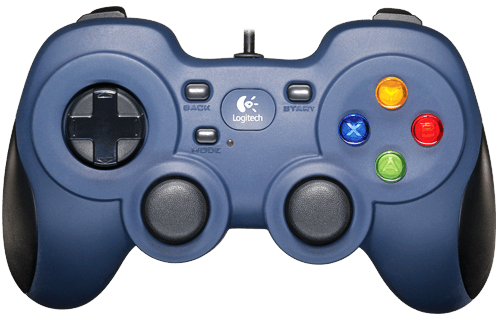
A miracle worker.  I've even played point and click games on this...
            While the thought of Folklore vanishing forever makes me sad, hope isn't lost.  If enough people remember and like a game and there are those who like it enough to try and fix it for the future, like the BS Zelda crew, then even hardware failures might not be the death of certain games.  We can keep them alive.

            However, the future isn't written.  We don't know if any of these hypothetical hackers will make it so we can emulate motion controls or make clone consoles of the Wii or 360 years and years down the line...and even if they could, will they?  Will they care?  So, I say take pleasure in the new experiences offered by new hardware...cause they won't be here forever.  Remember them.  Treasure them.  And try to keep their legacy alive, because I don't want us, as gamers, to lose any part of our history.  It's all valuable, even the bad parts.

What he said.
            The future isn't hopeless.  It's waiting for us to create...so we should try and create one worth living in.  A future where hardware laments don't exist, and old games are just as new as the day they were released, 30-50 years previously.

Wednesday, August 8, 2012

Limitations: Why the 16-bit Generation has the Best Games Ever


            First, let me apologize for being away so long.  Work is stealing my soul as well as my time.  Anyway, somehow, I managed to get this piece composed this piece, so let’s talk video games!

            Okay, the title of this article may set off a few people’s alarm bells.  First, let me tell everyone to relax.  This isn’t going to be a rant about why the SNES or Sega Genesis is the best system ever and the game industry was better when during the 16-bit generation.  Some of my favorite games are from later generations, especially the PS2.  However, I think that in the rush to improve and make graphics more photo-realistic, music more symphonic, and gameplay more complex, that something important has been lost.  I think that many games have lost their way because there is just so much that can be done with modern technology.  Some people may argue against that.  That having a huge sandbox to explore is amazing for game development, offering near limitless possibilities.  However, in my mind, knowing ones limitations is just as important as having the boundless freedom to explore and do as one wish’s.
Okay, we've got all this space to design!  So, umm...where do we actually go?
            And really, that’s why I have such admiration for the 16-bit era.  Its limitations.  The games in the 16-bit era managed to gain enough power as opposed to the 8-bit that they could expand and push the boundaries of what games at the time could do, creating prettier sprite based graphics, gameplay and AI that was more complex, and music that was less pixelated and more symphonic.  However, there were still clear limits to what could be done and the game designers had to work within those limitations to get the best out of their games without making them impossible to fit onto the console.  This meant that programmers had to put a great deal more care into their game design. 
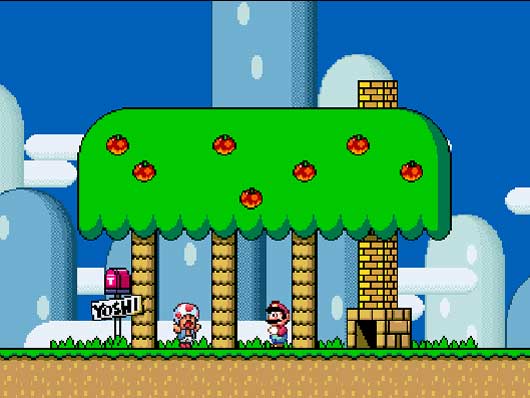
Most of the time a great deal of care was put into game design...translation...sometimes fell by the wayside.
             With increased space, stories could become more complex and scripts more well refined.  However, because of the limitations, the story was carried more on the weight of the script rather than the performance of those reading it.  It allowed the players to create their own voice or interpret the script in their own way.  Likewise, composers had some space to flex their musical muscle, however music couldn’t be ripped from outside sources and had to rely on the sound chip within the console, so most music had to be original or at least converted in such a way that was pleasing to hear.  Along that same line, it did not take scores of orchestras to record the music or dozens of composers, as what could be done was so limited.  And most importantly, the sprite based graphics of the 16-bit era used graphical tricks that were cheap and easy to implement as opposed to the time consuming process of 3d modeling.  A single 3d model can take days, or even weeks, to create, render, rig to look and act natural, and even more time if it needs to emote.  However, with sprite based gaming, a set of pixels just needed to be altered and the character could look like they were laughing, crying, in pain, exhausted, etc.  These graphics were pleasing to the eye and allowed much more expression than 8-bit sprites, which were limited in color and detail.  However, they were not so complicated that it took an excessively long time to create them.
Remember when games could look pretty without a billion polygons?  Yeah...those were good times...
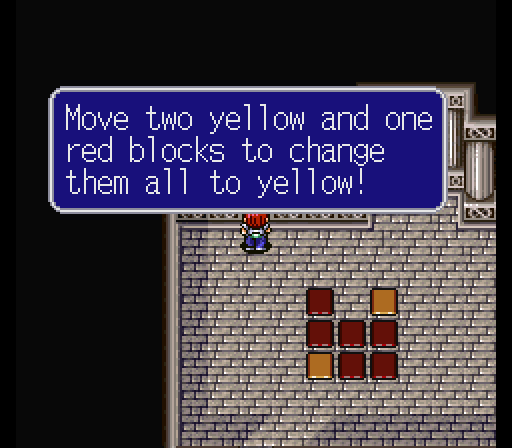
             The point I am trying to make with this tirade is that instead of bloated budgets for gaming which focused more on graphical fidelity and realism or on game design that is complex and unwieldy, 16-bit games had to be lean, using simple tools to achieve great feats.  The two Lufia games on the SNES, for example, had some of the most devious logic puzzles in all of gaming and they managed to do it using a simple system of lifting, pushing, and pulling objects.  In modern games, however, a puzzle game without a physics engine would be laughed out of the room.  What is easier to design and less prone to hiccups?  A physics engine that has thousands of variables or a simple system of pushing, pulling, and lifting that is based on a simple grid based puzzle system?
Simple, devious, and without the need for a physics engine...Why aren't we making more puzzles like this again?
            If nothing else, modern games have also proven how advances in technology can make games more beautiful.  People have given Heavy Rain, Modern Warfare 3, and other games which focus on realism heavy props for their graphical power.  However, how many systems can use those without delays?  How many computers can play graphically taxing games like Diablo 3 or Starcraft 2 without significant upgrades?  And how ridiculous will these purported realistic graphics look in twenty years when graphics are even more advanced?  Worse yet, however, is the propensity for excessive cut scenes.  Now, there is nothing wrong with cut scenes in games.  They can move along the plot or pump up the player for a confrontation, however using them as a crutch, focusing on graphics over gameplay or storytelling, is folly.  I think that an emphasis on using the latest toys and making things look pretty has made people forget what the core of game design is all about.  Substance over graphical flair.
Yes, Metal Gear 4, you're very pretty...now how about some gameplay with my 30 minute cut scenes?
            A number of people may argue against the idea that limitations are a necessary part of good game design.  Like how such limitations will hamper a game’s fun factor by hurting atmosphere, gameplay, music, etc.  However, take a look back at the game industry during the early 2000s.  Many of the games which endure are not the realistic ones, but those that use cartoony, cel-shaded, or alternative graphical schemes to the more realistic ones.  Jim Sterling made a brilliant argument on the Escapist about this, saying that the best games for HD televisions were not the grim, gritty, and realistic, but the colorful, cel-shaded, and lively.  Games like Rogue Galaxy, Killer 7, and Final Fantasy Tactics still look as good today as the day they came out.  And many games thrive on limitations.  Horror games in particular.  In Silent Hill and Silent Hill 2, there were a huge amount of limitations that needed workarounds for the games to function properly.  Pop in graphics were common.  So, to hide the pop in, they world was draped in an eerie mist or in darkness or in snow that hid the monsters and made the players feel both alone, and surrounded, creating an atmosphere of crushing dread.  Forcing games to work within limitations often brings out the best in them.  By comparison, the modern Silent Hill games after Silent Hill 4 have been lacking some of the atmosphere of the previous ones, because the monsters have to be so well defined in their grotesqueness, the graphics need to pop and be eye catching, and the voice acting has to be spot on. There is no room left for the scary atmosphere created by the mist, snow and darkness of previous games.  Although, some people do seem to be learning from such mistakes, as games like Silent Hill: Shattered Memories or Silent Hill: Downpour indicates.
Would you believe one of the most terrifying experiences in gaming was born of necessity rather than graphical fidelity?
             Others may argue that it would be impossible to create 16-bit style games with the same sensibilities that we have now and that they are a relic because of their limitations.  However, I also dispute this claim as well.  Modern programming teams have created 16-bit style games using tools such as RPGmaker or other game engines to experiment with 16-bit games in ways that, while not implemented during the 16-bit generation itself, are still ground breaking and creatable without a bloated budget.  To the Moon, for example, is a game that looks, on the surface, like a Final Fantasy 6 style RPG.  However, it actually is a graphic novel style of game that is more closely related to a point and click adventure.  It focuses on tight writing and the emotional poignancy of the graphics and music to deliver a moving experience.  Lone Survivor, on the other hand, creates a claustrophobic 16-bit world that uses tricks learned from the 16-bit generation to inspire a world of surreal horror which is genuinely terrifying and unsettling.  So, one question I might ask is that, if these games are easier to create than mainstream games, can be just as much fun, can experiment more than their contemporaries, and are cheaper to both make and for customers to buy, then…why don’t we see more 16-bit revivals?  Lone Survivor is available on Steam and To the Moon from Freebirdgames.com but both are somewhat niche titles that have not met a huge level of financial success.  However, 16-bit games in the modern era that achieve success are growing less rare.
16-bit.  Modern Sensibilities.  Damn scary.  We need more of this.
             A number of 16-bit style games as well as other games that embrace their limitations have been created recently that are both innovative and successful.  And, perhaps most importantly, exist outside the bloated AAA games market.  Cthulhu Saves the World was a game that was built to look like a 16-bit RPG and was heavily praised for its writing, game design, graphics, and music, all of which used the same tricks of its forbearers, such as swapping out sprites to emote or create unique appearances and looped animations for walking or simple expressions.  Terraria is a beloved exploration based action RPG which uses a sprite based 16-bit aesthetic and game design to create an engrossing experience.  More surprisingly, it was crafted by only 2 people over 4 months.  Even the graphically impressive Dear Esther knew its limitations and gave people the freedom to move, but to find the story, left them with little else they could do.  These games, have met with critical and commercial success precisely because they used their limitations to create a unique experience and focus on a specific aspect of their game design, be it story with Dear Esther, customization and exploration with Terraria, or solid game mechanics with Cthulhu saves the world.
Four months in the making and 200,000 sold in its first week.  Take note, AAA developers.
             One of the reasons I love 16-bit games and games from the PS1 and PS2 over the PS3 or high end PC games is that they embraced their limitations to a degree and knew when to stop.  Their scripts had to be tighter, their game design more innovative, and their music less hackneyed and repetitious.  Often times, modern game design tries to do everything and fails to really stand out or fails to be enjoyable as a whole.  Granted, this is only my opinion, however, I think that to forget ones limitations is to invite folly.  You do need space to stretch.  My favorite game, Odin Sphere, uses sprites that could never fit on a 16-bit system and would only really be possible on the Playstation 2 or greater.  However, if you get too much space, you probably won’t know what to do with it all.

Bloated game design also raises the bar for entry.  In the days of the Commodore 64, people could create their own homebrew games that they could sell.  While I believe the Commodore 64 was very limited, it showed that regular people could learn programming and build games.  Modern AAA game design requires up to 4-6 years of school in a specific skill, such as modeling, photoshop, etc. to even get an entry level position.  However, if something like Terraria is any indication, it is possible to build and put a game on the market in less than half a year with simpler tools that anyone can use.

Ultimately, I don’t think the game industry needs to return to its 16-bit roots.  I love 16-bit games and I’d love to see more.  I’d love for Actraiser, or Terranigma, or Final Fantasy 6 to return to grace, but they’ve had their time in the sun.  We need to keep moving forward.  However, forcing people to create a game that needs a million units sold to make enough money to repay all the time and effort put into it is just not good business.  Limitations on what game developers can do or CHOOSE to do could lower the bar for entry into the games industry, allow innovation, as cheaper games give more opportunity to try new ideas, and give them a tidy profit that doesn’t require a huge team to work on.  This is why Indie games are so good for the industry.  They know their limits and work within them to create the best experience possible.  While I am not sure exactly where, I do recognize that the web series Extra Credit has tackled this issue far better than I from a business perspective, but it bears repeating.
These games had their time in the sun.  I don't think the world needs to return to 16-bit.
Yet, we can make games like this much easier now than in the 1990s.  Why don't we make more?
 On the whole, I think that 16-bit games exemplify this kind of ideal perfectly.  Most took no more than a year or two to create, as opposed to the abysmal 2-5 year cycle of modern AAA games, most used simple concepts, such as turn based combat or simple eight directional over head movement to experiment with established formulas and create new ones, and it gave aspiring artists and composers a chance to stretch their legs without having to work themselves half to death.  And if the game industry is to survive, major publishers need to start embracing these kinds of design practices.  They need to give AAA style attention and funding to smaller games which can be produced quickly, but which also have the necessary quality and fun factor behind them.  Games which embrace their limitations to do certain things very well.  I don’t think all games need to be like this, in fact the landscape of gaming would change for the worse if that were the case, but publishers should at least dabble in it.  Otherwise, the game industry will have a revolution where the AAA market is toppled by the indie developers and digital distributors.  Which…on second thought, might not be too bad for us, the consumers.

Once again, any material that people believe I have used inappropriately or without permission, please contact me and I will address the issue.  Otherwise, I hope some fun was had reading my take on games and their limitations.