Showing posts with label Satellaview. Show all posts

Sunday, April 13, 2014

Diminutive Diatribes: Hardware Laments and The Future of Old Games...


Guys, gonna be honest, I am just dead this weekend.  I've worked myself too hard, taken a huge exam on Saturday, and been going through a lot of stress and emotional whosits and whatsits.  So...sadly, no creator spotlight this week.  I did write up a little something for you all though, so enjoy.  Fingers crossed we get back to our regularly scheduled program next week.


Diminutive Diatribes: Hardware Laments and The Future of Old Games...

            It's fair to say that nostalgia is a big thing in video gaming.  The resurgence of the 16-bit and 8-bit pixel art style in video games, chiptunes, emulation, virtual console, everything points to the fact that we have an infatuation with games from our past.  And this can be for various reasons.  Sometimes it's purely rose tinted glasses, where a bad game felt good because we played it when we were younger and needed it as an outlet.  Sometimes it really was very polished, because with the limited memory of the 8 and 16-bit eras, you had to have a focused, polished game, because there were no patches and you wanted to build brand loyalty.  However, I've often asked the question, what happens to our old games as time goes on?

What happens to our old games when there is no one to play or love them?
            Now, since nostalgia is popular, software itself is not necessarily something to be afraid of losing.  Clone consoles of the NES or SNES are available, right now, to play original or reproduction copies of old games.  Software that was originally only built to run on DOS is being retooled by GOG so that even a Windows 7 machine can run Math Blaster or King's Quest.  We have an almost infinite number of roms for emulation software available, ostensibly, for free on the internet.  So, that part of old gaming will actually never die.  It will be around in some form or another for as long as our digital age lasts.  However, there are some things that...concern me.

They save as many games as they can, but even GOG can't do everything.
            Has anyone ever watched the Angry Video Game Nerd and seen him have to fiddle with the Atari 2600 or the Magnavox Odyssey or the Action Max?  Those games have hardware components that make them nearly impossible to play on a traditional LCD flat screen television.  The display is off and the games with them seldom work properly...you need an old CRT television, which is what the machines were originally designed to work on.  These games are, for all intents and purposes, doomed to fall prey to the march of progress, where sooner or later the components that are necessary for them to work will simply no longer exist.  CRTs will be phased out or replacement parts, like the cable box for the Odyssey, will no longer be made.  For me...that's kind of scary.  And not just because of old gaming either.

When the Angry Video Game Nerd reviewed Pong Consoles, the game was the machine...so if the machine was broken, you were flat out of luck.  That's what scares me about our modern games...
            In the modern era, hardware has become a big seller of games, not just on graphical prowess, but on the promise of a new experience.  The Wii, Playstation Move, and Microsoft's Kinect all act upon the idea of motion controls.  While we're in the present era, few people have given any thought to whether or not these games, good or bad, will ever be unplayable because we will be unable to find the component parts needed to make them work or properly emulate said component parts on another platform, like a PC.  However, this is a very real concern that people need to be aware of.

A huge misstep, in my opinion.
            With the axing of backwards compatibility in the Playstation 4 and Xbox One era of gaming, this leaves a number of games in limbo.  For example, many early games on the PS3 used the sixaxis motion controls of the proprietary Playstation controllers to create key features in their games, such as Ratchet and Clank Future's tornado weapon, which was controlled by tilting the controller, Lair's dragon flying which functioned in the same way, or a personal favorite of mine, Folklore, which used the tilting of the controller to rip souls out of enemies.  Tell me, what happens when the PS3 becomes an antique in say, 20 years, and all the sixaxis controllers are broken?  Folklore would be left in the dust bin, unplayable because we lack the proprietary software.

To pull out the soul, you must tilt it into the proper alignment with the sixaxis controller in Folklore.  What happens when there are no more sixaxis controllers?
            So, I want people to take a minute and think about all the hardware gimmicks being pushed down our throats.  We bemoan many of them but at the same time, if we have any games amongst those that we like, we could be out of luck when the hardware stops working.  Think about how difficult it is for an emulation program to run a rom.  It basically copies the hardware settings on a PC that existed for the said console and maps the controls to the keyboard or a USB controller.  Relatively simple.  However, how can you tell a PC to handle gyroscopic motion controls?  How can you tell a PC to recognize a slash or a swipe with the controller for Dragon Quest Swords?  How do you tell a PC to tilt this way or that in a game?  This is harder, because the only real way to simulate it, at present, is with hardware, either the proprietary hardware or a similar cloned version.  Even if we don't like some of the hardware tricks, like the 3DS's 3d...this may be the only generation which gets to experience them.  I'd say treasure the unique experiences and try to preserve them, because for lots of gaming, the future is hardware failure and abandonment, avoiding complete oblivion only through the graces of youtube and wikipedia.

Don't take it for granted.  When it's gone, it might never come back.
            I don't have an answer for this problem other than be aware and try to preserve so that if we ever need to make a clone console or whatever, we can, but I also don't want to end this on such a downer.  The idea that swathes of games could be lost to the future because they are tied to a special piece of hardware that no one makes anymore is terribly sad...however, some savy gamers are trying to find ways around it.

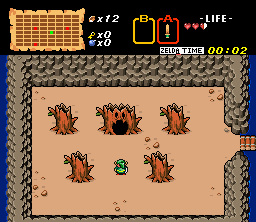
            Software is a versatile thing and many hackers and programmers try to work around issues that the hardware had.  This can be shown through the creation of clone consoles and the like, but also with certain special projects online.  The BS Legend of Zelda project is an excellent example of this.  The BS Legend of Zelda games were three titles, technically four but let's not get into that, released only in Japan for the Satellaview, an add-on to the Super Famicom.  The Satellaview was a great example of a hardware system that we couldn't carry into the future, because it relied on satellite broadcasts for the games to work.  Orchestral music, game data, and live voices would be transmitted via the satellites and arrive at your console.  However, when service for the Satellaview cancelled and the satellites stopped transmitting, many games on it were thought either lost to time or to the few savy collectors who made back ups on blank cartridges.  Some savy hackers, however, managed to find the code for the Legend of Zelda games on Satellaview and repair the missing code, putting in a soundtrack for the music and adding cues to make up for the voices.  It's now available, online, right here.  And BS Zelda wasn't the only one.  Other games, like the fantastic Radical Dreamers were also saved through the use of the internet.

On the left, we have the NES Zelda, on the right the BS Legend of Zelda from Satellaview.  So glad this was saved ^_^
            Hope isn't dead yet for old games that rely on hardware.  As we advance into the future, some hackers or programmers realize the value of certain control schemes and can create mods or whole programs to simulate them.  The Logitech USB controller, for example, has a special program which not only lets you customize controls for PC games, even ones without controllers support, but can also simulate mouse movement with the analogue sticks.  If that is possible, perhaps even motion control could one day be simulated in our USB controllers.  Perhaps...
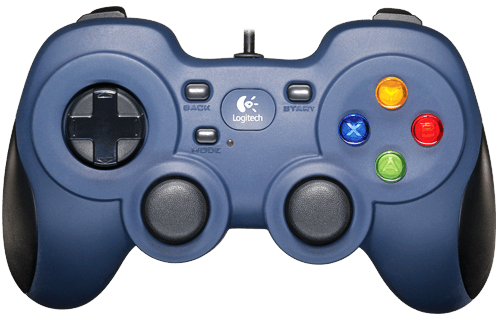
A miracle worker.  I've even played point and click games on this...
            While the thought of Folklore vanishing forever makes me sad, hope isn't lost.  If enough people remember and like a game and there are those who like it enough to try and fix it for the future, like the BS Zelda crew, then even hardware failures might not be the death of certain games.  We can keep them alive.

            However, the future isn't written.  We don't know if any of these hypothetical hackers will make it so we can emulate motion controls or make clone consoles of the Wii or 360 years and years down the line...and even if they could, will they?  Will they care?  So, I say take pleasure in the new experiences offered by new hardware...cause they won't be here forever.  Remember them.  Treasure them.  And try to keep their legacy alive, because I don't want us, as gamers, to lose any part of our history.  It's all valuable, even the bad parts.

What he said.
            The future isn't hopeless.  It's waiting for us to create...so we should try and create one worth living in.  A future where hardware laments don't exist, and old games are just as new as the day they were released, 30-50 years previously.

Thursday, September 13, 2012

Cult Followings: Working With the Fans


There are a number of things in the game industry that confuse me to no end.  Perhaps at the top of the list is the Mother series in Japan.  It is a quirky 16-bit RPG series that has gained a huge following in the U.S.  While I have yet to play it, I know a great deal about the series.  While it did see a limited release in the west under the title Earthbound, it seems odd that games like Infamous are getting a re-release collector’s edition less than four years after its initial release, but this quirky series is left by the wayside.  The fans are there and have made themselves known to Nintendo, so why? 
17 years and Nintendo still remains silent on the Mother/Earthbound series
Nintendo claims that there might be legal repercussions based on musical ques and names as the reason for the game Mother 2 or Earthbound not being re-released.  However, this doesn’t stop Mother 1 or Mother 3 from being released as part of a compilation set or on the Virtual Console on the Wii or 3DS.  Yet, Nintendo continues to be silent on this series.  One of the arguments for this is that these games are text heavy RPGs that would require too much time to translate and adapt to the U.S.  And that is a fair complaint.  I understand that a lot of great RPGs and other uniquely Japanese games weren’t released because of translation issues.  Translating the Japanese text and mannerisms to make sense in English would cost a great deal and take a huge amount of time.  However…why doesn’t Nintendo use the fan translations?
This is the only way to play Mother 3 in English...so why doesn't Nintendo just reach out to the fans for the translation and schedule a release of the game stateside?
Here is the meat of our subject today.  Fan power.  Gamers who love games will go to all manner of extremes for them.  Fan fiction, fan art, fan translations, even fan mods and fan sequels.  These extensions of popular games are uniquely tailored to their audience and will thusly appeal to them, more often than not.  The biggest hurdle to these fan creations being released for profit is the threat of legal action from the company that owns rights to the original.  However, what if the game companies, instead of threatening legal action or trying to shut down or ignore these fan communities and fan creations, tried to make use of them?  Market them legitimately?  In fact, mods, or fan created additions, to PC games are how many gamers get jobs in the industry.  Showing they understand the tools needed to make games by adding on to games they already know and love.

And some of these fan creations show real time, effort, and dedication.  Many games never reached the shores of the U.S. because of time, money, or apparent lack of interest.  However, fans who had imported the games loved them so much that they wanted to share them with others and took to translating them.  Many fan translation or localization groups have put forth work purely out of their own interest with no hope of profit.  This is how the Mother 3, Bahamut Lagoon, and the original Final Fantasy 2, 3, and 5 translations were released.  However, fans can go even further.  One intrepid group of young hackers put games from the Satellaview, a Japanese only satellite gaming service, online for all to enjoy, with the caveat that if they were contacted by Nintendo or other companies and asked to remove them, they would.  They also stated that if the games were released stateside, they would take down their website.  What makes this remarkable, however, is that not only was the Satellaview released only in Japan, but many of the games for it had holes in the code which were meant to be filled by the satellite broadcasts.  So, these hackers not only translated the games, but filled the holes in their code, retooled their controls, added in the old music from the broadcast, and released it, for free, so that others could enjoy it.
Zelda on the Satellaview, in English, available to the masses, all thanks to fans
No matter what anyone says about copyright violation or piracy, one has to admire the passion involved in projects like this, where dozens of people spend their own time, without pay, to share the games they love with others.  However, I personally believe that this is an untapped resource for game companies the world over.  Rather than re-releasing some games as many as five times, Square-Enix, why not look at some of your older properties that have gained a cult following but were never released in the west?  If the fans have done their work right, you could offer to buy their translation from them and release your old game to the west, but at full price on a new platform.  It would require some quality control and play testing, but the lion’s share of work necessary to make it viable for a western release would already be done.  However, even given such a unique opportunity to work with fans, most game companies do not cooperate.  In fact, some go out of their way to destroy the hard work of fans.

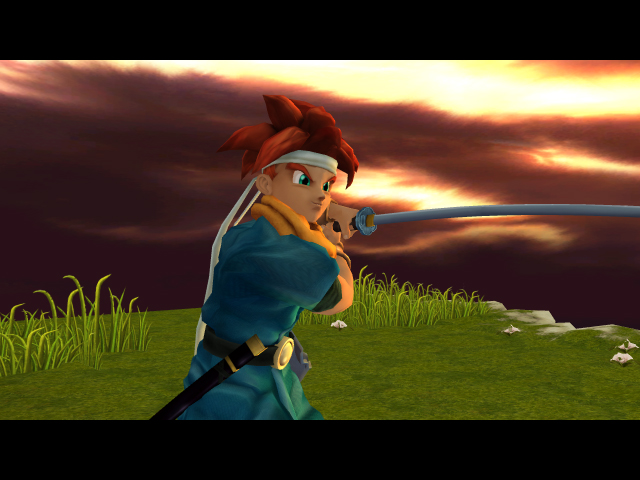
Most fans respect the wishes of the game companies and agree to shut down their work if they are asked.  And some companies, like Nintendo, agree to look the other way so that the fans can be fans.  However, many game companies take one look at a promising project and immediately shoot it down.  For example, a 3D remake of the critically acclaimed Chrono Trigger was being made by fans and the company who owned the rights to it, Square-Enix, threatened them with litigation if they did not cease and desist.  This effectively killed the project.  However, think for just a moment.  Square-Enix has a propensity for re-releasing their popular titles.  Recently, Chrono Trigger was just re-released for the Nintendo DS.  So…why not simply work with the fans instead of threatening legal action on them?  Buy them off and have them continue their work.  Square recently released a 3D remake of Final Fantasy 3 done in house, a process which had to be unbelievably expensive.  So, if a group of gamers who loved the game are working to create the exact same thing, but are doing it for free…then buy them off and have them continue their work.  Don’t simply waste all their time and effort by threatening legal action.
This is what Chrono Trigger would look like in 3d...if it hadn't been shut down.  Yeah...thanks for that, Square-Enix
Fans of video games, like fans of almost any property, can have an unbelievable drive, love for their medium, and a power to change it.  However, too often, game companies see them as the problem, not the solution.  In my opinion, game companies have forgotten that fans are the force which keeps them profitable.  Without the fans, they are nothing.  Yet, every day the gaming world is outraged at some new form of on disc DLC or DRM which locks players out of games they paid for, or online passes.  Game companies treat gamers more like thieves or free money than lifelong friends.  And that is a major problem.  Fans will continue to love games, regardless of the companies, but if companies don’t understand and respect the power of fans it will hurt them in the long run.  Before being acquired and merged with Activision, Blizzard, for example, knew how to treat fans.  After releasing Starcraft, Blizzard encouraged its piracy to a degree.  Burn a copy, share it with friends, and then they might go buy a copy themselves, or at least share the popularity of the game with their own friends, who might go buy a copy.  While this kind of policy changed after their merger, this should prove that fans have power.  And fans want to be friends to game companies, even if the reverse is not true.
Blizzard used to just spread the love.  Then Activision happened.  And now we get online passes.  Progress...?
And it is curiously true that many times, fans orchestrate the biggest changes in the gaming world.  Gamers modding Half-Life created the incredibly popular Counter-Strike mod that has become a mainstay of Valve’s and which has seen several sequels and spin offs.  Importers who picked up Demon’s Souls, even though it wasn’t planned for a western release showed Japanese developer From Software that there actually was a market for their game in the west, convincing them to release it and its sequel, Dark Souls, in the west.  The Defense of The Ancients mod in Warcraft 3 became so popular that it even spawned an entirely new genre of game, the massively multiplayer online arena fighter, which has one sequel in the works and at least a dozen competitors.  The highly publicized Operation Rainfall brought awareness to the titles Xenoblade Chronicles, The Last Story, and Pandora’s Tower, and helped them get out of Japan, into Europe, and eventually to U.S. shores.  Fans have an incredible gift for changing the industry and game companies need to start respecting and making use of their fans, like partners, rather than treating them like thieves trying to take a piece of their pie.
This funny little fan mod spawned an entire sub genre of MMO games
If game companies would open themselves up to fan assistance they would not only find strong potential employees, but might actually get to release some games they would not be able to otherwise.  For example, Vanillaware recently had to cancel the western release of a game called Grand Knights History, due to “lack of resources to localize.”  However, what if fans stepped in and agreed to work with the designers to get this project done?  Some wouldn’t even ask for payment, so long as the game was released.  Fans can be a powerful boon for small companies that need assistance and can be loyal followers for stronger companies who already have their footing, provided they don’t alienate their fans.
Yeah, this ain't making it stateside anytime soon
Perhaps the biggest issues preventing gamers and companies from coming together are legal concerns and profit concerns.  This is frustrating, because gamers are more than willing to lend their hand to help make something they want a reality, but game companies have their own interests to protect.  Legal concerns, such as the rights of the fans making the game vs. the company would be a problem and if any materials or resources, such as the game engine, levels, or characters, were used in other projects by the fans, there might also be a need for litigation.  Game companies are very protective of their assets, most of the time.  And there would also be the issue of compensating the fans for their work and whether or not their work turns a profit for the company.  Game companies, especially the big ones, like Square-Enix and Electronic Arts, have to protect not only their own profit margins, but cater to their investors and shareholders, which would make any project with fan assistance a hard sell, as investors are naturally skeptical of people not on their payroll and who they cannot properly penalize should something go wrong.
Pretty much how game companies feel if a product bombs...and we want them to approve fan games?
            I really do believe that with the right business model, any number of game companies could use work done by the fans and turn a profit, for both themselves and those who worked on it. NES Reproductions, for example, has managed to make a fair profit by releasing fan translated NES games for sale directly to gamers.  They can do this because the copyright on the games and the technology is usually long expired, since the NES and Famicom were released almost thirty years ago.  This kind of business model takes the work of the fans and turns it into something that can be bought and sold for a profit.  If an independent party can do it with properties that have passed their expiration date, imagine what a game company still holding onto the rights for almost a dozen retro titles never released in the west could do.  I have a vision that I’d like others to indulge in for just a moment.  Say, instead of making reproduction cartridges with fan translated or altered games on them, game companies created a digital service, like Steam?  Then, took old games like the Mother series, Bahamut Lagoon, Sweet Home, or any number of other titles they still owned and released them at a fair price, like 10-20 dollars?  If they used the fan translations and gave a cut of their profits to the translators, that’s a tidy amount they had to do basically nothing to make.  Granted, this kind of business model would require a digital distribution service and would take time to set up, but it would go a long way in discouraging emulation and piracy.  As it stands, emulation is the only viable way to play English language copies of games like Mother 3 or Bahamut Lagoon for most people.  However, if the game companies made it easier to get these games off their service, perhaps with a sale or two and built in rewards just to sweeten the pot, emulation would practically die out overnight.  This happened for countless Wii owners who found games they used to emulate on the virtual console for a fair price.  The Extra Credits crew have said time and again, if you provide a better service, people will use that rather than piracy.  Convenience is the key.  A service like Steam or the Wii’s virtual console caters to fans and makes it easier to get the games they want.  Emulation has a lot of legal and computer based issues.  However, when emulation is the only option, then that is what people are going to choose.
How many people would give their left foot for this game to be released overseas legitimately?
            Regrettably, this kind of business model may never see the light of day.  There is a lot of red tape involved in some of these dealings, such as giving proper credit to the fan translators, ensuring they get fair compensation, the compromise between game companies who have had their properties tampered with and the fans who only want to bring old favorites to the masses, and countless other problems.  Most game companies don’t want to adapt to make use of their fans.  And the sad thing is, unlike some of the other issues discussed here, they don’t really need to adapt.  Fans will continue translating, making unofficial sequels, modding, etc. as long as it gives themselves and other gamers joy, while companies will either tolerate them or crack down on them so long as they feel their rights are threatened.  If a company cracks down, the fans may just make the game an original title and release it as an indie game on Steam or some other digital service.  So, while there isn’t really a big loser if these two sides stay separate, I feel that it is a huge missed opportunity for the developers and publishers to foster relationships with their fans that benefit everyone.  Even if fans keep on being fans and companies keep on being companies, imagine what they could do if they came together to work on something they loved?  We could get a third Chrono game, translated versions of games that were never released stateside, genuine fan feedback on changes made to try and modernize old classics…the possibilities are limitless.  Well, even if it’s never meant to be, we can all dream, can’t we?
Dare to dream, people.  Dare to dream.