Showing posts with label To the Moon. Show all posts

Sunday, March 2, 2014

Creator Spotlight: Laura Shigihara


            Confession time.  I got the idea for the Creator Spotlight section of this blog almost entirely due to one person.  I rediscovered her work just a little while ago, and I'd been a huge fan for years before...not really sure how or why I forgot about it.  She reminded me of other great game creators that I respected...and I wanted to pay my dues to them.
Too often people get angry at developers and creators who don't deserve it.  I want to pay respects to people rather than getting angry at them.
            From the title, it ought to be obvious who I'm talking about, but let me just give a brief introduction.  A fantastic pianist and vocalist, capable of singing both in English and Japanese, and a member of the prestigious club of 3 composers who have actually made me break down and cry from playing a video game.  This is Laura Shigihara.

Talented to a fault, but also very humble, enthusiastic, and adorable, Laura Shigihara is one of a kind.
 
Laura on Youtube.  Check her out.  CHECK HER OUT NOW!!!
            While not nearly as obscure as Amon26, I don't believe Shigihara gets nearly enough credit.  True, she has had some mainstream recognition from her work on Plants Vs Zombies, Plants Vs Zombies 2, and thanks to Kotaku spotlighting her collaborations and covers of other video game music.  However, she's not a household name when...really, I believe she should be.  Shigihara may be relatively new to the composing scene compared to Uematsu, Mitsuda, Talarico, or Yamaoka, but that doesn't make her any less talented or worthy of praise.

Shigihara has also worked on this charity album with such great composers as Uematsu, Mitsuda,a nd Yamaoka...eerie, isn't it?
            There's something undeniably charming about Laura Shigihara that is apparent anytime she creates her music and talks to the audience.  She appears to be both humble and enthusiastic about her work, showing a true reverence and respect for gaming as a whole.  Her first soundtrack composition was for the small casual game Wobbly Bobbly, which she offered to do for free just because she was so excited to be working on a video game.  Such dedication shines through all her work and it has gained her employment on a number of games, including Minecraft, World of Warcraft, Basement Collection, and my personal favorite, To The Moon.
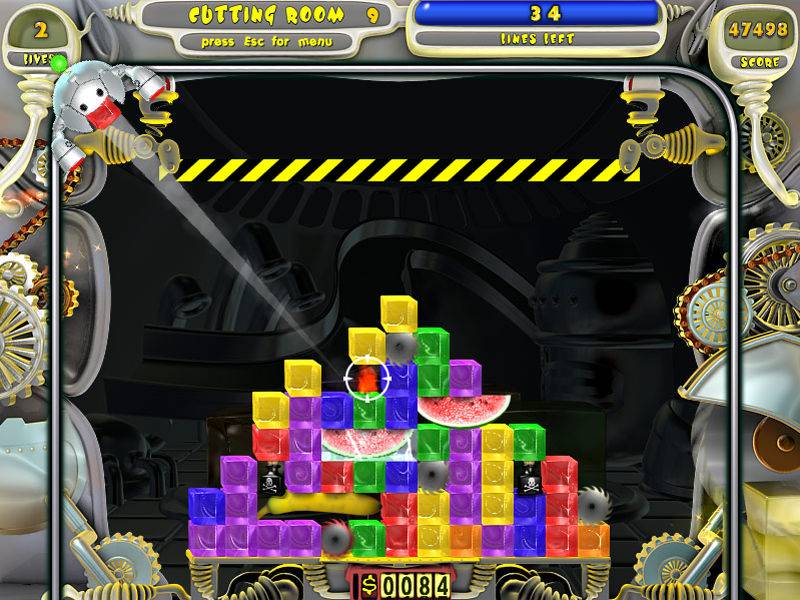
Wobbly Bobbly, the debut of a great composer.
            I first came across Shigihara's work when I played Plant's Vs Zombies.  She not only composed the entire sound track and was the sound designer on the game, but was also the vocalist, in English and Japanese, for the end theme, Zombie on your Lawn.  The song and music video were featured on Steam and the deciding factor in my purchase of the game.  However, I only really took notice of Laura Shigihara while playing the indie game, To The Moon.

            In To The Moon, Shigihara's music made for a fantastic emotional rollercoaster.  It could be quiet and somber, a little manic or silly for the lighter moments, or even bombastic in places.  What got me, though, was the song Everything's Alright.  This is sung at a key moment in To The Moon where love, true, unrequited love, is lost.  I first heard it when I was in a...less than stellar relationship.  I won't spoil the payoff, but it was beautiful, moving, and heartbreaking all in one.  For me, this piece was something sad, but also somewhat hopeful.  It was an anthem to me of love and became both the hope and the requiem of my own hopeless romance.  Even though my love is dead, I still listen to it frequently and never tire of the soft, thoughtful look at a flawed relationship that we want to work so well.
             I suppose that's what made me really sit up and pay attention.  You see, this song, and Shigihara's music as a whole, remind me of a saying from the game Soul Blazer.  The gist of it is that music is a funny kind of thing.  The same music we listen to can feel very triumphant or joyous when we are happy, or mournful and sad when we are depressed.  It spoke to me, I suppose you could say.  It made me feel.  Any game and any music that can do that, really make you feel something, is powerful.

Yeah...that's the moment.  The moment music begins to make you feel.
            Shigihara's music usually involves the piano as she is incredibly skilled as a pianist, but it doesn't have to.  Thanks to the advent of sound software and electronic keyboards, a piano can produce a much wider variety of sounds, which offer great variety to the music as a whole.  Which is quite good, as Shigihara's strength is in piano music and vocals.  She often collaborates with others when other instruments are needed, which have led to some fantastic renditions of classic video game music.

            Now, I am not an expert in music or composition by any means, so perhaps this is also pretty normal for those who can play.  However, Shigihara amazes me with her ability to play music by ear and compose her own original pieces.  Her original work can span any range, from being soft, quiet, and mournful, to being fast paced and energetic.  Cubeland, From the Ground Up, and Jump showcase this range and all her songs are immediately infectious and memorable.  I also can't forget when I saw her playing the Little Nemo themes by ear on her piano.  It sounded spot on and was a wonderful nostalgia trip for me.

            Shigihara is an amazing composer in her own right, however she has also dabbled in game design.  While work began on an RPG called Melolune, it never made it past the demo phase.  However a 3 hour demo is quite impressive, nonetheless and Shigihara has stated she is only on break from this game.  At the moment, she is working on a title called Rakuen, which focuses on a mother and son's relationship, and how stories told to the hospital bound boy are able to help him cope with his illness.  Along the way, the boy starts to learn about the patients in the hospital and tries to complete his own sets of challenges to meet the guardian of the forest from his stories, the mysterious Morizora.  Having heard some of the soundtrack for Rakuen, I can say it looks to be charming and playful, yet also a little somber, mysterious, and possibly even tragic.  In short, it sounds like an emotional journey that I can't wait to try.
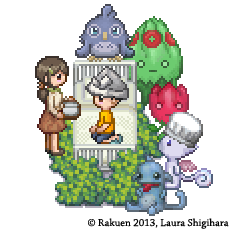
Fantasy and reality mixing to create a journey of emotions.  Also, I want that kids hat.
            While I have many famous composers I admire, including Nobuo Uematsu, Akira Yamaoka, and Yasunori Mitsuda, I'd say Laura Shigihara deserves a place among the best of them.  Her music is hauntingly beautiful, memorable, and something that everyone, not just video gamers, should listen to.
Laura is also very vocal about her love of gaming.  She defends the works of others and is a voice of reason in the vitriol fueled games media machine.
            For more information on Shigihara's game, Rakuen, check here.  For all Shigihara's music, which you can purchase for a nominal fee, check here for her bandcamp page.  If you want to show some support, then check out her blog or her facebook pages, but above all else, look at her Youtube channel.  It features some beautiful covers of music, from Miyazaki and Megaman to Frozen and Final Fantasy.  And, just to cover all bases, for the EXCELLENT To The Moon, and other great emotional journeys, check here.

            We don't get composers like her everyday.  No matter what the future brings, we're all anxiously waiting to see what you come up with, Laura.  Keep on playing, keep on singing, keep on having fun.

Keep on making that wonderful music, you beautiful person.

Wednesday, August 8, 2012

Limitations: Why the 16-bit Generation has the Best Games Ever


            First, let me apologize for being away so long.  Work is stealing my soul as well as my time.  Anyway, somehow, I managed to get this piece composed this piece, so let’s talk video games!

            Okay, the title of this article may set off a few people’s alarm bells.  First, let me tell everyone to relax.  This isn’t going to be a rant about why the SNES or Sega Genesis is the best system ever and the game industry was better when during the 16-bit generation.  Some of my favorite games are from later generations, especially the PS2.  However, I think that in the rush to improve and make graphics more photo-realistic, music more symphonic, and gameplay more complex, that something important has been lost.  I think that many games have lost their way because there is just so much that can be done with modern technology.  Some people may argue against that.  That having a huge sandbox to explore is amazing for game development, offering near limitless possibilities.  However, in my mind, knowing ones limitations is just as important as having the boundless freedom to explore and do as one wish’s.
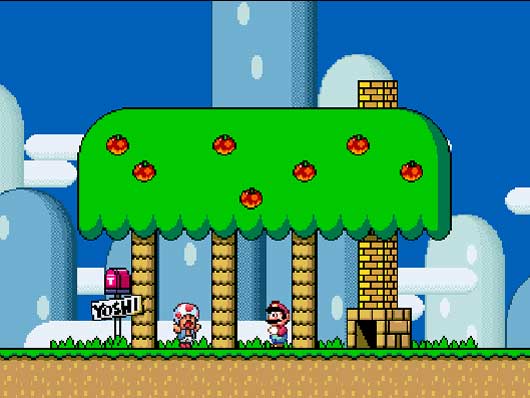
Okay, we've got all this space to design!  So, umm...where do we actually go?
            And really, that’s why I have such admiration for the 16-bit era.  Its limitations.  The games in the 16-bit era managed to gain enough power as opposed to the 8-bit that they could expand and push the boundaries of what games at the time could do, creating prettier sprite based graphics, gameplay and AI that was more complex, and music that was less pixelated and more symphonic.  However, there were still clear limits to what could be done and the game designers had to work within those limitations to get the best out of their games without making them impossible to fit onto the console.  This meant that programmers had to put a great deal more care into their game design. 
Most of the time a great deal of care was put into game design...translation...sometimes fell by the wayside.
             With increased space, stories could become more complex and scripts more well refined.  However, because of the limitations, the story was carried more on the weight of the script rather than the performance of those reading it.  It allowed the players to create their own voice or interpret the script in their own way.  Likewise, composers had some space to flex their musical muscle, however music couldn’t be ripped from outside sources and had to rely on the sound chip within the console, so most music had to be original or at least converted in such a way that was pleasing to hear.  Along that same line, it did not take scores of orchestras to record the music or dozens of composers, as what could be done was so limited.  And most importantly, the sprite based graphics of the 16-bit era used graphical tricks that were cheap and easy to implement as opposed to the time consuming process of 3d modeling.  A single 3d model can take days, or even weeks, to create, render, rig to look and act natural, and even more time if it needs to emote.  However, with sprite based gaming, a set of pixels just needed to be altered and the character could look like they were laughing, crying, in pain, exhausted, etc.  These graphics were pleasing to the eye and allowed much more expression than 8-bit sprites, which were limited in color and detail.  However, they were not so complicated that it took an excessively long time to create them.
Remember when games could look pretty without a billion polygons?  Yeah...those were good times...
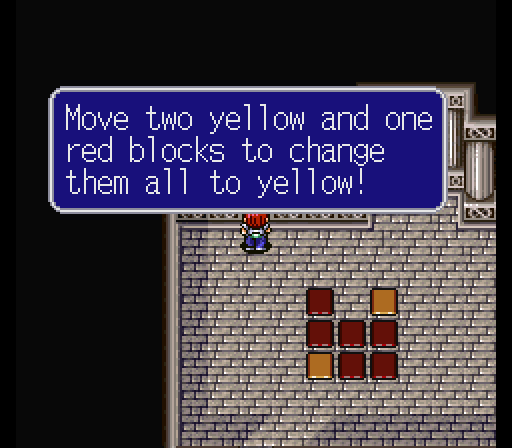
             The point I am trying to make with this tirade is that instead of bloated budgets for gaming which focused more on graphical fidelity and realism or on game design that is complex and unwieldy, 16-bit games had to be lean, using simple tools to achieve great feats.  The two Lufia games on the SNES, for example, had some of the most devious logic puzzles in all of gaming and they managed to do it using a simple system of lifting, pushing, and pulling objects.  In modern games, however, a puzzle game without a physics engine would be laughed out of the room.  What is easier to design and less prone to hiccups?  A physics engine that has thousands of variables or a simple system of pushing, pulling, and lifting that is based on a simple grid based puzzle system?
Simple, devious, and without the need for a physics engine...Why aren't we making more puzzles like this again?
            If nothing else, modern games have also proven how advances in technology can make games more beautiful.  People have given Heavy Rain, Modern Warfare 3, and other games which focus on realism heavy props for their graphical power.  However, how many systems can use those without delays?  How many computers can play graphically taxing games like Diablo 3 or Starcraft 2 without significant upgrades?  And how ridiculous will these purported realistic graphics look in twenty years when graphics are even more advanced?  Worse yet, however, is the propensity for excessive cut scenes.  Now, there is nothing wrong with cut scenes in games.  They can move along the plot or pump up the player for a confrontation, however using them as a crutch, focusing on graphics over gameplay or storytelling, is folly.  I think that an emphasis on using the latest toys and making things look pretty has made people forget what the core of game design is all about.  Substance over graphical flair.
Yes, Metal Gear 4, you're very pretty...now how about some gameplay with my 30 minute cut scenes?
            A number of people may argue against the idea that limitations are a necessary part of good game design.  Like how such limitations will hamper a game’s fun factor by hurting atmosphere, gameplay, music, etc.  However, take a look back at the game industry during the early 2000s.  Many of the games which endure are not the realistic ones, but those that use cartoony, cel-shaded, or alternative graphical schemes to the more realistic ones.  Jim Sterling made a brilliant argument on the Escapist about this, saying that the best games for HD televisions were not the grim, gritty, and realistic, but the colorful, cel-shaded, and lively.  Games like Rogue Galaxy, Killer 7, and Final Fantasy Tactics still look as good today as the day they came out.  And many games thrive on limitations.  Horror games in particular.  In Silent Hill and Silent Hill 2, there were a huge amount of limitations that needed workarounds for the games to function properly.  Pop in graphics were common.  So, to hide the pop in, they world was draped in an eerie mist or in darkness or in snow that hid the monsters and made the players feel both alone, and surrounded, creating an atmosphere of crushing dread.  Forcing games to work within limitations often brings out the best in them.  By comparison, the modern Silent Hill games after Silent Hill 4 have been lacking some of the atmosphere of the previous ones, because the monsters have to be so well defined in their grotesqueness, the graphics need to pop and be eye catching, and the voice acting has to be spot on. There is no room left for the scary atmosphere created by the mist, snow and darkness of previous games.  Although, some people do seem to be learning from such mistakes, as games like Silent Hill: Shattered Memories or Silent Hill: Downpour indicates.
Would you believe one of the most terrifying experiences in gaming was born of necessity rather than graphical fidelity?
             Others may argue that it would be impossible to create 16-bit style games with the same sensibilities that we have now and that they are a relic because of their limitations.  However, I also dispute this claim as well.  Modern programming teams have created 16-bit style games using tools such as RPGmaker or other game engines to experiment with 16-bit games in ways that, while not implemented during the 16-bit generation itself, are still ground breaking and creatable without a bloated budget.  To the Moon, for example, is a game that looks, on the surface, like a Final Fantasy 6 style RPG.  However, it actually is a graphic novel style of game that is more closely related to a point and click adventure.  It focuses on tight writing and the emotional poignancy of the graphics and music to deliver a moving experience.  Lone Survivor, on the other hand, creates a claustrophobic 16-bit world that uses tricks learned from the 16-bit generation to inspire a world of surreal horror which is genuinely terrifying and unsettling.  So, one question I might ask is that, if these games are easier to create than mainstream games, can be just as much fun, can experiment more than their contemporaries, and are cheaper to both make and for customers to buy, then…why don’t we see more 16-bit revivals?  Lone Survivor is available on Steam and To the Moon from Freebirdgames.com but both are somewhat niche titles that have not met a huge level of financial success.  However, 16-bit games in the modern era that achieve success are growing less rare.
16-bit.  Modern Sensibilities.  Damn scary.  We need more of this.
             A number of 16-bit style games as well as other games that embrace their limitations have been created recently that are both innovative and successful.  And, perhaps most importantly, exist outside the bloated AAA games market.  Cthulhu Saves the World was a game that was built to look like a 16-bit RPG and was heavily praised for its writing, game design, graphics, and music, all of which used the same tricks of its forbearers, such as swapping out sprites to emote or create unique appearances and looped animations for walking or simple expressions.  Terraria is a beloved exploration based action RPG which uses a sprite based 16-bit aesthetic and game design to create an engrossing experience.  More surprisingly, it was crafted by only 2 people over 4 months.  Even the graphically impressive Dear Esther knew its limitations and gave people the freedom to move, but to find the story, left them with little else they could do.  These games, have met with critical and commercial success precisely because they used their limitations to create a unique experience and focus on a specific aspect of their game design, be it story with Dear Esther, customization and exploration with Terraria, or solid game mechanics with Cthulhu saves the world.
Four months in the making and 200,000 sold in its first week.  Take note, AAA developers.
             One of the reasons I love 16-bit games and games from the PS1 and PS2 over the PS3 or high end PC games is that they embraced their limitations to a degree and knew when to stop.  Their scripts had to be tighter, their game design more innovative, and their music less hackneyed and repetitious.  Often times, modern game design tries to do everything and fails to really stand out or fails to be enjoyable as a whole.  Granted, this is only my opinion, however, I think that to forget ones limitations is to invite folly.  You do need space to stretch.  My favorite game, Odin Sphere, uses sprites that could never fit on a 16-bit system and would only really be possible on the Playstation 2 or greater.  However, if you get too much space, you probably won’t know what to do with it all.

Bloated game design also raises the bar for entry.  In the days of the Commodore 64, people could create their own homebrew games that they could sell.  While I believe the Commodore 64 was very limited, it showed that regular people could learn programming and build games.  Modern AAA game design requires up to 4-6 years of school in a specific skill, such as modeling, photoshop, etc. to even get an entry level position.  However, if something like Terraria is any indication, it is possible to build and put a game on the market in less than half a year with simpler tools that anyone can use.

Ultimately, I don’t think the game industry needs to return to its 16-bit roots.  I love 16-bit games and I’d love to see more.  I’d love for Actraiser, or Terranigma, or Final Fantasy 6 to return to grace, but they’ve had their time in the sun.  We need to keep moving forward.  However, forcing people to create a game that needs a million units sold to make enough money to repay all the time and effort put into it is just not good business.  Limitations on what game developers can do or CHOOSE to do could lower the bar for entry into the games industry, allow innovation, as cheaper games give more opportunity to try new ideas, and give them a tidy profit that doesn’t require a huge team to work on.  This is why Indie games are so good for the industry.  They know their limits and work within them to create the best experience possible.  While I am not sure exactly where, I do recognize that the web series Extra Credit has tackled this issue far better than I from a business perspective, but it bears repeating.
These games had their time in the sun.  I don't think the world needs to return to 16-bit.
Yet, we can make games like this much easier now than in the 1990s.  Why don't we make more?
 On the whole, I think that 16-bit games exemplify this kind of ideal perfectly.  Most took no more than a year or two to create, as opposed to the abysmal 2-5 year cycle of modern AAA games, most used simple concepts, such as turn based combat or simple eight directional over head movement to experiment with established formulas and create new ones, and it gave aspiring artists and composers a chance to stretch their legs without having to work themselves half to death.  And if the game industry is to survive, major publishers need to start embracing these kinds of design practices.  They need to give AAA style attention and funding to smaller games which can be produced quickly, but which also have the necessary quality and fun factor behind them.  Games which embrace their limitations to do certain things very well.  I don’t think all games need to be like this, in fact the landscape of gaming would change for the worse if that were the case, but publishers should at least dabble in it.  Otherwise, the game industry will have a revolution where the AAA market is toppled by the indie developers and digital distributors.  Which…on second thought, might not be too bad for us, the consumers.

Once again, any material that people believe I have used inappropriately or without permission, please contact me and I will address the issue.  Otherwise, I hope some fun was had reading my take on games and their limitations.