The Ouya. I know that a lot of people have talked and speculated
about the Ouya and joining a bandwagon isn't exactly my style. But if the Ouya succeeds, it will have
repercussions that many may not realize.
You see, provided the Ouya works, I think that it could well be the
future of video gaming. A middle finger
to the bloated, expensive, frankly deplorable AAA video game market and just
the shake up console gaming needs. So,
for the sake of the indie market and for how this new console could affect the
video game industry, I've decided to take a moment to explore what the Ouya
promises to be and what that means for the industry and gamers, good or bad.
 |
| Behold the Ouya. The next big wild card in the console wars. |
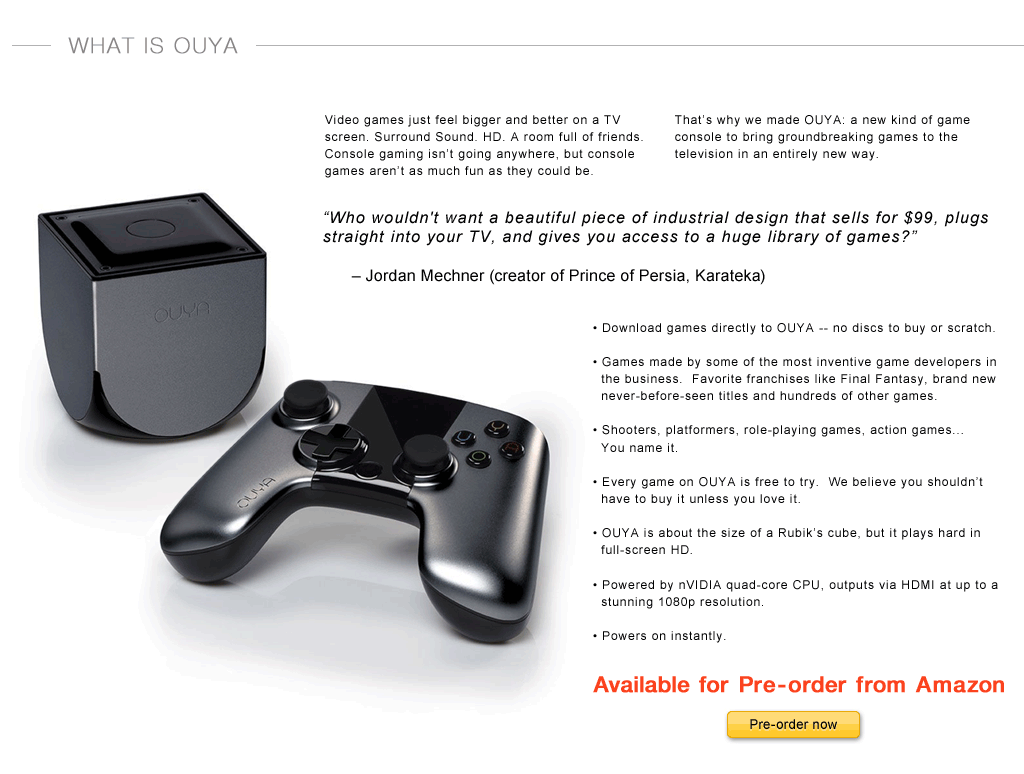
Hardware. The Ouya is an interesting machine, hardware
wise. It has an NVIDIA quad core processor,
for moderate graphical prowess, certainly no match for a PS3, but at least as
strong as most android or Iphones, possibly stronger depending on how it is
used. 1GB of ram provides speed
comparable with decent laptops for streaming or gaming. 8GB of flash memory allows for storage of
games, which, while comparable to the PS3 and Wii U at launch, is still a
rather small amount. It can be expanded
via USB storage. It has full wifi,
ethernet, and bluetooth capabilities, allowing internet connections of all
varieties and wireless connectivity. It
has USB ports for porting programs from other systems and a relatively unique
controller. The Ouya controller
resembles a Playstation Dual shock controller, with the face buttons changed to
spell out O-U-Y-A. There is also a touch
screen included which can be used as a touch screen or to mimic a mouse,
allowing for internet surfing and exploring the Ouya's stores or software.
 |
| If that controller's touch screen works out, this might be the make or break feature of the Ouya. |
What does
all this mean? Well, the Ouya is
basically an iphone made into a console, though I think that's a gross
oversimplification. It shows the basic
features of a video game console without any unnecessary extras crammed
in. No backwards compatibility with
other systems, no DVD or blue-ray playback, no slots for CDS, etc. It is a console that aims at digital
distribution, streaming audio and video, and with the basic capabilities of a
phone or medium range computer in terms of gaming. The graphics of the Ouya will not be top of
the line, however they will match and probably exceed those of top of the line
Iphones, since they will not need a number of extra components which other
consoles or phones would need for them to function properly. The controller in particular seems steps
above what the Xbox720 and PS4 are offering, by providing something sleek,
which still has touch screen capabilities, making it even more attractive to
some than a Wii U controller. Thanks to
it's supposed ability to mimic mouse movement, the controller has great
potential for bringing PC games and console games closer together.
Based on
what can be gleaned from these specs, the Ouya seems to be aiming at gamers
less interested in graphical fidelity and more invested in fun gameplay
experiences, with the ability for it to be expanded into a digital multimedia
system down the line.
Price.
The Ouya aims to do what many console gamers have been dreaming of for
decades. Make a console that will not
destroy their credit rating. The Ouya
aims to debut for only $100 at launch and one can assume that used versions
could be sold for cheaper. This
proposition is a bit eyebrow raising.
True, many computer components are much cheaper if bought wholesale or
if the company using them is in a contract with the manufacturer, but the price
seems too good to be true. Something
that, as the software previews have shown, is at least as powerful as a low end
PC with the capability to stream video from Onlive or Twitch TV that even a
minor could afford simply by saving his allowance for a few months seems like a
fantasy. So, many are skeptical of the
Ouya's ability to deliver on its low price promise considering the promised
hardware and software involved. I can
only say this. Is it possible? Certainly.
It is possible to build a working console for that little, provided you
have the capital to develop the necessary OS, get the manufacturing process hammered
out, and to maintain manufacturing for an indefinite period of time. And with the Ouya's pre-orders, successful
kickstarter campaign, and any personal investment those behind it have made,
I'd say it is possible to get the process rolling and make the Ouya with only a
small loss for each machine sold.
 |
| The Ouya's managed to ship out its developer consoles already. Will the commercial ones be as easy? |
However, price doesn't only
figure into the hardware. The Ouya's
manufacturers have outlined that any software sold on their system will be
split 70% to 30%, with the 30% going to the manufacturers, allowing them to
feasibly continue producing Ouya consoles indefinitely, provided there is a
strong software base. More surprisingly,
however, is that the Ouya requires at least one aspect of every piece of
software on it to be completely free. This
has been dubbed, free-to-try. This
system can include whole games, demos, level packs, etc. but it ensures that
any person who buys an Ouya will always have something to fiddle with even if
they don't pay a penny over the $100 price tag.
I am not certain is this particular aspect of the Ouya is sustainable,
however if the programs use in-game advertisements or other means, this
business model could prove successful.
 |
| Seems too good to be true, doesn't it? Still, cut out all the fat and just maybe the price can work... |
On the
whole, the price point for the Ouya seems too good to be true. Cheap, with free content being released
constantly from both professional and independent developers. What can this mean? Well, it could mean one of two things. It could mean that there will be much price
gouging. That free to play games with
90% of the content as purchasable DLC could become the norm. This is a depressing thought, however if the
market stays competitive on the Ouya, this may not be an issue, as price
gouging games that are free could be beaten out by reasonably priced games that
are complete, offering a free demo.
Conversely, it could mean that the Ouya is trying for an entirely
different market than the bloated AAA console gaming crowd and will be aiming
to make its money back through smaller products, but greater sales numbers, not
unlike Steam. Offering both a service
and a price that makes gamers feel as if they are being respected, I can only
hope that this is the case since it shows intelligent design with the marketing
of both the console and the software.
Approachability. The price point already makes the Ouya
approachable from almost any developer or gamer, however it seems to have far
more than price going for it. In their
FAQs, the Ouya's manufacturers claim that a store similar to an app store will
be set up to sell the software. This can
mean that anyone who develops a game for Ouya can sell it without the need of a
publisher, beyond the Ouya's manufacturers, of course, without licensing fees,
and without need for excessive testing from either the Ouya's manufacturers or
the development team. This could mean
that the Ouya will have more experimental games, that it might be an open door
to fledgling designers, or that it could be a playground for scammers. The marketplace seems to be aiming at as low
a barrier of entry as possible. This
could be solved with refunds provided for broken products, self regulating
product reviews that shut down scams like those that appear on other app stores,
or by regulation from the Ouya manufacturer, such as people releasing a scam
being permanently banned from releasing on the console again. Approachability is a double edged sword.
 |
| This is a mock up of what the Ouya app store could look like. |
This
approachability seems to go beyond just a business model, however, with the
Ouya being easily moddable without punishment from the manufacturers and with
all the tools necessary to develop games for the Ouya included with the
console. It has been years since
anything beyond the PC has allowed for such approachability and
flexibility. The Commodore 64 springs to
mind with homebrew games being capable of being ported to a floppy disc and
sold commercially. What does this mean
for the Ouya? Well, let us do a little
math. Let's assume that 100,000 people
buy an Ouya in the first year. And of
those 100,000, let's speculate that at least 1,000 develop a game to completion
where it can be released on the Ouya's marketplace. Now, assume one last time that of those 1,000
games, 100 are successful financially.
If we follow this model, then the Ouya could release at least 100
quality home brew games yearly. This
means that the Ouya could be a self sustaining gaming platform, without the
need for support from large publishers or developers.
 |
| This is the Ouya taken apart. Four screws. That's all it takes to mod this baby. |
The Ouya
seems to be a very approachable console, but it may end up being too
approachable. Releasing a scam game on
an Iphone doesn't require as much effort as one might think and the same could
be said of the Ouya. Games with so many
bugs or glitches that they are unplayable could also become a problem. However, if the app store is properly
regulated and decent games are released, both from professional designers and
from regular people making homebrew games, it could become a timeless machine,
where one does not need a $10,000,000 budget to make a game. They just need the time and the will.
Focus. This category seems a bit odd, but just
stick with me. You see, the Ouya appears
to be focusing, at the moment, on gamers.
Not simply hardcore or casual gamers, but gamers in general. Developers like Mojang and Square-Enix have
made promises of having Minecraft and Final Fantasy ready for the console,
while any number of android apps which captured the imagination of casual
gamers also seem to be lining up to be ported.
The promise of Onlive streaming services for games as well as Twitch TV,
which showcases competitive video gaming, seems to further demonstrate the
Ouya's focus of being a cheap, accessible console that all gamers can enjoy.
 |
| What does it take to make competitive video gaming relevant again? Get it to the people! The Ouya can do this. |
The Ouya also seems to embrace
its limitations, with its conservative design and ambitions. This means that the focus will be on smaller
game development from teams of tens or even only a few people, without the
bloated design groups of a AAA title like Dead Space 3 of Final Fantasy
13. I have already explained how both
illusion in gaming and how limitations can enhance a product, so hopefully
recognizing this will allow it to avoid the excessive costs of the AAA console
market while still delivering a solid product.
 |
| How gamer focused is the Ouya? Someone has already developed and SNES emulator for it. Nuff said. |
The Ouya's
marketing also seems to rely heavily on indie game designers embracing them as
a more cost effective way of getting their games out there and making money for
their teams. A more indie focused
console could create a niche for itself that will either supplant mainstream
console gaming or live alongside it as a niche.
Either way, the Ouya seems to win.
I believe that its focus, at least in this department, is admirable, as
it does not aim to compete with the unique features of the Wii U or the
graphically superior Xbox360/720 or PS3/4.
Instead, it aims to create a place for itself.
Game Development. Honestly, the Ouya's impact on game
development is what has me the most excited.
They aim to streamline the development and release system while creating
a more symbiotic relationship with developer and publisher. Ouya games can be created on the Ouya or
created separately and made to work on the Ouya, then submitted to the Ouya
store and published with none of the hassle.
While I have said that this could lead to shoddy or buggy games, it also
allows genuinely good game designers to release their titles without jumping
through hoops for larger publishers, allowing them to remain small and
independent, making a career out of their game design rather than being tied to
a publisher for their paycheck.
 |
| Cryamore is PC Kickstarter JRPG. That has promised Ouya support. THIS is what you might expect from indie game designers for the Ouya. |
The Ouya
seems to be aiming to put the power back into the hands of the developers
rather than in a shareholder meeting asking the question "Is it guaranteed
to sell?" I am excited for the
prospect because the Ouya could work alongside crowd sourcing websites like Kickstarter
or Indiego to allow gamers to choose what gets made rather than a group of
businessmen. With any luck, this will
also have a sort of self regulating effect.
Under this kind of system, gamers vote for games, sequels, genres, etc.
with their wallets, allowing them to regulate the market based on demand. If there is a demand for a JRPG, then one can
be put on the Ouya and it will be successful.
Complemented by the free-to-try model that the Ouya is adopting, it
would seem that gamers will be allowed to have all the choice in a game. If they like the first level, or the demo, or
the free game, they can throw money at it and be rewarded with what they want.
 |
| Some big developers have promised Ouya support, but don't expect Final Fantasy 13 on the Ouya. |
 |
| Final Fantasy 3, though? Yeah, I can see this on the Ouya. |
In terms of game development,
the Ouya could revolutionize the industry.
With the over bloated, often disrespectful, price gouging methodology of
the modern console gaming scene, a crash like the video game crash of 1983
seems all but inevitable. The Ouya,
however, favoring the indie scene, could survive that crash and become a beacon
for gaming culture, much like the NES did.
However, that is only one possible scenario.
Conclusion. The Ouya still has a lot to prove, to be
honest. The price point needs to be
proven, the software support needs to be proven, the ability for developers to
quickly and easily release products for the system needs to be proven, and some
form of quality control will need to be exercised. There are a number of ways the Ouya can fail,
from internal bugs in the OS, to support falling through from its
partners. However, this is true of any
product. I am cautiously optimistic
about the Ouya, thanks to being an avid member of Kickstarter. I did not support the Ouya during its time on
Kickstarter, but I have supported a number of indie game designers who promise
Ouya support and seem excited at the prospect of a home console tailored for
them.
 |
| This is every gamers dream. As Jordan Mechner put it, a game console that's $99, plugs straight into the TV and has a huge library of games ready to try out of the box for no cost? Yes, please! |
The Ouya may not revolutionize
the games industry as I have said it could in my more extreme predictions, but
I believe that it will be, at the very least, a moderately successful
console. If it can maintain a low price,
stay in touch with its fans and supporters, exercise quality control to cut
back on any would be scams, and truly support those who use the console as a
development tool, I believe that it will be able to breathe some new life into
the games industry, bringing casual games to a wider audience than before and
giving indie developers a place they can call home. If the information that is available to the
public about the Ouya is true, then I am 100% confident that it will at least
achieve some level of success. It could
become a mega hit which every console gamer will buy as their second or even
first console after their main one becomes out dated.
So, will I be getting
one? I'll have to wait on the game
library to become more concrete before I decide on that. And for a bit more information on how certain things are handled. Computer technology isn't black magic, it's science, and computers, even supposedly plug and play machines, are often finicky. I may wait till the Ouya gets some of its bugs or details hammered out before I jump into the Ouya pool headfirst. I can say this, though. It's a damn sight more likely that I'll buy an Ouya than a PS4 or Wii U.
More information
about the Ouya can be found at it's website,
here, and at its Kickstarter page,
here.