Showing posts with label creator spotlight. Show all posts

Sunday, August 10, 2014

Creator Spotlight: StarQuail


            Welp, it's that time again.  After a fair bit of delays due to work, and the release of my review of their signature game, it's time that we give StarQuail Games a look see.  LET'S GET TINY!!!
The face of polish and comedy...after all, who could take a quail seriously?
            First, a little history.  My first encounter with StarQuail was during my initial Kickstarter binge.  I was hooked on the idea of a game that didn't exist being funded entirely by the fans and this was one of the first ones I gave a look to.  While still sketchy on the idea of Kickstarter, I had a little extra cash lying around and Tiny Barbarian DX, the title being advertised by StarQuail, was interesting.  The music was good and it had an aesthetic that matched Robert E. Howard's Conan the Barbarian stories, which I had always had an interest in, but never got around to.  What really sold me on funding Tiny Barbarian DX, however, was the original Tiny Barbarian.

This is the image I was greeted with when I found Tiny Barbarian DX on Kickstarter
            Michael Stearns, the patron of the Tiny Barbarian DX Kickstarter, was its artist, alongside lead programmer Daniel Roth and both basically formed StarQuail because they liked making games, many of which were free, as is common amongst indie developers like Amon26 or Endless Fluff.  Among these, was the original Tiny Barbarian, a take off on the classic story of "The Frost Giant's Daughter."  Stearns advertised this game in the Kickstarter for Tiny Barbarian DX, encouraging people to give it a look and see if the art and gameplay was something they enjoyed.  So, I did.  It was a bit clunky at times, but the music, the visuals, and the overall arcade feel of the game really sold me on Tiny Barbarian DX and after its release, the studio sort of emerged on the map, for me and many other gamers.
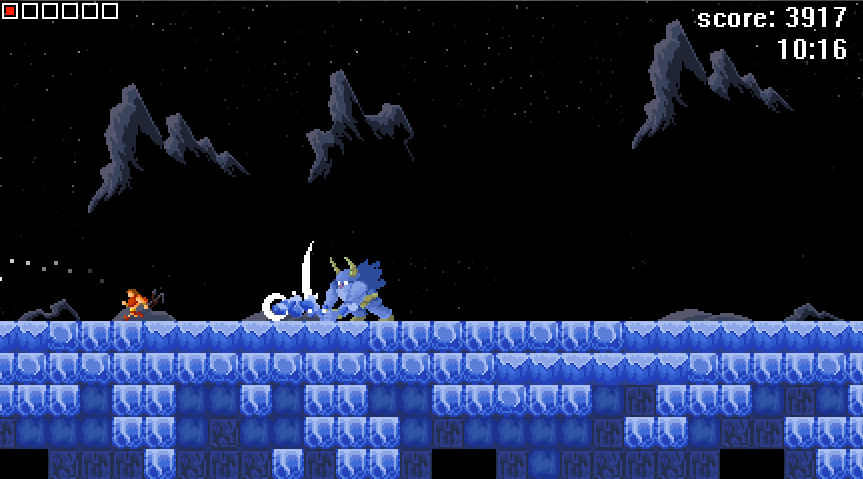
Nothing sells you on a game like throwing down with a few ice giants.
            However, like I said, Stearns and Roth had been making games for years before Tiny Barbarian DX released.  StarQuail itself was formed in 2006 and between then and the 2012 Kickstarter, they created many games.  The first was the vertical scrolling game Sky Puppy for the PC, a free ware game which had a flying puppy avoiding dangers to look for treats.  Following this was Crystal Skies, playable on both PC and Xbox 360 which is a mix of puzzle platformer and arcade score attack.  It features the soul of a dead fish bouncing around a maze of colored spheres, trying to get coins, much like the bonus stages in the original Sonic the hedgehog.  These games were somewhat amateuristic in design and show the evolution of StarQuail as they experimented with genres and design theory to try and improve their skillset.  And improve they did, as their next release, Astroman on the Xbox 360, featured an adventure focused on a space explorer platforming around alien worlds, with multiple worlds accessible from his space ship.  It was very much the template that StarQuail would embrace, featuring only minor innovations to set it aside from other platformers, but with a unique art style and sound track with the kind of polish necessary to avoid frustration and win over tentative gamers.

Starquail has a fondness for timed score attack games, apparently, like Sky Puppy here.
            Following Astroman was Tiny Barbarian and Tiny Barbarian DX.  These games are great and offer a kid friendly way into the world of swords and sorcery.  They offer tribute to Robert E. Howard's work, however are far less visceral and more fun and funny.  At present, StarQuail seems to be devoting most of its time towards Tiny Barbarian DX, as the game was released with only one of four episodes.  However, a second episode was released early in 2014 and it seems as if the developers are fully committed to finishing this project, as it is a work of passion.
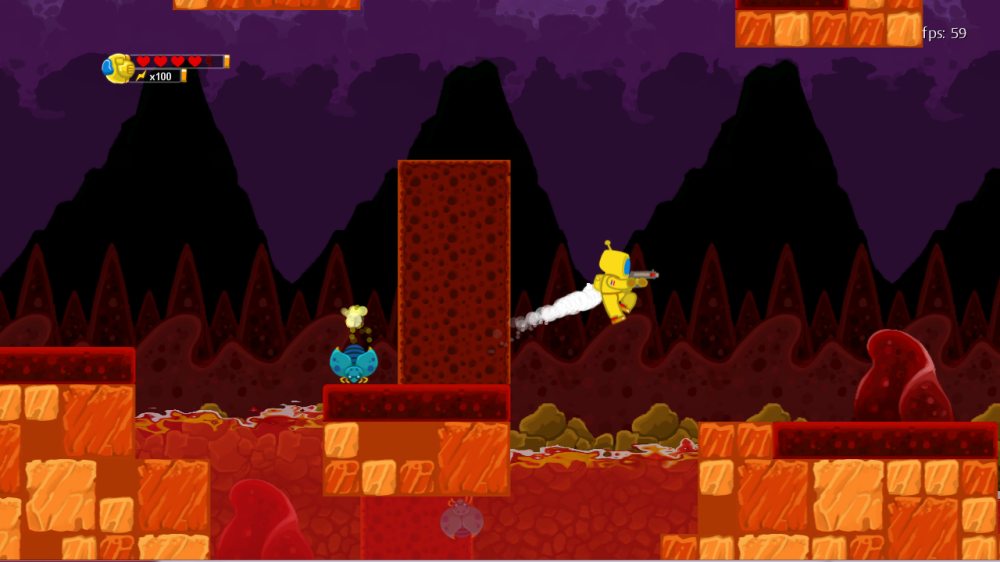
While not groundbreaking, Astroman was fun, polished, and interesting.  That's worth a lot in the age of bugs, broken promises, and outright lies from developers.
            Now, what makes Tiny Barbarian DX stand out?  Honestly, it's the games immersive storytelling, unique art style, and polish.  Tiny Barbarian DX is a pixel art style of game that are rather common these days and the platforming is nothing new or spectacular, however I like to think that it stands out because it knows what it wants to be.  It wants to be an arcadey, pulp-esque story that can be finished in a single sitting, but which is great for speed running and score attack challenges. 
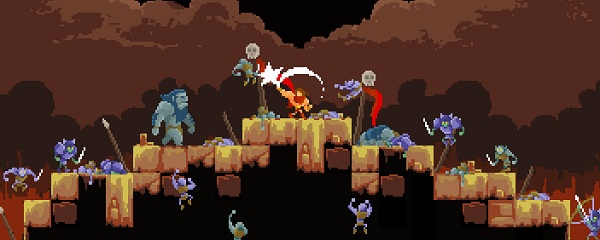
It pays to love your work, eh, Tiny?
            Some might ask how a pixel art arcade title could be immersive in its storytelling, but I say, you have to see it to believe it.  Tiny Barbarian DX eschews long bits of dialogue or exposition in favor of showing rather than telling.  The story never stops so that you need to read or catch up, it's all done through pantomime and body language.  And honestly, it works really well, from Tiny moving on the player's command to eat a vulture to regain his strength, to him flexing in front of ladies, to him riding out of a collapsing palace.  The context is always clear.  While the story isn't deep, it lets the game show you rather than weighing you down with dialogue or exposition.  On top of that, Tiny Barbarian DX features locales that are seldom seen in games, as they look like they were ripped straight out of Robert E. Howard's Hyborian age.  Wasteland palaces decorated with snake motifs and dank jungles fill the land with many secrets to discover, but they all feel distinctly unique.  Alongside the locales, the art style feels like a 1980s arcade title.  It has animations that are too smooth and colors too bright and vivid for the NES or the Atari, but too primitive for a 16-bit console, fitting it right into the unusual world of arcade graphics.  It's refreshing, considering the glut of RPGmaker or NES-style copy cat games that have been arriving on the market.  What may make Tiny Barbarian DX stand out the most, however, is the polish.  Unlike many early NES games, Tiny Barbarian DX feels very well play tested and the controls work exceedingly well, with a number of additions that allow the game to be enjoyable in spite of its difficulty.  While there are a few moments that may be unfair, the game is, by and large, very approachable, as some individual sections are hard, but there is no lives system so the only penalty for death is a lowered score and more time on the clock, showing how you need to improve.

A world of monsters and demons, but yet still approachable, colorful, and polished.  A rare breed.
            Jeff Ball, a friend of Stearns and Roth, composed the music for Tiny Barbarian and it is beyond glorious, further emphasizing the arcade feel of the title while keeping the audience pumped for what's coming.  It's pure chiptune glory and it works surprisingly well.

            Speaking purely as a gamer, I can understand why some might pass on Tiny Barbarian DX, as it is a little expensive.  I'm biased too, because I helped fund it.  At $10 on steam, a score attack game that can be beaten in an hour, even with the promise of more content down the line, is a hard sell.  But I look at it like this.  Robert E. Howard's pulp stories about Conan were short, bite sized bits of fiction that gave us a quick diversion from the annoyances of life and allowed us to enter a flight of fantasy, full of dark sorcerers, monstrous beasts, and one, lone barbarian hero.  Pulp stories take their name from the low quality paper they were printed on because they were considered quick entertainment in an era before gaming or even mainstream television were so domineering.  And to me, Tiny Barbarian DX is like the pulp stories of the modern game industry.  It's short, but it's enjoyable, offers a nice diversion, and promises to build on what has already been established for fans and newcomers alike.  If anything, I have to admire Stearns and Roth for making the game at all, because it IS a hard sell.  But they made the title they wanted and I can't help but enjoy the amount of personality and goodwill they've put into Tiny Barbarian DX.  They even took the time to make a digital manual complete with expository comic, like those made in the NES or SNES days, and put it up for free online, alongside links to the free download of the Original Tiny Barbarian for people to try and see if they like it before laying down money.  To me, it speaks of the kind of developers who aren't in it to get rich or even to get noticed, though that is nice, but who are just doing what they love as a passion project.
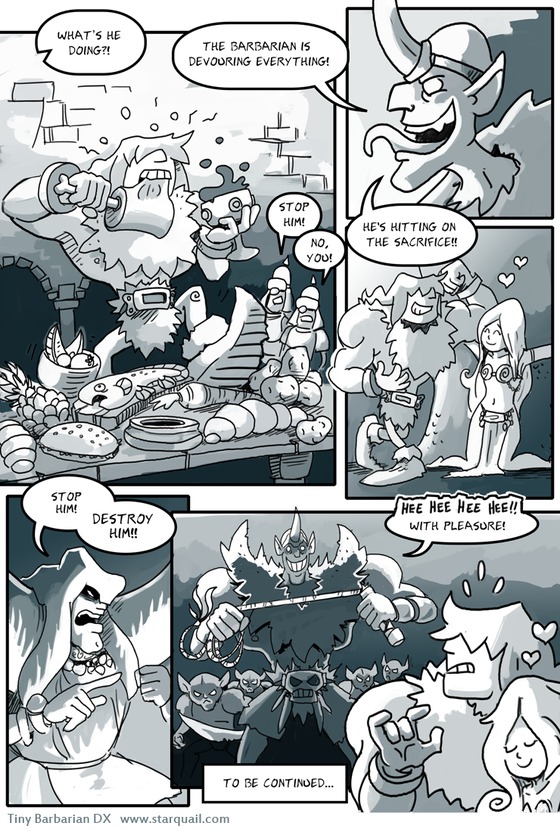
This kind of dedication to a game they love is what I love about Indie developers, especially StarQuail.
            I think we should support StarQuail games.  They're incredibly talented for how small the studio is and if Tiny Barbarian DX is what can be produced on a meager $12,000 Kickstarter, I'd love to see what they come up with next, perhaps on a bigger budget.  They are a studio to look out for and I recommend them.  For those looking for StarQuail's home page, complete with links to all their games, including the free ones, click here.  For the Tiny Barbarian Soundtrack, created by Jeff Ball, check here.  For the now expired Kickstarter, check here.

Looking forward to Episode 3, guys :)
            I found this studio through Tiny Barbarian and I believe it is their best property, but I'm anxious to see what they can come up with next.  Mr. Stearns.  Mr. Roth.  Mr. Ball.  I hope you three become the next Robert E. Howard.  I'm anxious to return to Cimmera.

Saturday, July 12, 2014

Creator Spotlight: Matt Gilgenbach


            Usually, when I talk about creator spotlight candidates, they have a special connection to me.  I talk about both their past, accomplishments, and my personal story in regards to how I came to be acquainted with the developer.  However, this week is a bit different.  I've only played one game by this man and it's not the one I intend to talk about.  So, why am I talking about him?  What gives me the right?  Well, because even if I never played his games, I'm glad that they exist.  Ladies and gentleman, this is Matt Gilgenbach.
Meet Matt Gilgenbach of 24 Caret games

            Been a while since I did one of these, huh?  Well, I wanted to talk about this particular developer because recently, I gave up on a game called Call of Cthulhu: Dark Corners of the Earth.  Gilgenbach didn't make this one, but hear me out, I'm going somewhere with this.  Call of Cthulhu...is just awful.  It had a spark of brilliance in it, as it stayed relatively true the idea of alien horror invading the world we know and our mind slowly eroding to compensate that is a hallmark of H.P. Lovecraft's work.  It very much matched the pulp fiction culture of the time, with the hero being a noir-esque detective investigating strange goings on that led to the discovery of alien nightmares beyond all imagining.  I'd even go so far as to say the muddy graphics helped in this regard, giving a bleak feel to the game, and the atmosphere was both very alien and lonely in places, but also claustrophobic and paranoid when it needed to be.  The story is also really amazing too, mixing Dagon, Call of Cthulhu, Shadow out of Time, and Shadow Over Innsmouth together in a blender.  However, it is hampered by incredibly poor controls, level design that is frustrating to deal with, a huge number of game breaking bugs, and a frustration factor that makes the game nigh unplayable as a horror title, as the first time a mob of sick, cultish townsfolk chase you, it's scary, but the fifteenth time you deal with it, it becomes annoying.

The Alien horror of the deep ocean mixes with the great atmosphere of Lovecraft...at first.  It quickly gets frustrating though.
            Slowly, I grew to hate Call of Cthulhu, as it was a frustrating game that I was unwilling to slog through for the tiny, MICROSCOPIC bits of quality I could find.  However, I love the work of H.P. Lovecraft...and after giving up on the game I realized that while I hated it...I was glad that it existed.  Because it meant that Lovecraft COULD be done in game form...hopefully it could be done better next time.  It showed that something had value in being created.

Meet Call of Cthulhu's game breaking glitch.  If you don't know exactly where to point and shoot this scope, the game is unwinnable.  Problem is, there's no indicators of where to shoot.
            This brings me to Matt Gilgenbach.  Gilgenbach has a rather skewed view of the world, having near crippling OCD which have led to nightmares when sleeping and difficulty adapting to normal life when awake.  This led to Gilgenbach having depression, even prior to his entry into the game's industry.  Despite this, however, Gilgenbach got his start in the AAA industry, making games such as Ratchet and Clank: Size Matters for the PSP.  Ironically, this is the only Gilgenbach game I have ever played.  It was a decent enough title that, while fun, basically did nothing new and I didn't care whether or not I played it.  Gilgenbach would have fallen off my radar completely if not for the fact that he ditched the AAA industry to go indie.  On the indie scene, Gilgenbach basically defined games that, whether you love them or hate them, you can't help but be glad that they exist.

While fun, the only Gilgenbach game I've ever played is...kinda generic and forgettable.
            After leaving the AAA industry, Gilgenbach created Retro/Grade, a shooter that played in reverse.  You have to basically intercept and unshoot your shots, while avoiding the shots you originally avoided so that the enemies can unfire them, in a mind bending bit of temporal paradox.  Interestingly, it is also a rhythm game, which adjusts the music based on the shots you intercept to create different tunes.  I was both visually stunning and an interesting twist on a tired formula.  There are plenty of shooters, even rhythm based shooters like Rez, however it was an interesting idea to have the game playable in reverse.  What's more, you could control the game with a guitar controller from Guitar Hero.  The game was, sadly, a commercial failure, but looking back, I can't help but approve of the experiment.  Gilgenbach created a game that he had passion for and, rather than following the leader and trying to make the next Minecraft or a retro 16-bit throwback game, he created something wholly original and interesting.  That's admirable, even in the indie scene, and it provides an interesting point of reference to designers in the future to play around with.

            Unfortunately, the failure of Retro/Grade alongside Gilgenbach's OCD caused him to spiral into a period of even greater depression.  However, like a true artist, Gilgenbach tried to take what he had experienced, the hell of his OCD, his nightmares, and his depression, and make something out of it.  Make a game out of it.  And this is the reason I decided I wanted to talk about him.  The game he made...is Neverending Nightmares.

Oh...oh wow...so...anyone else not sleeping tonight?
            Confession time.  I have an odd fascination with horror games.  I don't really like being scared, but I think that horror titles can explore a part of the human experience that few other games can and thusly are unique, powerful experiences.  This has drawn me to a few select ones, like the Silent Hill or Clock Tower games...and it's what drew me to Neverending Nightmares.  The game appeared on Kickstarter when I was looking for fresh new experiences to support and fund.  While I didn't fund the game, I kept an eye on it, just in case...because like with many games, I wasn't sure if I wanted to play it...but I DID want it to exist.

Yes, I'm glad this to exists.  The hell is wrong with me?!
            Well, Neverending Nightmares reached its goal and recently released an alpha build for backers, which I got to see through the Let's Player, Lotus Prince.  The game is sublime.  It features a beautiful black and white art style with highlights of red for blood and with a number of brilliant mechanical and storytelling ideas. 

            The game's basic focus was on Gilgenbach's OCD nightmares, which frequently had him waking up, only to still be asleep and trapped in a nightmare, a cycle which would continue until he eventually did wake up.  Here, this is how you handle both progression and death.  Dying will return you to a bed where you wake up from your nightmare...only to realize you're still trapped in an entirely different nightmare.  When you complete a section, you either die or wake up...only to find you are worse off than before.  It's an interesting idea that gives respawning a very organic feel and allows the players to explore the world without feeling like they're doing the same sections over again, since each nightmare is, in the context of the game, new.
Waking up provides no escape from the nightmare that is life.

            Neverending Nightmares does what all good atmospheric horror games do.  It will create an aura of unease around the player, without the need for musical stings or jump scares...at least not as much as other games.  During Lotus Prince's play through, he found a room filled to the brim with creepy dolls, many missing their eyes, all staring at you.  There are no musical stings or camera changes...the game lets them sit there.  The player believes something bad will happen...but doesn't know when.  This is the feeling of true terror and helplessness, making us want to run from the section.  Also, only objects highlighted with red blood can be examined, meaning that to advance in the game...you have to subject yourself to the horror and the threat of bodily harm or mutilation that is forthcoming.  The trailer even shows a large degree of disturbing imagery, including a man prying a bone out of his cut open arm.  The art style is not meant to be realistic and is hand drawn, but because of the 2D and black and white aesthetic, it is suitably unsettling, especially during the death and mutilation scenes.  The lighting however is one of the game's best features as the darkness really feels alive, chased away only by a candle you can hold or the few lights on in the game...it feels oppressive, crushing...and absolutely perfect.

Oh god...why did it have to be dolls?! O_O
            I've only seen two of the proposed six sections of the game, the first being a house in the woods where things are...a bit tense, to say the least.  The second is a mental asylum, with creepy patients roaming the halls.  I adore Neverending Nightmares.  However, I don't know if I will ever actually play it.  The game is scary.  Scarier than almost any game I've seen in a long time.  It draws on a primal fear, born of Gilgenbach's own human experiences and uses that fear as both a storytelling medium and a driving force for the player.  I don't know if I can handle that.  But even so, I am still so glad that Neverending Nightmares exists.

Have I mentioned this game gets DARK...
            I first encountered Matt Gilgenbach as a developer trying to sell a dream.  He basically laid out that if he couldn't get Neverending Nightmares funded, he'd have to give up on it, not having the time or the money to do it otherwise.  He wanted to turn his fear and his experience into something constructive, that others could understand and enjoy in the form of a game.  And, I was captivated by it.  I didn't want to play it, but that didn't mean I couldn't recognize quality, passion, and something truly amazing.

By surviving our nightmares, we can grow stronger.
            I am glad that Neverending Nightmares exists because like Retro/Grade or Call of Cthulhu, it offers something unique and interesting to the world.  By extension, I'm glad we have developers like Matt Gilgenbach.  Someone willing to take a risk on a dream and work towards making their own nightmares something others can actually see and enjoy.  I've heard that sometimes art merely exists for art's sake and I believe that Neverending Nightmares is definitely art.

Regardless of your stance on art, the game has polish.  Look at that...I didn't even notice that at first!
            I do believe that I will buy Neverending Nightmares at some point.  It's an interesting game that has captivated me with it's art, story, and tone.  However, that is a ways off yet.  For those who want a more immediate interaction with Matt Gilgenbach, you can find Retro/Grade here, the completed Neverending Nightmares kickstarter here, and the Steam Greenlight page, with playable demo, here.

Well done, sir.  Well done.
            As a final word to Gilgenbach, I'd like to say congratulations.  In spite of struggling with your nightmares and your depression, you've created something truly amazing that, no matter how well others receive it, is marvelous simply because it exists.  And so are you, sir.  I look forward, Mister Gilgenbach, to seeing what else you can come up with in the future.

Dream on, dreamer.

Friday, May 9, 2014

Creator Spotlight: Zeboyd


            I tend not to do this, as this is a team of two developers at once, and these guys are pretty well known as far as indies are concerned...I mean, the titles of their games are too insane to ignore, but...these guys are just brilliant.  So insightful, so intelligent, and yet, still humble.  These are the models that every wannabe JRPG developer, that every piece of RPG Maker shovelware who gets onto Steam, should look up to.  This...is Zeboyd.

Retro does not even begin to describe this company...and yet, still more modern than a lot of other JRPGs.
            Zeboyd consists of Robert Boyd and William Stiernberg, with the duties for each neatly divided down the middle.  Boyd is the programmer and handles most of the storytelling and gameplay aspects, while Stiernberg is the artist, who creates characters, environments, and effects.  To me, it's amazing how well this works.  Neither side seems out of the loop, which helps because it's only a team of two, but...they work so well together to create such unique titles.

The men behind the company.
            Before we get too in-depth with the praise, however, let's go on a little trip back in time.  It's 2009.  Xbox Live Indie Games becomes available on the Xbox Live Marketplace, but only reaches a...minimal audience.  Robert Boyd decides to leave his day job and, being skilled with programming languages and having a love of JRPG and visual novel games, decides to try his hand at XBLIG.  He and Stiernberg's first title sold less than 1000 digital copies and was a visual novel style game parodying science fiction tropes.  It was called Epiphany in Spaaace!  Despite the minimal sales, Zeboyd tried again.  This time, it released a game called, Molly, the Were-Zombie.  Also an interactive novel game, it also sold less than 1000 copies.  Apparently, this lack of success made Zeboyd change their strategies just a bit.

Not exactly riveting stuff, but Epihphany in Spaaace! still maintains the trademark off humor of Zeboyd.
 
Have I mentioned that Zeboyd loves their cameos?
            Zeboyd's next title is one of the big ones it's known for.  Breath of Death VII: The Beginning.  This title is remarkable, and not just because Breath of Death I-VI don't exist(even the title is a parody...).  Breath of Death is built as a throwback to old 8-bit RPGs with a somewhat animated intro mimicking what might have been seen on the NES.  It plays very much like Dragon Quest and features as main characters, a skeleton warrior, a ghost priest, a vampire mad scientist, and a zombie prince.  This game takes place after the end of the world where the undead have taken the place of humanity, built cities, and are occasionally plagued by monsters.  This game is insane.  It's rife with parody, as the main character communicates via thought bubbles, since he is a skeleton and has no tongue, but while the players can hear him, others take him as a silent protagonist, and we are subjected to some clever humor lampooning the notion.  It plays very stiffly, but this is by design, as it mimics the controls of Dragon Quest.  However, Robert Boyd wasn't shackled by that design mentality.  Rather than making a straight up copy of Dragon Quest, he thought of ways to improve the experience for players.  First, the experience is relatively streamlined.  The only real items carried are potions, which one can use to revive a fallen comrade.  Other than that, there are basic equipment slots for everyone, though it usually consists of weapon and armor.  However, it wasn't just made simpler.  The game also had a number of improvements to the old formula.  There was a change to leveling.  When a character leveled up, they got an option of what skills to learn, usually either strength based or magic based, so players could pick and choose to build a balanced or specific stat heavy character.  Combo attacks were added, where some characters can forfeit their turn to do a single, powerful move to either heal or inflict tons of damage.  Enemies grew stronger as turns went by, encouraging encounters to be speedy, lest the whole party get wiped out.  Most notable amongst the changes to the standard JRPG formula, however, was the addition of the "Fight" option in the menu, eliminating the need to look for random encounters AND the fact that the number of encounters in an area was limited, and once that number was reached the only way to get more was to use the "Fight" command.  It was a brilliant way to balance the grind of the JRPG with the fact that people get tired of having to slog through weaker enemies if they need to back track.  Breath of Death sold 40,000 copies during its time on XBLIG and made enough money for the team to try another game.
 This opening...sooooo many warm fuzzy memories

            Following Breath of Death, Zeboyd made Cthulhu Saves the world.  Yes, you read that right.  Cthulhu.  Saves.  The World.  It's a game about the elder god from the  Lovecraftian mythos, re-imagined as a humorous RPG character.  Why is he saving the world?  Well, because the only way to regain his dark, evil, wicked power...is to become a true hero.  I am not kidding at all.  This game was closer to a 16-bit RPG and kept many of the innovations that Breath of Death pioneered, including the leveling systems, limited random encounters, and streamlined approach.  The game stands out for it's humor, which is genuinely funny, and the tributes paid to Lovecraft and the world he built.  What's remarkable about the game is the attention to detail paid in the art assets.  While characters aren't displayed on screen, attacks have more effects to them and every single enemy in the game has two different sprites.  One for normal and one for insane, since turning enemies insane is part of the mechanics of the game.  Stiernberg went out of his way to make characters, even hideous monsters, lose their minds when turned insane.  It's pretty amazing.  Cthulhu Saves the World is a fitting sequel to Breath of Death and was released with a bit more fanfare.  A parody song was made for it and after its release on Xbox Live, it was eventually bundled with Breath of Death for sale before being released on Steam.  This bundle was immensely successful, selling well over 100,000 units only four months after its subsequent release on Steam.
 Yes, this is a real thing used to promote the game.  Wow...
            This was how I was introduced to the game.  Zeboyd, however, has managed to do more than merely be successful by mimicking old school JRPGs.  They've earned a huge amount of goodwill from fans like me.  You see, all Zeboyd games are released at extremely low prices.  The Breath of Death/Cthulhu bundle on Steam was released for $2.99 without any discounts.  And these games also have a staggering amount of extra features, including new game+ modes and alternate story modes, where Cthulhu is replaced by another character, with cameos from some unexpected places.  Cameos from previous games are also a hallmark of Zeboyd, so players can always expect to meet some old friends.

$2.99 or less.  What's your excuse for not playing these games?
            So, after flying high, releasing their games on Steam to huge success, and still being humble, how does Zeboyd follow it up?  By being entrusted to finish up the Penny Arcade video games.  Zeboyd created Penny Arcade: On the Rain Slick Precipice of Darkness 3 and 4.  These games are...pure madness.  What's more amazing is that people need not have played the previous games to enjoy them or even be a fan of Penny Arcade's comic.  They are magic.

Never really been a PA fan, but alright, Zeboyd, show us what ya got.
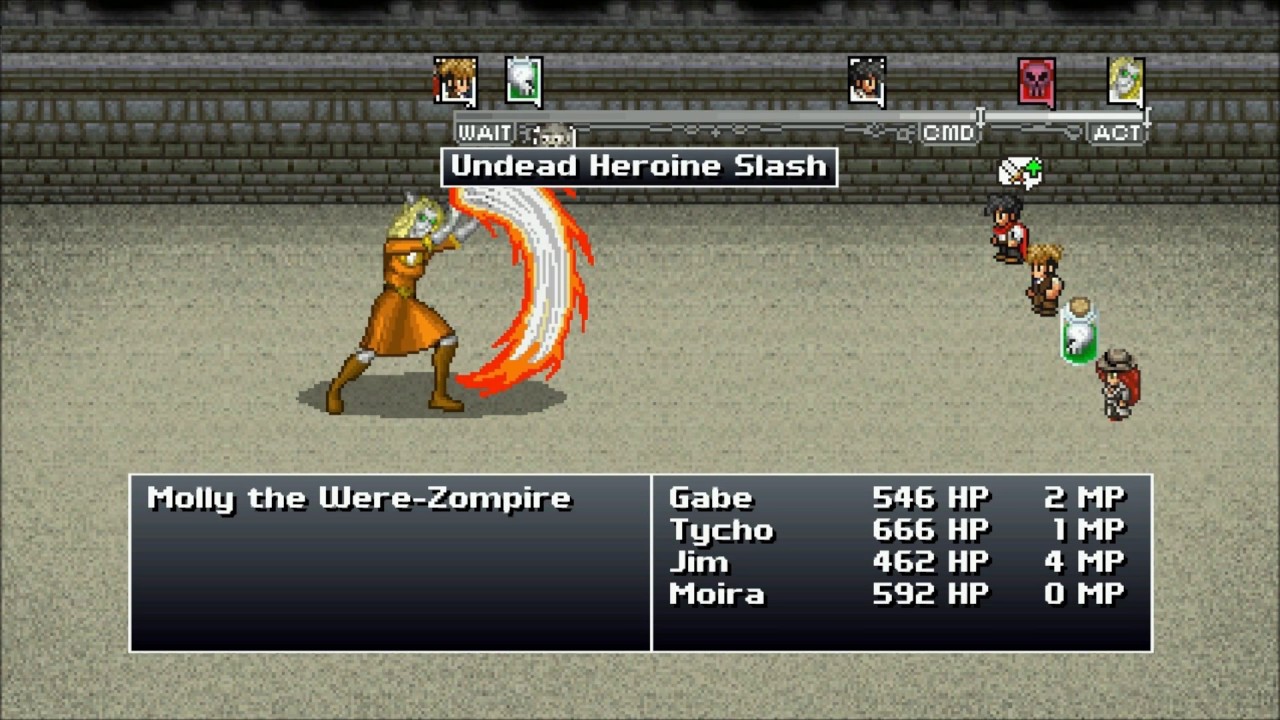
            Zeboyd decided to break up the formula as well as update the graphics on their game engines.  Penny Arcade 3 featured a class system, with such classes as crabomancer, hobo, gardener, soothsayer, etc.  It allowed players to mix and match up to two classes, along with their own abilities for some truly unique combos.  Players could summon the apocalypse, turn into a T-rex, and summon a swarm of honey bees all in one turn.  Speaking of turns, the game features an active time battle system that is more akin to Final Fantasy 10 than any other.  Players can see when they are coming up in the que and when the enemies are and, interestingly, can disrupt enemy movements to alter the order.  Also, enemies can be seen on the map, so random encounters are not a problem.  The combat is fun, fast paced, and allows for some bizarre ways to play the game.  There are also bonus dungeons near the end of the game and different filters to apply to the game, such as turning all the characters into girls or furries.  It's pure insanity.

Yes, that's a T-rex and a skull in a jar fighting the Thinker.  This game is crazy.
            For Penny Arcade 4, the same battle system was used, though the class system was replaced by a pokemon-esque system of raising companion monsters.  The humor from all their previous titles are intact, however there are some odd touches that add a bit of darkness to the humor.  More than that, the graphics for this title are simply beautiful, with players visiting some of the most unusual of places, such as a giant tree with a zoo inside it, the inside of a monstrous train that is literally alive, with guts and everything, and a temple run by different incarnations of the same guy.  Stiernberg really had some fun with this one.  The game lacked some of the extras of previous titles and the lack of random encounters made this and Penny Arcade 3 harder, since grinding was not an option, but on the whole, they were great games.

Yeah, have I mentioned these games are gorgeous yet?
            Ironically, for all my praise of these games, I dragged my feet with playing them.  For me, Zeboyd games are always good.  Not necessarily great, but good.  They are solid, innovative, wonderful...but none of them have really captured my heart the way Chrono Trigger or Final Fantasy 6 have.  I've always enjoyed my time with them, because they are fast, fun, and quirky, but...well, I suppose it's unfair to compare a game built by two people to the best of Square in its hey day.

            Interestingly, Zeboyd does not produce the music for their games in-house.  They do not have a dedicated composer, so they take to the interwebs and use music from indie musicians.  What is perhaps more amazing is that all the tunes work.  They all fit the game and the settings and are often quite beautiful.  Kudos for their choices.

            Zeboyd seems like it's here to stay.  The only cost for the team is their equipment and their own upkeep.  With two developers, that's not terribly much.  And it allows them to continue selling their titles for dirt cheap and getting more good will with the gaming public.  Of the few companies I trust for quality, there are only 3 at present who I would buy any game from on release day.  Vanillaware, for making some of my favorite games ever, Mistwalker, for creating spiritual successors to Final Fantasy, many of which stand side by side with their older brethren...and Zeboyd.  Zeboyd games may not move me like Mistwalker games, but...they are always, ALWAYS good.  Always worth my time.  And always dirt cheap.  Zeboyd is a product of good will and effort.  They have earned my trust.

Zeboyd may not be Last Story good, but they are still damned impressive.  Hell, almost NO ONE is Last Story good...
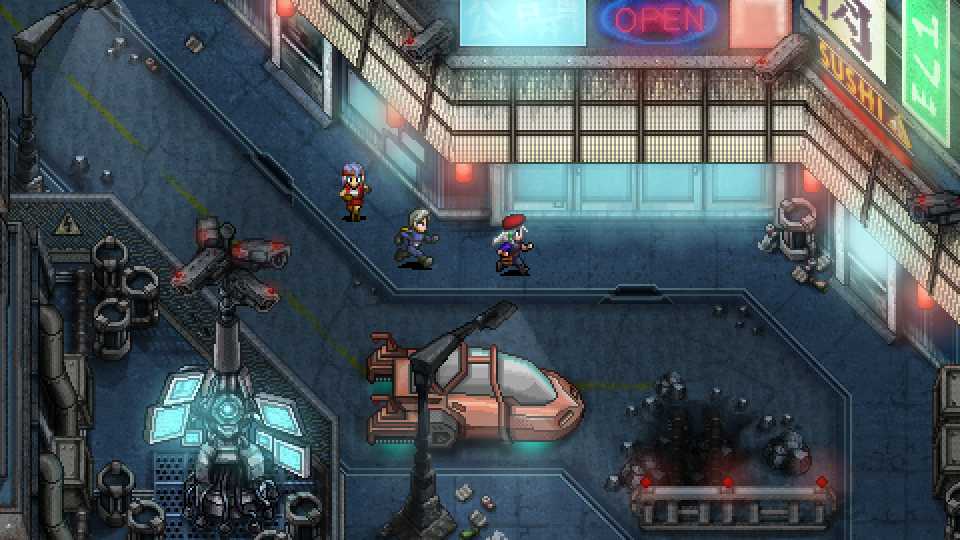
            What does the future hold for Zeboyd?  Well, they recently went to Kickstarter to fund a sci-fi Phantasy Star-esque space RPG, which looks to have sprites and graphics very close to those of Chrono Trigger.  Perhaps they are going to try and butt heads with giants.  All I know is that I helped fund it and that they're working, even as this post goes up, to get it ready.  Be on the lookout for Cosmic Star Heroine.

You can't tell me that doesn't look sweet.
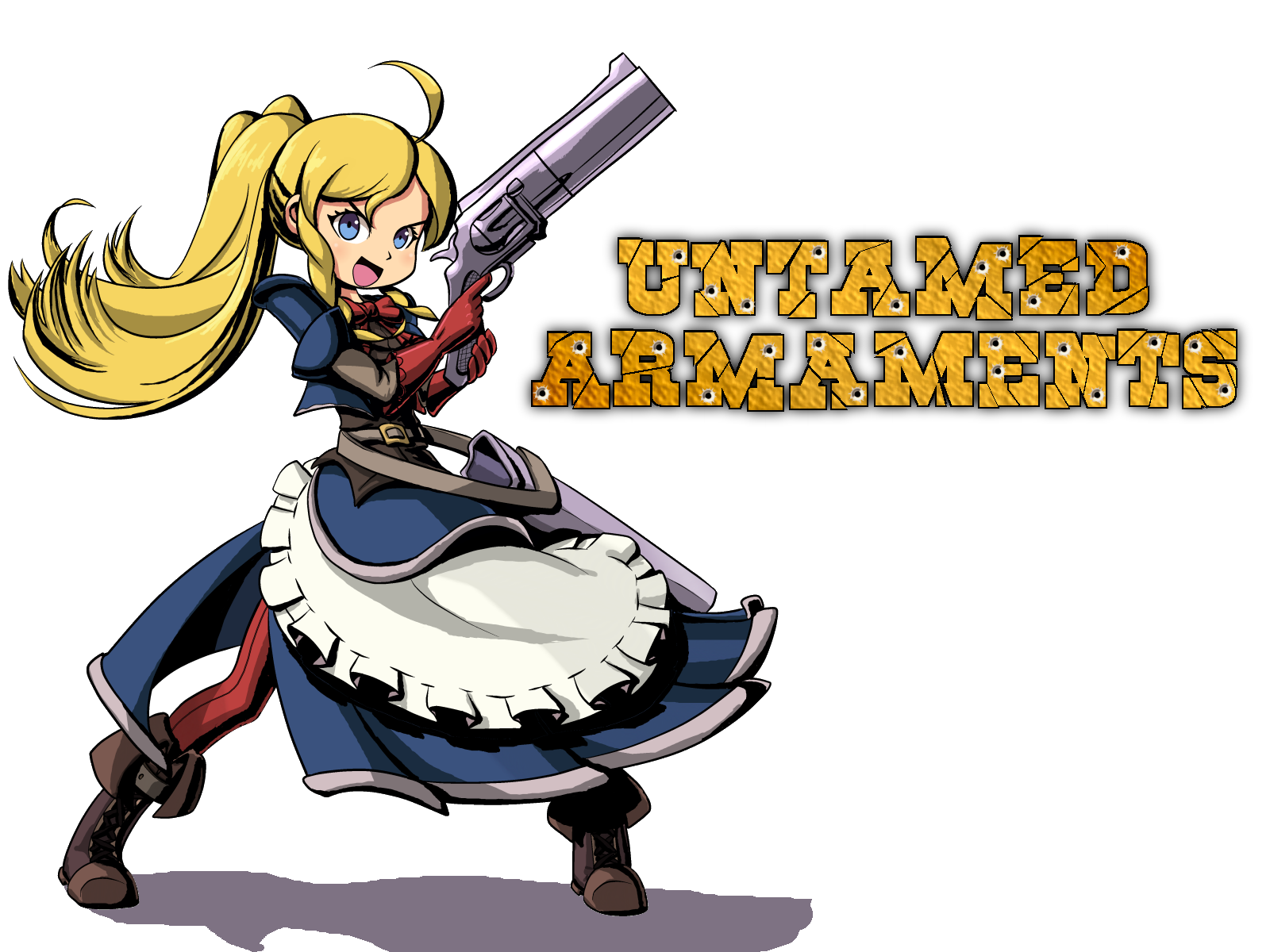
            Zeboyd also announced their next sequel, Untamed Armaments!  On April 1...so, yeah, no.  However, that does lead me to one of my closing discussions about them.  Both Boyd and Stiernberg manage their home website, as each is co-owner of Zeboyd, and their discussions on the industry are insightful and amusing.  Even when not making games, these two are willing to offer gorgeous art and common sense on the madness that is the games industry.  For example, with Phil Fish's retirement, they discussed the nature of being in the public eye and, without pointing fingers or making anyone feel bad, kind of agreed that it's better for everyone to just be nice(Everyone.  Not just developers.  Journalists, reviewers, fans, EVERYONE.)...which may sound childish or simple, but the way they put it was simply amazing.  Also, there used to be a kickstarter report, where Robert Boyd would give thoughts on certain, special kickstarters that he thought were worthy of attention.  I rather miss it, as it helped me find some amazing projects to fund.

Not sure what's sadder...that Zeboyd actually made me think, for a while, that they were making this game...or that I know and own the game this title is lampooning.
            Zeboyd is the whole package.  Insightful, mature, intelligent, and yet still humble.  They do not ask for a fortune for their games, but instead want others to be able to play them.  They treat the RPG genre with respect, while still modernizing it in ways that will please rather than enrage fans.  And they do it with only a shoestring budget and two developers.  I'm including the links for the Breath of Death/Cthulhu bundle as well as Penny Arcade 3 and 4 here, because you SHOULD buy them and play them.  They are dirt cheap guys...c'mon...we can find like 3 bucks in our couch cushions...  Also, this is the link to the main website.  Zeboyd is a great place to look for insight on the industry as well as updates on their games.  Give them a look.

            While you guys haven't breached my gaming top 10 list, you are a beacon of light in the darkness and everything that a game developer should be, now or in the future.  Zeboyd Games, I salute you.  If you continue giving us great JRPGs till your day of retirement, you'll hear no co

Sunday, April 20, 2014

Creator Spotlight: Alec Holowka


            This week's topic is bittersweet for me.  You see, for a brief period of time, one team of developers had my heart, my soul, and the power to cash any check from me, which I would pay without question, provided it meant more of one game.  That team is the one that made the game Aquaria, Bit Blot.  And...then the disappointment comes.  That being said, I still respect the star of our topic today for what he's done.  Today, the design and musical genius of Alec Holowka.

So much genius...yet, it's not aimed in the direction I desire TT_TT
            Alec Holowka got his first big start in game design with the masterpiece, Aquaria.  This game is ranked in my top 10 of games, bearing in mind that I've played over 1000 titles...yeah, that's a big flippin deal.  So, let's take a journey.  It's 2010, I've got my laptop, it's moderately powerful, and me, having seen an awards show in 2009 that spotlighted a strange, but beautiful title...decide to download the demo for Aquaria.  My god...Aquaria.

From both a music and a design standpoint, Aquaria is a masterpiece.  Go out and play it now.  NOW!!!
            One part Metroid, one part Ecco the Dolphin, and one part the most bittersweet of stories, Aquaria captivated me from start to finish.  Derek Yu and Alec Holowka were the designers responsible for bringing the game to life, alongside the voice talent of JennaSharpe.  Derek Yu is worthy of a spotlight in his own right, but today, we're talking about Alec.  See, Aquaria is a PC game that focuses on exploration and combat, much like Metroid, but which takes place almost exclusively under water.  It features a song based system of auditory, color, and shape recognition for puzzles and fighting enemies that managed to be intuitive, memorable, and strangely haunting, as a way of making the music a more real part of the game.  All these design works belong to Alec.

The voice of Naija, who gave life to Alec Holowka's compositions?
That would be the amazing Jenna Sharpe.  Please, game designers, HIRE THIS WOMAN!  She is just fantastic.
            Alec Holowka is a brilliant game designer.  He's got a real knack for coding, and using the engines at his disposal to make a title memorable, intuitive, and enjoyable.  However that's not all.  Aquaria also features some of the most beautiful music I've ever heard and Alec was the first composer aside from Nobuo Uematsu to make me break down and cry from the sheer beauty and tragedy of the music alone.  Lost to the Waves and Fear the Dark from the Aquaria sound track should be all one needs to prove the sheer power of his rhythm and melody, however he manages to perfectly mix peaceful, exciting, sorrowful, and upbeat all within a few tracks.  Aquaria is a musical tour de force and while I have a bone to pick with Alec...his work in the industry after Aquaria continues to prove that he's still a genius.  It's hard to pin down what makes his music so good beyond base composition.  With Laura Shigihara, it's somewhat easy.  It's clear that her works start from the piano, coupled with her ability to listen and play by ear, which she builds upon for either vocal or symphonic additions.  Alec's work tends to have a synth base, but synth music is a dime a dozen in the world...it's hard to say what makes his special other than it just feels...right.  No matter the piece, it manages to not pull at emotions, but imbue them into others.

            Now, I've built this up enough.  Why do I have a bone to pick with Holowka?  Well, he and Derek Yu ended Aquaria on a To Be Continued that both admitted they had no plans to go back to...sigh...yeah, that's petty of me, but I feel that was petty of them too.  We didn't need that...the story was complete, so...anyway, moving on.

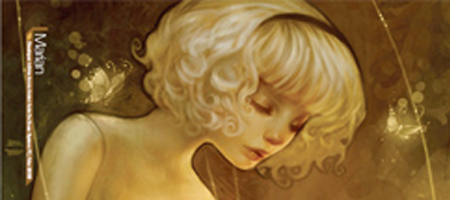
            Following his work on Aquaria, Holowka started up Infinite Ammo, a blog dedicated to the work on his game, Marion.  Marion was eventually scrapped.   AGGGGGHHHHH...Yes, Marion was going to be a spiritual successor to Aquaria with a wonderfully captivating premise of a puppet cutting her strings, using them as weapons, and finding a destiny of her own, free of the manipulations of others.

I can only dream of what could have been...
            Sigh...so, I'm a bit peeved with Holowka.  I can't really blame the guy, though.  He went through a rough patch, trying to find a team, dealing with a cancelled superhero mobile game, and having to rebuild much of Marion from scratch after changing it's art direction.  It's just frustrating to know there's this work of genius that's...never going to be made.

            That being said, it hasn't stopped me from loving his work.  Near the end/middle of Marion's demise, he worked on a game called Paper Moon, which was a free flash game.  It was a cute little title, with a simple, lilting melody that inspired a sort of relaxed pace, despite the game being timed and failure being heavily penalized.  Holowka made the music for this title, as well as the unique mechanic of, since the world is paper, causing the world around you to rapidly fold in or out to create a hectic, but interesting platforming experience.

Trust me...insanely addicting.  This game will eat hours out of your day like minutes.
            Now, this about covers my experience with Holowka's work, but it extends far beyond that.  He wrote music for the interesting little 16-bit throwback, Offspring Fling, featuring a bird-like creature throwing their offspring to solve puzzles, and did both coding and music on an odd title called Planet Punch where...a cloud...punches things...and it's a space based shooter...yeah, that's a weird one.  Either way, both titles showcased more of his talents.  Offspring Fling featured some unique tracks that managed to mimic the 16-bit stylings we grew up with, but with as much flair as the best of Uematsu.  Planet Punch had a different, more harsh style of music not unlike the scratches and beats of a DJ.

Really should give this game a try...
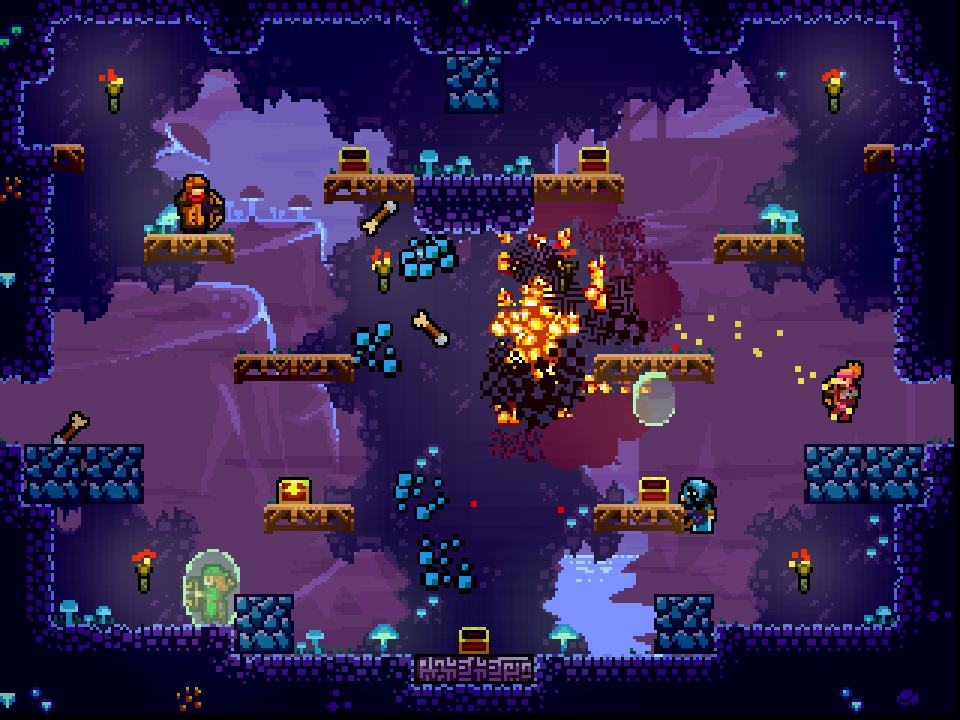
            The game most people might know Holowka for, and yet not know him for, is Towerfall Ascension.  The game where you shoot a limited number of arrows at enemies in an arena, Super Smash Brothers-esque battle for survival.  It was the killer app for the Ouya for a time before it's eventual port to PC and console.  Holowka did the music and by god, is it glorious.  It manages to remind me why I loved the man to begin with, because the tracks are so memorable and so engrossing.

Aright...it's not JUST the music that's got me interesting.
            At present, Holowka appears to be working on three separate projects.  Portico, which is described as a puzzle-trap-defense title, Skytorn, a game that appears to be Metroidvania-esque with a character exploring islands in the sky, and Night in the Woods, an odd little title featuring anthropomorphic animals in a game that seems to be part exploration, part commentary on the state of life, and part trippy as hell visual experience.

            Look, I cannot state enough how amazing Holowka is as both a designer and a composer.  Musician...well, I wouldn't go that far, but he's able to do amazing things with both lines of code and notes on a sheet of paper.  I may have my personal issues with the guy, but check out his work.  All of his games are highly memorable and even if you're not into games, his music is soul rending and soul soothing, all at once.

            Thankfully, Holowka himself has set up links to all his projects, past and present, at his blog, here.  Also, check out his band camp and support him, here.  Aquaria gets its own special mention.  Find it here.

Shine on, Naija.  I miss you.  Maybe someday, we'll get that Aquaria 2.  Eh?  Mr. Holowka...?
            I started off calling him Alec and ended with Holowka because I felt like the man I admired betrayed me, just a little bit.  It's not his fault, really...he doesn't know me and I don't know him.  But still...the man made me feel, with his game and his music.  That's both terrible...and wonderful.  No matter what I may say after, Alec Holowka is one of four composers to make me cry...an honor he shares with the legendary Nobuo Uematsu and the charming Laura Shigihara.  Nothing he does can take that away from him.

            You may frustrate me, but I salute you, Mr. Holowka.