Showing posts with label Dark Souls 2. Show all posts

Saturday, May 31, 2014

Still on cooldown. Updates, nonetheless.

Hello, all!  I swear, I had a rant prepared for today, but...hasn't quite coalesced yet.  Still working on what I want to talk about next and some indies to spotlight.  Either way, I wanted to let people know that I DID survive Animazement.  I debated buying some games, but was poor, so settled for a few movies.  I wanted to get the Guardian Legend for NES, but...again, poor.
Can we get a VC release, Nintendo?  Pleaes?
I sold about 400 dollars worth of my gaming perlers, which is pretty decent, if I do say so.  However, a fair bit of things happened while I was gone, so I just want to post a few updates about gaming, then I'll hopefully be back into regular update mode next week.  First, while Animazement was going on, we finally have the release of the Retron 5 by Hyperkin...the delays and price hikes have made many people skeptical, but as far as clone consoles go, it seems PRETTY DAMN IMPRESSIVE.  Save states, built in cheats, and almost 10 different systems that are playable(NES, Famicom, SNES, Super Famicom, Sega Genesis, Sega Megadrive Japan version, Game boy, Game boy color, and GBA.)  Gamespot did a much more comprehensive review than I could, seeing as I don't have one because, poor.  Check that out here.
It ain't perfect, but it is pretty damn cool.
Zeboyd games, one of my previous creator spotlights, has started up the Kickstarter Report again and I couldn't be more thrilled, as they have showcased some truly interesting kickstarter ideas.  Extra Credits recently finished an inspiring examination of how video games could be used as educational tools.  And Dark Souls 2 continues to be awesome, thanks to lore enthusiasts like Vaati.

Also, right after I returned home from my convention, an artist and graphic designer I know showed me something awesome.
A billion points to people who actually get this reference.
She's an artist, pokemon enthusiast, and overall awesome person.  Goes by the tag Aquarius Magick.  Check her stuff out, if you're interested.

That's all for me.  I'm still cooling down from working over 30 hours last weekend, yes still, shut up, I'm tired.  I'll also be heading out to New York in two weeks, so this might be a light month for me in terms of updates, but I don't intend to abandon this blog by any means, so...just be patient, alright?

Thinking next week we talk about either Legend of Iya or Neverending Nightmares and their creators.  We'll see...

Saturday, April 5, 2014

Mind Games: The Good and the Bad of Psychological Warfare in Gaming


            Okay, so last week, while I was writing up my discussion on the goods, bads, and confusing elements of Dark Souls 2, I touched a little bit on my belief that the game was actually trying to engage in some psychological warfare.  I intend to go into that here, because, for what the game is trying to do, I think this type of mind game is actually pretty amazing.  Before we do, though, there are probably a few questions people might have about psychological warfare with games that need to be addressed first.

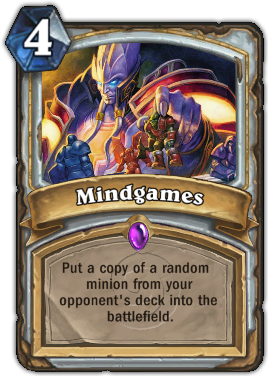
Yep, we're gonna be talkin about you today, Hearthstone...you and your MIIIIIIIND GAMEEEEESSSS
            Psychological warfare in a video game does not mean a psychological thriller, necessarily, like Silent Hill 2.  While there can be elements of psych warfare in that type of game, Silent Hill 2 and many games with a psychological bend are more interested on looking at the character they've given to the player and exploring their development in a nonlinear manner, showing their strengths, weaknesses, and growth through their actions and the world around them.  No, when I talk psych warfare, I am referring to when games perform something that does not affect story or the world they are in, but which elicit a particular response from a player that is contrary to what they know or believe the way things should be done.
Psychological thrillers and psychological torment is not the same as psychological warfare.
             Free to play games are probably the ones people might know best for psych warfare.  Free to play games operate under the idea that, a player goes into the game knowing full well that they DO NOT want to pay for it.  They want to get the maximum enjoyment out of the game as possible without having to spend a dime.  However, the way the game is built, it makes the game easier and ultimately more enjoyable if you will actually pay.  The game gives you the option to do what you believe is correct, but ultimately is trying to drive you towards something you don't want to do.  Hearthstone is a good example of this because it is subtle...it's not in your face about it.  It puts a 100 gold win cap per day on individual players, so they can't win more than 100 gold from matches per day, and gives them quests every day to win gold, which they can use to buy new cards or participate in the game's arena mode, for free.  However, 100 gold a day buys you one, count them, ONE pack of cards.  The Hearthstone store allows you to buy up to 40 at once...provided you are willing to pay real world money.  So, for a starting out player, who gets trounced by the guys wielding expensive cards...this is a real temptation.  It defines pay to win and wants to goad the players into spending, even though in their mind, they know that's not what they want to do.  This is psychological warfare.  It is trying to elicit an action from players contrary to what they might do in normal circumstances.  It aims to mess with your mind.

Behold the Hearthstone Store.  Funny how all the boosters above one cost real world money, huh?
            Now, free to play games are inherently at war with a player and that is our choice, if we agree to play them.  I deal with Hearthstone's frustrations and the psychological warfare because I like it and that is my choice.  However, like any great power, psych warfare can be easily abused.  Jim Sterling coined the term "fee to play" where a player pays a fee to buy a game, sometimes as much as 60 dollars, and then have the option of performing microtransactions and paying the game to give them more content that is behind a pay wall right off the bat.  This style of game tends to harass players into spending money rather than giving them the option.  It can never force them to, but it teases them, while still requiring them to pay, and this type of psychological warfare is pretty devious, because it tries to squeeze as much money from a single player as possible without enhancing the experience.  In truth, fee to play games are the worst kind of psych warfare because while free to play allow a richer experience if you are willing to put down a little money, fee to play negates much of your hard work, because you are paying to make a game you've already paid for easier and shorter.

Paying to make a game that you've already paid for easier and shorter...just seems kinda counter intuitive, doesn't it?  Or is that just me?
            With that outline on the basics and the negatives of how psych warfare works in gaming, let me move onto the meat of this discussion.  How psych warfare in a video game can actually be used to enhance the experience.  I'll start with a baseline example, then move into Dark Souls 2, as I think it's pretty amazing what they've done there. 

            I find that most old school JRPGs invoke just a little bit of psych warfare, so let's start with them.  Final Fantasy 5 has an area called Gil Turtle's cave, where you fight an INSANELY tough monster called Gil Turtle every few steps in a long, straight, one square corridor that there's no way to go around.  Now, you don't have to do this.  The area is completely optional.  However, what's interesting about it is that the game keeps the camera pulled just far enough back that you can't see the end of the corridor from the overhead view.  You don't know if there's treasure in there, or if there's nothing at all.  However, there's this compulsion to know, since this cave is right next to one of the big cities we've been using as a base for the last few hours.  More than that, in JRPGs there's this knowledge that if you fight a boss, you will ultimately get a powerful reward.  So, players might waste time dying against the Gil Turtle monster or spend a lot of money trying to get equipment specially made to beat it or devote time to leveling up skills they think might help.  Even though in the back of their mind, they know they ought to either move on and come back later, or just ignore it, since they're not strong enough or what have you.  The game teases you with possibilities of what is hidden and so we persevere and find...nothing but money.  And not even that much money to begin with.  Frustrating, perhaps, but we did this to ourselves.  Final Fantasy 5 goaded us into the cave and into fighting Gil Turtle, sometimes as many as a dozen times for the very unlucky, just for money, but we're ultimately the ones who gave into it.  However, let's look at this from the other perspective.  I just gave you an example of how good psych warfare makes a game frustrating, but from a separate perspective, it can also force players to get better and start thinking more strategically.  For example, some players discovered that Gil Turtle was an undead and took damage from the bard spell requiem and holy magic, making the battle much easier if you have those who can cast it.  Also it was discovered that Gil Turtle largely uses physical attacks, so if you have a knight protecting players, or a spell that gives them evasion, it's doable without much risk.  However, no matter which perspective you take, you have to admit that your experience was drastically changed by the game's use of psych warfare.  Maybe it made you a better player, maybe it gave you a feeling of accomplishment for beating a hard boss...maybe it just taught you not to be so obsessed with treasure that you risk your own life...either way, it created a unique experience for you.

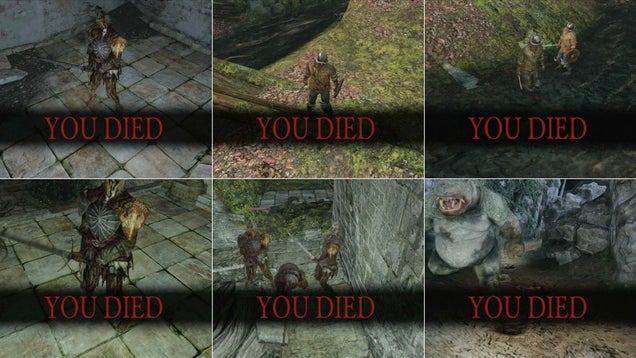
Get used to this screen...it's gonna happen A LOT.
            That, I believe is the power of psychological warfare in gaming.  It can alter how we decide to play games and give us a unique experience.  Heroes of Might and Magic does this in a very simplistic way, putting a large stack of enemies in between a player and great riches.  They know they probably won't beat the enemies at their current level, so they focus on building an army to get the riches...only to have their opponents take them apart because they were focusing on the monsters guarding the treasure instead of their true enemies.  It's a way of messing with the player, and possibly teaching them a few harsh lessons.  Either way, it alters the way we play games based on our own weaknesses as humans(greed makes us want treasure, curiosity makes us explore areas we shouldn't just yet, impatience makes us play sloppy, etc.) and ultimately changes how we experience a game.

That demon is guarding sooo much treasure...if only I had a dimension door...
            Now, I want everyone to understand that what I am about to say is purely speculation on the part of Dark Souls 2.  I don't know if this is the case, but I believe it to be so based on the game design.  Alright.  Now, in Dark Souls 2, you have a hub town.  This is where you level up, this is where you strengthen your recovery items, this is where you upgrade and buy items and weapons, this is where you are safe.  Problem.  You have to warp back to it for any of this, and that takes you out of combat, breaks the flow of the game, and puts you behind a loading screen.  I heard many players during the beta talking about how it was an issue for them.  About how the original Dark Souls allowed them to repair items at a bonfire, level up at a bonfire, improve recovery items at a bonfire, all taking only a minute or so and just like that, they were back in combat.  This new system seemed frustrating and baffling and I felt the same way...at first.  However, I realized after several painful deaths involving the loss of over a hundred thousand souls(the in game currency and experience points), that the game was messing with me.  You see, all those benefits to the hub town?  They're supposed to be inconvenient to get back to.  Not so inconvenient as to make the game frustrating, but juuuuuuussssttttt inconvenient enough that you don't want to go back to them from the middle of battle, even though you KNOW you should.  This is where the psychological warfare comes in.

Quaint little town, isn't it...it's a trick!
            In the original Dark Souls, one of the rules of gameplay was to spend your souls as soon as you got them, level up often, never wait, because death was right around the corner.  However, that mantra changes a little bit when you're taken out of combat and put behind load screens, short as they may be, because it's no longer easy to spend souls quickly and efficiently.  You  have to warp back to your home town of Majula, talk to the Emerald Herald NPC, talk to others to see if they have new wares in or to fix items, it completely takes you out of the "YEAH, I AM KICKING ASS" mentality for players doing well or the "MUST GET SOULS BACK/MUST GET REVENGE" mentality of players doing poorly.  And most players don't want to lose that mentality.  They're having fun, so they don't want to stop, even though, in their mind, they know they really should, because they're carrying a lot of souls they could use to level up or buy/improve items.  And this...this is where the game gets diabolical.  I believe that the hub town and the NPC who you have to level up with were all intentional.  The developers were trying to wage psychological war with players to try and get them to act recklessly, because everything in Dark Souls 2 is surmountable if you are careful or if you're open to experimentation.  However, neither of those is conducive to the fast pace of an action game or the impatience of many players.  So, they get sloppy and die.  And when they die, they lose A LOT of souls.  Why?  Because it was just a little too inconvenient to go back to Majula and spend them. 

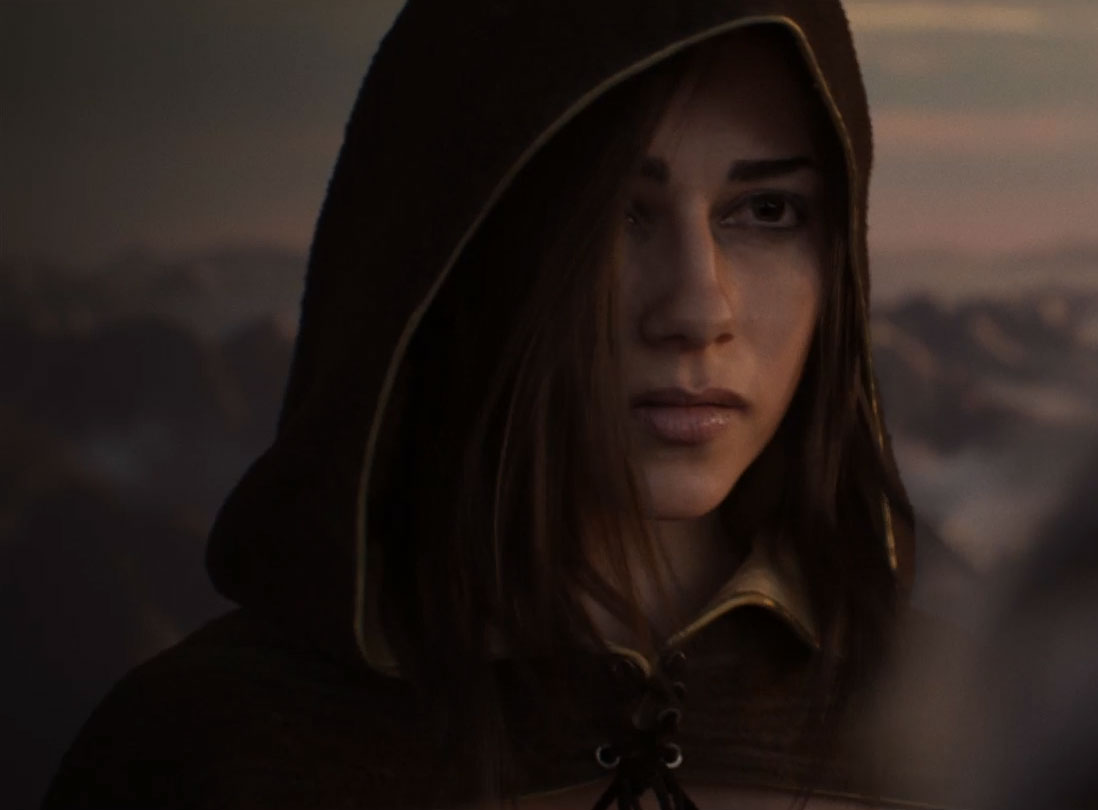
You'll stay by our side until hope withers, eh?  We shouldn't take your words lightly, Emerald Herald.
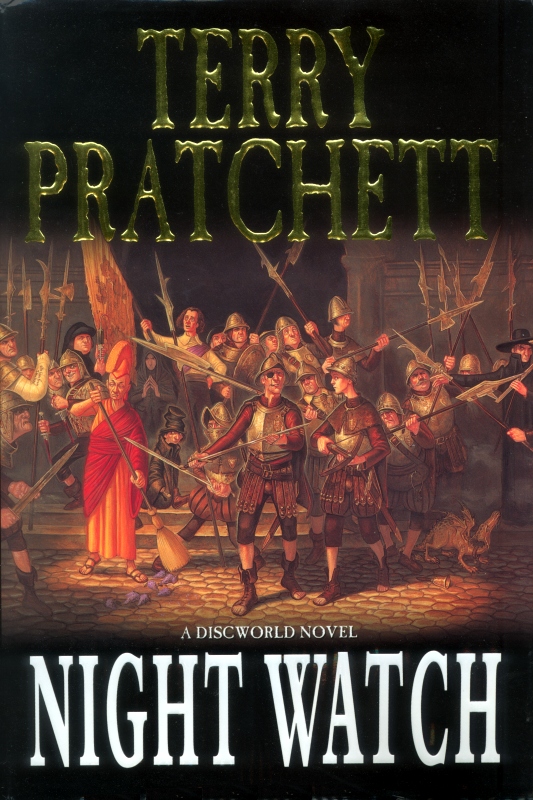
            In many ways, this is a better difficulty scaler than anything.  You see, the game is only hard if you're reckless.  If you don't spend souls as soon as you know you have enough.  Because you'll lose them.  Samuel Vimes in Terry Pratchet's "Night Watch" once said, "I have to get lucky all the time.  They only have to get lucky once," in regards to people trying to assassinate him.  The same mentality applies here.  You have to keep being lucky, because no matter how skilled a player, eventually there will be a mistake.  The enemies only have to get lucky once...and that's devious, because it lets you know the status quo...that all your assets are in this hub town...but then encourages you to ignore it at your own peril.

You're wise beyond your years, Sir Samuel.
            Even the rewards for the game encourage this to an extent that is rather shocking.  There are two items in Dark Souls 2 that are based around this same principal of making the players go against what they know is proper.  Illusory Ring of the Conqueror is awarded to players who beat the game without dying.  Illusory Ring of the Exalted is awarded to players who beat the game without using a bonfire.  Now, dying to experiment with different play styles or strategies and using the bonfire to heal and warp are cornerstones of Dark Souls 2...and encouraging players to get these rings by ignoring them is playing a bit of mind games with them.  You can only get these rings if you go against the game design and against convenience, as the inability to use a bonfire, for example, means you cannot warp or repair items and have to walk everywhere and deal with broken weapons at a regular basis.  It also means you cannot easily get rid of your souls via leveling up.  Yet, the game encourages players to try this...it is setting them up for failure, but it is a failure that they themselves could easily stop if they just did what they knew was the right choice.  And these rings?  They only make the item you're holding in each hand invisible.  Useful for PvP perhaps, but hardly worth the effort.  Yet some players are already working towards them.  This is what leads me to believe the game is messing with players.  It is more difficult than the original Dark Souls, but only if you let it get to you.  Let it get into your head and ignore the warnings.  This is psychological warfare.

I hope the ring was worth all the psychological warfare you subjected yourself to.
            Now, there are plenty of examples of varying degrees of psych warfare at play in the games industry.  I've only scratched the surface.  There are plenty of ways to mess with someone's mind.  Conditioning, for example.  In Pandora's Tower, you grow closer to Elena because the game conditions you to, with the relationship meter and the fact that she will do things for the player if they talk with her.  She can improve your items, give you buffs or healing tools, or many other things.  However, if you just want to play the game, she's a bit of a barrier, as you need to talk with her regularly...however the game is trying to convince you she is not a barrier and condition you to like her.  This happens, A LOT with games.  Some do it well, and I do believe Pandora's Tower does it well, others, like Final Fantasy 13, do it poorly and just make the character an annoying anchor around your neck.  However, ultimately, that brings me to an interesting question I asked myself while playing Dark Souls 2.  Is psychological warfare in a game beneficial to the player?  Is it "good?"

What can I say?  I'm a softie for Elena...
            Now, that's not an easy question to answer.  Some of it is clearly ripe for abuse, such as in free to play games.  Dungeon Keeper on mobile platforms abuses it's psychological warfare to try and bully, harass, and goad the players into spending real world money.  The NPC guide of Dungeon Keeper mobile actually says, "Who says money can't buy time?"  Now, with this level of abuse, especially in the fee to play games that Jim Sterling has outlined like Dead Space 3, psychological warfare is a bad thing.  It is meant to squeeze money out of players.  It does not serve the game, it serves the publisher.  In this case, I'd say psychological warfare is something to be wary of and try to be aware of as soon as possible and avoid.

This is psychological warfare in gaming at its absolute worst.  Manipulating the players for the profit of the publisher.
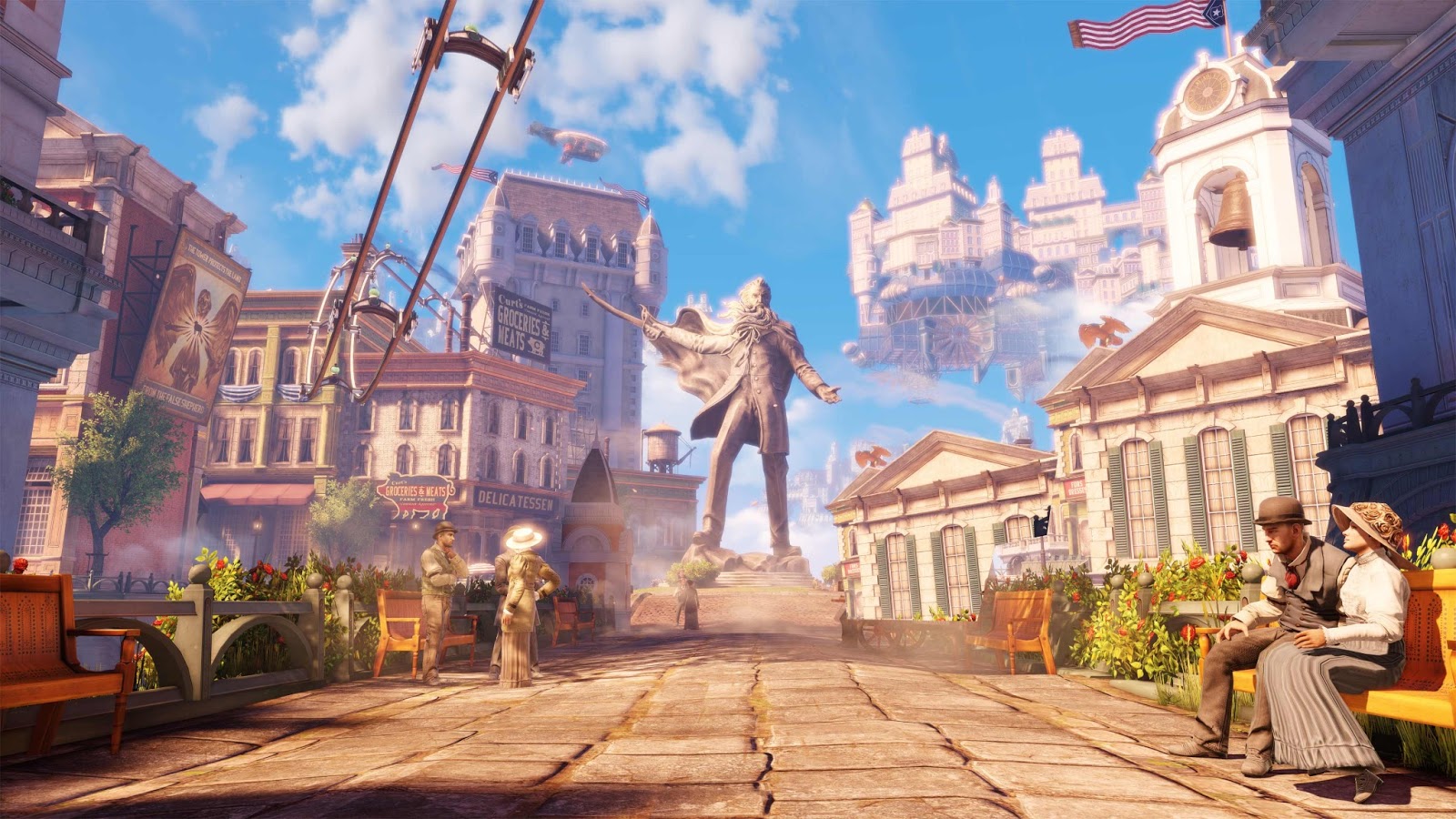
            Along that same note, I want to say that I consider psychological warfare to be completely different from brain washing.  Many games, some with political messages, some with ideological messages, or what have you, will try to brainwash its players into thinking a certain way.  This isn't warfare, it is programming...and that's just despicable, in my opinion.  Good players will agree or disagree or make their own decisions about how a game's views and agendas play out.  You can like or dislike the extreme racist views of Columbia in Bioshock Infinite because it doesn't necessarily play them out as good or bad, just a product of the times.  However a game made specifically to convince a player that their beliefs are wrong or invalid and that the beliefs of the game designer are right and thusly they need to change how they think?  That's not a game.  That's a piece of trash.  Most of the time, you don't see games like this sold commercially, because no one will pay money to be talked down to and have their beliefs belittled, but it is something to keep in mind for certain freeware games or for game design in the future.

Racist and insane as it may be, at least Columbia isn't trying to brainwash you into believing it's right...or if it is, it's doing a damn crappy job of it.
            HOWEVER...when a game doesn't try to brainwash or belittle a player?  When it doesn't have microtransactions?  When it is actively trying to make the player experience the world in a different way?  I actually think these types of mind games enhance the titles more than hinder them.  I freely admit to allowing myself to be taken in by the conditioning of Pandora's Tower and really growing attached to Elena and...that made the game better for me.  Playing Final Fantasy 5 and getting stuck in Gil Turtle's cave actually gave me some perspective onto how brutal some of the secret bosses could be and helped me work through strategies on how best to defeat other secret bosses, like Omega and Shinryu, which I did.  And in Dark Souls 2...I have to admit, it made me be a bit more aware of my actions.  I knew that the risk I was taking was stupid, sometimes, but it enhanced the thrill of the game when I did it...and it also made me feel smart when I chose not to, spent my souls in Majula, and died moments after going back to battle.  It taught me how to better play the game.

I praise the sun for this victory!
            Thing is, it takes work to put psychological warfare into a video game without microtransactions.  It takes work to design Gilgame's cave to make it so difficult to pass through but so easy to avoid.  It takes work to try and condition players to like characters, even if it fails, like with Vanille in Final Fantasy 13.  It took work to make Dark Souls 2 function the way it does, with an NPC to level you up and a hub town behind a loading screen to spend your souls at.  And why do all this work if not for the benefit of the players and the experience?  I know that some people might get a little iffy about being played or having their mind messed with, but in most games, psychological warfare is actually meant to enhance the experience.  Recognizing it actually kind of changes the game too, because you can choose to be taken in by it or to play it without being messed with, further enhancing a game's replayability or it's value.

            Psychological warfare in games isn't meant to program you to think a certain way, even though conditioning can make you look at characters more fondly...the point of it is to enhance the experience for the player so that they will buy the sequel or recommend the game to others.  If a game tries to overstep that bound and doesn't serve the player, that's when we have a problem.  That's why I have such disdain for games like Dungeon Keeper mobile or other fee to play games.  Because they don't want to enhance the game for the player...they are there to serve the publisher or some other party.

            Let me close out by saying that you don't need to recognize psych warfare to enjoy a game or to be swayed by it into playing it differently.  In fact, if done well, it should be very hard to recognize indeed.  However, it is a very interesting little look at how some game designers go out of their way to make a game better by trying to understand how a player will think and then work against them or with them(in some cases) to try and make the experience more unique and fulfilling.

Sunday, March 30, 2014

Diminutive Diatribes: First Look at Dark Souls 2


Okay, so...don't usually do this, but I have a busy week, in particular Saturday, so I won't have time for my regular creator spotlight or article.  So, I thought I'd share a sort of first look at Dark Souls 2, give my critiques, and try to say how it stacks up to the original.  Probably less editing and pictures and more discussion for this one.  There will be minor spoilers, but nothing too specific, so relax.

The Good: Dark Souls 2 has fantastic game mechanics.  They copy much from the original, with the tight controls based around wielding an item in each hand, shield or weapon, and having spells and regular tools for use in specific slots.  The enemies follow similar rules, with varying degrees of speed and power, all with their proper tells and weaknesses, if you're willing to be patient and look.  It's a system that rewards patience and persistence, as well as a bit of mastery.  If you learn your weapon or spell or attack style and its use, then you can overcome almost anything, with the right amount of practice.

Alongside the game mechanics, there have been additions throughout the game.  The ability to duel wield adds new combos to an already established weapon at the risk of extra damage, and there is now an option to two hand items in either hand instead of just the one in your right.  There are more item and weapon slots, more ring slots, and a much more diverse range of weapons and spells in the game.  This includes twin blades that, while weak when wielded with one hand, are very powerful if wielded with two hands.

Yes, there is dual wielding.  It's pretty cool.
The graphics are beautiful and the design of everything from the buildings to the enemies is superb.  One enemy was literally a giant mass of corpses made to look like a person and the corpses wriggled about, while one vista had a tree that was the corpse of a giant, complete with a fruit I could harvest.  Everything here is worth taking a second to stop and examine, because the world is truly much more beautiful than the original Dark Souls.  It's a wonder to behold.
The game really is beautiful

Music is competent.  Regular music is ambient, while boss music is exciting, and the sound effects are nice and meaty, giving your weapons a powerful and satisfying feel.  Speaking of music, it really contributes to the atmosphere.  While not as lonely as the original Dark Souls, it has a very distinctive feel...in darkness, things are quiet, but also hectic, frightening, and will keep you on edge for fear of the blade in your back.  In day time, even when facing huge monsters, you have a feeling of ease and calm that is different from previous games...the disparity here really helps make the game a rollercoaster of experience.

Surprises.  The game is full of unexpected twists and turns that you won't really be expecting.  I don't just mean traps, either, like the mimic chests which will eat you.  I'm referring to anything from walls you can blow up on accident or which enemies can smash through, to hidden doors and areas, to NPCs who do the most unusual of things.  In one instance, I used a torch to help navigate a darkened area near the seaside and while it didn't do damage, some of the bestial enemies were visibly frightened by it, preferring to hide rather than fight.  In that same area, an enemy threw something at me that exploded in black tar...it didn't damage or even slow me down, but if I was hit with a flaming arrow or if I had my torch out, I'd explode.  In another area, if you douse yourself with water, you take reduced fire damage, while others have traps activated with certain key items.  It's an interesting mix of things you wouldn't expect, offering surprising complexity and richness of things to explore.

Yeah, walls can be destroyed, you can be jumped, and there are a lot of surprises waiting for you.
Side Stories:  The game has a few interesting side stories.  Talking to NPCs can get you items for listening, but sometimes the best stories are ones told by the world or that you see for yourself.  One area has a farm that is full of peasants and pigs, wielding farm equipment.  They are working until they see you, at which point they go feral and attack, rolling boulders at you and generally acting crazy.  Then, further on, you see a cultish ceremony and above them is a jovial pardoner, surrounded by corpses.  What happened here?  That is for us to piece together and it's delightfully creepy.  Very Resident Evil 4.  In another area, you hear tell of a mystic queen who bathed herself in poison to try and keep herself young...and if you're not careful, you'll have to battle here in a pit of poison, as she tries to reclaim her youth.  My personal favorite has to be a chapel surrounded by decaying knights where an old friend from a previous game waits.  If you go looking, the game has plenty of fascinating little stories to tell you.

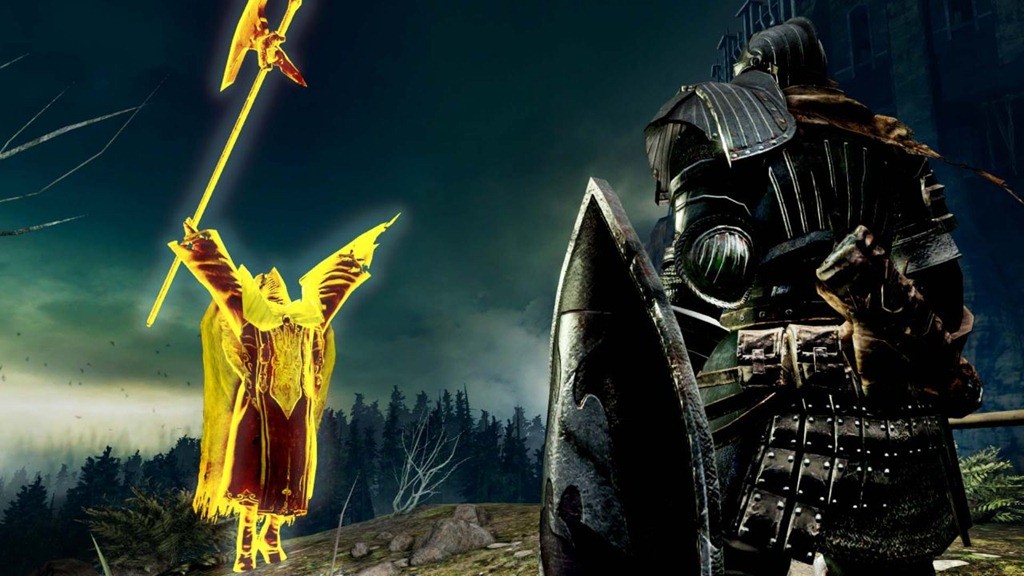
Hey, here's a familiar face! ^_^
The Bad: The main story is just tosh.  It's pretty uninvolving and kinda lame.  This does encourage players to make up their own reasons for fighting, but...I wanted more.

The enemy design may be pretty, but it's painfully uninspired.  While a precious few bosses are actually interesting looking, most enemies are guys in suits of armor.  Hell, even the bosses feel lame.  One is basically a giant slug that is almost impossible to die to, while another is a rat with a mohawk.  Some bosses get re-used later in the game as enemies and as major boss fights...it's disappointing that we didn't have a gaping dragon or a four kings...I hated those bastards, but I have to admit, they didn't look like regular enemies.  I've seen some interesting designs, but not enough, at least not after 40 hours.  Little depressing.

Hey...here's a familiar face -_-u
The new stat allocation system makes things a lot more complicated than I think it needed to be.  It also makes the game a helluva lot harder, with equip load and general speed being made into two stats unto themselves rather than being folded into other stats.  It's a little annoying, having to level up both vitality and endurance to be able to wield a sword, but also have the stamina to use it more than once.

Voice acting is just terrible.  Granted, it's not like people care, I tend to just read the dialogue and skip it, because we're here for the gameplay, but the characters seldom really emote and the script doesn't really give them the leeway too.  We get more character out of the environment than the NPCs.

Lack of gimmicks.  This one might seem a bit strange, but stick with me.  In Dark Souls, you could often do weird things to enemies, gimmicks, that would change the way a battle progressed, like cutting off a beast's tail, or using a Lloyd talisman to prevent them from using estus to heal, or nullifying a poisonous enemy with pyromancy.  And while there are some new wrinkles to combat and enemies with tricks in Dark Souls 2, several gimmicks were taken out...and that makes me sad, because I liked cutting off enemy tails or trying to outwit my opponents.

Know what you could do in Dark Souls?  Cut off tails and wield them as weapons.  Know what you can't do in Dark Souls 2?  Cut off tails and wield them as weapons...
Lack of explanation.  This has always bugged me a little in both Dark Souls games.  See, this is kind of a hallmark of the series.  It's part of the exploration...but god, is it frustrating at some points.  I have no idea how to even switch arrows.  Sometimes, this can be an interesting twist.  You don't always understand the controls, so you experiment.  You try and see what each item does or what each weapon's moveset is and, by comparison, this game does offer more explanation than Dark Souls did.  However, I still feel frustrated by a lack of explanation on certain controls.  Not just with how to switch arrows in the middle of combat, either.  Duel wielding is never explained.  You have to have two weapons of the same type, 1.5 times the stats of the highest stats required for the weapon, and hold triangle...that wasn't explained anywhere and I just discovered it while farting around with my weapons.  I get that that might be the point, but it limits the abilities of a player to progress and enjoy the game and I think that, even if you don't want to include it in the game, at least give us an instruction manual outlining all the controls.  Dark Souls 2 doesn't have an instruction manual.  It has a warranty slip...I am not kidding at all.

Lack of interconnectivity in the world is probably what makes me the saddest about this game.  Rather than a large, interconnected world where you could warp, but which you could actually scale from one end to the other, you have a hub area, a few basic areas attached to the hub, and warps to others areas.  They all go off in straight lines and never intersect and that's lame, to me.  I liked being able to go from the forest, to the city, to the shrine all in a few minutes of hectic sprinting in the original Dark Souls.  The reason for this is also something I hate.  Load walls.  Most of the starting areas are hidden behind doors that lock behind you, but which you can still open, and they do this to hide the areas loading.  The original Dark Souls never needed time to load.  It was all seamless.  Here though...while the separate areas are seamless, there are plenty of seams in between them and the hub and it feels awkward.  I wish more thought had been given to the world's layout.

The Mixed:  The hub town.  While this could have been an interesting idea, Majula, the main city, bothers me for how reminiscent it is of Demons Souls, the game I hate most in the Souls Series.  You HAVE to go back there a lot, because the only way to level up is there.  You can't do it by bonfire.  And really, plenty of NPCs may come there to live, but others don't, so you still have to warp around.  However, why is this mixed and not bad?  Well, two reasons.  It gives you some down time...a place to collect your thoughts and breathe and in Dark Souls 2, that's important.  And two, because I think it may have been an interesting psychological experiment.  This is only speculation, but I think that what with the load times and what not, they took away the ability to level up at the bonfire to wage a psychological battle with the player.  It's easier to horde souls now, rather than going to Majula to spend them, since you have to warp, and wait for the load, and talk to the NPC who levels you up...so it's easy to get overconfident and lose big.  If this was intentional, it is a stroke of genius in game design.  I'll be talking more about that in next week's article.

Get used to being here...you'll be coming back ALOT
Questionable design choices.  This mostly comes down to putting a bonfire so close to enemies that you can't use it once you get up, cause the enemies respawn.  This happened to me where a bonfire was right next to three archers who would start to snipe me as soon as I got up.  It forces you to kill them a dozen times to stop them respawning and...this happens in more than one place.  I don't know if this was intentional or not...it could go either way.

Enemy despawning.  So, in this game, you can actually farm an area of enemies until they no longer spawn.  This is an interesting idea because it forces you to move on, rather than grind.  And the game is balanced, for the most part, so that you don't need to grind.  You can sell items, you get souls, you can go to other areas, if you need souls, usually, you can get them.  However, this also means that if people mess up too much and despawn the only area they can handle, they could be in a real no win scenario...and have to restart the game.  It's a mixed bag, actually.  It adds to difficulty, but can also be convenient, if you just wanna run to the boss.  However, it can also be detrimental.

Secrets.  Yes, I love the surprises the game throws at you, but some secrets are so hard to find, like the hidden doors which you cannot tell from other areas of wall, that it makes the game stupid hard or annoyingly tedious when you wanna search for new items.  Just...frustrating.

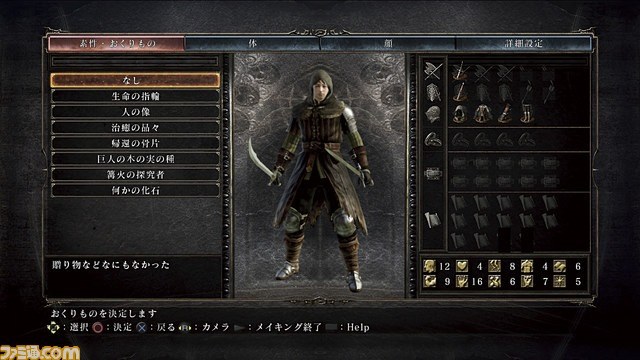
Lack of starting options.  In the first Dark Souls, if you knew where to go, because of the connected world, you could be rolling in weapons, armor, and items right from the start.  However, in Dark Souls 2, you can't go everywhere right away...so you have to make do with your starting character's items.  What's more, lots of services like smiths or item vendors who buy your unused equipment are unlocked much later in the game...so you can't improve or get a quick boost of souls to help you out.  This is both good and bad.  Good in that it gives weight to your character choice early on and affects how you will play, since you won't have many other options, but bad because...you can't easily cover your weaknesses.  The starting merchants do make this less of an issue, but it's an interesting balancing act between starting in an interconnected world with lots of options, but making your starting choice meaningless or starting in a more divided world and making you really think about your class.

Choose wisely, cause this is all you'll get for a while.
Change in tone.  I enjoyed the solitary journey that was Dark Souls, but the change in tone puts more of an emphasis on the multiplayer and the NPCs.  You are not alone in this world, the game seems to say, and so you have to interact with either the NPCs or your fellow players.  While I'm not overly fond of this, it is going for a different feel than the original Dark Souls and it's not bad, just...different.  However, it is head scratching.  Many rewards for covenants can only be gotten through multiplayer in Dark Souls 2 and this is a stark contrast to the original, where even the multiplayer focused covenants had rewards that anyone and everyone could get.

This is a less lonely Dark Souls...more NPCs, more multiplayer, less solitude
How it stacks up:  Compared to the original Dark Souls, Dark Souls 2 is a definite improvement mechanically and graphically.  I think that Dark Souls was more polished and diverse than Dark Souls 2, probably because it was the first we'd seen anything like it, and I miss the open world and unique monster designs.  On the whole though, I wouldn't say that one is better than the other.  Part of Dark Souls charm was that the combat, while not perfect, was so tight and in so little need of improvement.  The improvements in Dark Souls 2 are nice, but some of the changes are annoying.  Dark Souls 2 has prettier worlds than Dark Souls.  Dark Souls has a more satisfying journey because of the interconnected worlds and characters.  You could make comparisons till you're blue in the face.  But I think Yahtzee Croshaw said it best.  It's like trying to decide which is better between Portal and Portal 2.  It's kinda pointless.  More of Dark Souls is never a bad thing.

Prepare to die...and love every second of it.
Dark Souls 2 is different from Dark Souls.  That's not better or worse, it's different.  Standing on it's own, it's a damn fine, very enjoyable, very HARD game.  I'd recommend both to anyone, because Dark Souls 2 is more fun to look at and explore, but I love the world of Dark Souls.  So far, they're on an even keel, I think, with me liking Dark Souls just slightly more than Dark Souls 2 because of the convenience of leveling up at the bonfire.

Before anyone asks, no, I don't have a problem with the system of death.  Losing incremental health actually feels like a nice balance to me between Demons Souls and Dark Souls.  It makes you want to get better, without making death consequenceless or too punishing.  It kind of encourages growth, but without actually making it too unfair, unless you screw up just way way too much.  I may not really like it or be jumping for joy about it, but it's okay.

And that's a basic first impression of Dark Souls 2.  I have beaten it, I died 330 times(thank you for the death counter by the way, From Software) and it was DAMNED hard.  As hard as the original?  Dunno...there are changes that make the game easier and changes that make the game much much tougher.  Regardless, it's a good game, even if it is different from what I was expecting.
Don't expect this to be easy.  The players claiming this is easier than the original...yeah, no.