Showing posts with label Extra Credits. Show all posts

Saturday, June 7, 2014

Insignificant as an Ant: The Magic of Disempowerment


Okay, so I'm not doing a creator spotlight this week, nor probably for the rest of June.  This doesn't mean I don't want to, it means I have something else I want to talk about.  This week and the week after I get back from New York, we will be spending doing a talk about power fantasies in video gaming.  The two sides of power fantasy.  Empowerment and this week's topic, disempowerment.

Insignificant as an Ant: The Magic of Disempowerment

            Extra Credits brought up an interesting bit of discussion during one of their segments recently, talking about the Cthulhu mythos and how so few people understand what it means.  It's not about monsters or beasts, it's about the abject horror of being so small, so infinitely weak that the monsters we face are beyond our understanding and that we are as insignificant as an ant to them.  Or even less so.

            This got me to thinking about disempowerment in video games.  There are whole genres of game design which seem to want to disempower the players, such as Outlast or Silent Hill, and many games which use disempowerment as a tool, such as Sang-Froid, where you are disempowered for the purpose of storytelling or character growth.  But why do we like disempowerment?  Why do we play games that may make us feel afraid, insignificant, or powerless?  Well, lots of reasons.  Many people are control freaks and the idea of losing control is appealing to them as a way to relax and let go of the stresses of the day, even if they have the ultimate power, the power to turn the game off.  Others Like to start off weak so they feel much better when they become strong.  Others still like the adrenaline high...the feeling of struggling to stay alive in spite of all that is stacked against you.  Count Jackula actually put it best for me.  We all need to feel fear, to understand what it is to be weak, because then, when we are faced with true horror in our real lives, we will not flinch.  In many ways, they teach us to cope, to handle obstacles, and to find hope.

We put ourselves through fear to better prepare ourselves for the coming nightmares.  Or perhaps because we just enjoy it.
            Whatever the reason, there is an art to disempowerment.  It can be handled in a number of ways.  One way is to not give the player any power to begin with.  To place them in a position of danger and give them no way to cope with it, other than to run.  This gives a modicum of control to the player, namely the ability to run and hide, but prevents them from acting like...well...a human being.  Because, no matter how scared or weak we are, some of us, when cornered, will grab a pipe and start bashing away at the cosmic monster or the psycho killer trying to destroy us.  While flawed, I believe this method has some interesting applications.  The ultimate goal is to make the players feel helpless, but to not make them feel like a pawn of the game.  These experiences are generally very, very linear, since your actions are so limited.  These are story driven experiences, not sand box games.  These games give players the illusion of choice, and thus the illusion of hope, when in reality they are just pulling you by the nose towards a goal, with the atmosphere around you and your own mind starting to play tricks.  Outlast and Amnesia are games like this.  You cannot fight, your inventory and ability to run/heal are very limited, and you will always follow the same path each time you play.

You have no power in Outlast.  All you can do is run.  Try to outlast your hunters.
            I heartily disagree with this method of disempowerment because while these games can be quite horrifying, I think they make a cardinal mistake.  Outlast, Amnesia, and Slender, are all games based around running, hiding, and light puzzle solving in order to try and evade some horrific monster or psycho killer.  One way that disempowerment fantasy works is that you are put under a threat and a fear and you wish to avoid it.  Typically the fear is about death.  However, Outlast, Amnesia, and Slender usually kill you right at the end of the game anyway.  Now, this isn't necessarily bad, as the point of these games is, as I said, story driven.  To make you feel horror and fear in regards to the story being told.  However, the flaw is that if you just die at the end...what is the point?  Why are you being pushed forward so much if once it is all over, you simply die?  Why do those other deaths matter any less?  The answer is, of course, so you can enjoy the journey and see more horrific sights.  At the end of the day, I feel it's a bit of a cheat, however, because they don't really give resolution.  You may get to a point where you cannot run any more or where there is nothing else left to do, however we don't get an end to the overall story, usually.  It just ends.  Worse is that during these death scenes at the end, your ability to run or struggle is taken away, robbing you of your control and removing you from the body of your avatar.  This kind of takes away the disempowerment, because you're no longer playing, you're watching.  There is a disconnect between player and avatar, as what the player may want to do is not what the game is ALLOWING them to do.  At least some players will want to try and fight, no matter how futile it is.  Taking away the control to fight, or hell, even run, removes some of the fear, horror, and disempowerment.  And I think they should be allowed to fight if necessary.  Why?  Because another way to disempower the player is to give them power, but show them that their power is ultimately meaningless, weak, or that they are truly insignificant.
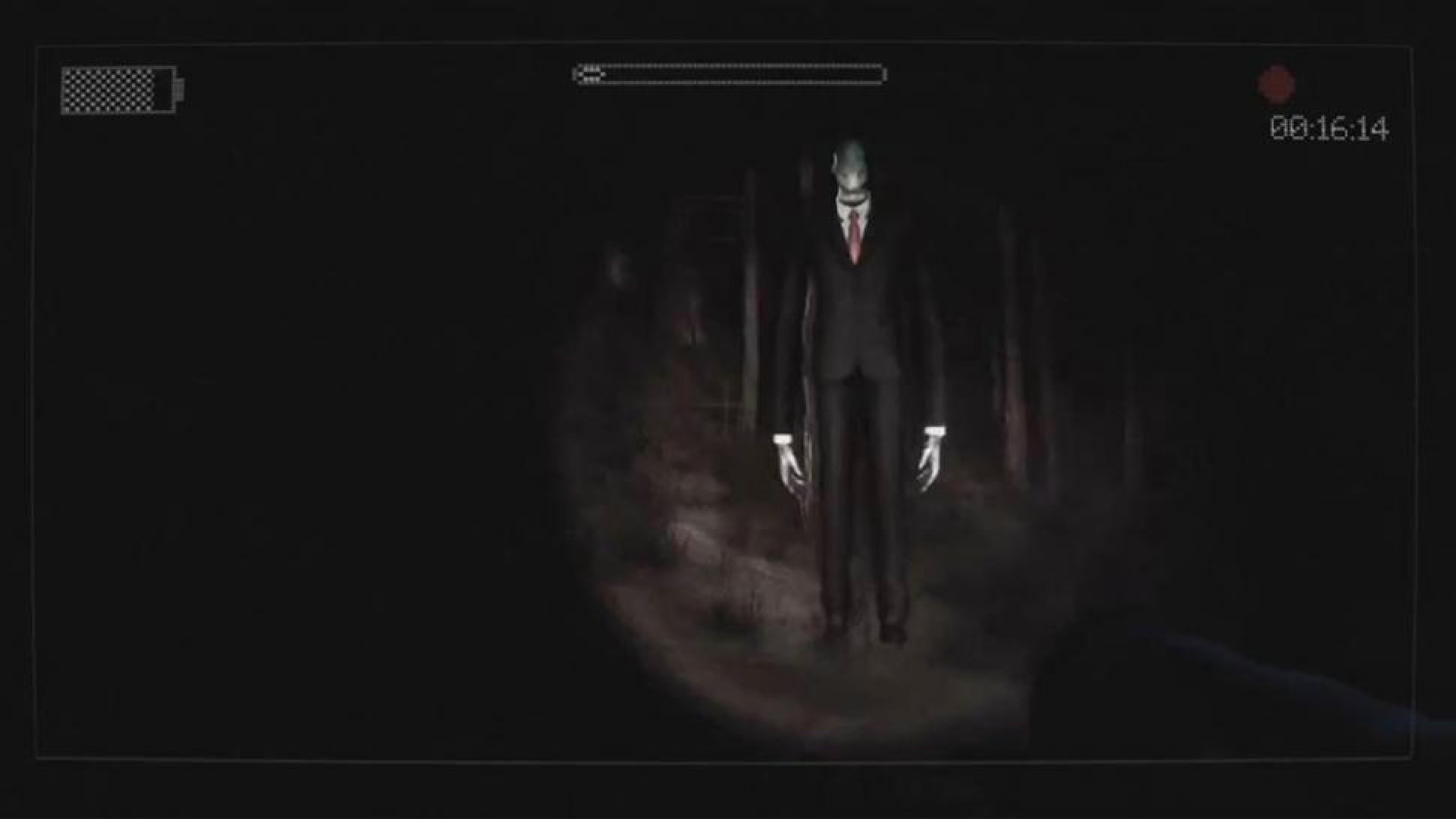
Problems with games like Slender or Amnesia or Outlast are...if you're just going to die anyway, what makes this death at the start of the game any more or less meaningful than the death at the end of the game?
            The Silent Hill games are a beautiful bit of disempowerment fantasy, where the player is actually given a decent assortment of weapons, from pipes and clubs to various guns.  These can be used to defend yourself against the enemy, however it is ultimately. futile.  Why?  Because the true horror does not come from the fear of death.  The true horror is not about physical bodily harm or a monster getting you.  The true horror is about living with the monster.  About being surrounded by an unholy feeling of dread that although you could be killed at the whim of whatever you are facing, you are left alive only to suffer, for the amusement of whatever you are facing.  The Silent Hill series does this better than almost any other game, with the possible exception of Lone Survivor.  The atmosphere around you is incredibly heavy and the enemies, while dangerous, seem to have a kind of apathy towards you.  They care very little about you...not even to the point where they even need to attack you.  They will if they see you, however you know that if they all charged you at once, you'd die...but you are kept alive because Silent Hill itself doesn't care about you.  Not even enough to kill you outright.  In all the Silent Hill games, you CAN die at the end if you act in a certain way, however most of them offer a solid resolution, showing either a falling deeper into horror or finding a way out, which I believe is nice for disempowerment fantasy...it helps bring the players back to reality, so to speak, while still being a bit obscure...leaving the player wondering and making connections with their own life.
The true terror of a game like Silent Hill 2 is living with the monster that is the town.  It hates you.  But it doesn't care so much to kill you...it will let you kill yourself, little by little, because you really are insignificant.  This is what makes the game so disempowering...and so brilliant.
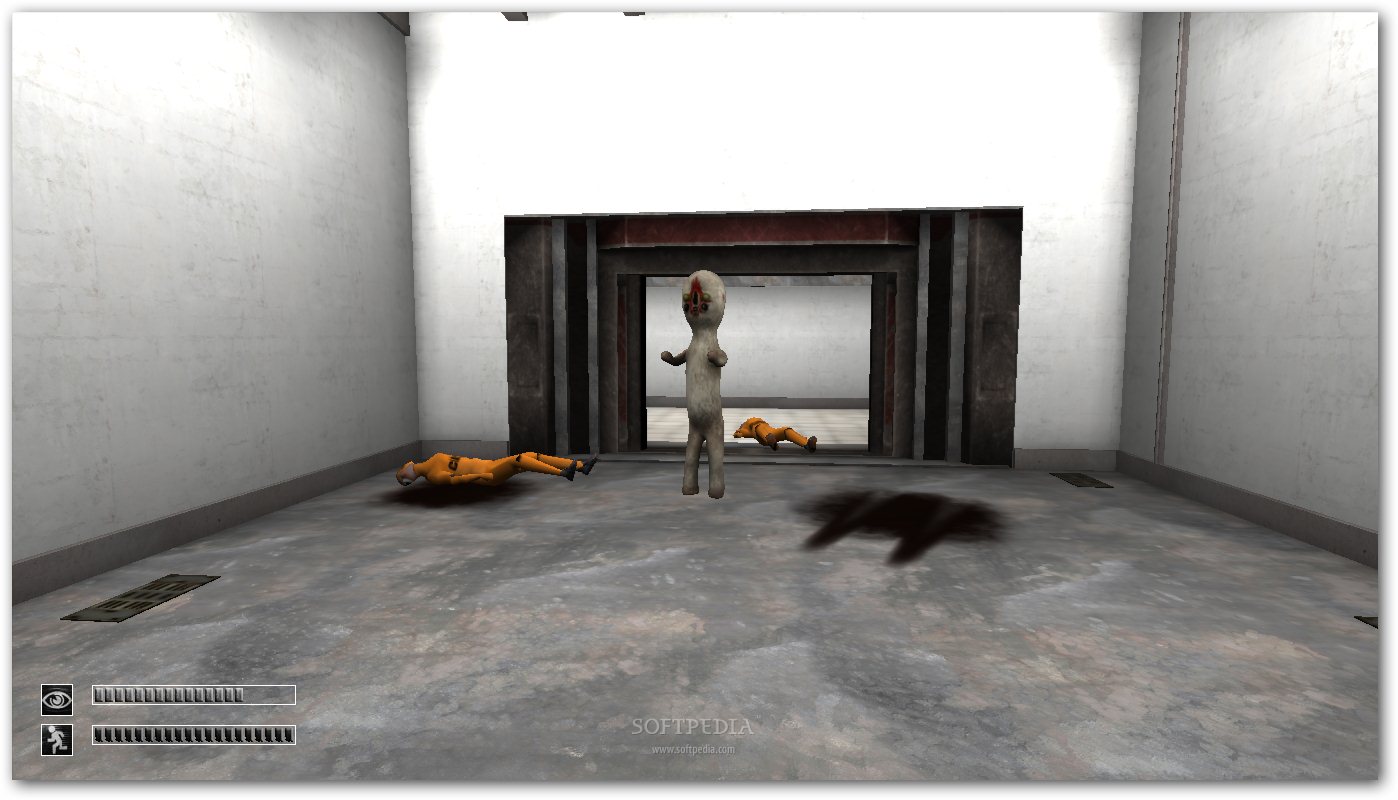
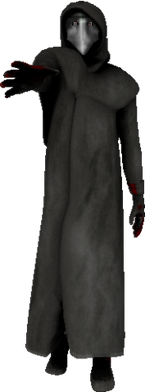
             Another way to handle disempowerment fantasy is to try and give someone something truly unknowable that they are facing.  It might be given an explanation or a synopsis on some wiki, but the creature itself is still alien to you and acts in a way no human could ever act.  This is truly horrifying, as we don't understand the reason for its actions.  It is beyond us.  Even if armed with powerful weapons, like in Prey, you can feel weak and disempowered because you cannot fathom the purpose of the enemies around you, or even if you can, you cannot reconcile it.  SCP: Containment Breach is a charming little freeware indie game that does this better than any game I've ever seen.  Using the monsters on the SCP wiki, it has creatures that are gifted with power beyond your understanding and a dark purpose that is never explained.  The horror comes from trying to survive them, such as a porcelain statue with an unblinking, painted face, which will only move when you don't look at it, like the Weeping Angels in Doctor Who.  While the Angels can be figured out and were even given a voice, the statue has none of this and haunts you, perhaps for no reason other than its own amusement.  Other monsters abound in SCP containment breach, such as the plague doctor, a creature that can pass through walls, or even a simple painting which compels you to slit your wrist and finish it in your own blood.  These are nightmares that cannot be reasoned with, figured out, or in many cases, even fought.  They are contained because of the danger involved.  These horrors would make you cringe and feel weak even if the game gifted you with a gun, which it does not, and in many ways are one exception to my rule of not letting the player fight.  When you are facing human monsters, or human-esque monsters who kill you with physical force, that's one thing.  But when you are facing a creature that kills you by infecting you with a disease, forcing you to slit your wrist, or simply hiding in your peripheral vision...what can you do?  How do you fight something that kills you by simply being?

Blink or take your eyes off the statue and you die.  It will move so long as you're not looking in its direction.  How do you fight something like that?  More to the point...what the hell is this thing?!
 
Did I forget to mention...in SCP: Containment Breach, the doll from hell isn't the only monster out there.  We have many, MANY more...
           And of course, many games try to disempower using tried and true horror cliches, such as the jump scare, the sound of people dying within your ear shot to make you feel that you're responsible or too late or what have you.  They can use gross out moments, such as filling a room with roaches or they can use gore, such as bodily dismemberment.  However, the instant you take away control from the player, I personally believe that it stops being a disempowerment game.  It stops being that horrific experience of facing demons and trying to come out unharmed, both as the character and as the gamer.  So, many times I feel these techniques are wasted.

Fear is demoralizing and disempowering...and body horror is a great way of inducing fear and making the player feel weak and scared.
            So, now that we've looked at different ways to disempower, how can we take it that one step further?  How can we improve on the subject?  Well, there are a number of ways. 

            SCP: Containment Breach, I believe has great potential because it does one thing that most horror games don't.  It adds an element of randomness.  You see, the death of horror and disempowerment is rote memorization.  The longer a player experiences a game, the better equipped they are to deal with it later.  The game stops being disempowering because you now have the power of pre-cognition.  You know what's coming and are therefore able to handle it, even if the character in game cannot fight.  When I played Dark Souls 2, I beat the game 3 times before starting a new game+.  When I got to one section of the new game, a GIANT MONSTER climbed out of the ground and began to attack me.  I was shocked and a little scared.  I felt helpless, as I wasn't expecting it.  It wasn't supposed to appear.  And it does disappear quickly enough, but the shock and surprise, not unlike a jump scare, got me.  That element of newness, of the unexpected, actually got me.  SCP: Containment Breach does this quite well.  It has randomly generated maps so that players dealing with the monsters within have the potential to find new monsters in places they thought were safe.  The game always starts and ends the same, however where it proceeds from there is different each time, and that keeps people on their toes.
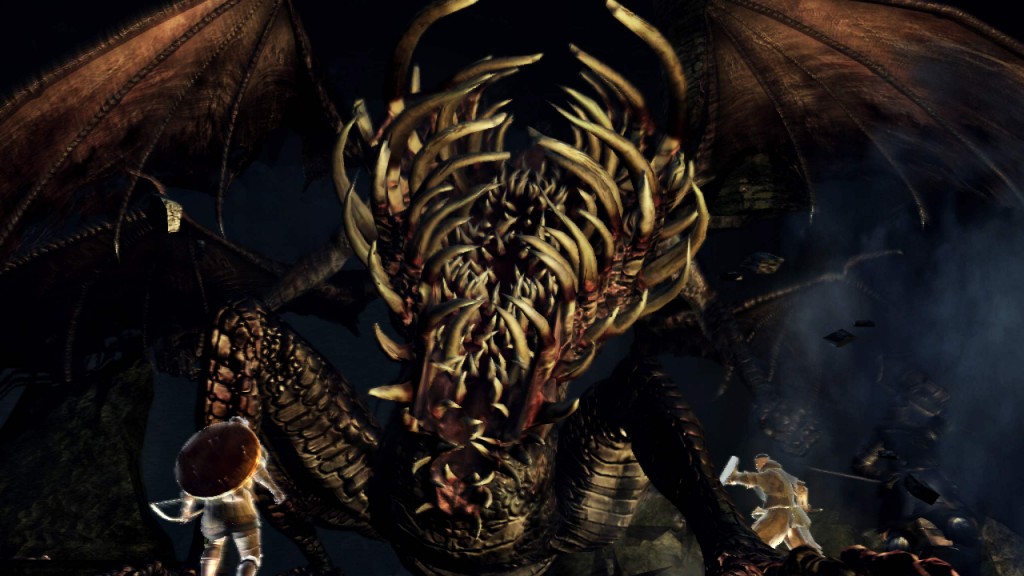
Seeing something new, horrific, and scary will demoralize and disempower the first time you see it...but once the newness wears off, so too does the fear.  You have to keep things fresh...keep people on their toes...to keep them disempowered on a regular basis.
            Sadly, however, even random elements can be predicted to an extent.  No matter how random the layouts, play SCP: Containment Breach enough times and you'll eventually get used to the monsters and they'll stop scaring you and making you feel weak.  A more lasting way to get into people's heads, in my opinion, is to make their fear personal.  Now, this is limited by the hardware.  You can't have a game slamming doors or rattling walls in real life.  However, there are ways to make it feel personal nonetheless.  Silent Hill 4, for example, takes place in a person's 1 bedroom apartment.  Slowly, the apartment becomes more corrupted and your haven becomes your prison.  Since I live in a 1 bedroom apartment myself, this really freaked me out.  Likewise, in Gone Home, the idea of your family home being exactly as it should be, but without your family and with a painful story to tell can be unsettling.  A home matching yours covered in Slender man scribblings can be downright terrifying.  These personal touches can make games far scarier, because you never get used to them, at least while you're in the place that it makes homage to.  So, one way to create lasting fear in spite of being able to predict or get used to the disempowerment is to make it personal.  This is naturally quite hard, due to everyone being different, however I believe some things are universal.  If you can tap into that, then you can make something truly horrifying.

My apartment looks similar to this in terms of layout...but not nearly as much blood or rust.  Seeing this in a game...seeing my home become a nightmarish prison...it really got to me.  THANKS, SILENT HILL 4!!!
            Also, I believe that the key to disempowerment is tricking the player into feeling weak, when in fact they can do whatever they want.  Once again, Silent Hill does this very well by giving you the ability to fight, but by making you feel as if your fighting is futile.  A way to improve this is to have tighter controls.  Silent Hill usually has very clunky controls, even with the more combat focused games like Homecoming.  If the gameplay allows the player to do anything, but still makes them feel weak...then you've successfully disempowered them in the best way possible.

The trick to making a game truly disempowering is to give players perfect control...and still make them feel helpless.  If you can do fight or trick enemies but still feel weak and helpless...then you've got a good horror/disempowering title on your hands.
            A key way to get around the problem I talked about with games like Outlast or Slender is actually to make death and rebirth an integral part of the game.  Imagine the horror you might experience of finding your zombified/petrified/mutilated corpse on a subsequent playthrough?  ZombiU does this, by allowing you to spawn a new avatar with each death and forcing you to reclaim your supplies by killing your zombified former self.  Unfortunately, where ZombiU stumbles is in the storytelling, as the new character is different, thus the horror is diminished, since death no longer becomes that big a deal.  After all, if all that you can be threatened with is death, then why be afraid?  Death is merely an inconvenience.  Neverending Nightmares and Gyossait found a brilliant way around this, in my opinion, each approaching the problem in a different way.  Neverending Nightmares is a game about dealing with horror, monsters, and tragedy, but also puts instakill enemies and traps in the game.  However, when you die, you wake up in bed, panting and covered in sweat, as if it were a dream.  Even when you advance, it is always like waking up, only to be still trapped in the nightmare.  The beds act as checkpoints and each death only leads into another nightmare.  Conversely, Gyossait states after your first death that you are here to be tormented and that you will be reborn time and again only to suffer.  What's more, I believe your corpses linger in these games, even with the new lives.  How horrific is that?
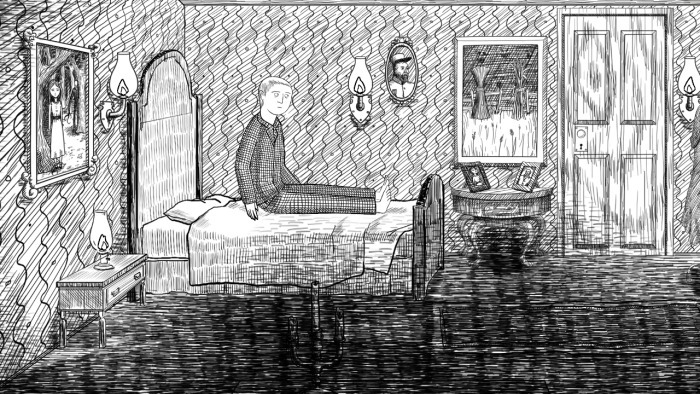
Death is not the end.  It only leads to more nightmares.
 
You live to feel pain.  And each time you die, you will be born again, just so I can watch you suffer...
            Along that same line of thought, I'd say that all games, even Outlast, Slender, and Amnesia should feature the ability to attack monsters.  Now, don't misunderstand me.  Just because you can attack a monster, I don't think you should be able to beat it.  Give them infinite HP, while still making the weapon sound like it touched them.  Players may die a few times while trying to fight off their foes, but it will just add to their sense of helplessness and sooner or later, they will try to run, realizing their own weakness.  This is something that will disempower greatly.

Could you or I really beat a monster like this?  Maybe not, but we don't know until we try...and if you let us try and fail, imagine the horror and weakness we'd feel the next time...
            Finally, the most effective way of disempowering a player is selective loneliness.  Removing any figures of compassion or understanding.  Putting them in a world that hates them.  This is hard to do, even with the best of games because they typically need at least one or two figures who will give the player hope or push them forward to try and survive.  This is where "selective" comes into play.  You should not have anyone to give support to the player while they are actually playing.  Have enemies and monsters as even with a great atmosphere, if you feel truly alone, then you have nothing that can hurt you.  Even Amnesia had to throw a monster at you after an hour or two of atmospheric teasing, lest the player start to lose their fear.  With no one to rely on, despair can set in, as human beings are social creatures.  With no one to fight for or to help you, you may begin to lose hope, no matter how capable you are, pushing forward only because you fear death or want out of your nightmare.  This is where true disempowerment lies.  Neverending Nightmares sets this up with a brilliantly dark opening, featuring a young woman being stabbed, apparently by the player, right before we wake up and meet the same young woman, our younger sister, who is nice to us and tries to guide us forward.  Once she vanishes, our apprehension and fear return...more so than before, because we fear we will hurt this person...we fear we will be alone.  We despair of saving  or being saved.  We feel weak.

In Neverending Nightmares, you are alone...that which is here, hates you.  That which you love is gone.  God...why have you forsaken me?
            When it comes to gaming, I'm not sure if we can ever fully simulate the feeling the Extra Credits crew was talking about.  Cthulhu, to them, was not an entity, but a concept.  It was an idea, or a presence.  The very existence of it breaks our understanding of reality, of our importance in the world.  The only reason we live in a world with Cthulhu is because we are so small that he does not care about us.  We could be stepped on or spared, and the elder god would not care.  In this aspect, one of the few things we can hope to do is survive the nightmare...to hide and if we're lucky, avoid the foot of god.  This presence, this feeling that we are always and forever weaker than we think, the idea that the universe is so infinitely large and that we are so pathetically small, could make for an interesting corner stone of disempowerment in video games.  It just hasn't been tried that much.  Games like Silent Hill or Lone Survivor do it on a small scale, where the presence of the world around you exacts a pull on your psyche, however on a truly cosmic scale?  Nothing quite that ambitious has been done. 

To truly know how small we are on a grand a scale as this is hard.  To truly feel like an ant under the boot of an eldritch god, who cares nothing for our existence, for good or ill...that kind of horror is still waiting for us to discover in gaming.
            I believe that as horror evolves, it may be tried, as disempowerment is a part of our development.  We have to feel weak sometimes to understand the value of strength.  We need to be tested with helplessness in order to temper our resolve and not lose hope.  Or perhaps we just like being scared and the adrenaline high does it for us.  Who knows?

            I am not a horror gamer by trade.  I have Silent Hill 2-4, Homecoming, and Clock Tower 3.  I generally DO NOT LIKE playing horror games.  That being said, it doesn't mean I'm not fascinated by the stories they tell or by the odd approach they have to game design.  Making someone feel weak runs contrary to basic game design.  And yet, it can still be compelling for the reasons I stated above.  So, I have gained a growing interest in horror games.

Perhaps I too gaze into the abyss in fear, in hope, or to test and see...if something is going to gaze back at me.
            I hope you have enjoyed this exploration of disempowerment fantasy and ways that it might be improved through game design in the future.  Check out some of the horror titles I've mentioned for a terrifying good time and come back in two weeks for when we discuss the exact opposite.  We're going to talk about how to make you feel like a bad ass.

Saturday, May 31, 2014

Still on cooldown. Updates, nonetheless.

Hello, all!  I swear, I had a rant prepared for today, but...hasn't quite coalesced yet.  Still working on what I want to talk about next and some indies to spotlight.  Either way, I wanted to let people know that I DID survive Animazement.  I debated buying some games, but was poor, so settled for a few movies.  I wanted to get the Guardian Legend for NES, but...again, poor.
Can we get a VC release, Nintendo?  Pleaes?
I sold about 400 dollars worth of my gaming perlers, which is pretty decent, if I do say so.  However, a fair bit of things happened while I was gone, so I just want to post a few updates about gaming, then I'll hopefully be back into regular update mode next week.  First, while Animazement was going on, we finally have the release of the Retron 5 by Hyperkin...the delays and price hikes have made many people skeptical, but as far as clone consoles go, it seems PRETTY DAMN IMPRESSIVE.  Save states, built in cheats, and almost 10 different systems that are playable(NES, Famicom, SNES, Super Famicom, Sega Genesis, Sega Megadrive Japan version, Game boy, Game boy color, and GBA.)  Gamespot did a much more comprehensive review than I could, seeing as I don't have one because, poor.  Check that out here.
It ain't perfect, but it is pretty damn cool.
Zeboyd games, one of my previous creator spotlights, has started up the Kickstarter Report again and I couldn't be more thrilled, as they have showcased some truly interesting kickstarter ideas.  Extra Credits recently finished an inspiring examination of how video games could be used as educational tools.  And Dark Souls 2 continues to be awesome, thanks to lore enthusiasts like Vaati.

Also, right after I returned home from my convention, an artist and graphic designer I know showed me something awesome.
A billion points to people who actually get this reference.
She's an artist, pokemon enthusiast, and overall awesome person.  Goes by the tag Aquarius Magick.  Check her stuff out, if you're interested.

That's all for me.  I'm still cooling down from working over 30 hours last weekend, yes still, shut up, I'm tired.  I'll also be heading out to New York in two weeks, so this might be a light month for me in terms of updates, but I don't intend to abandon this blog by any means, so...just be patient, alright?

Thinking next week we talk about either Legend of Iya or Neverending Nightmares and their creators.  We'll see...

Thursday, June 20, 2013

Video Game Piracy: A Victimless Crime?


So...piracy.  The games industry loves to blame all their problems on piracy and used video games.  But...is it really as big a deal as they say?  Is piracy the crippling blow to the industry that publishers decry it as or is it, as many pirates claim, a victimless crime?  Taking money from the already bloated, over stuffed, often dishonest publishers for products that are not worth said money to begin with.  I'm not, nor will I ever be, a pirate.  I disagree with it on a moralistic level.  However I do understand the ideas behind piracy in the modern age.  So...I'd like to discuss for a bit about piracy in the video games industry and how it both hurts, and is actually beneficial, to said industry, despite claims to the contrary.

Everyone loves pirates, right?  Err...right?
            First, let's look at the definition of piracy.  Before copyright came to be, it was robbery or illegal violence at sea.  Robbery seems to be what stuck with people, as these days piracy has been morphed into a catchall term for unauthorized reproduction or use of a copyrighted material in its original form, I.E. copyright theft.  These restrictions have been relaxed in recent years to allow these materials to be used so long as they are altered, such as with commentary from a let's play, or through a review.  However, the idea that piracy equates robbery has always stuck with any industry that thrives off copyrighted material.  And to some extent, I sympathize.  Artists need to make money in order to keep producing art.  Even if they love it, if they can't afford to eat off their art, they probably won't have time to make it because they'll be too busy doing something that puts food on the table.  However, with the rise of corporations who use and abuse the artists for their personal profit and the advent of independent releases on the internet as opposed to something that HAD to have a publisher to ever see the light of day, I think that piracy has become sort of a buzzword that many people use to frighten others and imply that they are a victim.
In this day and age, piracy has become like the word communist or socialist.  It's just a buzzword to scare people and justify things that should not be justified.
             First, let me say this.  Piracy should only be used as a term if a product is on the market, being sold for profit, by either the original creator or a duly appointed seller, I.E. a publisher, and if this said product is being taken and either being used or redistributed without providing proper remuneration for those who created it.  What does this mean?  Well, essentially, this is my way of saying I do not believe that video game emulation should be considered piracy.  For the most part, at least.  When emulation was first on the rise, many video game companies feared they would be out millions as people could simply download the game code on the internet for free and use their computers to mimic console hardware so they could essentially play any console video game they wanted for free.  At the time of emulation's creation, I could understand these concerns.  However, they have gotten far stupider as time has gone on.  Emulation, for those not in the know, is where a video games code is downloaded from the internet in the form of a ROM, then a player, which emulates a video game console such as the SNES or the Sega Genesis, reads these ROMs and plays them as if they were the actual game.  Largely, it is excused if you delete the ROMs in a 24 hour period, as a trial run, or if you already own a physical copy of the game.

Emulation of current games shouldn't be allowed, but emulation in and of itself?  Not really piracy.  It's people getting a chance to enjoy games that are no longer for sale, and thus do not hurt the developer in the least.  Unless they've re-released it, of course.
            I want to ask people to take a moment and think about emulation and its potential to hurt and its potential to preserve.  It has been seen as a tool for piracy by many, but is it really?  Well, in some cases, yes.  If an emulator for a modern console, like an Xbox 360 or a Playstation 3 were released along with ROMs for games that you could still buy in stores it would be piracy without a doubt.  The developers and publishers are still making sales off these products and they are still in production, so there are costs to consider.  However, what so many people overlook is that emulators are almost ubiquitously used to play older games on the Atari 2600, the NES, the SNES, the Genesis, etc.  These games are no longer sold in most stores and even if they are, their sale does not profit the publishers or the developers any longer.  Many publishers or developers of older games have ceased to be, actually, so sales of these games are strictly between private owners, not a retail outlet which pays for the games to be stocked.  In this case, emulators are not really a form of piracy.  They do not steal money from a publisher or developer, as the product is no longer in use.  In many ways, it is like the copyright has become invalid as soon as production and sales of these games have ceased, making them seem like fair use products.  They are not, I assure you, but...I do not see the harm, either.  Emulation has the potential to hurt consoles currently still on the market, however, it is also a tool for preserving and re-experiencing video games from a bygone era that you may not have had a chance to play or buy during your youth.  Emulation under these circumstances should not, I believe, constitute piracy.  However, if these games are ever re-released, I believe that playing them on an emulator, even if their ROM is from a cartridge no longer being sold, then it WOULD constitute piracy.  The Wii and Wii U, for example, frequently re-release older games that they have the rights to.  In this case, downloading Super Metroid for free, online, to play on an emulator, when a legitimate copy is being sold, for very little might I add, is piracy.  Simple as that.  Emulation is used by many as a way of expressing love for video games and as such, I believe that a bit of good faith is in order.  If the games you love are available in such a way that benefits their creators then buy them.  Support the creators.  However, if games are not for sale, then feel free to emulate them.  You may even stir interest for sequels or re-releases by keeping their memories alive.
Guys, I defend emulation for how it preserves bygone games, but if those bygone games can be bought legitimately...just do it.  If we do, we support good developers and show interest, which may lead to sequels or improvement.s
            Now for the prickly subject that no one wants to talk about.  Emulation is widely regarded as okay, by gamers and even by some publishers when it meets the circumstances I outlined above.  However, there are some forms of piracy that many try to legitimize, which have no bearing in reality.  Yes, if the game is no longer being made for profit and the sales are no longer going to the creator, there should not be a concern as to who plays it for free.  Many gamers, however, feel justified in piracy just because they cannot pay for games.  I understand this dilemma.  Games are growing more and more expensive to buy and with the economy in its present state there is less and less money to go around.  So, you feel justified in pirating a game since all your money is going to supporting yourself.  I get it.  But if you ever want the industry and the world at large to actually accept this as kosher, then you need to act in good faith.  What does that mean?  Well, essentially it means supporting the games even if you do commit acts of piracy.  The host of a radio show I listen to, for example, once openly admitted to buying a copy of Skyrim on Steam, then getting a cracked copy for free online.  Why?  Because he does not like how Steam interferes with his experience, through its pop in menus and glitches.  However, he already paid for his game, so the developers have already profited.  This is what one might consider an act of good faith.  Pirates who buy the game, disagree with some of its design choices, like the recent always online DRM of Sim City, and decide to get a pirated version regardless.  This is not a problem, provided you DO act in good faith. 

If piracy is to be allowed/overlooked, it needs to be done in good faith.  So you bought SimCity and it's servers are so broken you can't play it?  Feel free to get a cracked or pirated version.  You already bought a legitimate version, so the developers already have your money...now that you've done the right thing as a person, do what's fun for you.
            Pirates who try a game and play it all the way through, then buy it to support the developers show good faith.  I would even argue that pirates who try a game for a little bit, dislike it, stop playing it, and don't pay for it act in good faith, as this is akin to buying a game, trying it, disliking it, then taking it back to the store for a full refund.  However, I have to call out the pirates who do not act in good faith.  Pirating a game that is available for retail, playing it all the way through, keeping the pirated copy on your computer, and then never paying for a retail copy is stealing.  This may sound accusatory, but it is.  And I know that in this day and age publishers are over bloated, toxic to their own customers, far too controlling, and often downright dishonest with us.  I know this.  But you cannot simply pick who to like in the games industry when it comes to piracy.  What do I mean by that?  Well, what I mean is if I said to hell with the publishers I hate, I would also have to accept that indie developers bending over backwards to make their games easy to play, download, pay for, and DRM free shouldn't get any consideration either.  Or that people giving away games in bundles like on Steam or the Humble Bundle also are beneath consideration.  If you were to pick and choose like that, it would be akin to a police officer having the option to pick and choose who to arrest.  Or a bank picking and choosing who to foreclose on, leaving their favored customers alone while bullying new customers.  These acts are dishonest and they spit in the face of the idea that we are all equal under the law.  The same principle applies with game piracy.  You can hate a company and its games and not buy them, that's fine, that's capitalism.  However, you cannot pirate the games of one company you don't like, then turn around and say people should buy games from another studio.  That's simply dishonest and hypocritical.

Piracy in good faith.  Either you support the developers for work you've enjoyed or you have stolen from them.  No one should begrudge you a free look or playthrough, but if you take it without paying for it, that is a crime.
            In a subject like this, if you won't act in good faith, then you are not allowed to pick and choose who you decide to screw over.  If you don't buy a game because you don't like it, fine, you've chosen with your wallet.  If you pirate a game, like it, but never pay for it...you are stealing.  You cannot argue otherwise.  I sympathize with not having money to pay for a game at this moment, but that is why good faith is in order.  If you pay for it down the line...great.  If not...thief.  Remember, this is only games being sold for profit, so emulators or gamers who want to pirate games that are no longer sold but which are still not freeware?  I have no issue with you and neither should the game industry.  But I do have issue with the people who hurt developers who genuinely need support.

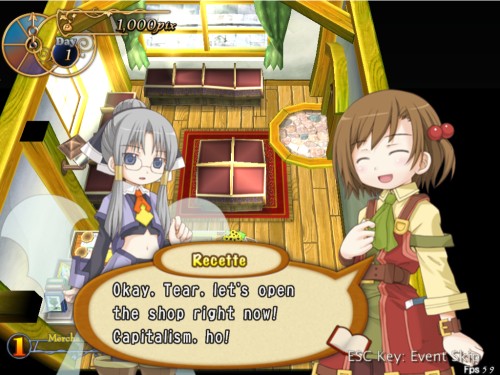
            Like all things, the video games industry is a business.  Not everyone, however, plays by the rules of the over bloated AAA industry and smaller indie developers put their heart, souls, savings, and life into making great games that they enjoy and want to share.  I think it's fair that these people get remuneration for their efforts.  When Derek Yu and Alec Holowka made Aquaria, it was a labor of love by two talented game designers and for their efforts, their game enchanted tens of thousands.  But how many sales were lost due to piracy?  How many people profess love for a game, then offer the creators nothing for their efforts?  This is not acceptable.  In fact, sometimes, it is heartbreaking.  Recettear is an indie game about a girl running an item shop and in the demo, it talks about why she runs it.  She's in debt.  And the developers threw in a tiny gag at the end of the demo, where the girl pleads with the audience to not pirate the game, otherwise she will never get out of debt.  And this isn't just meant as humor.  Indie developers can live or die off a few thousand sales, since they have very little overhead and sometimes don't have to give publishers a cut.  The fact that this game, which does everything it can to be as open and available as possible, has to plead with its audience to not steal it is heartbreaking.  You might ask, "What's the worst that could happen?"  Well...how about no more games from indie developers.  No more Fez.  No more Aquaria.  No more Dust.  No more Minecraft.  If everyone pirated these games, the developers would die.  There would be little to no point in making the games.  No sequels would be made.  No new projects.  It would end them.  The pirates I take the most issue with are those that do not act in good faith and willfully steal from these developers who need all the help they can get.  But, as Jim Sterling pointed out, there is one breed of pirate who is the worst of all.

Like it or not, we live in a capitalist world.  If you're good at something, you should get paid for it.  And that goes for game developers too.  Piracy in bad faith is criminal because it takes money from people who've worked hard to create something beautiful and fun.
            Pirates who steal from charity.  My jaw literally dropped over a year ago when I saw Jim Sterling's article on just how many people had pirated the Humble Indie Bundle.  For those unaware, the Humble Indie Bundle is an organization that, with the creator's permission, periodically releases indie games at far below their normal price in a large bundle and gives a portion of their profit to the charity Child's Play.  You can pay a fair amount, like 10-15 dollars and get extra games or content.  Or you can pay a single penny and get the basic bundle.  A single penny for anywhere from 4-6 games.  And yet some people still felt that that was beneath them.  I understand piracy.  I understand wanting to try before you buy.  I understand wanting to recapture the past.  I understand not having money to pay for a game.  But this is willful, malicious greed and should never, ever be excused.  I will agree that game companies do treat their customers too harshly in the battle against pirates.  But those who not only act in bad faith but who will turn their nose up at honest, noble attempts to deliver great games at a low cost which benefits charity?  I have no pity for them.  In the least.

The Humble Bundle is an effort by game developers to give games out to the fans for very cheap and at the same time, support a worthwhile charity.  To pirate this is to be absolutely morally bankrupt.
            So, is piracy a victimless crime?  No.  No its not.  Not everything should be considered piracy, I admit.  Emulation can prove to be a great way for those who are broke to experience older games without hurting anyone by getting a chance to play games that are no longer sold for profit.  However, piracy on the whole does take away money from those who desperately need it.  Piracy in bad faith, that is.  I would actually argue that piracy in good faith does more for the industry than any amount of advertising could.  Piracy in good faith spreads the word about a game to people who may want to buy it, without acting as if they are justified in their theft, since the pirates also want to support the game and will eventually buy it.  This kind of press cannot be bought with any amount of money and will be beneficial to any game that was made with passion and not created as just another assembly line piece of shovelware.  Many indie developers have been gracious in the face of piracy because it does spark interest.  I say, good for you for being so gracious, but you still deserve to be paid.  Piracy is not a victimless crime.  But it does not always have to hurt people either.  I imagine in the olden days, pirates could not only steal gold and silver from ships, but also medicine for sick families who could not afford it.  Piracy is not evil in and of itself.  However, when performed in bad faith, it deserves no sympathy.

Piracy is freedom, to a degree.  It is the ability to choose whether to purchase a game blindly or try it out, then decide what to do.  Piracy is no more evil than freedom.  It is only evil if you choose to use it as such.
            I should end this discussion with that, however I just want to bring up something Daniel Floyd and James Portnow have said in the Extra Credits Series.  You want to stamp out piracy?  Then offer a better service.  This is simplicity itself.  Why do people pirate?  Because of DRM.  Because games are too expensive.  Because there are no other options.  Give them other options, and the pirates will beat a path to your door and fling their money at you whole heartedly.  Most of them will, at least.  There will always be those who think it beneath them to pay, who believe the internet and anonymity entitles them to do as they please...but for most pirates, offer them what they can only get through piracy, and then one up that offer, and you will win over hundreds of thousands if not millions of customers.  Steam uses DRM.  However it is not intrusive, games connect directly to the Steam forums and community through it for troubleshooting and support, it can be deactivated to play offline, and Steam offers trading and great sales to bring the cost of games down.  GOG does one better, allowing players to, after paying for them once, re-download their games as much as possible, potentially allowing limitless sharing.  The games themselves are also completely DRM free with sales that happen just as frequently as Steam sales.  These are things that piracy cannot always do.  If a torrent disappears, your source to a game is gone.  But so long as you have a GOG account, it will always be there for you to re-download.  So, how do you stop piracy?  Make it seem like more of a hassle than buying the games legitimately.

Want to stamp out piracy?  Offer a better service.
            Just in case anyone is wondering, yes, I saw E3, I know about the PS4, the Xbone, and the Wii U.  No, I'm not going to discuss them.  While I do believe the issues of ownership that the Xbone and some other companies have been screwing around with are important, and a core reason as to why people pirate, they have already been thoroughly explained by people more entertaining than me.  If you want to see why they are going to cause an issue, check out Angry Joe's rant on the Xbone or Video Games Awesome's coverage of E3.
Sorry, I couldn't resist.  I know Microsoft flip flopped on their DRM policy recently, but it's sad that the Xbone ever got this far without someone raising a hand and going "Ummm...are we sure this is a good idea?"  This is the kind of attitude that breeds piracy.  Restriction.