Showing posts with label Sim City. Show all posts

Sunday, April 27, 2014

Diminutive Diatribes: The Power of Goodwill


            With net neutrality being an issue at the moment, I'm reminded of the simple statements of Nash Bozard who said that, without goodwill, we will abandon a company the instant we are able.  He was referring to the abysmal business practices of ISPs and how they have frustrated and abused their customers to the points where the instant they are not needed, their customers will toss them aside.  Well, it's the same with game companies.

Shouldn't game companies do the same?
            Goodwill is kind of an essential thing in this era of gaming, where prices are higher, income is lower, and the options are much larger.  In the 80s and 90s, you had only a few options for play, namely Nintendo, Sega, PC, or perhaps a third party console like the Turbo Grafx.  But now, we have dozens of digital distribution websites, 3 major consoles, 3 backlogs of consoles from the previous generations, and not to mention handhelds.  There are literally hundreds if not thousands of games being released every month, in some way shape or form.  So, with that many options, you have to hold onto your fans with as much vigor as you can muster, not push them away or squeeze them dry with shady business tactics.  Because a fan whom you have treated well will stick with you through thick and thin.  They'll forgive a few botched experiments, so long as you let them know you respect and care about their business.

The options we have here are staggering.
            A good example of this is Nintendo.  Nintendo has made several unusual choices in gaming in the last decade or so.  They released the Gamecube with a distinctly child-like/toyish design, they made motion control a core part of the Wii and the Wii U is meant to emulate tablet gaming.  These experimentations might push away core fans if not for the simple fact that 90% of the time, when you buy a Nintendo game, you know you buy quality.  Nintendo may not french kiss all their fans and they've made their share of mistakes, but in the age of buggy launches, early access, and outright scams via Kickstarter or Steam, it's refreshing to pick up a Mario or Zelda game and know that 1) it will work right out of the box, no patches necessary, 2) it will be a high quality experience, regardless of any experimentation, and 3) it will be accessible by almost anyone.  Fans love Nintendo because they continue to give them quality, even if the games themselves sometimes seem to repeat.  More than that, Nintendo has also generated a pseudo culture around itself, where it appears friendly, offering fans rewards via the Nintendo Club and basically making themselves seem approachable.

You bought a Nintendo game?  Come on up and pick your reward!
            On the other hand, let's look at Steam, of late.  Steam used to be a great example of a company that understood and generated goodwill with its customers.  They have frequent sales of their games and until about 2011-2012, the products released on Steam were of proven quality.  They could have bugs or patches, but they were still strong, enjoyable games that were well worth the money.  However, recently, Steam has started to become unstable.  They have released a glut of shovelware titles onto their marketplace, which, with this new influx of trash, has become harder to navigate to find the quality items, their early access releases have no quality control so a game can be for sale at full price that is effectively broken or released as a scam to take money, and their attempt at getting new, innovative products through Greenlight has been a rather depressing failure, with some games being inspiring, such as Octodad, Bunny Must Die, or La-Mulana, while other releases have been appalling disasters, such as Guise of the Wolf which is laughably bad in every way and Kingdom Rush, which was so bugged upon release that it was unwinnable past level 3.  Worse, when you start abusing your customers like this, policies that you've implemented that weren't a big deal before start becoming more apparent.  The sometimes intrusive, sometimes not DRM Steam uses to both protect your games, but also monitor you, the no refund policy under most circumstances, and the abusable comment and review systems are only a few.  When compared to GoG, which will offer refunds if your game does not work, which frequently gives out free, classic games, and which still uses a high level of quality control, coupled with DRM free titles, Steam starts to seem less and less reliable.  And if they continue, they may lose many of their regular customers to GoG, Desura, or Green Man Gaming.
Oh, Steam...what have you been letting into your inner circle?
            Now, let's look at one of the worst.  EA.  EA has frequently screwed over its customers with DRM through online passes, released buggy games, such as Simcity, which was unplayable offline at all and unplayable online for the first few weeks, and forced players to register with their online service Origin if they want access to EA's games.  These kinds of policies push consumers away and have been lampooned by people far wittier than me(See Yahtzee Croshaw or Jim Sterling.)  The sad truth is that EA doesn't value its customers.  Apologists might argue otherwise, but EA sees them as a way of making a quick profit and will do anything to get more money, such as including micro-transactions in a full price game, forcing DRM to try and shut out pirates, and releasing games too early in order to gain some quick profits.  They may be pretty big, but EA has also dealt with a lot of controversy.  Lawsuits over Battlefield 4, the outcry and hilarious media disaster that was Simcity, piracy STILL happening despite their best efforts to force consumers to prove their loyalty, etc.  If these continue, EA will lose customers...they've already been losing customers.  A franchise players love will only care a company so far.

Need I say more about EA?
            My point with this is to try and emphasize the obvious.  If a company abuses its customers, even if the abuse is something as minor as releasing a buggy game that lacks polish, then they are risking losing them.  You have to engender goodwill in your consumers if you want them to be loyal.  Elder Scrolls fans have cried foul of Bethesda on many occasions because of the bugs, but mostly forgive the series because of how deep, enjoyable, and moddable it is.  Elder Scrolls Online has pushed that, requiring a sixty dollar commitment, a fifteen dollar further commitment if they want to play the game at all after buying it, and the option of using real money to buy things like horses.  They have cast aside a lot of goodwill there.  Likewise, Konami and Kojima productions are risking reprisal when Metal Gear Solid 5 gets released due to their $40 demo sold under the title, Metal Gear Solid 5 Ground Zeroes.  Sales may be strong now, but the internet remembers...the internet remembers and it does not always forgive.
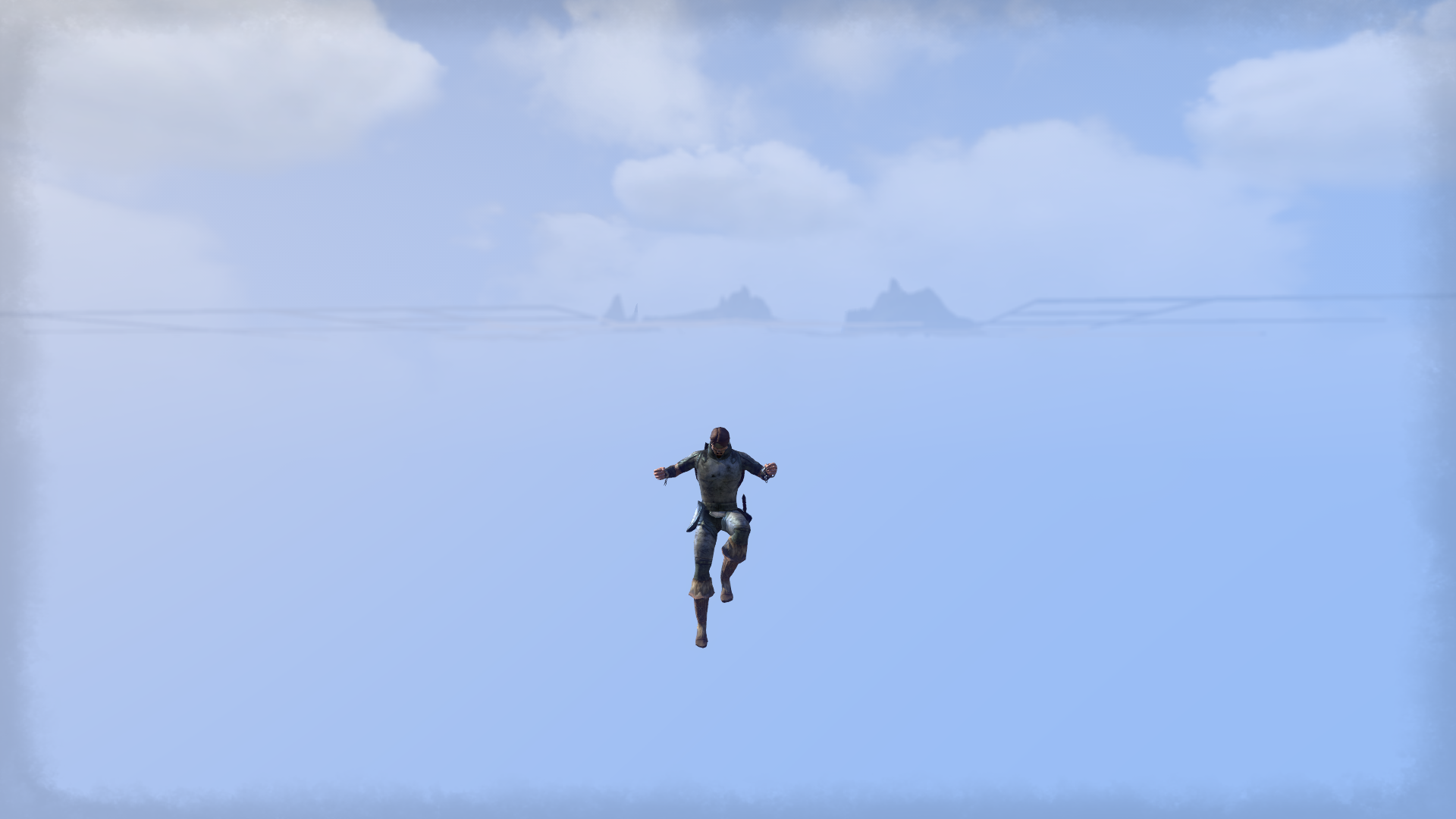
75 dollar entry fee...was Elder Scrolls Online worth it?  Goodwill, wasted, needlessly.
            Even companies like Nintendo need to be aware of how they COULD be engendering more goodwill.  Mother fans would bow down and welcome their new god, Nintendo, if they announced the release of Mother 3.  RPG fans the world over and nostalgia buffs would flock to the Wii U if cult hits like Rygar, Terranigma, and other titles would grace the Virtual Console.  And Nintendo isn't above mistakes either...the Retro Remix games they have released is dangling dangerously close to cash in, with links to the Virtual Console to buy the full version of the sample game that you can play.

I've got my eye on you, Nintendo...
            In the age of dwindling sales, game companies need, more than ever, to be willing to bow their heads, take a little bit of a pay cut here and there, and say to their fans, "Thank you for sticking with us."  The truth is, we don't have as much money, but we do have more games and more options for buying and playing them.  Hell, it's at the point where we don't even need to pay games, since something like Hearthstone or Loadout are free to play with no required buy in.

100% free to play.
            So, what can companies do to let gamers know they care?  Well, first, they can be straight with them.  Be honest if you're having problems.  Don't hide it and push your buggy game onto the market.  Say you need more time...say it might not be up to snuff...gamers will respect you more for being honest than for trying to pretend things are okay when they're clearly not. 

A little honesty might have made this less painful, Gearbox...
            Next, companies can talk to gamers like people.  Communicate not corporation to consumer, but gamer to gamer or developer to gamer.  One thing Kickstarter does well is it allows the creators of games to directly talk with and engage their fans in updates and comments.  It wouldn't be that hard to implement for anyone who's bought a game digitally.  No cryptic salesman bull crap, but just talk like a normal person.  Hell, even a regular podcast would do wonders for PR. 

            Another good way to engender goodwill is freebies that aren't just being held back or that aren't just shovelware.  Think about what would happen if Sega gave a Steam gift code to one of their titles on Steam, like Beyond Oasis, Vectorman, or the Sonic games, with each new purchase of a current game.  Fans might not use them...but they might.  They'd remember that a good game was given to them, even if it was old.  And what does that cost Sega?  Nothing.  It's a digital game made years ago.  There's no real overhead.  Extras in game packages that AREN'T collector's editions also work well with this.  Soundtracks, figurines, posters, anything that makes a gamer feel like they're getting more than their money's worth is smart and a good way to engender goodwill.

Still awesome years later, an easy way to earn kudos points with gamers.  Give it to them for free.
            Probably the best way to make gamers love you?  Listen to them and give them what they want.  Not in terms of game design I mean, since then we'd get more and more Call of Duty Clones, but for example, many Konami fans miss Suikoden or the Metroidvania style Castlevania games.  So, give them one.  If you can't make a new Suikoden game, for whatever reason, make the older ones more accessible.  Suikoden 2 is STILL awaiting release on the PSN...if it had been released 4 years ago, when the service was getting going, Konami would have been heaped with praise.  Now, we're just praying it doesn't get cancelled.  And these games?  Yeah, you might take a little loss on them at first, but think about all the people you will hold onto because you said, "We listen and we care."
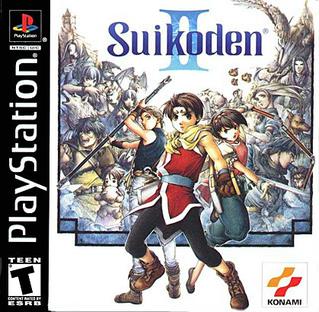
C'mon, Konami, stop dragging your feet...
            The smaller things a game company can do to generate more goodwill is to not take advantage of the goodwill they've already got.  See, goodwill is like money in a bank.  It accrues interest the longer you have it and don't spend it.  If you keep getting goodwill, or even if you just don't abuse that goodwill, it will deliver in spades.  So, don't release buggy games if possible.  Don't force DRM.  Don't make on disc DLC.  Don't hold back content so you can release it AS DLC.  If you just release a game and put your all into it, you'll earn goodwill...and even if you don't, you won't squander it by abusing your consumers.

            I just wanted to write this up to remind people that sometimes, you need to play the long game.  Goodwill is like an investment.  You won't see an immediate return on it, but if you want to retire...it's a good thing to have.  It will keep making money even if you start to stumble or lose your way because you have respected and stood by your fans and they will, in turn, stand by you.  Companies need to take note, before it's too late.  You might make your money now, but sooner rather than later, your fans will abandon you when a new company, one that respects or at least doesn't abuse its players as much, joins the scene.  If you don't get people who will stand with you...then you'll have no one to help you when it all comes crashing down.

Not even great Galactus can do it alone...
            Woe to him that is alone when he falleth, for he hath not another to help him up.
                                                                                                - Ecclesiastes 4:10

Monday, September 2, 2013

Sell Now, Fix Later: The Growing Problem of Unfinished Games


Okay, before I get started with this entry, I want to apologize for the infrequency I have been posting lately.  I recently lost my old job and have returned to school, so needless to say, it's been an adjustment period.  I've also had my hands in other projects, like my book or a sexism project in regards to video games for the sake of a friend of mine.  Anyway, enough apologies.  I may be a bit more infrequent for the next few months, but I do have some more posts in the pipeline so...please be patient with me.  Now, on with the post and your inevitable hate mail.

Sell Now, Fix Later: The Growing Problem of Unfinished Games
I'm going to say something that will probably earn me a good deal of flak.  I don't like Skyrim.  Before anyone throws hate mail my way or "You just haven't played it enough" or what have you, let me retort with, I spent sixty hours playing the game.  It's addicting, certainly, but...I can't really say I had FUN while playing it, just that I couldn't exactly stop.  I went from the start of the game to the end of the story missions, finished the civil war, and by the end was greatly disillusioned with it because Skyrim is an unfinished game, shoved out into the market because the developers thought it was "Good enough."

"Good enough" is not good enough when it comes to a $60 game.  Make.  It.  Better.
            What do I mean by that?  Well, in the modern game industry, the advent of consoles which regularly connect to the internet has spoiled video game developers somewhat.  You see, thanks to the ability to patch a game online, many developers feel it is alright to skip some of the crucial stages of QA testing in their games, shove it out into the world at large, and if there are problems down the road they can just release a patch for it.  While I know that releasing a patch is a huge hassle much of the time and does require a fair amount of manpower, this kind of nonsense would not fly ten years ago.  Ten years ago, a game with as many bugs and glitches as Skyrim would be laughed off the cutting room floor, not lauded with 9/10 and 10/10 scores from reviewers and given countless game of the year awards.  See, as consoles have grown closer and closer to PCs, an unsettling number of them have started to treat their games like PC games.

It's a good game, but...no.  Glitchiness should not get a free pass.  9/10 for a game with an insane amount of glitches is unacceptable, even for an Elder Scrolls game.
            There was a time when console video games could not be that glitchy.  One or two glitches might be acceptable if the developers missed them and they didn't obstruct gameplay, like the famous Final Fantasy 6 reviving General Leo glitch or the duplicating items glitch in Dark Cloud 2.  However, if a video game had noticeable problems just running normally then it would receive a lot of flak from reviewers and gamers alike.  For me, personally, Skyrim on the PS3 froze to the point where I had to manually restart my console about 6 times during my play through.  Many monsters would one shot me at full health, even if they were tiny.  I had, on two separate occasions, Dragon corpses draped over different houses in different cities that refused to disappear and which ragdolled and got trapped in the scenery.  Characters who could get trapped, both by scenery and IN scenery.  And overall just poor design on certain sections of the game.  Yet, despite all these problems, and these were in the most recently patched version, Skyrim's perfect "legendary edition," people still threw around awards of 10/10 for the game.  When the game was released in 2011, there were dozens if not hundreds more glitches, some of which made the game unplayable after sixty hours or more.  This kind of glitchy, unfinished console game would never even find release, save for the most unscrupulous of developers pre-2006.  The fact that it's a port of a PC game is little excuse, especially considering how high profile it is.  Be more critical, game journalists!  Skyrim did not deserve all those 10/10 scores it got.  I personally didn't like it, but that's personal preference.  I could see it being a solid 8/10 or a 7/10 because of all the options and the capacity for fun through organic gameplay...but with all the glitches, it did not deserve all the praise it got.  Just because a game has a massive amount of content does not forgive the fact that the game is unfinished in places.  In fact, "You can overlook a few glitches due to the amount of content"  should not be an excuse.  If anything, the amount of content raises the bar higher because if you can give us this much content, we expect it to all work.

You laugh, but this is kind of distracting...immersion breaking...and just unacceptable in a "game of the year" title.
            Here's the thing.  PC games have had this issue for a while where even seminal games can be plagued by glitches.  System Shock 2, I have no Mouth and I must Scream, Deus Ex, etc. have all had glitches that needed patching or which were just left in game, some of which were game breaking.  However, PC games are a different breed than console games.  PC games allow free modding, so that even if a developer abandons a game to glitchiness, the fans could program in a work around.  This is not possible with console games.  If you're going to release a console game, you have to recognize that internet access 24/7 is not all that likely, so patches will be harder to send out, and that there will not be a modding community, so you can't simply throw up your hands when an error comes in and say, "It's good enough.  Ship it with the glitches, we'll sort it out later."  Even for PC games, I think this is giving a bit too much leeway.  When you have to pay sixty dollars for a game, brand new, then it should work for you without fail.  It should be a finished game.  No one pays ten grand for a car that's missing wheels or missing an engine when it's been advertised as complete and no gamer should pay full price for a game that clearly is not finished.  "Good enough" is not an excuse.

I love Splatterhouse, but...get ready to rage as it glitches up over and over.  A game like this should not have been released, at least not for full price, even if it's dirt cheap now.
            Yet, in the current generation, this happens more and more, even with games that aren't patched.  I could definitely keep kicking Bethesda, since Elder Scrolls 4: Oblivion also had glitches and Fall Out 3 and New Vegas were prone to freezing a fair bit, but let's look at some games that aren't PC ports.  Splatterhouse for the PS3 and Xbox 360.  I love Splatterhouse.  For all its flaws, it's very fun.  But even I raised an eyebrow and sighed when I saw the ending.  There was a massive sound glitch where the entire audio track, music, sound effects, voices, the works, just stopped working during a cinematic.  This happened several times, where audio would fail, video would get choppy, or where I would die just because of a game glitch.  I love Splatterhouse, but it should not have been released as it was.  The developers had to have known about this issue and they should have fixed it.  There's no excuse for it.  Or Pandora's Tower.  I've already gushed about how much I adore Elena and Pandora's Tower for the Wii.  But even I yelled at my game when it started to glitch out.  You see, at one point in the game, the player can through one of two towers, which are connected.  One tower, randomly chosen, causes the game to freeze.  If you reload the game and choose the other tower, you're usually fine.  But every other time I tried to go into these towers, the game would freeze and I would have to reload.  And judging from forums about the game, this kind of glitch is just one of many. This is hard to miss, given the nature of the glitch and the game's pacing.  How could QA have screwed up so badly?

See that chain?  That's the glitch gateway.  After running down it to enter the last tower, prepare for a game freeze.
            Now, I'm not an idiot here.  I know that glitchy, unplayable console games have been released in the past, such as the LJN licensed games on the NES, however look back on those games.  They typically saw very poor sales and were reviled by the gaming community.  Compare that to Skyrim or even Pandora's Tower.  Skyrim has sold millions of copies and even been named game of the year, while Pandora's Tower has been ported to the US after the massive fan campaign, Operation Rainfall.  These are high profile titles in the gaming community.  And their mistakes are just getting overlooked.  This is something I cannot stand.  We paid full price, so we should get a finished game.

            I can be sympathetic up to a point.  Sometimes, developers think they've caught all the mistakes possible.  They think they've fixed their game to the point where it's not "Good Enough" but that it's actually "Complete."  Then it ships, a player does something the developers weren't prepared for, and a glitch is discovered.  This is a real possibility, especially with older PC games like Deus Ex or even newer games, like Aquaria or FEZ.  And it's not restricted to AAA developers, as the previous two games were indie titles.  When that happens, I understand that it was probably unforeseeable.  However, in a game like Skyrim, which released with a huge number of bugs, then was re-released as a "Legendary" or "Complete" or "Game of the Year" edition...I have no sympathy.  You sold us a broken game you thought was good, okay, we understand, just do what you can to patch it.  You sold us a game you KNEW was broken and just went ahead with it because of the money?  Screw you.

Legendary Edition, my ass.  These games may have the latest patches, but still have a plethora of glitches.  Try, plebian edition.
            This seems almost like a parody of video game business models.  A parody of Skyrim was featured in an independentfilm by Doug Walker called "Dragonbored."  In this film, a Bethesda stand in released a game called Skyguard, which had a glitch that released the in-game character into the real world.  Impossible?  Certainly.  Funny?  At times.  But then, the film ends with a stinger showing the developer's coder talking to the boss.  They talk about a glitch which sent someone back in time.  The developer's response?  "Go ahead and release it.  We can patch it later."  This may have been a parody, but think about that mentality.  About a developer or publisher caring nothing for your satisfaction as a customer, because they can do something about issues "later" so long as they get your money "now."  This kind of short sighted business decision is scummy beyond compare.  Now, for EA.  We all knew this was coming.  The Sim City 2013 release.  EA released a game that suffered disastrous launch failures, which despite being online only and patched regularly still had numerous glitches, several of which were server glitches directly under EA's supervision, and was ultimately reviled as one of the most botched launches in gaming history.  However, months after the fact, EA called it a success.  Why?  Because they sold several million units and got them working "eventually."  They thought that selling their users a broken game was fine, so long as they got their money now and the users got their finished game "At some point."

Don't worry...we'll fix it eventually.  Unacceptable, EA.  Unacceptable anyone.  Stop selling unfinished games!
            Truthfully, the internet isn't the only thing that has led us to this current embarrassment in game design.  It's the bloated AAA industry.  Lately, the AAA video game industry has become like scummy, short sighted politicians or Wall Street businessmen.  They follow the mantra of "Profits now, who cares later."  They shove their games, broken or not, into our face and expect us to buy them up like good little sheep.  The prices rise, but the quality drops and we continue to purchase their games, regardless.  Longer, more expensive development times means they can afford to do no less.  They don't have time or money for "polish."  The fact that they can get away with it means they don't hesitate to release an incomplete game.

            And really, who is to blame for this?  Well, the companies, obviously, but also, us, the gamers.  We put up with this nonsense.  Every time we buy a Skyrim and give it a 10/10 despite it's numerous frustrating glitches, every time we buy into another EA pyramid scheme, every time we shrug and say, "Oh well, it's good enough" while playing a game, every time we buy a broken game just because of brand loyalty or without looking into it, like good little sheep, we are contributing to the problem.  Developers have gotten spoiled thanks to the idea of a console having free access to the internet.  But then again, so have gamers.  It's why so many people put up with on-disc DLC or why online passes were overlooked for a time.  Because we were spoiled by the internet and forgot a time when consoles didn't have the net.  They only had their games, to stand or fall on their merits alone.  And we need to remember.  I personally connect my PS3 to the internet maybe once a year.  Thousands if not hundreds of thousands never connect their systems at all.  We need to go back to a time, such as when the PS2 launched, where connecting to the internet was the exception, not the norm.  Where games had to stand on their own merits, rather than on what they maybe, possibly, could be once they were fixed.

Still don't believe my warnings?  Well brand loyalty and buying up games like good little sheep gave us Final Fantasy 13-2.  And Lightning returns.  Yeah.  Be afraid.
            The games industry is and has always been a business.  But Jim Sterling put it best.  No longer are game companies trying to create a title that will polarize and attract new gamers.  They are now trying to squeeze as much money out of what dwindling fan bases they have as fast as possible.  Gearbox shoving Aliens: Colonial Marines while advertising with a demo that was a blatant lie is proof of that.  A broken game, shoved out with promises of tweaks, which seem really unlikely, for the masses to lap up.  There was a time when a developer didn't need to release a broken game to squeeze money from a fan base.  There was a time when releasing a game dead on arrival was just that, dead, not dead until fixed.  But as the AAA industry becomes more bloated and ridiculous, I imagine we will see a good deal more releases that are functionally unfinished and which need to be patched.  Patches may be a great thing, allowing a developer to fix their mistakes post mortem, however, I also expect to see games released which are functionally unfinished even AFTER patches or which receive no patches at all.  If they haven't already been released by the time of this posting.

This is the game Gearbox sold to us as finished.  Yeah...remember what happened?  Oh, right.  Fan outrage.
            So, what can be done?  Well, compromise for one.  If you're going to release a game that has bugs or glitches that you know about, scummy as that may sound, give gamers a price drop.  A decent price drop.  A $20-$30 price drop.  That way, they at least know what they're getting into.  Value for less than stellar efforts.  Or, on the flip side, if you think it's good but bugs crop up anyway?  Well, how about some special content for people free of charge?  Some developers do this and while it's not a perfect solution, especially for gamers who play offline, it's at least something.  Hell, some game companies like Nintendo have multi-media sites that can give rewards or game credit as an apology if they so chose to do so.  However, there is one thing we can do beyond simply compromise.  We can stop settling for less.

            Angry Joe and Kotaku both played Saint's Row 4 when it came out and I have been flabbergasted by the excuses they make for the game's many glitches.  When a car clips into scenery?  "It's fine!  It's funny and I can just get out of the car."  No.  A game doesn't function the way it should, you need to raise a little more hell.  "The game froze on me, but it's still fun, so I'll excuse it."  Ummm...doesn't a game freezing make you repeat a section, thus killing some of the fun?  Own up to it!  "The game's so outrageous these glitches almost seem like they were built into it."  Really?  Are you really that desperate to defend what you love?  I love Splatterhouse.  I think it's an underrated game that's really fun.  But I would not pay full price for it.  I waited to buy it on the cheap because I knew it was flawed.  And even though it's fun, I can admit the glitches hurt my appreciation of the game.  Reviewers, gamers, and yes, even developers...stop settling for less.  Stop making excuses for your games.  I know you love them, but part of love is honesty...don't sweep their failings under the rug.  Be fair.

Yeah, these glitches were intentional...it's parody!  Keeeeeeep telling yourself that.  Whatever lets you sleep easy at night.  Seriously, give games a fair shake, both for good or for ill.  If they screw up, bash them, even if you love them.
            What game companies and even gamers forget is that we have the power.  We have the money.  And if game companies want it, they need to do a better job.  My final suggestion is to stop buying games on release day, honestly.  Let the lifetime sales of a game speak for its merit, not just a million over the weekend.  Wait until you know a game is actually finished or worth playing before dropping your money down on it.  Don't follow a brand or a series or a developer like sheep just because they've released hits in the past.  Gearbox, Square Enix, EA, Bethesda, even Nintendo have all released major smash hits in the past but they've also all released unfinished games as well.  Don't settle for "Good enough."  Don't settle for the excuse of, "Oh we'll fix it later, we'll patch it."  Don't defend it just because it's "fun."  If the game is unfinished, own up to it and demand a game that is worth the money you're plopping down for it.