Showing posts with label alternate control schemes. Show all posts

Friday, September 27, 2013

Diminutive Diatribes: In Defense of Metroid: Other M. What can we learn from it?


Unlike a large majority of the Metroid fans, I'm one of the few people who actually enjoyed playing through Metroid: Other M on the Wii.  While I think it is remarkably flawed, I also saw flashes of brilliance in the narrative.  And while it failed on a number of levels I did enjoy PLAYING the game...for the most part.  So, with Metroid receiving some new attention due to the recent Kotaku article on thehistory of the series, minus Other M, I think it might be important to examine Other M, both what it did right and what we can learn from it about Metroid and video games in general.
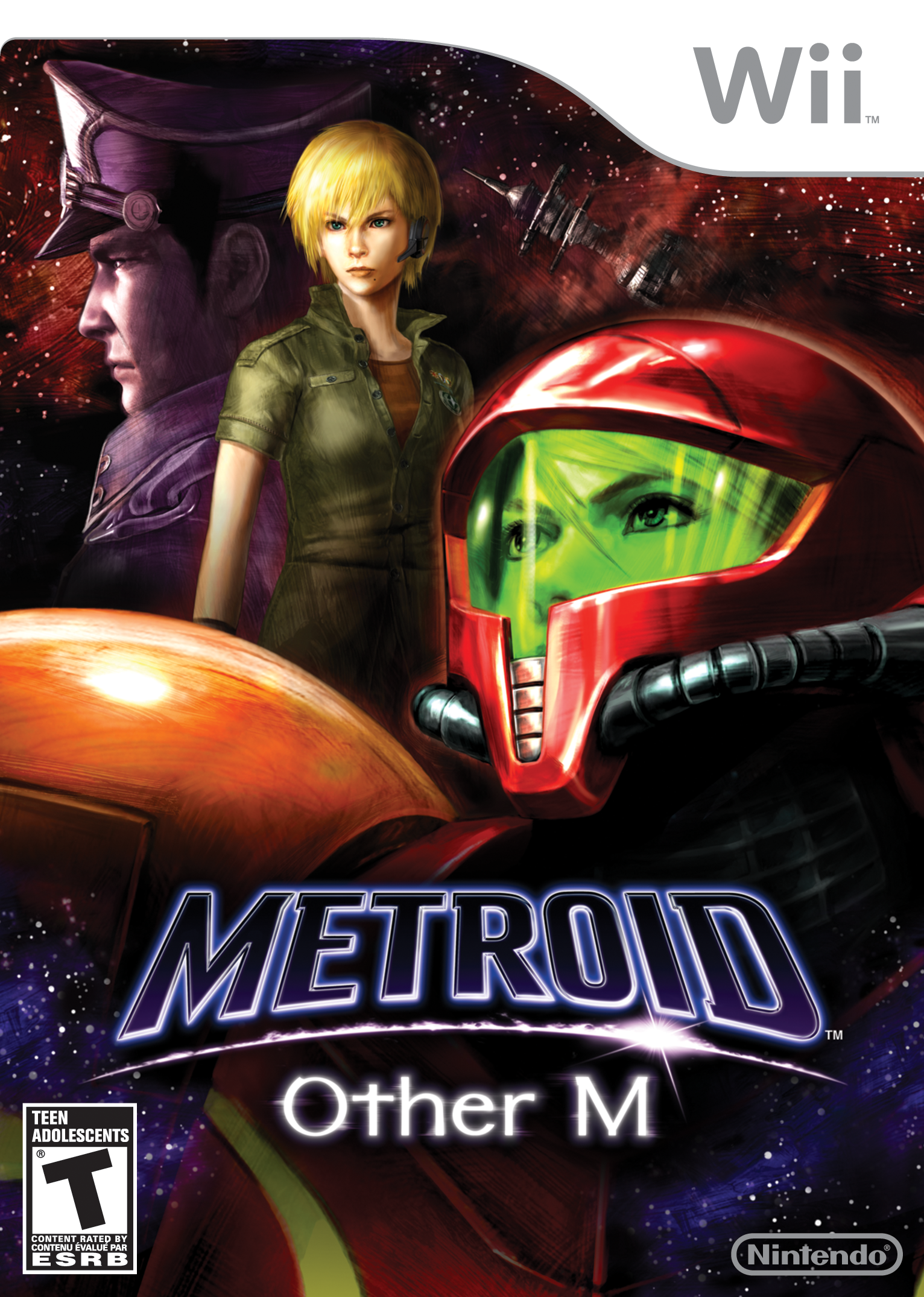
Alright, let's do this.  Let's examine Other M, flaws and all.
            First, let's talk about what Metroid: Other M does very well.  Body language.  While the script and the internal monologues are...flawed at best, the body language of the series is actually done pretty well.  My favorite example of this is the epilogue, which has very little spoken or monologued speech.  However, near the end, our heroine, Samus Aran, finds the helmet of her former comrade, hugs it close and then carries it out with her before setting it on the seat of her gunship and leaving.  This speaks volumes about the respect and meaning this one person had for her.  Likewise, throughout the game, you will see subtle movements by the character, like a bowed head or reaching out in concern that, while different from previous Metroid games, speaks to the spirit of the series of showing rather than telling.  We learn Samus is compassionate or strong through her movements.

That pose and that expression say all we need.  Words at this point would only cheapen the moment.
            The script, while flawed, isn't necessarily as bad as people think.  The real problem with it is the internal monologue.  Throughout the series, Samus has spoken very little, giving her the feeling of a solemn, thoughtful individual.  She has spoken in Metroid Fusion and I don't mind her speaking in Other M, as real humans, especially those who have to interact with others, have to talk.  The real problem is that the internal monologue paints her as a submissive, weak, childish girl rather than a strong, solemn, mature woman.  Now, whether or not Samus has these thoughts in the midst of her hunting, I don't know, but if she does, we don't need to know it.  The dialogue itself is actually not that bad.  It's a bit dry, but it feels very much like the movie Alien, with a crew of people, some very close, exploring an abandoned/infested space station.  It plays to the environment.  Take away the internal monologue and the dialogue here is actually much closer to Metroid Fusion and not nearly as bad as people think.

When we're not listening to the dreadful internal monologues, we've actually got a decent script.  Samus and a group of soldiers exploring a hostile environment full of alien monsters and an unknown agenda...draws heavily from the Aliens series and that's not a bad thing by any means.
            The gameplay is stellar, for the most part.  The 2-d side scrolling uses 3-d models, but still holds very true to the feel of Super Metroid.  It's fast, fun, and very easy to pick up and play.  The controls are fluid and the shifting from 2-d to a 3-d viewpoint, while a bit clunky, makes excellent use of both control modes of the Wii-remote.  It offers a new dimension of gameplay, but still stays true to the spirit of the original.  The graphics are beautiful, with impressive particle effects and stellar designs overall for monsters and characters.  The environments also offer both familiar and unique environments that Metroid fans will eat up.  Music is also competently done, with a re-worked Metroid theme and sound effects as well as nice ambient sound and music throughout.

Dear lord is this game a feast for the eyes and a real treat to actually play.
            So, the game has a passable script, excellent graphics, gameplay, sound, and some blocking(character movement) that feels very close to the original series.  The game is enjoyable to play...but let's not give it too much credit.  The game, in Team Ninja's hands, made several key mistakes. 

No, really, they gave Metroid: Other M to Team Ninja.  The breast physics guys...oh dear...
            First, is the portrayal of Samus.  This includes the script and some specific moments of blocking.  Metroid has never been a series which relied heavily on cut-scenes, however Other M does to an extent...and this isn't necessarily a good thing.  Normally, a Metroid game focuses on organic gameplay for storytelling and character development.  We become closer to Samus by playing her.  However, the organic gameplay runs counter to the constant internal monologues and a few key scenes.  The most egregious of these is when Ridley appears and Samus freezes up, morphing out of her suit in a panic.  Samus has killed Ridley four times.  This runs counter to our knowledge and Samus's experiences.  Likewise, flashbacks showing Samus's past are not really necessary.  They use the internal monologues to try and build a set of traits to make it appear as if Samus has a deep relationship with another character, however, we don't need that.  We know who Samus is by now and trying to shoe horn anything in, after almost six adventures previously, will ring false.  For example, a thumbs down signal introduced in Other M is supposed to be endearing because of Samus's past...but it isn't, because it is shoe horned in and runs counter to what we know about Samus.

Yeah...not endearing, not charming, not relevant.  This character bit was never mentioned in previous Metroid games and is barely relevant here.  Samus has depth...you don't need to needlessly shoe horn any in.
            Next, trying to railroad the plot through interactive cut scenes.  Other Metroid games have railroaded the plot organically, by creating areas that cannot be accessed without powers from an area that will be easier to surmount.  However, in Other M, many elements of the plot cannot progress unless you go into first person mode and look at one specific patch of screen.  It's very difficult to actually find the right patch of screen, because there are no indicators and the game doesn't make it clear what you should be looking for.  This is a large problem because it not only breaks the flow of the game, it also can be game breaking, if someone does not find the exact spot the developer programmed to move the plot along.

While First Person Mode seems like a good idea on paper, forcing us to look at a very specific patch of grass to advance the game is...just stupid.  Be honest.  It is.
            Finally, just general laziness when it came to scripting and story development.  There are some interesting ideas in this game.  Making Mother Brain, a largely organic super computer, into a human is an intriguing idea.  The use of cloned Metroids by Samus's employers opens up new ground for emotional development through body language and initiating doubt or concern that could tie into Metroid Fusion, making the transition much smoother.  The inclusion of a character who's goal was to kill the others show shades of Metroid Prime 2 and Metroid Fusion and offered opportunities for inventive boss battles and tension...which were not used and feels completely wasted, as the plot thread is largely forgotten mid way through the game.  This kind of waste...of squandering potential...is rife throughout the game.   
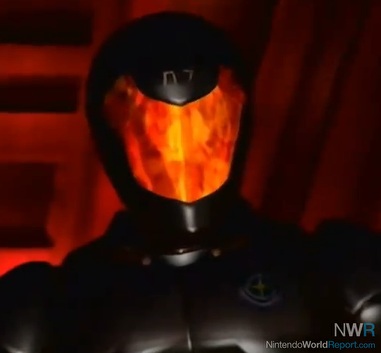
This is what we could have gotten in Other M.  A pitched battle with an intelligent opponent on par with ourselves.

Instead, we got the Eraser...whom you never fight in-game and who only serves to pick off the less developed members of your group.  Huzzah...
         For example, all Metroid games need a reason for Samus, who at the start is very powerful, to be weak so the players can have a feeling of progression.  Some have Samus getting damaged in blasts or radiation, having to get new suits due to infection or what have you...Other M just has Samus deciding not to use her powers because a man she respects, but who has no power over her as she is an independent agent, might not want her to.  This is lazy.  Have her activate an EMP trap, or have the traitor attack her, or have something to make her lose her abilities and regain them.  It's not hard to write them in.  When you are making a Metroid game, you cannot afford to half ass it, as the series depends so much on organic gameplay and a good set up.
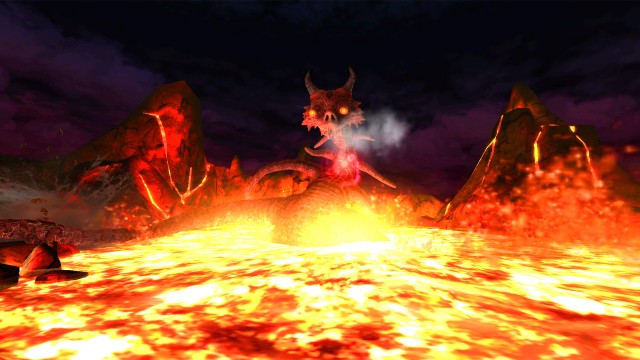
Hand to god, Samus has the ability to withstand lava but doesn't use it until her superior gives her permission, right at the start of this boss fight.  Seriously.  That's the best you could come up with, Team Ninja?  Making her get "permission?"
            So, what can we learn from this?  Well, for starters, do not take a character in a radically different direction because you want to "Appeal to a wider audience" or make them "Hip" or try and put your vision over a well established character.  Fans of that character will call bullshit and be very, very angry.  Also, rigorously test the game so that you do not find an area that is game breaking or which is too byzantine to understand.  You need to make a game flow smoothly and trying to force a detective section in an action game is just out of place and will break the flow.  Try and match the gameplay styles together rather than forcing something in where it doesn't belong.  Finally, if you are going to make a game, put your all into it.  Don't settle for a weak script due to deadlines, don't introduce an idea that has potential, then drop it down the line, don't try to reinvent the wheel...if you have a good formula, stick with it.  To that end, learn from your successes as well as from your flaws.  Body language can be used to great effect.  Merging styles can be an effective tool and you shouldn't be afraid to try, just don't implement it if it's going to break the flow.  Take the good parts of your script, such as those featuring Samus acting in character, and use those as building blocks for future scripts with her.
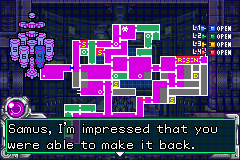
Dialogue in a Metroid game.  Metroid Fusion proved it can be done well.  Take what you learned from Other M and do it RIGHT next time.
            Now, I know all these things can be difficult to implement, but if another Metroid game were made, hell, even if it were put into Team Ninja's hands again, I think that if they learned from their mistakes, it could be a fantastic title.  Metroid: Other M plays very well and if you can get past the flaws, and ignore the internal monologues, then even hardened Metroid fans can still find the game enjoyable.  However, that doesn't excuse its flaws.  I say, Metroid: Other M is a decent and fun game, but it's important to take a game, even one we might enjoy, and hold up the flaws so that they can be learned from.

Don't give up on Metroid because of Other M, Nintendo.  Learn from it's flaws, build on it's successes, and you will have a WiiU game like no other.

For those who can't guess, I probably won't move into reviews in my spare time, because there doesn't seem to be an interest, however I may give certain games special examination if they have something that they can teach.  And, I think Other M can teach through its flaws as well as it's successes.

Saturday, October 6, 2012

Alternative Control Schemes: Why They Are Important and Why People Don’t Use Them as Much as They Should


In the world of video games, there is one rule above all others in defining an experience.  Interactivity.  If a game is not interactive, then it is not truly a game, but rather a film, a television program, a piece of music, or what have you.  Interactivity defines video games in the world of media as something unique.  However, how enjoyable a game is often comes down to how easy it is for a person to play it.
Simple and easy to figure out.
            Good games have a fairly predictable formula.  Easy to learn, hard to master, addictive once started.  Nothing breaks this formula quite like poor control schemes.  When a game does not do as it’s told, there is a jarring disconnect between player and game.  This, for many, kills a video game’s fun factor and many will leave it by the wayside because of this.  Thusly, I have a question for modern game companies.  Why do you insist on making ridiculously unintuitive control schemes…and not allow us to change them to suit our tastes?
Control schemes don't get much more unruly than the one for this mech game.
           Alternate control schemes are the most basic form of customization and can add a personal touch to any video game.  But they do so much more than that.  They can make games accessible to a wider variety of people.  For example, if someone’s index finger was crushed in an accident, they might not be able to use it to play a game.  If they were accustomed to using it for the trigger on a Playstation or Xbox controller before the accident, they would have to use another finger, like their ring finger or their index finger, which would be clumsy and unaccustomed to the controls.  In a shooter, where a moment’s slip-up could mean death, this can ruin a game for someone like that, especially if that control is related to the guns.  Say it could be altered, though.  So that the trigger activated the pause menu and another easier to reach control activated the guns.  If that happened, the crushed finger would not be as much of an issue and the game would be more intuitive for that person.  Would they not then keep playing and possibly pick up a sequel to that game when it was released?  While this example might seem like a long shot, there are people everyday who cannot or simply do not wish to use the control schemes the developer used.  And they leave a game behind specifically because of that.
Most games require two hands to play, so what happens to those too old, crippled, or injured to play?  This is where alternate control schemes can shine.
            This cuts at the two biggest reasons for including alternative control schemes.  Comfort and accessibility.  With a crushed finger, one could still play a game, more often than not.  But would it be comfortable?  Would it be enjoyable?  Would it be fun?  Probably not.  And if something is more trouble than it is worth, why would anyone do it?  At the same time, a player needs to be able to choose which actions in a game have priority over others.  For example, in Rogue Galaxy, all characters have close combat weapons, like swords or axes, and long range weapons, like guns and bows.  Being able to choose which of these weapons is more useful, and by extension which buttons use them, is key to creating an experience unique to the player.  It defines their whole play style.  So, it is important that players can access the game’s functions to its fullest.  It needs to be both comfortable enough to play and accessible enough that the player can gain enough skill with it to win.
Battle axe or minigun.  Which is more your style?
            At its core, a control scheme needs to minimize the interference between player and game, so that the player feels immersed in the experience.  Nothing is as responsive as a controller, because they are wired directly to the game and almost directly wired into the hand.  A player sees something, hits a button, and is rewarded instantaneously with a proper action.  Alternate control schemes are an extension of this principal.  Everyone plays games differently.  Some people have large hands, broken fingers, weak thumbs, or what have you and cannot play the game as the developer intended.  Their reaction speed is crippled due to circumstance.  However, with an alternate control scheme, they can define for themselves how best to interface with the game.
The less interference between player and game, the better.
            Given how useful alternative control schemes can be for comfort and accessibility, why then do developers not offer more options to customize controls within their games?  Well, a simple answer is gimmick.  Some games have interchangeable controls that can be tweaked without hurting the experience.  Fighting games, for example, often let players map different attacks to different buttons.  Where if the developer programmed a button to kick, it could be changed to punch or grab to match the player’s style.  However, imagine a game system that is a bit more experimental or gimmicky.  For example, a game that uses the Nintendo Wii’s motion sensor will almost never transfer well to a basic control scheme mapped to a controller.  Dragon Quest Swords on the Wii relies on players slashing across the screen horizontally, vertically, diagonally, holding the sword up to the sky, holding it down to the ground, and holding up a shield to block attacks.  These kinds of controls cannot be altered anymore than someone can treat a sword like a bow.  It is in the nature of the system.  This is not merely limited to motion controlled games, however.  Some games require specific button sequences for events to play out, such as quick time events, and to alter all those buttons would make the game more confusing when the time to input the sequence rolled around.  It would end up being even more frustrating than having to implement an alternative control scheme.
With a game like this, alternate control schemes aren't really possible.
            When the gimmick is valued more than the game design, developers may even opt to not include an alternate control scheme to simply push the platform.  A number of Nintendo DS games require the stylus to work.  However, a large number of games don’t.  Yet, some of these games, which were clearly designed without the use of a stylus in mind, force players to use the stylus based controls with no options to change them.  Magical Starsign is one of the most egregious offenders in this department.  It is a typical turn based RPG, which could very well have come out on the SNES or Playstation, however it is entirely controlled through the stylus.  Even though the controls would probably be more fluid with the d-pad, the gimmick is more important than functionality.  Wii games also suffer from this.  While Metroid Prime 3 is an outstanding game and really makes use of the Wii-mote to its fullest, the option to have a more standard control scheme is suspiciously absent.  It’s not as though it didn’t exist, as the previous two games had been on the gamecube with a regular controller.  It was purposefully held out to push the system.

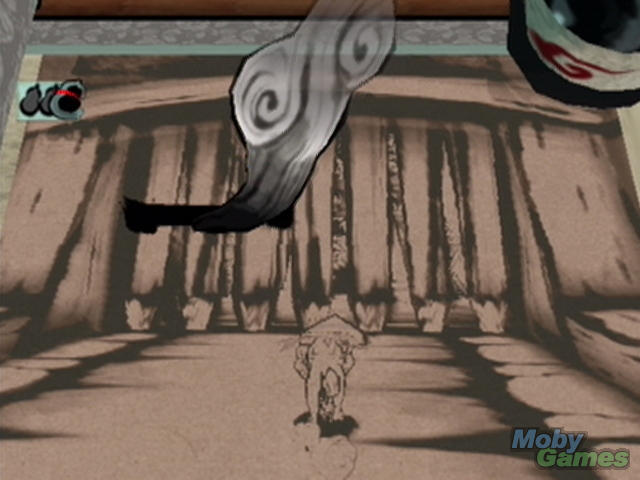
            Gimmicks are not the only reason for not including alternate control schemes.  Just the most common one.  Complexity is another good excuse.  Many games have controls or actions that are so complex that to alter the buttons would break the game design.  In Okami, players hit a trigger button to freeze the game and bring up a paint brush.  Then, they use a face button and the control stick to paint on the screen.  To alter this entire sequence, which is used as often as ten times a minute in the game, would require the entire flow of the game to be altered.  It is a three layered sequence of events that requires enough input that it cannot be altered, in good conscience, without breaking the game.  This is a very common reason for a lack of alternative control schemes.  A game like Metal Gear Solid 4, which requires a player to get into a stance, line up their shot with a control stick, then fire with a trigger button, would be a nightmare trying to program alternate control schemes.  And it would ruin the game’s design.
With actions that are complex or require specific commands, alternate controls would needlessly complicate the game.
            One of the more frustrating reasons for not including an alternate control scheme is the amount of contents in a game.  Many developers want to pack a ton of extra features into games, from side quests to minigames.  While a ton of content is usually very well received and helps a game in the long run, it leads to one phrase dominating design meetings.  “If we change the controls, we won’t be able to do everything we want to do.”  This might sound a bit selfish, but actually it is entirely reasonable.  Games like Jak and Daxter, Ratchet and Clank, and Sly Cooper, offer some customization of controls for the basic game.  However, complete customization would mean they would have to go into each and every one of their minigames, such as defending a beach with a turret, hacking a computer by playing pac-man, or running through a 2-d side scroller side mission, and change the controls each time.  Mini games would hurt arguably the most from this sort of implementation, but it would also rob games of their immersion.  Taking them out is not really an option either, since without the extra content the games would lose some of their variety.  Many designers can only choose one of the two, and in a pinch, they will choose content over customization of controls.
One minigame that lasts roughly a minute.  Imagine how difficult it would be to rebind controls for like a dozen of these in a 20 hour game.
            That brings us to the most frequently used reason for a lack of alternative control schemes.  Negligence.  Many game designers are either too strapped for time or simply do not think of them.  The games industry is a cutthroat business and developers who do not meet milestones are soon dead and buried.  The luxury of time to implement all the features that they may plan is not something most developers have.  They need to ship their product and recoup their money, because every month they have to sit on their game is tens if not hundreds of thousands of dollars lost.  So, the first feature to go is usually alternate control schemes.  If it’s thought of at all.  Many developers truly believe they’ve found the best control scheme for their game and don’t wish it changed or don’t believe it needs to be changed.  It is unfortunate that developers don’t take the minimal time needed to simply offer the option to rebind buttons and allow the controls to be rebound with them.  This is done frequently in quality assurance testing for developers, so simply giving gamers that option would be more than they’re used to.  However, when you’re in the crunch, you either don’t think of or don’t have time to implement such luxuries.

            All the same, despite the myriad reasons why developers do not embrace alternate control schemes more readily, even though they should, I remain hopeful.  Because, with indie gaming now in full swing, developers are more able to be flexible with their game design, including options for alternate controls, the ability to rebind keys, or supporting third party control systems.  The perfect example of this is the USB gamepad.  Logitech frequently releases USB gamepads that function just like a Playstation or Xbox controller, but which have drivers that enable it to have buttons bound to it in a certain way.  Games like Orcs Must Die, To the Moon, Wizorb, and PC ports of games like Silent Hill Homecoming or the Overlord games all include options for a gamepad as well as a keyboard and mouse.  And with the Logitech software, these gamepads are programmable to a degree.  Other games are realizing the importance of control and simply allow their entire command set to be rebound, like with Smite, which can have any control bound to any key on a keyboard, any button on a controller, or a combination of the two.
I have seen the future and it is usb controllers.
            Alternative control schemes are not dead and, thanks to modern technology, especially from modders making their own changes to games they love, they are starting to become more prevalent.  In this way, PC gaming is often more accurately described as superior to console gaming on sheer virtue of versatility.  If console developers wish to continue to be competitive, they need to make a product that is more accessible and more comfortable than, or at least on par with, their competitors in the PC market.  Unfortunately, with time, manpower, and costs for developing AAA games increasing, alternate control schemes may not be something the industry will readily embrace.
Rebindable controls like this make games so much more personal and enjoyable.
            As technology increases and functionality starts winning out over shipping a game by a certain date, I believe that alternative control schemes will become more prevalent.  And, as a result, I think that more people will find time for gaming, because they will be comfortable enough with the controls that they can enjoy the experience.  The future is not in fixed controls.  It’s in flexibility.  When there is a game built for two hands, but that allows a one armed man to play it with no handicaps, alternative control schemes will have really won the day.  And people will finally appreciate their USB controllers, the option menus in their favorite games, and the versatility of motion controls.  Until that day comes, keep on trying to find the control system that works for you.  And don’t let any developer tell you that what’s comfortable for you is the wrong way to play.