Thursday, June 20, 2013

Video Game Piracy: A Victimless Crime?


So...piracy.  The games industry loves to blame all their problems on piracy and used video games.  But...is it really as big a deal as they say?  Is piracy the crippling blow to the industry that publishers decry it as or is it, as many pirates claim, a victimless crime?  Taking money from the already bloated, over stuffed, often dishonest publishers for products that are not worth said money to begin with.  I'm not, nor will I ever be, a pirate.  I disagree with it on a moralistic level.  However I do understand the ideas behind piracy in the modern age.  So...I'd like to discuss for a bit about piracy in the video games industry and how it both hurts, and is actually beneficial, to said industry, despite claims to the contrary.

Everyone loves pirates, right?  Err...right?
            First, let's look at the definition of piracy.  Before copyright came to be, it was robbery or illegal violence at sea.  Robbery seems to be what stuck with people, as these days piracy has been morphed into a catchall term for unauthorized reproduction or use of a copyrighted material in its original form, I.E. copyright theft.  These restrictions have been relaxed in recent years to allow these materials to be used so long as they are altered, such as with commentary from a let's play, or through a review.  However, the idea that piracy equates robbery has always stuck with any industry that thrives off copyrighted material.  And to some extent, I sympathize.  Artists need to make money in order to keep producing art.  Even if they love it, if they can't afford to eat off their art, they probably won't have time to make it because they'll be too busy doing something that puts food on the table.  However, with the rise of corporations who use and abuse the artists for their personal profit and the advent of independent releases on the internet as opposed to something that HAD to have a publisher to ever see the light of day, I think that piracy has become sort of a buzzword that many people use to frighten others and imply that they are a victim.
In this day and age, piracy has become like the word communist or socialist.  It's just a buzzword to scare people and justify things that should not be justified.
             First, let me say this.  Piracy should only be used as a term if a product is on the market, being sold for profit, by either the original creator or a duly appointed seller, I.E. a publisher, and if this said product is being taken and either being used or redistributed without providing proper remuneration for those who created it.  What does this mean?  Well, essentially, this is my way of saying I do not believe that video game emulation should be considered piracy.  For the most part, at least.  When emulation was first on the rise, many video game companies feared they would be out millions as people could simply download the game code on the internet for free and use their computers to mimic console hardware so they could essentially play any console video game they wanted for free.  At the time of emulation's creation, I could understand these concerns.  However, they have gotten far stupider as time has gone on.  Emulation, for those not in the know, is where a video games code is downloaded from the internet in the form of a ROM, then a player, which emulates a video game console such as the SNES or the Sega Genesis, reads these ROMs and plays them as if they were the actual game.  Largely, it is excused if you delete the ROMs in a 24 hour period, as a trial run, or if you already own a physical copy of the game.

Emulation of current games shouldn't be allowed, but emulation in and of itself?  Not really piracy.  It's people getting a chance to enjoy games that are no longer for sale, and thus do not hurt the developer in the least.  Unless they've re-released it, of course.
            I want to ask people to take a moment and think about emulation and its potential to hurt and its potential to preserve.  It has been seen as a tool for piracy by many, but is it really?  Well, in some cases, yes.  If an emulator for a modern console, like an Xbox 360 or a Playstation 3 were released along with ROMs for games that you could still buy in stores it would be piracy without a doubt.  The developers and publishers are still making sales off these products and they are still in production, so there are costs to consider.  However, what so many people overlook is that emulators are almost ubiquitously used to play older games on the Atari 2600, the NES, the SNES, the Genesis, etc.  These games are no longer sold in most stores and even if they are, their sale does not profit the publishers or the developers any longer.  Many publishers or developers of older games have ceased to be, actually, so sales of these games are strictly between private owners, not a retail outlet which pays for the games to be stocked.  In this case, emulators are not really a form of piracy.  They do not steal money from a publisher or developer, as the product is no longer in use.  In many ways, it is like the copyright has become invalid as soon as production and sales of these games have ceased, making them seem like fair use products.  They are not, I assure you, but...I do not see the harm, either.  Emulation has the potential to hurt consoles currently still on the market, however, it is also a tool for preserving and re-experiencing video games from a bygone era that you may not have had a chance to play or buy during your youth.  Emulation under these circumstances should not, I believe, constitute piracy.  However, if these games are ever re-released, I believe that playing them on an emulator, even if their ROM is from a cartridge no longer being sold, then it WOULD constitute piracy.  The Wii and Wii U, for example, frequently re-release older games that they have the rights to.  In this case, downloading Super Metroid for free, online, to play on an emulator, when a legitimate copy is being sold, for very little might I add, is piracy.  Simple as that.  Emulation is used by many as a way of expressing love for video games and as such, I believe that a bit of good faith is in order.  If the games you love are available in such a way that benefits their creators then buy them.  Support the creators.  However, if games are not for sale, then feel free to emulate them.  You may even stir interest for sequels or re-releases by keeping their memories alive.
Guys, I defend emulation for how it preserves bygone games, but if those bygone games can be bought legitimately...just do it.  If we do, we support good developers and show interest, which may lead to sequels or improvement.s
            Now for the prickly subject that no one wants to talk about.  Emulation is widely regarded as okay, by gamers and even by some publishers when it meets the circumstances I outlined above.  However, there are some forms of piracy that many try to legitimize, which have no bearing in reality.  Yes, if the game is no longer being made for profit and the sales are no longer going to the creator, there should not be a concern as to who plays it for free.  Many gamers, however, feel justified in piracy just because they cannot pay for games.  I understand this dilemma.  Games are growing more and more expensive to buy and with the economy in its present state there is less and less money to go around.  So, you feel justified in pirating a game since all your money is going to supporting yourself.  I get it.  But if you ever want the industry and the world at large to actually accept this as kosher, then you need to act in good faith.  What does that mean?  Well, essentially it means supporting the games even if you do commit acts of piracy.  The host of a radio show I listen to, for example, once openly admitted to buying a copy of Skyrim on Steam, then getting a cracked copy for free online.  Why?  Because he does not like how Steam interferes with his experience, through its pop in menus and glitches.  However, he already paid for his game, so the developers have already profited.  This is what one might consider an act of good faith.  Pirates who buy the game, disagree with some of its design choices, like the recent always online DRM of Sim City, and decide to get a pirated version regardless.  This is not a problem, provided you DO act in good faith. 

If piracy is to be allowed/overlooked, it needs to be done in good faith.  So you bought SimCity and it's servers are so broken you can't play it?  Feel free to get a cracked or pirated version.  You already bought a legitimate version, so the developers already have your money...now that you've done the right thing as a person, do what's fun for you.
            Pirates who try a game and play it all the way through, then buy it to support the developers show good faith.  I would even argue that pirates who try a game for a little bit, dislike it, stop playing it, and don't pay for it act in good faith, as this is akin to buying a game, trying it, disliking it, then taking it back to the store for a full refund.  However, I have to call out the pirates who do not act in good faith.  Pirating a game that is available for retail, playing it all the way through, keeping the pirated copy on your computer, and then never paying for a retail copy is stealing.  This may sound accusatory, but it is.  And I know that in this day and age publishers are over bloated, toxic to their own customers, far too controlling, and often downright dishonest with us.  I know this.  But you cannot simply pick who to like in the games industry when it comes to piracy.  What do I mean by that?  Well, what I mean is if I said to hell with the publishers I hate, I would also have to accept that indie developers bending over backwards to make their games easy to play, download, pay for, and DRM free shouldn't get any consideration either.  Or that people giving away games in bundles like on Steam or the Humble Bundle also are beneath consideration.  If you were to pick and choose like that, it would be akin to a police officer having the option to pick and choose who to arrest.  Or a bank picking and choosing who to foreclose on, leaving their favored customers alone while bullying new customers.  These acts are dishonest and they spit in the face of the idea that we are all equal under the law.  The same principle applies with game piracy.  You can hate a company and its games and not buy them, that's fine, that's capitalism.  However, you cannot pirate the games of one company you don't like, then turn around and say people should buy games from another studio.  That's simply dishonest and hypocritical.

Piracy in good faith.  Either you support the developers for work you've enjoyed or you have stolen from them.  No one should begrudge you a free look or playthrough, but if you take it without paying for it, that is a crime.
            In a subject like this, if you won't act in good faith, then you are not allowed to pick and choose who you decide to screw over.  If you don't buy a game because you don't like it, fine, you've chosen with your wallet.  If you pirate a game, like it, but never pay for it...you are stealing.  You cannot argue otherwise.  I sympathize with not having money to pay for a game at this moment, but that is why good faith is in order.  If you pay for it down the line...great.  If not...thief.  Remember, this is only games being sold for profit, so emulators or gamers who want to pirate games that are no longer sold but which are still not freeware?  I have no issue with you and neither should the game industry.  But I do have issue with the people who hurt developers who genuinely need support.

            Like all things, the video games industry is a business.  Not everyone, however, plays by the rules of the over bloated AAA industry and smaller indie developers put their heart, souls, savings, and life into making great games that they enjoy and want to share.  I think it's fair that these people get remuneration for their efforts.  When Derek Yu and Alec Holowka made Aquaria, it was a labor of love by two talented game designers and for their efforts, their game enchanted tens of thousands.  But how many sales were lost due to piracy?  How many people profess love for a game, then offer the creators nothing for their efforts?  This is not acceptable.  In fact, sometimes, it is heartbreaking.  Recettear is an indie game about a girl running an item shop and in the demo, it talks about why she runs it.  She's in debt.  And the developers threw in a tiny gag at the end of the demo, where the girl pleads with the audience to not pirate the game, otherwise she will never get out of debt.  And this isn't just meant as humor.  Indie developers can live or die off a few thousand sales, since they have very little overhead and sometimes don't have to give publishers a cut.  The fact that this game, which does everything it can to be as open and available as possible, has to plead with its audience to not steal it is heartbreaking.  You might ask, "What's the worst that could happen?"  Well...how about no more games from indie developers.  No more Fez.  No more Aquaria.  No more Dust.  No more Minecraft.  If everyone pirated these games, the developers would die.  There would be little to no point in making the games.  No sequels would be made.  No new projects.  It would end them.  The pirates I take the most issue with are those that do not act in good faith and willfully steal from these developers who need all the help they can get.  But, as Jim Sterling pointed out, there is one breed of pirate who is the worst of all.
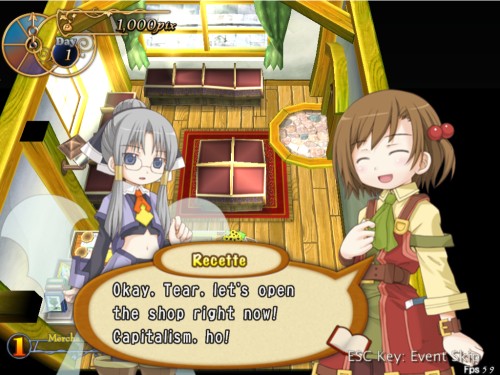
Like it or not, we live in a capitalist world.  If you're good at something, you should get paid for it.  And that goes for game developers too.  Piracy in bad faith is criminal because it takes money from people who've worked hard to create something beautiful and fun.
            Pirates who steal from charity.  My jaw literally dropped over a year ago when I saw Jim Sterling's article on just how many people had pirated the Humble Indie Bundle.  For those unaware, the Humble Indie Bundle is an organization that, with the creator's permission, periodically releases indie games at far below their normal price in a large bundle and gives a portion of their profit to the charity Child's Play.  You can pay a fair amount, like 10-15 dollars and get extra games or content.  Or you can pay a single penny and get the basic bundle.  A single penny for anywhere from 4-6 games.  And yet some people still felt that that was beneath them.  I understand piracy.  I understand wanting to try before you buy.  I understand wanting to recapture the past.  I understand not having money to pay for a game.  But this is willful, malicious greed and should never, ever be excused.  I will agree that game companies do treat their customers too harshly in the battle against pirates.  But those who not only act in bad faith but who will turn their nose up at honest, noble attempts to deliver great games at a low cost which benefits charity?  I have no pity for them.  In the least.

The Humble Bundle is an effort by game developers to give games out to the fans for very cheap and at the same time, support a worthwhile charity.  To pirate this is to be absolutely morally bankrupt.
            So, is piracy a victimless crime?  No.  No its not.  Not everything should be considered piracy, I admit.  Emulation can prove to be a great way for those who are broke to experience older games without hurting anyone by getting a chance to play games that are no longer sold for profit.  However, piracy on the whole does take away money from those who desperately need it.  Piracy in bad faith, that is.  I would actually argue that piracy in good faith does more for the industry than any amount of advertising could.  Piracy in good faith spreads the word about a game to people who may want to buy it, without acting as if they are justified in their theft, since the pirates also want to support the game and will eventually buy it.  This kind of press cannot be bought with any amount of money and will be beneficial to any game that was made with passion and not created as just another assembly line piece of shovelware.  Many indie developers have been gracious in the face of piracy because it does spark interest.  I say, good for you for being so gracious, but you still deserve to be paid.  Piracy is not a victimless crime.  But it does not always have to hurt people either.  I imagine in the olden days, pirates could not only steal gold and silver from ships, but also medicine for sick families who could not afford it.  Piracy is not evil in and of itself.  However, when performed in bad faith, it deserves no sympathy.

Piracy is freedom, to a degree.  It is the ability to choose whether to purchase a game blindly or try it out, then decide what to do.  Piracy is no more evil than freedom.  It is only evil if you choose to use it as such.
            I should end this discussion with that, however I just want to bring up something Daniel Floyd and James Portnow have said in the Extra Credits Series.  You want to stamp out piracy?  Then offer a better service.  This is simplicity itself.  Why do people pirate?  Because of DRM.  Because games are too expensive.  Because there are no other options.  Give them other options, and the pirates will beat a path to your door and fling their money at you whole heartedly.  Most of them will, at least.  There will always be those who think it beneath them to pay, who believe the internet and anonymity entitles them to do as they please...but for most pirates, offer them what they can only get through piracy, and then one up that offer, and you will win over hundreds of thousands if not millions of customers.  Steam uses DRM.  However it is not intrusive, games connect directly to the Steam forums and community through it for troubleshooting and support, it can be deactivated to play offline, and Steam offers trading and great sales to bring the cost of games down.  GOG does one better, allowing players to, after paying for them once, re-download their games as much as possible, potentially allowing limitless sharing.  The games themselves are also completely DRM free with sales that happen just as frequently as Steam sales.  These are things that piracy cannot always do.  If a torrent disappears, your source to a game is gone.  But so long as you have a GOG account, it will always be there for you to re-download.  So, how do you stop piracy?  Make it seem like more of a hassle than buying the games legitimately.

Want to stamp out piracy?  Offer a better service.
            Just in case anyone is wondering, yes, I saw E3, I know about the PS4, the Xbone, and the Wii U.  No, I'm not going to discuss them.  While I do believe the issues of ownership that the Xbone and some other companies have been screwing around with are important, and a core reason as to why people pirate, they have already been thoroughly explained by people more entertaining than me.  If you want to see why they are going to cause an issue, check out Angry Joe's rant on the Xbone or Video Games Awesome's coverage of E3.
Sorry, I couldn't resist.  I know Microsoft flip flopped on their DRM policy recently, but it's sad that the Xbone ever got this far without someone raising a hand and going "Ummm...are we sure this is a good idea?"  This is the kind of attitude that breeds piracy.  Restriction.

Thursday, June 13, 2013

Month of Characters Follow up: What Makes a Good Character?


Following my month of characters, I thought I might give some context to the lists and discuss what makes a good character and how so many writers and designers end up screwing up potentially iconic characters.

            First, let's start with heroes.  There are two basic types of heroes in video gaming that are very common.  The first are heroes who we find admirable, personable, or otherwise likable.  They are our avatars, but they are not us.  They have their own character, their own arcs, and their own agenda.  What makes a good hero?  Well, for starters, they need vulnerability.  The story may suggest that the hero can never die, however a hero is only compelling if the illusion of failure is hinted at through fallacies and weaknesses that the hero possesses.  For example, a personable hero having specific emotional triggers, phobias, or personality flaws is very humanizing, as we can often recognize those within ourselves.  These are sometimes the hardest to pull off in video game characters convincingly, because while a tragic past is rather easy to concoct, it can be difficult to make a hero vulnerable and weak, but still admirable and strong. 

Kratos is just not a well designed character from a story standpoint.  He's angry before his tragedy, he's angry after his tragedy and his back story barely ever comes up.  As a character, he's just a ball of rage with no reason to be but to kill.
            Kratos from the God of War series is an excellent example of a hero who fails to be relatable.  While he does have a tragic past, his personality is all rage, sarcasm, cruelty, and disdain.  He never shows signs of human weakness during battle or even during much of the plot.  And when he does attempt to show some weakness, it feels contrived because the character has not been built to actually support that weakness.  It is being jammed in where it is not wanted.  On the flipside of that, we have Ness from the Earthbound/Mother series.  Despite being a largely silent protagonist, Ness has several humanizing factors to him through game design.  Over the course of the game, Ness can come down with a number of status ailments that make it clear that he is, in fact, still just a kid and not some immortal super being.  Ness can get homesick and need to call his mother for support.  Ness can get the flu or a cold and need medicine.  Ness can get sick from allergic reactions and need homeopathic healing.  These small touches show that Ness is in fact a kid and vulnerable to childhood maladies, both physical and psychological.  It provides a nice perspective, showing that for all the new age hippies or knife wielding thugs you can take down with your psychic powers, you do still need a cuddle from your mommy or a teddy bear to start the day.  Watching a character act human is so much more relatable than a tragic back story.  If you are going to give a character a tragic back story, have it directly relate to their character and their vulnerabilities.  Dante, in the original Devil May Cry on the Playstation 2, lost his mother to demons.  While a great deal of information is not given, it comes out that this was a momentous event for him that shook him, through the story.  He takes a job from a woman named Trish primarily because of her resemblance to his mother.  When she betrays him, it hits the devil hunter very hard and after she is killed, he sheds tears for her.  His past directly relates to his character development in the game and it shows that he is vulnerable to being deceived because of his past.
Despite his cocky attitude, Dante has a tragic backstory that actually affects how he decides to act in the game, causing him to both grow and show signs of vulnerability.  This makes him a far more well rounded character than Kratos or your average shooter character.

        The other type of character is a power fantasy character.  Largely, these characters are avatars for the human players, with little to no personality of their own, allowing players to feel strong by playing the role of these characters in the game.  While this can lead to some interesting political, religious, or philosophical commentary, too often it is used for somewhat...reprehensible dreams.  A power fantasy character done wrong is where the game is built around appealing to the most base instincts of the human psyche, things like the desire to fornicate, the desire for wealth or power, the desire to kill in order to feel strong.  Modern warfare shooters appeal to players by allowing them to fit the stereotypical soldier, a walking death machine who kills without remorse in the name of the greater good(in the narrative at least) without consequence.  God of War, while not strictly a power fulfillment game as Kratos isn't a blank slate, does allow players to have sex with random women without consequence, and actually rewards the act.  Sexual games in Japan are also catered towards this style of play, allowing gamers to take on a character they can put themselves into as they either woo or abuse women for their own enjoyment.  These kinds of games do, sadly, fill the power fantasy requirement of giving characters the ability to make themselves feel strong, virile, or well off, however the actions that give off these feelings are, in my opinion, tragically flawed and can at times promote unhealthy views towards different races, genders, or the world in general. 

Ninja Gaiden 3 is power fantasy done very poorly.  It outright forces you to do acts that are horrific, even if they are empowering, without any set of consequences...they even reward you for it.  The infamous scene of Ryu killing a begging soldier, being forced to kill a begging soldier, is a sign of how flawed the game approaches making players feel tough.
            So, how do you pull of power fantasy heroes?  Well, there are a few good ways to do this.  The first is to supplant some of the more base desires and hit the itch to explore.  Power fantasies aren't just about base instincts, they are about being able to do in a game what you cannot do in real life.  Crafting a world or an environment that fosters exploration and rewards it, not necessarily with money or items, but with sights and experiences they cannot see elsewhere really helps grant players a reward for their effort.  Dark Souls does this quite well.  Though the world may be bleak and lonely, it offers a unique experience where the very act of exploring allows players to see things they could never hope to see in the real world, be it giant monsters, or unforgettable sights, such as crawling through a huge tree to reach an acid lake at the bottom.  Another good way to do power fantasy characters is to make the hero generally a good guy.  This allows you to not only enjoy the world that's been crafted around you, but also it allows some of those baser instincts to be sated without some of the guilt.  Adol Christian, for example, is an explorer and a swordsman who frequently makes romantic acquaintances with beautiful women the world over.  However, Adol does not take advantage of their affections as he is a character who acts with honor.  Adol is silent, so the interactions of those around him give us context to this effect, making the players accept the lack of ability to take advantage of those around us.  Also, Adol is a skilled swordsman and the combat in the Ys games is fast and enjoyable, allowing players to feel good about defeating monsters and protecting the innocent, rather than killing other human beings for some vaguely defined hyper masculine idea of patriotism.  Above all else, power fantasy should be about freedom, though.  Freedom to explore, freedom to challenge conventions, freedom to do as you wish.  This may lead some players to running over hookers in Grand Theft Auto, but a good power fantasy game does show that your actions have negative consequences, such as increased notoriety score and the possibility of being arrested or killed, and that while it is possible for you to hurt others for your own enjoyment...it's not the wisest idea.  In this way, they can subtly guide the player to a more fulfilling experience.  Power fantasy characters use the world and our own human impulses to affect us, often without our realizing.

While often cited as a highly adult game, Grand Theft Auto actually does do power fantasy very well.  You can do horrific acts to people around you, but it comes with consequences, like being arrested or killed.  In contrast, if you act like a good citizen, the game actually will award you money for saving people.
            Now, for villains.  Once again, there are two main types of villains.  Tragic villains and despicable villains.  Before we go into that, however, let me just say that in many games, villains are much easier to make than heroes.  If you do not have a villain who looms over the party for much of the game, you merely have to create a character at the end who has ties to the characters or the game world, has a view that is horrific or unjust, and who has a good reason to fight the main characters.  Final Fantasy Legend is a good example of this, in my opinion.  There are six main villains.  The four who guard the main worlds, Ashura, and the Creator.  The four who guard the main worlds are using their power to oppress the peoples of their worlds and/or block the way up the tower, as the higher up characters get, the stronger they become and are therefore more of a threat to these villains.  We don't have much prior contact to them, but the facts that they act in a manner that is clearly evil, that they don't replace someone more interesting or who we've had an investment in, and that they have a reason to want to stop us justifies these actions.  Ashura and the Creator are very similar in this regard.  However, they make ingratiating offers of the player, showing that while they have views that may be unjust, they are not entirely unreasonable, feral, or evil for the sake of being evil.  This shows some depth and allows the players to feel as if they have made a real triumph in refusing the offers these two make.

Bowser is fine as a simple villain.  He opposes Mario and wants to rule the Mushroom Kingdom.  Simple and to the point.
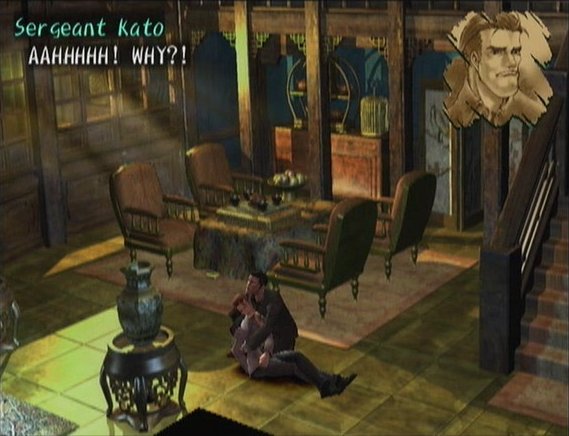
            Now, that said, that kind of template only works for the most basic of villain.  Really interesting and memorable villains are those with nuance, who you develop an emotional attachment to, and who are iconic in their own right.  Tragic villains usually have a back story that is depressing or has altered their view points so that they are acting in a manner that seems evil, but which is justified to them.  Like characters with tragic back stories, for these villains to really succeed, you need to interweave their current actions with their past, otherwise they become stock villains.  Evoland is a game which charts the history of adventure and role playing games in a satirical fashion and the main villain, who comes out of nowhere, is revealed to have a tragic backstory of his race being hunted for some reason, despite never mentioning it, hinting at it, or showing and trace of bitterness or regret until the final battle.  This is the definition of a stock villain, and Evoland created him in that way to parody the RPG stock villains of past and future.  A tragic villain with some bite is one who knows that what they are doing may not be justifiable, but still believe it is best for them or those dear to them.  Kato from Shadow Hearts: Covenant is this kind of villain.  He carries himself with an air of melancholy and early on he and Yuri discuss the loss of his love.  This melancholy and reference to his tragic past carry on throughout the game through his interactions with his superiors, who he has contempt for, and his resurrection of his lost love, albeit without her memories.  In the end, Kato decides to try and alter fate for the sake of love.  While he recognizes all the people he can and likely will hurt through these actions, to him it is justified because of all that he has lost.  This is a really well defined villain that players feel for and grow attached to.  They are lucid, reasonable, likable even, and are not deluded about the course of actions they have chosen to take.  A good way to mess up writing a tragic villain, apart from a stock backstory that is only mentioned once for the sake of pathos, is to have them be unreasonable, petulant, and whiny about their tragedy.  I honestly believe that Luc, from the Suikoden series, is a rather poor villain because he not only does he have immense power, but he has fought on the side of justice before and has a stern, but loving teacher and girl friend.  He should be perfectly content with his life.  However, the source of his power, his "true rune" of wind, which grants him mastery over wind and eternal life, seems to cause him distress as he believes his destiny is not his own.  So, he seeks to free himself from this burden by destroying the true rune, in an experiment which could wipe out an entire country.  Really, this is like saying "Wah!  Wah!  My whole life, people have made choices for me, I never got to live MY life!"  The truth is, Luc HAS lived his life, has made choices, and even if it felt like his destiny was being controlled, it was still ultimately up to him.  We all have choices.  But this attitude makes him seem whiny and ungrateful.  A sharp contrast from his previous appearances.

Kato is an excellent tragic villain, having his tragic backstory shown in the original Shadow Hearts and explained fully in the sequel.  His back story affects his actions and he sees what he is doing as justified, even if he has to commit horrors to do it.
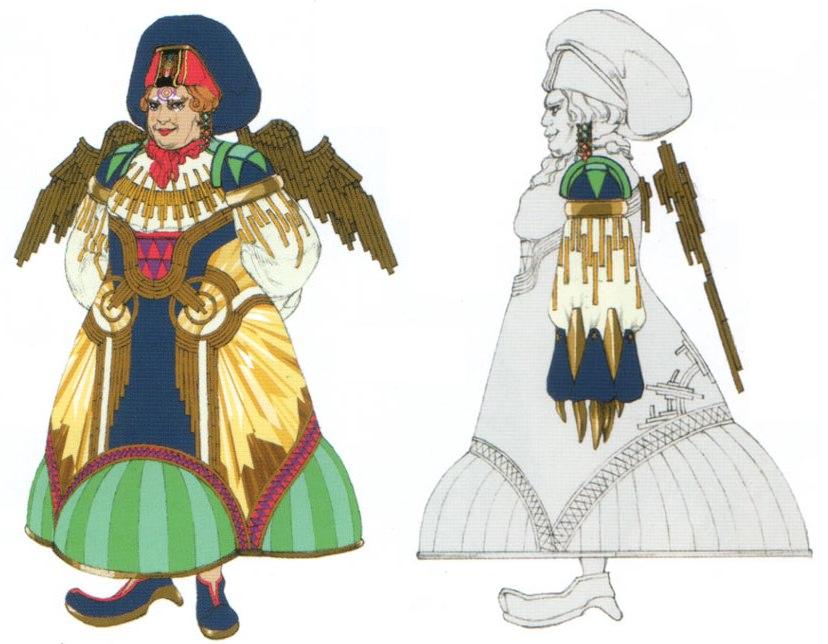
            Despicable villains can be a bit more fun than tragic villains, as they're not meant to be liked.  They are meant to be hated for their actions, which are still justified in their eyes.  Despicable villains do what makes them happy or what advances them without care for others, so they can be pretty shallow character wise.  However, their actions can speak great depths about the kind of person they are and give them some memorability.  Going back to Suikoden again, in Suikoden 2, Luca Blight is the main villain for most of the game.  He has his father poisoned and wages a bloody war across the country to spill as much blood as possible to empower the "beast" rune inscribed in his castle.  However, he really just likes killing.  Luca is a textbook case of an anti-social psychotic who gets enjoyment out of bloodshed.  Yet, he's not an impotent villain who just loves killing because it makes him feel big.  He's trained his whole life as a warrior and can hold his own, frequently taking part in the killing himself.  In fact, to bring Luca down it takes a squad of six soldiers against him, after he's been wounded, a barrage of arrows, and a final duel against the enemy commander while he is near death, bleeding out, and pumped full of holes.  This kind of villain is memorable because of how despicable he is.  Same for Kefka.  He's insane.  He wants power for his own sake, so that he can do as he pleases and takes great pleasure in causing suffering.  He's not afraid to fight on his own, but he's memorable for his quirky personality, something Luca was rather missing, and his unique visual appearance, resembling a harlequin.  Despicable villains can be well spoken or thoughtful as well, such as Grahf from Xenogears musing on the nature of human existence or on the darkness and evil which resides within us all, even though he freely kills his subordinates and wants to destroy all.  So, how do you destroy a good despicable villain?  Make their plan not make sense within the context of the world or for their character.  Barthandelus from Final Fantasy 13 is a good example.  Despite having a memorable look, his plan is very, very stupid.  He wants to reduce the entire world to nothing.  Now, you could argue that this is stupid, and I have, because he acts as a god, lives in luxury, and his children basically rule the world.  But, devil's advocate, let's say he's gone insane and wants to reduce the world to nothing.  Why doesn't he do it himself?  He is a god after all.  Why does he need to rely on proxies to do it for him?  And why does he think destroying the world will bring his creator/father back when there doesn't seem to be any evidence it will?  Why does he, if he wants himself to die to, fight and hound the players?  See, a despicable villain does not have to be terribly deep, but their plan needs to make sense from a certain perspective.  Luca likes killing, so he starts a war.  Simple.  Kefka wants power and is selfish, so he weasels his way into a position of power and then turns himself into a god of magic.  A bit contrived, but sensible.  Barthandelus wants to reduce the world to nothing, so he and his organization actively try and stop the people he manipulated into becoming the tools for the end of the world...wait, what?

Luca Blight is an excellent despicable villain who simply has a deep rooted need for slaughter.  He is absolutely reprehensible, but very memorable because, as he said, it took hundreds to bring him down, but he killed thousands with abject glee.
            Aside from a poorly realized master scheme, there are two final pratfalls to avoid when writing villains.  The first is comparison.  If you are going to have a really impressive villain in your game, one who follows the outlines set up above, you don't want to create something more impressive or more dangerous or more interesting than them.  This will leave the audience feeling cheated, as they invested time in believing your important villain was important, but then something bigger, cooler, and more evil comes along.  This is why you don't have a giant evil demon boss BEFORE you have your human trying to force people to act a certain way for the greater good.  The taste of the villain sours after you've had something bigger and more impressive.  Second is supplanting the main villain.  Especially with tragic villains, we, the audience, grow just as attached to the bastard we want taken down as we do to the heroes.  So, if we spend most of the game hating and fighting and preparing to fight one big villain, only to have him be replaced by a lamer, stupider, less powerful/intimidating villain, it will really sour the games taste.  Seymour Guado in Final Fantasy 10 should've been our final final boss, but he was replaced by Yu Yevon, who was barely alive to begin with.  Satan killed the Lord of Necromancers in Castlevania: Lords of Shadows because "Evil muahahahahaha!"  Look, I get that you want a twist, but you can do better.  Replacing an iconic villain like Vaz in Far Cry 3 will just make us call bull shit.  The only time when this can work is if you have a villain we are equally familiar with, either masquerading as a hero or hiding in the sidelines where we still know he exists but he's not the top priority, come out and one up our main villain.  The twist in the original Bioshock where Andrew Ryan is replaced is one of the more subtle and brilliant plot twists in modern gaming.  It can be done, but it takes finesse, proper scripting, and good pacing.  Not to be tried by amateurs and not to be used for shock value.  You will only piss off your audience if you throw in a twist just for the sake of having a twist.

Vaz is the face of evil in Far Cry 3...so why isn't he the final final boss?  Why waste such a good character?!
            And so, that's my follow up to the month of characters.  Aspiring designers, script writers, or storytellers, take notice.  I've given you the secret to making good heroes and villains on a silver platter.  It amazes me how, even to this day, poorly written characters just get a pass.  We, as gamers, demand better from our heroes and villains.  We want them to be memorable, but not for how bad they are.  So, I hope this has given a little bit of context to why I did the month of characters in May.

Thursday, May 30, 2013

Month of Characters: Top 10 Villains I Hate For All The Wrong Reasons:


Well, anyone who knows me could probably guess that this was coming.  We have tons of great villains in games.  Well rounded villains who are relatable, lucid ones who are charming and brilliant, and the most scummy ones who you hate because of how evil they are.  However, here's the thing...when the story does it's job right, you hate the villain because that's the way it should be.  When the story screws up, you hate the villain because you want to smack the game designer and go "What were you thinking?!"  These are 10 villains I utterly despise, but for all the wrong reasons.  Needless to say, there will be spoilers.

SPOILER WARNING!!!


Satan(Castlevania Lords of Shadow)
I've talked about this one before, so do I really need to go on?  Satan as the final boss of a Castlevania game?!  I mean, c'mon...where's Dracula?!  But, for completeness sake, let me explain, again, why this is such a stupid decision.  First off, he's never been introduced, mentioned, or even hinted at throughout the 30+ hour game and we're supposed to care about fighting him at the end?  Bull crap.  I know lots of games sometimes do the fake out, where the main boss you've been fighting gets killed off and a new guy appears, but it does not make it any less stupid.  Also, if Satan is the head baddy, why would he kill one of the Lords of Shadow?  Because he kills the Lord of Necromancers right at the end of the game.  Finally, by killing the Lord of Necromancers, Satan ACCIDENTALLY SAVES YOUR LIFE.  Gabriel Belmont had been used and tricked by the Lord of Necromancers all game and had unwittingly come into contact with a possessed artifact that the Lord of Necromancers could use to kill him.  In fact, after you create the item you've been looking for the whole game, the God Mask, he uses the possessed artifact to start to kill Gabriel and take the mask as his own.  Then Satan kills him and suddenly, your possessed artifact no longer has a master, so bam, you're saved and you defeat Satan to win the game.  Evil would have won if the prince of darkness had butted out.  Just pathetic storytelling.  I mean, I was told for over 30 hours that the three Lords of Shadow were my opponents.  In fact, it's in the title!  Yet Satan comes out and just goes "Fooled ya!  I'm the final boss!"  That is just stupid to the utmost degree.

The unholy one is a banished servant of the divine.  He holds no power, despite believing himself deserving of greatness and is worth more pity than fear.
Geldoblame (Baten Kaitos series)
For most head scratching appearance, let's give it up for Emperor Geldoblame.  Throughout most of Baten Kaitos, he is manipulating powerful forces to gather together the pieces of an ancient god and use them to control the world.  Then he gets killed, betrayed by his partner who is smarter and more nihilistic than he is.  It was a satisfying end for the tyrant, out witted and with his ambitions in shambles.  Then, at the end of the game after the players have killed the elder god which was summoned and their homes which had been floating in the sky touch down on the earth, he appears again.  Geldoblame's giant head made of stone pops out of the ground and attacks the players in a battle they pretty much can't lose.  Why?  Why did this need to be here?  He had his moment, died for his hubris, but now we have to fight him again?  Why?!  Oh, so the whale can come here and restore the ocean or something, whatever, alright...it just feels wasteful and stupid.  Geldoblame was a decent villain...until he came back from the dead as a giant stone head.  Then I scratched my head and started hating him.

The emperor held great power and ambition, but was ultimately brought low by his own desires.  Despite that, he clung to life and the memory of the tyrant was replaced by the memory of a pitiful ghost who could not let go of his greed.
True form of King Allant (Demons Souls)
I hated Demons Souls.  For a lot of reasons.  But that aside, what annoyed me probably the most is the final boss, which is basically a slug-like form of King Allant, the man who unleashed catastrophe on his kingdom and basically started the game.  He sought power and unleashed a monster which merged with and ultimately corrupted him.  He's pathetically weak and can be slain in a single blow.  Now, I know why that is and I know why we should hate him.  We should hate him for his greed and arrogance and ultimately pity him, for in trying to gain power he doomed himself to a cursed half existence as a monster, alone in the chamber of the beast he made a deal with.  But really, I was so annoyed at all this.  I'd cursed, sweated, and struggled through the other dozen or so bosses, each a nightmare unto themselves, and my final battle was against the "False King" a truly wicked bastard who killed me a number of times before I dropped him.  And then I am told I must go fight the real monster, the mastermind behind the whole event, and it's just Allant after become a slug like monster?  What a freakin disappointment!  This, especially, after fighting my way through hundreds of lives to reach the ending.  Dark Souls, its sequel, has you fight the specter of a god who, despite having lost much of his power, can rip you apart if you're not careful.  Not the hardest boss in the game, but not easy, either.  A climactic battle is what players want, since it makes the ending we fought so hard for that much sweeter.  But for just being completely pathetic and ultimately leaving a bad taste in my mouth after such hard work, I hate King Allant.  He's the epitome of pathetic.

The hanged man was once a king.  However, his intense desire for power and his fear made him weak, pitiful, and ultimately destroyed him.  All that remains is a shell.  To slay him is a mercy.
Barthandelus (Final Fantasy 13)
I.  DESPISE.  Barthandelus.  He comes right out of nowhere, has motivations which are not only selfish, but utterly stupid, he's been spying on the party for most of the game, manipulating them, and wants them to destroy him and all of creation.  Why?  Because the creator of the Fal'cie went away and they're throwing a fit, so they want to call him back through mass genocide.  Worse is that Barthandelus kind of makes the entire story irrelevant, since the players are basically in the palm of his hand from the start and guided by him throughout the story.  However, this opens a huge number of plot holes.  How could he have predicted the players would be turned into L'cie with the power to destroy all of creation?  How could he have orchestrated it all when everyone's actions were a comedy of errors?  Why, if he wanted you to destroy him, do HIS soldiers try to corner and kill you for the first FORTY HOURS?!  I mean, what would have happened if we'd lost?  If YOUR soldiers actually cornered and killed us?  Did you ever think of that, Barthandelus?  For that matter, why doe HE fight the players?  He's basically a mechanical god, with immense power, yet he wants the players to kill him and destroy everything, right?  So, why does he fight?  Why not just lay down and take it?  The character is so bland, stupid, and frustratingly cliche.  Even if you forgive the plot holes, let's just examine the situation closely for one moment.  Despite watching over humanity for millenia, ruling them in luxury, and basically being worshipped as a god, Barthandelus wants the main party to set off the apocalypse by killing him just so he can call his creator back and "Start over".  Say that out loud for a moment.  Then, join me in saying, "Barthandelus, you are made of stupid."

The world ruled over all as a god since time immemorial.  However, even this was not enough for him.  He desired to return to nothing and start again, if only because he was bored, with no thought to those he would hurt or his children, which he would betray for his own petty desires.
The White Witch (Ni No Kuni)
This one is so easy it's kind of sad.  Ni No Kuni is subtitled "Wrath of the White Witch."  But despite the fact that the we see the witch "controlling things as a puppetmaster," she doesn't really do much and is pretty irrelevant to the story until the last...3-4 hours?  She runs a shadowy council and seems all intimidating and kills our hero Oliver's mom, but...she isn't the main villain.  Oliver and company don't even know she exists till she announces herself.  The main villain for most of the game is Shadar, the Dark Djinn, who has a much more tragic and satisfying backstory, far better reasons for being the villain, and a pay off at the end which is incredibly satisfying.  By the time I got to fight the White Witch, I felt like saying "Why are you here?  Bring back Shadar!"  She and her council are the final bosses, but they feel like they shouldn't even be in the game.  I mean, the plot could've been altered slightly to not include her and everything would've worked out fine.  Oh, White Witch...why do you even exist?

The priestess watched over the world from her gilded seat, unwilling to save it but more than willing to condemn it.  However, her vanity was such that she would not even rule it...instead giving that honor to her servant.  None know the priestess.  None care for the priestess.  The priestess need not be.
Maximillian (Growlanswer 2: The Sense of Justice)
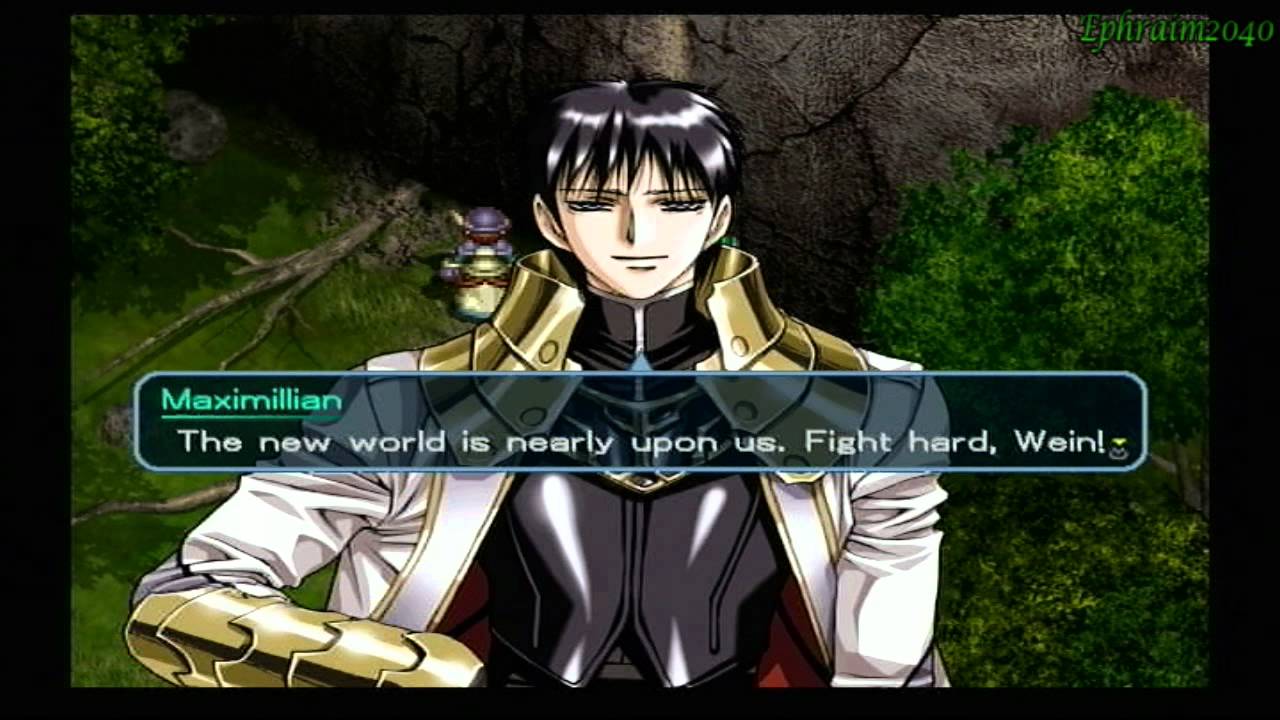
Maximillian is actually a pretty interesting villain, but ultimately he feels shoved in at the last minute and has to be compared to the much more interesting monster named Gevas.  See, you meet Maximillian at the start of the game, you become friends, then, on a routine military expedition, you and he discover a cave with an ancient mask that he takes to go research.  Maximillian wants to rid the world of war and believes anything toward that goal is just.  At the end of the game, he finds that the mask is a subjugation artifact and that he can use it to mind control people into not fighting. And, for the sake of justice and free will, the player must stop him.  Here's the thing, though.  For most of the game, a character named Arrieta, with a dual personality, has acted as the main villain.  When cornered, she reveals herself to be possessed by Gevas, a world crushing monstrosity that the heroes of Growlanswer 1 fought and defeated.  Now it's returned and we have to fight it.  And after it's dead, we then go fight Maximillian.  To me, that just seems kinda pointless.  Not only did we defeat the ultimate evil, but we did it and the game didn't end...it only ends after we defeat Maximillian?  Lame.  Maximillian's plot and his final boss status seems kinda thrown in at the last moment, but they were alright.  They'd be fine if they didn't have to compare to Gevas, which we'd already beaten.  I hate this battle because the comparison just kills any tension, as Gevas was a far more final boss.

Judgement holds his answer as the truth above all others and will bring an end to the cycle of death and rebirth.  He seeks to end war, strife, and power, though his means be unjust.  The sad truth is that while he may judge, he holds no power compared to the vast will of the world.
Wilhelm (Xenosaga 3: Also Sprach Zarathustra)
Wilhelm is more baffling to me than hateful.  But, in a series with a ton of great villains, including the space pope, a man who blows his own head off, steps on it, then regenerates it, a body snatcher, and a space samurai, we have Wilhelm as the grand mastermind of some vaguely evil scheme.  Wilhelm is a CEO of a technology corporation in the far future, who looks to be about...age fifteen, tops, and has no emotions.  Or if he has them, he doesn't use them.  Wilhelm is boring.  And I have no idea why I'm fighting him, save that he's trying to...destroy the universe?  I guess?  And Wilhelm is the main villain.  He has private shock corps made up of better fallen villains.  He pisses me off because I have no reason to fight him, no reason to be invested, no reason to even care.  He's not even in the final battle.  He uses "The circle of Zarathustra" which I have no idea what its supposed to do, with a kid named Abel in the center, to try and kill the party.  Wilhelm seems about as bored as I am.  That's why I hate him.  The best thing a villain can be is memorable.  Some are memorable for good reasons, some for how lame or annoying they were, but they are still remembered.  The worst thing a villain can be is boring because no one will remember them.

The hermit does not indulge to enter the world.  He is content to stay back, emotionless, uninterested, holding his philosophy above all others.  There is nothing he has to say.  There is nothing he has to teach.  He may as well return to solitude.
Yu Yevon (Final Fantasy 10)
This villain is a thief.  As annoying and poncy as Seymour Guado was, he was still a pretty cruel, sadistic, nihilistic, evil villain, and fitting for the final boss role.  But no.  Instead, after fighting our way inside the colossal monster, SIN, which has rained untold destruction on the world, after putting Jecht to rest and outwitting the REAL villain, Seymour, we fight...a giant tick.  Yu Yevon was a summoner who formed the core of SIN by corrupting the summoned beasts, Aeons, and using them as an armor for its soul.  But Yu Yevon itself is nothing without the Aeons.  I doubt very much that its even capable of thought, much less malice.  It's a villain that was thrown into the final enemy slot because...I don't even know.  Players cannot lose the battles with Yu Yevon, no matter how weak they are.  What makes me so angry at this boss is that, despite how stupid he looked, Seymour was clearly the main villain.  And Square could have made him the final boss.  SIN was always a threat, yeah, but Yu Yevon wasn't really controlling it, just hiding inside it.  Yu Yevon is a pathetic waste of a boss, because he barely even exists and doesn't affect the story at all, save for stealing the final boss status from Seymour, who rightfully deserves it for all his dickish behavior.  Yu Yevon as a boss is a nonentity.  It's something that exists without reason.  That's even worse than being boring. 

The fool is a blind, deaf, idiot, dancing to his own tune, oblivious to the whims of others.  He may infuriate or annoy, but it matters not.  He is all sound and fury, ultimately accomplishing nothing, save for being a nuisance.
Xemnas (Kingdom Hearts 2)
Ultimately, I feel like miscasting was the downfall of Xemnas.  He's not really a bad villain, but he's so bland, generic, and boring that I can't help but yawn.  He uses his light saber swords, fights Sora and Riku, then disappears into nothingness, blah blah...we had so many other more interesting members of Organization 13 who could've taken the number 1 spot.  Saix was interesting and his relationship to Axel would've made him a moving final antagonist.  And his death, where he laments his lost heart and asks where it has gone is pretty heavy, for a villain dying.  If not him, why not Xigbar, who actually fought the original Keyblade masters in Birth by Sleep?  He seems more capable than Xemnas.  But no, Ansem's nobody had to be the final battle.  It depresses me because you do so many cool things in the battle, but Xemnas as a villain is so blah.  He's just there.  He doesn't make an impression like Xehanort did, doesn't have any really good lines and is constantly being one upped by his subordinates.  Xemnas.  So boring his battle almost killed me by putting me to sleep.

The nothingness holds no substance or value.  Merely a cheap copy of the truth, it has no reason to be here, save that it was recognized.  Though the idea of nothingness may intrigue others, it is without any lasting power.
Zachariah Comstock (Bioshock Infinite)
Originally, I had intended to include Demon King Malladus from Legend of Zelda: Spirit tracks...however, then I played Bioshock Infinite.  Literally the week before this post was to go up, I discovered one of the most frustrating and annoying villains I've ever seen in a video game.  Zachariah Comstock, the "prophet" of Columbia, a floating city in the sky.  I hate Comstock because, as a villain, I just want him to go away.  Not kill him, mind, I just want him to leave the story.  He is a loud, annoying, narcissistic, psychotically religious hypocrite with none of the charm and intellect of Andrew Ryan or the warped ideals of Sofia Lamb.  Comstock has NOTHING of value to say, but keeps going on and on about how he is the chosen one, how he will cleanse the sodom below, how everyone who is against him is against god, stock religious super villain nonsense.  And he seems so insecure, frequently building monuments the size of islands to his greatness when he cannot fight himself.  He's a frail old man who uses machines and his zealots, who are idiots for following him by the way, to do his dirty work for him.  At the best of times, he seems like he's using religion to his benefit, like any number of scam priests in stories.  At the worst of times, he seems pants on head insane, believing whole heartedly that stealing a baby from an alternate dimension, raising her in isolation, and frequently beating, torturing, maiming, and brainwashing her as an adult is somehow god's will and will save the world.  Comstock isn't compelling, intelligent, or even very well spoken.  He's an insane religious zealot with an inferiority complex.  Worse yet is that his character, when we learn the truth, makes absolutely no sense, as he actually didn't used to be Zachariah Comstock, but was another person.  A smart person.  A capable person.  A person who WASN'T pants on head insane.  Comstock ruined Bioshock Infinite for me.

The heirophant's arrogance knows no bounds.  He believes himself divinely blessed by god and will justify any atrocities in that name.  He says nothing of merit and is insecure in his own power.  Only a fool devoid of thought would follow his words.
            And there you have it.  These characters fail for a number of reasons, most relating to story and writing, sadly.  Any number of them could have been unforgettable main villains who embedded themselves in people's minds as amazing, well spoken, scary even, if they had a better script to work with or if the story was more refined.  Place Maximillion before the huge final boss battle...have Seymour Guado kill Yu Yevon and take his place inside SIN.  Have Satan at least HINTED at to some extent in the game.  Give Comstock ANYTHING interesting to discuss beyond how awesome it is to be a racist Catholic white man with a god complex.  These villains weren't brought low by our heroes.  They were brought low by the scriptwriters, the translators, and the story boarders who failed them.  Failed to make them compelling and instead opted for shock value or to cop out near the end of the game.

            There you have my month of characters.  Each of the character lists show an important aspect of the games industry, some that need to be focused on, like making compelling villains, admirable heroes, or great worlds to explore, and some that need to be stopped, such as making the villains so depressingly generic or unsatisfying.  Bear in mind, these characters are all just from my experience.  If you want, share in the comments some of your favorite heroes, villains, power fantasies, or characters you just can't stand and why.